

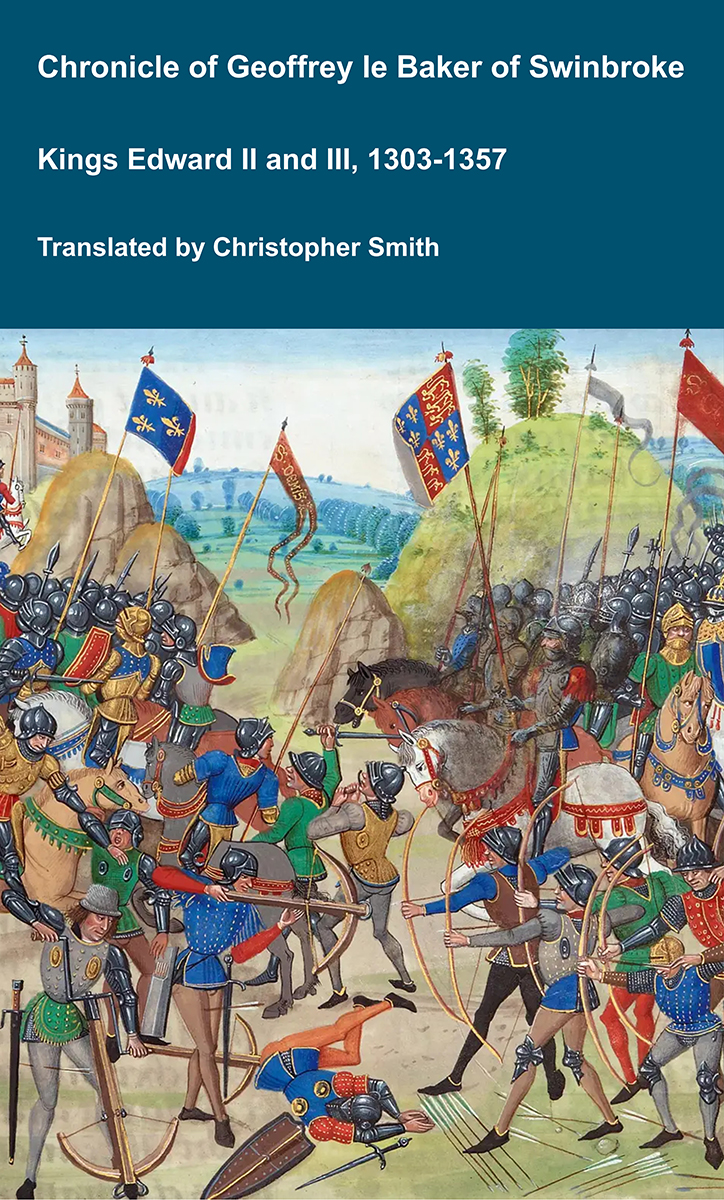
Chronicle of Geoffrey le Baker of Swinbroke
Baker was a secular clerk from Swinbroke, now Swinbrook, an Oxfordshire village two miles east of Burford. His Chronicle describes the events of the period 1303-1356: Gaveston, Bannockburn, Boroughbridge, the murder of King Edward II, the Scottish Wars, Sluys, Crécy, the Black Death, Winchelsea and Poitiers. To quote Herbert Bruce 'it possesses a vigorous and characteristic style, and its value for particular events between 1303 and 1356 has been recognised by its editor and by subsequent writers'. The book provides remarkable detail about the events it describes. Baker's text has been augmented with hundreds of notes, including extracts from other contemporary chronicles, such as the Annales Londonienses, Annales Paulini, Murimuth, Lanercost, Avesbury, Guisborough and Froissart to enrich the reader's understanding. The translation takes as its source the 'Chronicon Galfridi le Baker de Swynebroke' published in 1889, edited by Edward Maunde Thompson.
Available at Amazon in eBook and Paperback format.
Paternal Family Tree: Essex
King Sæberht of Essex was born to [his father] Sledd King of Essex and [his mother] Ricula of Kent.
Around 587 [his father] Sledd King of Essex was appointed King Essex.
In 604 King Sæberht of Essex was converted to Christianity and baptised by Bishop Mellitus.
Anglo-Saxon Chronicle. 604. This year Augustine (age 64) consecrated two bishops, Mellitus and Justus. Mellitus he sent to preach baptism to the East-Saxons. Their king was called Seabert, the son of [his mother] Ricola, Ethelbert's (age 54) sister, whom Ethelbert placed there as king. Ethelbert also gave Mellitus the bishopric of London; and to Justus he gave the bishopric of Rochester, which is twenty-four miles from Canterbury, Kent [Map].
In 604 [his father] Sledd King of Essex died. His son Sæberht succeeded King Essex.
In 616 King Sæberht of Essex died. His son Sexred succeeded King Essex. His son Sæward succeeded King Essex. They ruled jointly with another unamed brother.
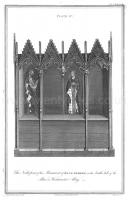
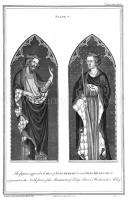
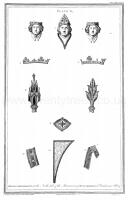
Vesta Monumenta. 1780. Plate 2.32 to 2.34. Monument of King Sæberht of Essex in Westminster Abbey [Map].
[his son] Sæward King of Essex was born to King Sæberht of Essex.
[his son] Sexred King of Essex was born to King Sæberht of Essex.