

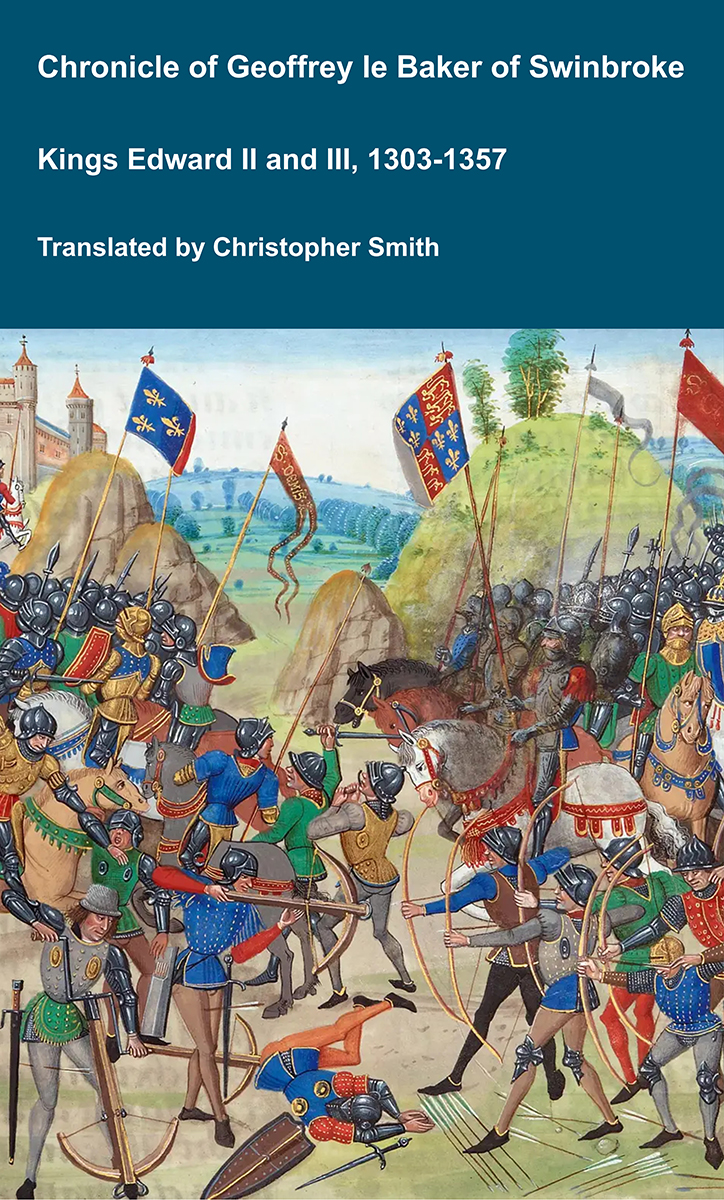
Chronicle of Geoffrey le Baker of Swinbroke
Baker was a secular clerk from Swinbroke, now Swinbrook, an Oxfordshire village two miles east of Burford. His Chronicle describes the events of the period 1303-1356: Gaveston, Bannockburn, Boroughbridge, the murder of King Edward II, the Scottish Wars, Sluys, Crécy, the Black Death, Winchelsea and Poitiers. To quote Herbert Bruce 'it possesses a vigorous and characteristic style, and its value for particular events between 1303 and 1356 has been recognised by its editor and by subsequent writers'. The book provides remarkable detail about the events it describes. Baker's text has been augmented with hundreds of notes, including extracts from other contemporary chronicles, such as the Annales Londonienses, Annales Paulini, Murimuth, Lanercost, Avesbury, Guisborough and Froissart to enrich the reader's understanding. The translation takes as its source the 'Chronicon Galfridi le Baker de Swynebroke' published in 1889, edited by Edward Maunde Thompson.
Available at Amazon in eBook and Paperback format.
Academy Architecture is in Modern Era.
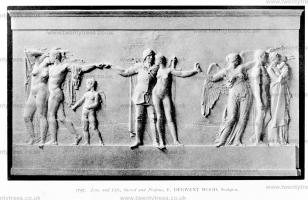
1904. Love and Life, Sacred and Profance, F. Derwent Wood [aged 32], Sculptor.
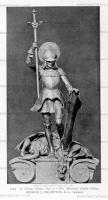
1904. St George, Status, Part of War Memorial, Radley College, George Frampton [aged 43], R.A., Sculptor.
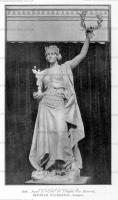
1905. Figure of "Glory" for the Islington War Memorial, Bertram MacKennal [aged 41], Sculptor.
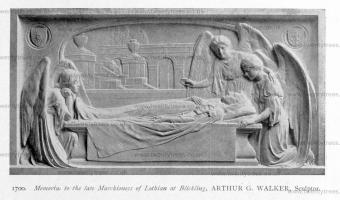
1905. Memorial to the late Marchioness of Lothian at Blickling [Map], Arthur G. Walker [aged 43], Sculptor.
Constance Harriet Mahonesa Talbot Marchioness Lothian: On 15th June 1836 she was born to Henry John Chetwynd-Talbot 3rd Earl Talbot 18th Earl of Shrewsbury and Sarah Elizabeth Beresford Countess Talbot Shrewsbury Waterford at Blickling Hall, Norfolk [Map]. On 12th August 1857 William Schomberg Kerr 8th Marquess Lothian and she were married. She by marriage Marchioness Lothian. She the daughter of Henry John Chetwynd-Talbot 3rd Earl Talbot 18th Earl of Shrewsbury and Sarah Elizabeth Beresford Countess Talbot Shrewsbury Waterford. He the son of John Kerr 7th Marquess Lothian and Cecil Chetwynd-Talbot Marchioness Lothian. They were first cousins. On 10th October 1901 Constance Harriet Mahonesa Talbot Marchioness Lothian died without issue at Blickling Hall, Norfolk [Map].
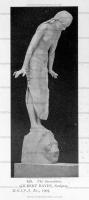
1905. The Invocation, Gilbert Bayes [aged 32], Sculptor, R.G.I.F.A. Ex., 1905.
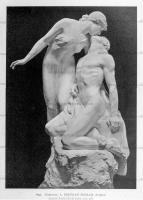
1905. Endymion, A. Bertram Pegram [aged 32], Sculptor.
Alfred Betram Pegram: In 1873 he was born. In 1941 he died.

1905. Circe, Bertram MacKennal [aged 41], Sculptor. R.G.I.F.A. Ex., 1905.

1905. Truth, Bertram MacKennal [aged 41], Sculptor. R.G.I.F.A. Ex., 1905.
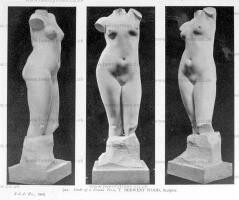
1905. Study of a Female Torso, F. Derwent Wood [aged 33], Sculptor. R.S.A. Ex., 1905.
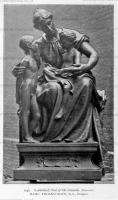
1905. Brotherhood, Part of the Gladstone Memorial, Hamp Thornycroft [aged 54], R. A., Sculptor.
Abbot John Whethamstede’s Chronicle of the Abbey of St Albans
Abbot John Whethamstede's Register aka Chronicle of his second term at the Abbey of St Albans, 1451-1461, is a remarkable text that describes his first-hand experience of the beginning of the Wars of the Roses including the First and Second Battles of St Albans, 1455 and 1461, respectively, their cause, and their consequences, not least on the Abbey itself. His text also includes Loveday, Blore Heath, Northampton, the Act of Accord, Wakefield, and Towton, and ends with the Coronation of King Edward IV. In addition to the events of the Wars of the Roses, Abbot John, or his scribes who wrote the Chronicle, include details in the life of the Abbey such as charters, letters, land exchanges, visits by legates, and disputes, which provide a rich insight into the day-to-day life of the Abbey, and the challenges faced by its Abbot.
Available at Amazon in eBook and Paperback format.
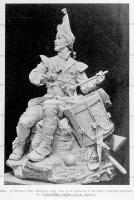
1905. A Drummer Boy, Dettingen, 1743, Part of the Memorial to the King's Liverpool Regiment. W. Goscombe John [aged 44], A. R. A., Sculptor.
1905. Greek Dancer, Gilbert Bayes [aged 32], Sculptor.
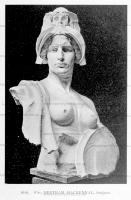
War, Bertram MacKennal, Sculptor.
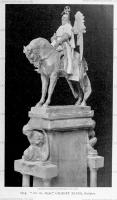
"For the Right", Gilbert Bayes, Sculptor.
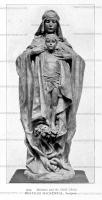
Madonna and the Child Christ, Bertram MacKennal, Sculptor.
Narcissus, A. Bertram Pegram, Sculptor.
Narcissus: he was born to Cephissus and Liriope following his rape of her.
Alfred Betram Pegram: In 1873 he was born. In 1941 he died.
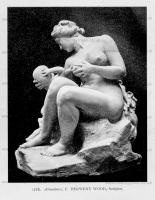
Abdunance, F. Derwent Wood, Sculptor.
The Bud and the Bloom, A. C. Lucchesi, Sculptor.
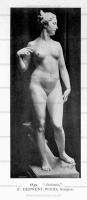
"Atalanta", F. Derwent Wood, Sculptor.
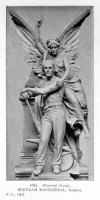
Memorial Group, Bertram MacKennal, Sculptor.
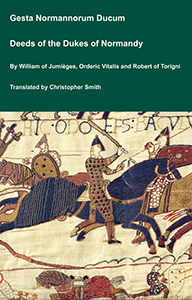
The Deeds of the Dukes of Normandy
The Gesta Normannorum Ducum [The Deeds of the Dukes of Normandy] is a landmark medieval chronicle tracing the rise and fall of the Norman dynasty from its early roots through the pivotal events surrounding the Norman Conquest of England. Originally penned in Latin by the monk William of Jumièges shortly before 1060 and later expanded at the behest of William the Conqueror, the work chronicles the deeds, politics, battles, and leadership of the Norman dukes, especially William’s own claim to the English throne. The narrative combines earlier historical sources with firsthand information and oral testimony to present an authoritative account of Normandy’s transformation from a Viking settlement into one of medieval Europe’s most powerful realms. William’s history emphasizes the legitimacy, military prowess, and governance of the Norman line, framing their expansion, including the conquest of England, as both divinely sanctioned and noble in purpose. Later chroniclers such as Orderic Vitalis and Robert of Torigni continued the history, extending the coverage into the 12th century, providing broader context on ducal rule and its impact. Today this classic work remains a foundational source for understanding Norman identity, medieval statesmanship, and the historical forces that reshaped England and Western Europe between 800AD and 1100AD.
Available at Amazon in eBook and Paperback format.

Earth and the Elements, Bertram MacKennal, Sculptor.