

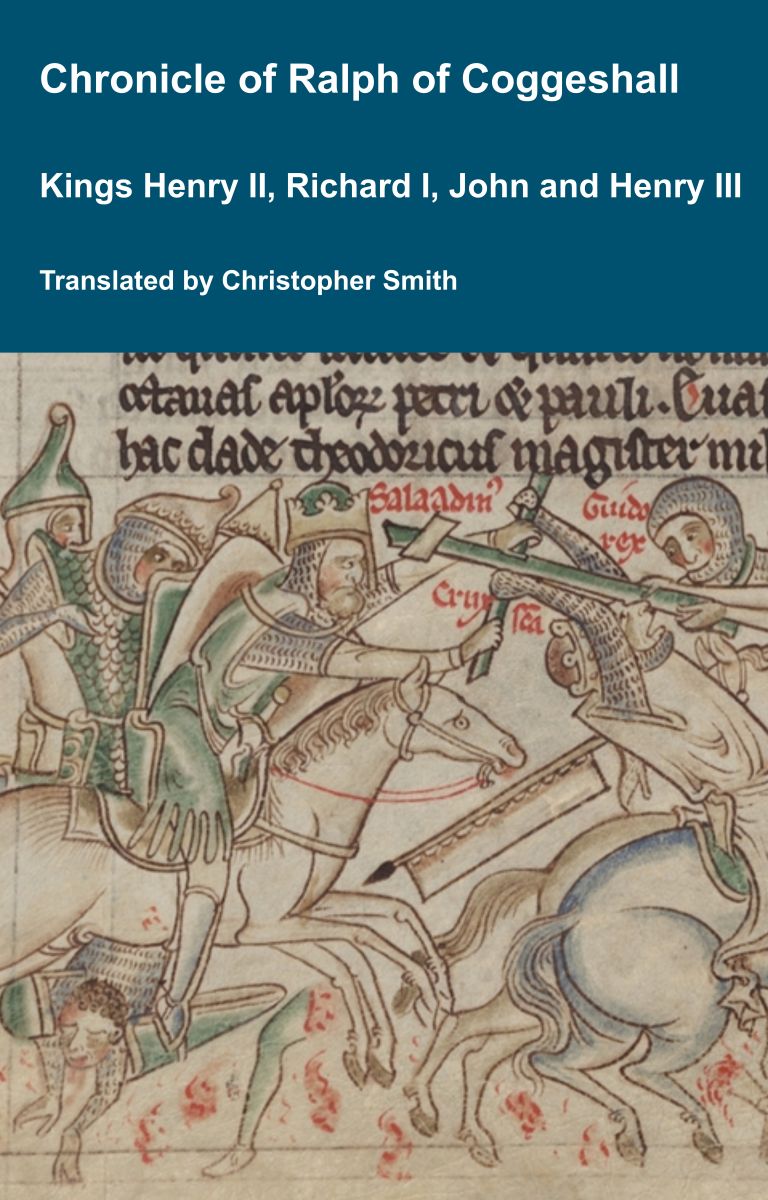
Chronicle of Abbot Ralph of Coggeshall
The Chronicle of Abbot Ralph of Coggeshall (Chronicon Anglicanum) is an indispensable medieval history that brings to life centuries of English and European affairs through the eyes of a learned Cistercian monk. Ralph of Coggeshall, abbot of the Abbey of Coggeshall in Essex in the early 13th century, continued and expanded his community’s chronicle, documenting events from the Norman Conquest of 1066 into the tumultuous reign of King Henry III. Blending eyewitness testimony, careful compilation, and the monastic commitment to record-keeping, this chronicle offers a rare narrative of political intrigue, royal power struggles, and social upheaval in England and beyond. Ralph’s work captures the reigns of pivotal figures such as Richard I and King John, providing invaluable insights into their characters, decisions, and the forces that shaped medieval rule. More than a simple annal, Chronicon Anglicanum conveys the texture of medieval life and governance, making it a rich source for scholars and readers fascinated by English history, monastic authorship, and the shaping of the medieval world.
Available at Amazon in eBook and Paperback format.
Calendars of Parliamentary Rolls is in Calendars.
6th June 1474. Westminster Palace [Map]. Exemplification at the request of Richard Duke of Gloucester [aged 21], of the tenour of an act (English) in the Parliament summoned at Westminster [Map], 6 October, 12 Edward IV, and continued to 9 May, 14 Edward IV, ordaining that George Duke Clarence [aged 24], and Isabel [aged 22] his wife and Richard Duke of Gloucester, and Anne [aged 17] his wife, daughters and heirs to Richard Nevyle, late Earl of Warwick, and daughters and heirs apparent to Anne Beauchamp [aged 47], his wife should possess and enjoy as in the right of the said wives all possessions belonging to the said Countess as though she were naturally dead and that she should be barred and excluded therefrom, that they should make partition of the premises and the same partition should be good in law, that the said Dukes should enjoy for life all the possessions of their wives if they should outlive the latter, that the said George and Isabel should not make any alienation, grant, fine or recovery of any of the premises to the hurt of the said Richard and Anne or the latter to the hurt of the former, that if the said Richard and Anne be divorced and afterwards married this Act should hold good, that if they be divorced and he do his effectual diligence to be married to her and during her life be not wedded to any other woman he should enjoy as much of the premises as should appertain to her during his life, and that notwithstanding the restraint of alienation or recovery above specified the lordship, manor and wappentake of Chesterfield, Derbyshire [Map] and Scarvesdale with the appurtenances and all the lands and tenements in Chesterfield, Derbyshire [Map] and Scarvesdale sometime of Ales, late Countess of Salisbury, might be given to the King and his heirs in exchange for other lands and tenements, which shall however be subject of this Act.
Be it remembered that on Friday, 23 January in the first year of the reign of King Richard the third [aged 31] since the conquest, that is, on the first day of parliament, with the lord king sitting on the royal throne in the Painted Chamber [Map] within his palace of Westminster, then being present many lords spiritual and temporal, and the commons of the realm of England, assembled at the aforesaid parliament at the king's command, the venerable father John, Bishop of Lincoln, chancellor of England memorably declared and announced the reasons for summoning the aforesaid parliament, taking as his theme: 'In the body there are many limbs, but not all have the same function'. In which words he gravely and very astutely explained the fealty which subjects of the king and the functions individual members owe to the principal member, asserting that there are three kinds of body, namely the natural, the aggregate and the politic, and going on to suggest that one coin, the tenth, had been lost from the most precious fabric of the body politic of England and that to hunt for it and find it would require the king and all the lords spiritual and temporal to be very assiduous and diligent during this parliament; concluding that after the finding of the tenth coin, which signifies perfection, our body politic of England would endure gloriously and for a long time, healthy, safe and free from all damage or injury; the king, the great men of the realm and the commons eternally cherishing peace outward and inward and the author of that peace. At the end of which declaration and announcement, the aforesaid chancellor in the king's name firmly ordered the commons to assemble on the following day in their common house as usual and elect one of their number as their speaker, and to present the man thus elected to the same lord king. The same chancellor announced moreover that the said lord king, wishing justice to be done more swiftly both to denizens and aliens wishing to complain in the said parliament, had appointed and assigned certain receivers of the petitions to be presented in the same parliament in the following form ...