Adam Murimuth's Continuation and Robert of Avesbury’s 'The Wonderful Deeds of King Edward III'
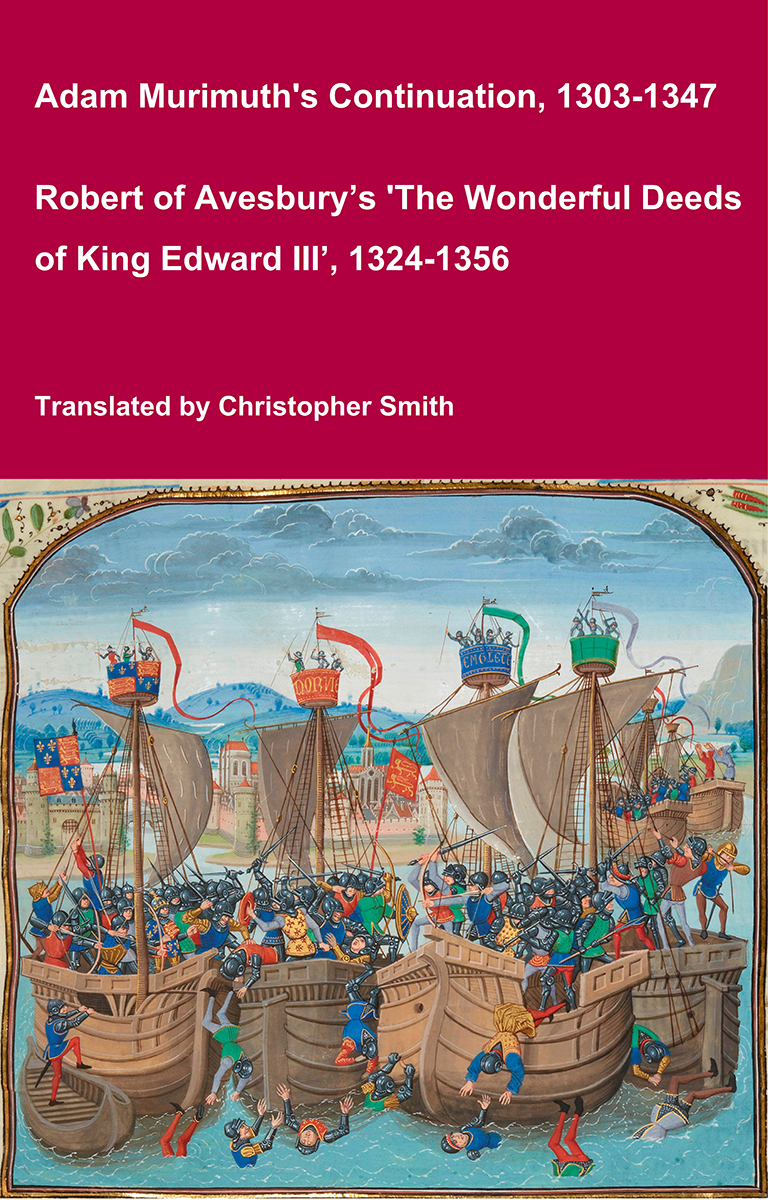
This volume brings together two of the most important contemporary chronicles for the reign of Edward III and the opening phases of the Hundred Years’ War. Written in Latin by English clerical observers, these texts provide a vivid and authoritative window into the political, diplomatic, and military history of fourteenth-century England and its continental ambitions. Adam Murimuth Continuatio's Chronicarum continues an earlier chronicle into the mid-fourteenth century, offering concise but valuable notices on royal policy, foreign relations, and ecclesiastical affairs. Its annalistic structure makes it especially useful for establishing chronology and tracing the development of events year by year. Complementing it, Robert of Avesbury’s De gestis mirabilibus regis Edwardi tertii is a rich documentary chronicle preserving letters, treaties, and official records alongside narrative passages. It is an indispensable source for understanding Edward III’s claim to the French crown, the conduct of war, and the mechanisms of medieval diplomacy. Together, these works offer scholars, students, and enthusiasts a reliable and unembellished account of a transformative period in English and European history. Essential for anyone interested in medieval chronicles, the Hundred Years’ War, or the reign of Edward III.
Available at Amazon in eBook and Paperback format.
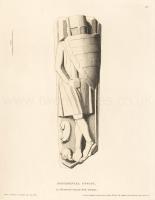
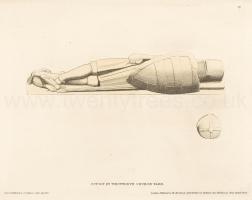
Effigy in Whitworth Church, Durham is in Monumental Effigies of Great Britain.
THIS remarkable sculptured stone is about six feet in length. On the head of the figure is a cylindrical helmet: the apertures for the sight, and the weldings, or joints, are so arranged as to form a cross. This species of defence for the head was continued in use, with a slight variation in the form, until a much later period than that of the present subjecta. This effigy is in an attitude of defence: the shield is borne before the body, and in the right hand is the sword naked and erect. The surcoat extends only to the knee. The mails of the hauberk have either not been expressed, or are obliterated. The legs are crossed, designating a Crusader, and they appear to trample on a prostrate figure, intended, perhaps, for an infidel. At the right side is a couchant hound. The bearing on the shield is, barry, a bordure charged with bezants. These bearings do not belong to any family which are known to have existed in the North; the figure can therefore only be conjectured to represent one of the Lords of Whitworth. In one or two other places in the County are effigies sculptured in exactly similar costume, the work probably of the same handb.
Details. Profile. Plate 11. The top of the helmet.
Note a. See the real specimens extant. That of Edward the Black Prince in Canterbury Cathedral, delineated in this work. Two belonging to the Lords of Cobham are in the chancel of Cobham Church, Kent.
Note b. See Surtees's Durham, vol. III. p. 293, and the illustrative plates of that work.