

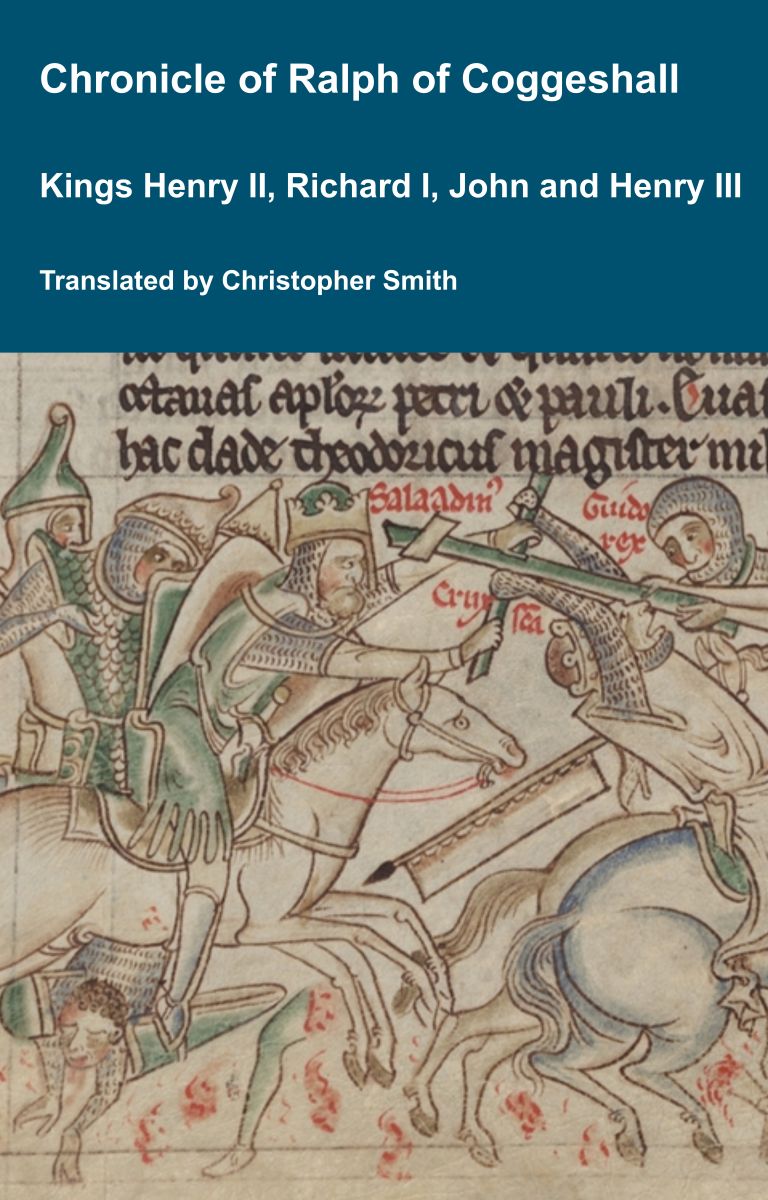
Chronicle of Abbot Ralph of Coggeshall
The Chronicle of Abbot Ralph of Coggeshall (Chronicon Anglicanum) is an indispensable medieval history that brings to life centuries of English and European affairs through the eyes of a learned Cistercian monk. Ralph of Coggeshall, abbot of the Abbey of Coggeshall in Essex in the early 13th century, continued and expanded his community’s chronicle, documenting events from the Norman Conquest of 1066 into the tumultuous reign of King Henry III. Blending eyewitness testimony, careful compilation, and the monastic commitment to record-keeping, this chronicle offers a rare narrative of political intrigue, royal power struggles, and social upheaval in England and beyond. Ralph’s work captures the reigns of pivotal figures such as Richard I and King John, providing invaluable insights into their characters, decisions, and the forces that shaped medieval rule. More than a simple annal, Chronicon Anglicanum conveys the texture of medieval life and governance, making it a rich source for scholars and readers fascinated by English history, monastic authorship, and the shaping of the medieval world.
Available at Amazon in eBook and Paperback format.
Effigy of a Montfort in Hitchendon Church is in Monumental Effigies of Great Britain.

THIS is one of the family of De Montfort Wellesburne, the particulars of whose settlement at Hitchendon, in Buckinghamshire, were detailed in the description of a former effigy. The present figure is carved on a stone placed on the door of the chancel of the parish church of the above place. Notwithstanding its low relief, its rude and singular appearance, the armour shows that it is of no earlier date than the latter end of the fifteenth century. On the helmet appears an obscure representation of a panache of ostrich feathers and a wreath. In the right hand is a mace, a horseman's weapon formerly much in use; the left arm supports a shield, on which, under a chief cheque, is the griffin rampant, holding in his paws a child, (the remarkable bearing which has been noticed under the article of Richard Wellesburne de Montfort,) over all a bend.