

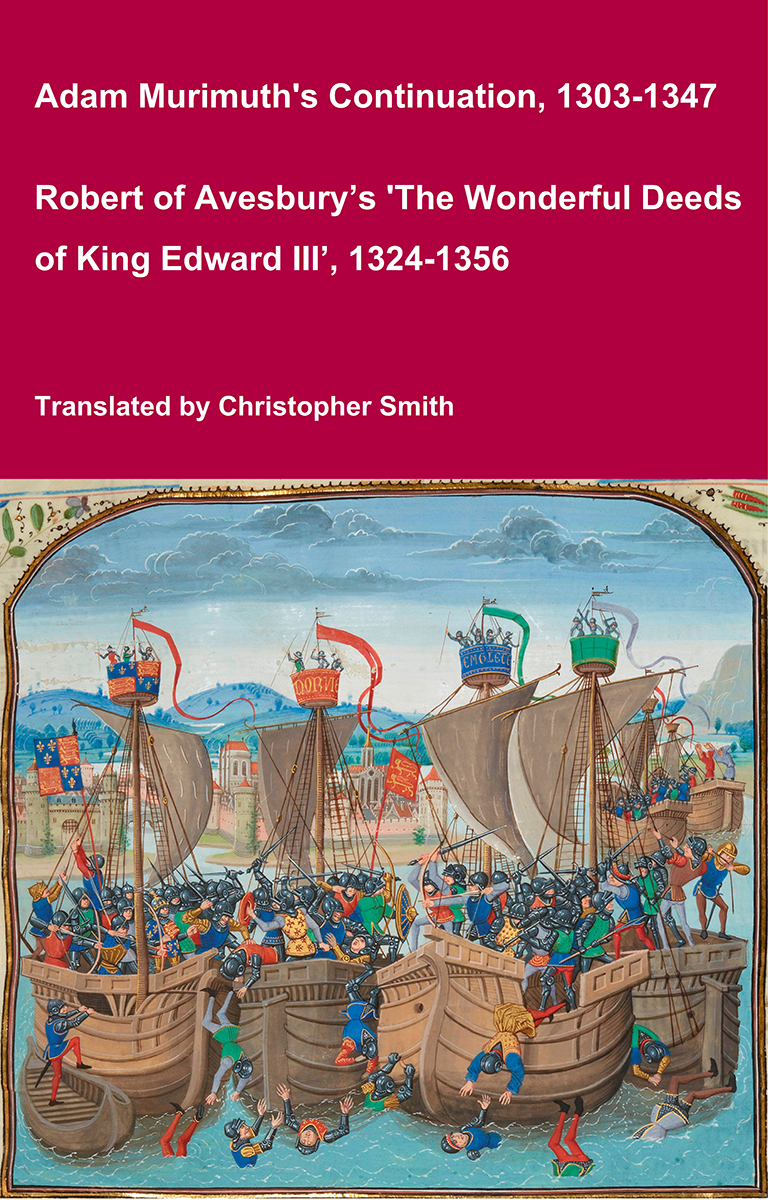
Adam Murimuth's Continuation and Robert of Avesbury’s 'The Wonderful Deeds of King Edward III'
This volume brings together two of the most important contemporary chronicles for the reign of Edward III and the opening phases of the Hundred Years’ War. Written in Latin by English clerical observers, these texts provide a vivid and authoritative window into the political, diplomatic, and military history of fourteenth-century England and its continental ambitions. Adam Murimuth Continuatio's Chronicarum continues an earlier chronicle into the mid-fourteenth century, offering concise but valuable notices on royal policy, foreign relations, and ecclesiastical affairs. Its annalistic structure makes it especially useful for establishing chronology and tracing the development of events year by year. Complementing it, Robert of Avesbury’s De gestis mirabilibus regis Edwardi tertii is a rich documentary chronicle preserving letters, treaties, and official records alongside narrative passages. It is an indispensable source for understanding Edward III’s claim to the French crown, the conduct of war, and the mechanisms of medieval diplomacy. Together, these works offer scholars, students, and enthusiasts a reliable and unembellished account of a transformative period in English and European history. Essential for anyone interested in medieval chronicles, the Hundred Years’ War, or the reign of Edward III.
Available at Amazon in eBook and Paperback format.
Effigy of a Nevill and Lady in Brancepeth Church, Durham is in Monumental Effigies of Great Britain.
THESE are most probably the effigies of Ralph second Earl of Westmorland, and one of his wives. He was the son of John Nevill (who died in the lifetime of his father, Ralph, first Earl of Westmorland), by Elizabeth, daughter of Thomas Holland, Earl of Kent.
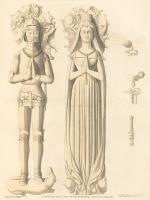
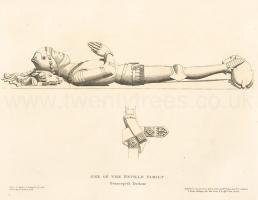
He had two wives; his first was Elizabeth, widow of Lord Clifford, daughter of that remarkable historical character Henry Lord Percy, son of the Earl of Northumberland, surnamed, for his promptitude in military emprize, Hotspur. By Elizabeth he had a son, John, who was slain during his life-time in the battle of Towton. His second wife was Margaret, daughter of Sir Reginald Cobham, knight. He died in the year 1484, the second of the reign of Richard the Third. The remarkable points in these effigies are the collars which decorate the necks of the figures. The Lancaster badge of SS is now discarded, and we find that of York, the white rose in the suna, adopted; from which is suspended the white boar, Richard the Third's device.
Note a. The parhelion which appeared in the Heavens at the battle of Mortimer's Cross occasioned Edward the Fourth to add the device of the sun to the white rose; and this assumed omen of success was indeed the occasion of victory to him at Barnet Field; for, being embroidered on the coats of his men, (much as we see, at this day, the crown, &c. on those of the yeomen of the Royal Guard,) and the Earl of Oxford, on the other side, having either a blazing star, or the silver mullet of his arms, on the jacks of his retainers, indistinctly seen gleaming through the mists of a spring morning, it was taken by the Earl of Warwick's soldiers for the badge of the foe, and assailed as such. Oxford, in consequence, suspected treachery in Warwick, and fled the field. Warwick's valour could not repair the mistake; he was defeated and slain.