

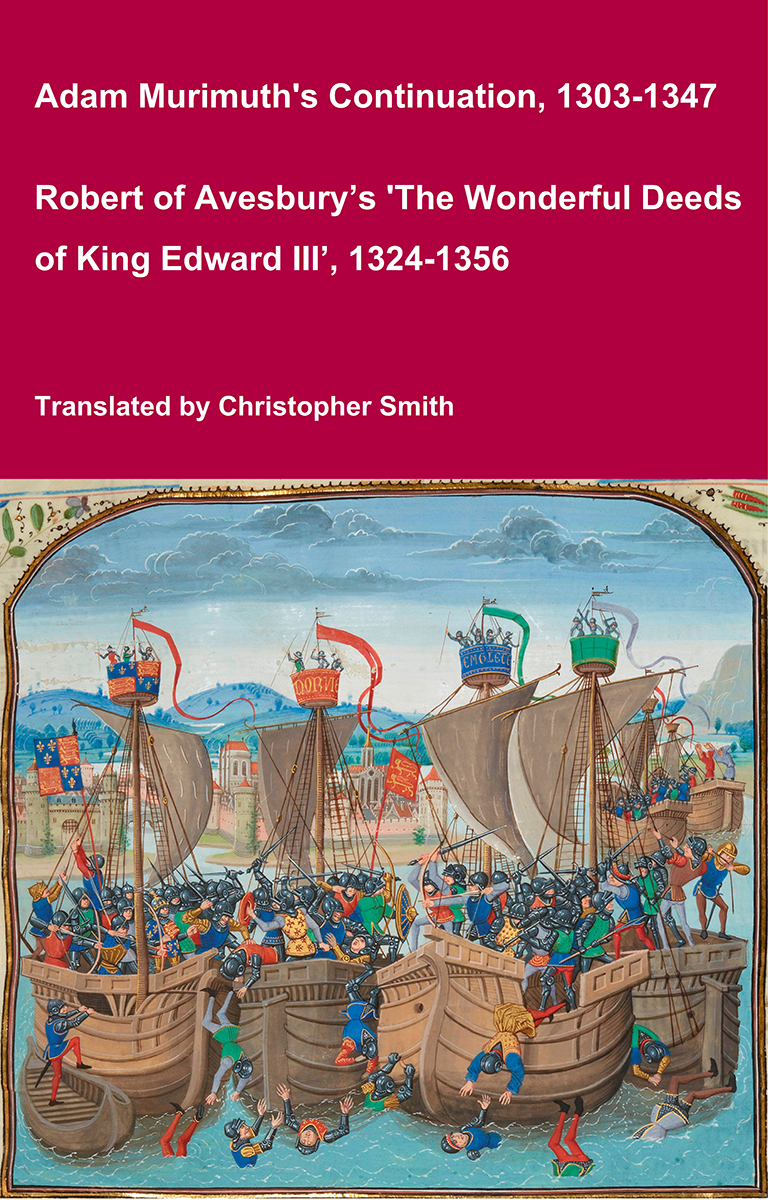
Adam Murimuth's Continuation and Robert of Avesbury’s 'The Wonderful Deeds of King Edward III'
This volume brings together two of the most important contemporary chronicles for the reign of Edward III and the opening phases of the Hundred Years’ War. Written in Latin by English clerical observers, these texts provide a vivid and authoritative window into the political, diplomatic, and military history of fourteenth-century England and its continental ambitions. Adam Murimuth Continuatio's Chronicarum continues an earlier chronicle into the mid-fourteenth century, offering concise but valuable notices on royal policy, foreign relations, and ecclesiastical affairs. Its annalistic structure makes it especially useful for establishing chronology and tracing the development of events year by year. Complementing it, Robert of Avesbury’s De gestis mirabilibus regis Edwardi tertii is a rich documentary chronicle preserving letters, treaties, and official records alongside narrative passages. It is an indispensable source for understanding Edward III’s claim to the French crown, the conduct of war, and the mechanisms of medieval diplomacy. Together, these works offer scholars, students, and enthusiasts a reliable and unembellished account of a transformative period in English and European history. Essential for anyone interested in medieval chronicles, the Hundred Years’ War, or the reign of Edward III.
Available at Amazon in eBook and Paperback format.
Hall's Chronicle 1420 is in Hall's Chronicle.
Kyng Henry heard gentely the Ambassadors and agreed to their request and desire, and so came to Maunte, where at the feast of Pentecost he kept a liberall hous to all commers, and sat hymself in greate estate. On which daie ether for good service before by them done, or for good expectacionof thynges to come, he created Gascon de Foys a valiaunt Gascoyn erle of Longeuile, and sir Ihon Grey was likewise made erle of Tankeruile, and the Lorde Bui shier Erie of Ewe. After this solempne feast ended, the place of the enteruieue and metyng was apoynted to be beside Meiaus on the riuer of Seyne, in a faire playne every pane was by comissioners appoyncted to their grounde. The Frenchmen diched, trenched, and paled their lodgynges for feare of afterclappes: But the Englishmen had their parte only barred and ported. The kyng of Englande had a large tent of blewe veluet and grene richely cmbrodered with two deuises, the one was an Antlop drawyng in an horse mill, the othar was an Antlop sittyng in an high stage with a braunche of Olife in his roouthe: And the ten te was replenished and decked with this poysie. After lusie labours commeth victorious reste, and on the top and heigth of thesame was set a greate Egle of golde, whose iyes were of suche orient Diamondes that they glistered and shone over the whole felde.