

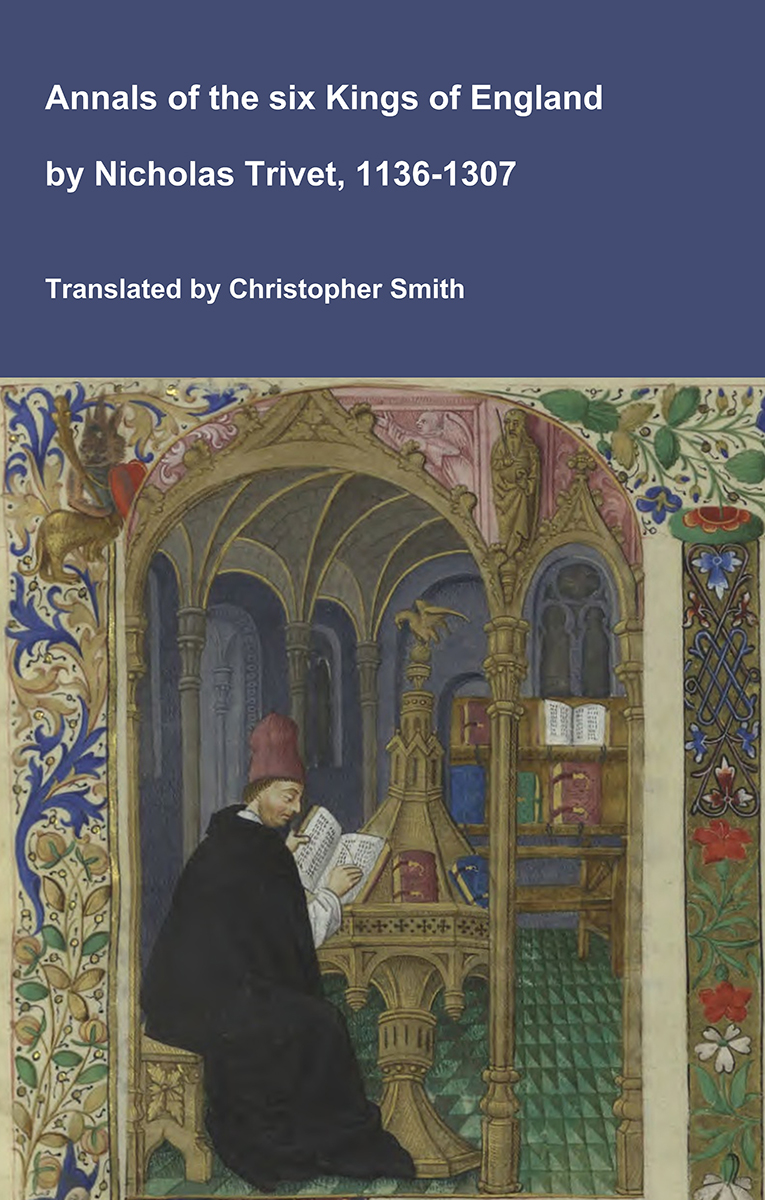
Annals of the six Kings of England by Nicholas Trivet
Translation of the Annals of the Six Kings of England by that traces the rise and rule of the Angevin aka Plantagenet dynasty from the mid-12th to early 14th century. Written by the Dominican scholar Nicholas Trivet, the work offers a vivid account of English history from the reign of King Stephen through to the death of King Edward I, blending political narrative with moral reflection. Covering the reigns of six monarchs—from Stephen to Edward I—the chronicle explores royal authority, rebellion, war, and the shifting balance between crown, church, and nobility. Trivet provides detailed insight into defining moments such as baronial conflicts, Anglo-French rivalry, and the consolidation of royal power under Edward I, whose reign he describes with particular immediacy. The Annals combines careful year-by-year reporting with thoughtful interpretation, presenting history not merely as a sequence of events but as a moral and political lesson. Ideal for readers interested in medieval history, kingship, and the origins of the English state, this chronicle remains a valuable and accessible window into the turbulent world of the Plantagenet kings.
Available at Amazon in eBook and Paperback format.
Hall's Chronicle 1464 is in Hall's Chronicle.
[25th April 1464] Lorde Montacute, forgat not the office of a good capitain, nor beyng well furnished with suche as he knewe would neither flie backeward, nor stande still lookyng, and not fightyng, thought no leger to tract the tyme, but with a valiant corage, marched forward toward his enemies, and in his iorney, he was inconntered, with the lorde Hungerford, tho Lorde Roos, sir Raufe Percy, and diverse other, at a place called Hegely More. Where sodainly thesaied lordes, in maner, without stroke strikyng, fled, and onely sir Raufe Percy abode, and was there manfully slain, with diverse other, saiyiig, when he was diyng: I have saued the birde in my bosome: meanyng that he had kept, both his promise and othe, to kyng Henry the VI: Forgettyng that he in kyng Henries moste necessitie, abandoned him and submitted hym to kyng Edward, (as you before have heard.)
[15th May 1464] The lord Montacute seyng fortune thus prosperously leadyng his saile, was auaunced with hardy corage toward his enemies, & then in passyng forward, he had by his espialles perfite intelligence, that kyng Henry with all his power, was incamped in a faire plaine called Lyuels, on the water of Dowill in Exham shire. It was no neede to bid hym hast, as he that thought not to lese the occasion, to hym so manifestly geven, & to leaue the good port of fortune, to hym opened and vaclosed: and therfore, in good ordre of battail, he manfully set on his enemies, in their awne cape, whiche like desperate persones, with no small corage received hym. There was a sore fought feld, and no partie by a long tract, could get any aduauntage of the other, till at the last, the lord Montacute, criyng on his men to do valiauntly, entered by plaine force, the battaill of his enemies, and brake their array, whiche like men amased, fled hether and thether, desperate of all succor. In whiche flight and chase, wer taken, Henry duke of Somerset, whiche before was reconciled to Kyng Edwarde, the Lorde Roos, the Lorde Molyns, the Lord Hungerford, sir Thomas Wentworth, sir Thomas Huse, sir Thon Fynderne, & many other. Kyng Henry was this day, the beste horseman of his company: for he fled so faste that no man could overtake hym, and yet he was so nere pursued, that certain of his henxmen or folowers wer taken, their horses beyng trapped in blew veluet: wherof one of thé had on his hed, thesaid kysg Henries healmet. Some say his high cap of estate, called abococket, garnished with twoo riche crounes, whiche was presented to kyng Edward, at Yorke the fourth daie of Maie. The duke of Somerset, was incontinently, for his greate mulabilitie and lightnes, heliedded at. Exam, the other lordes and knightes, wer had to New Castle, and there after alitle respite, wer likewise put in execucion. Beside these persones, diverse other to the numbre of XXV wer executed at Yorke, and in other places: wherby other fautors of kyng Henries partie, should be out of all trust of all victory, consideryng that their capitaines, had hopped hedles. Fro this battaill escaped kyng Henry the VI, sir Humfrey Neuell, Willia Taylboys, callyng hymself erle of Kent, sir Raufe Gray, and Richard Tunstall, and diverse other, whiche beyng in feare of takyng, hid themselfes and lurked in denes and wholes secretly. Thei wer not so closly hid, but they were espied: for the erle of Kent was taken in a close place in Riddesdale, and brought to New Castle, and there with an axe lost his life, Sir Humfrey Neuell, after long lurking in a Caue, was taken in Holdernes, and at Yorke behedded. Thus every man almoste that escaped, was after taken and scorged: so that it should seme that God had ordeined, all suche persones as rebelled against kyng Edward, to have in coclusion, death for their reward and guardone.