

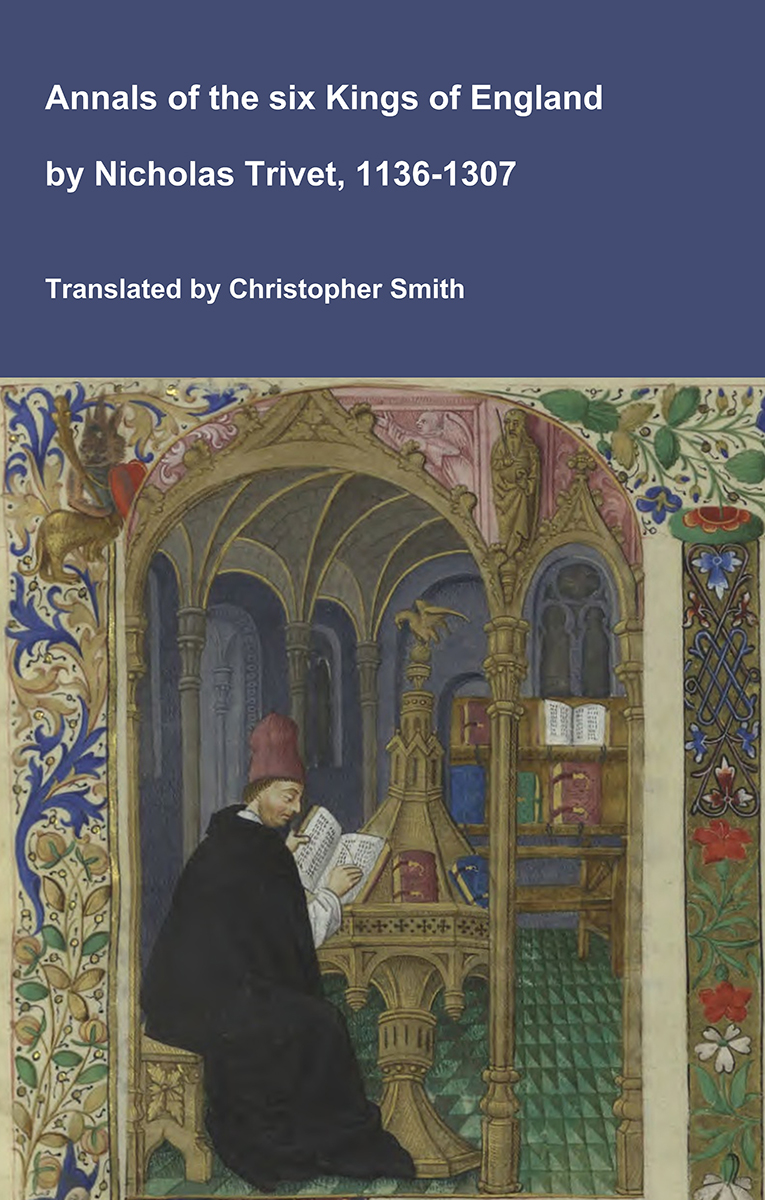
Annals of the six Kings of England by Nicholas Trivet
Translation of the Annals of the Six Kings of England by that traces the rise and rule of the Angevin aka Plantagenet dynasty from the mid-12th to early 14th century. Written by the Dominican scholar Nicholas Trivet, the work offers a vivid account of English history from the reign of King Stephen through to the death of King Edward I, blending political narrative with moral reflection. Covering the reigns of six monarchs—from Stephen to Edward I—the chronicle explores royal authority, rebellion, war, and the shifting balance between crown, church, and nobility. Trivet provides detailed insight into defining moments such as baronial conflicts, Anglo-French rivalry, and the consolidation of royal power under Edward I, whose reign he describes with particular immediacy. The Annals combines careful year-by-year reporting with thoughtful interpretation, presenting history not merely as a sequence of events but as a moral and political lesson. Ideal for readers interested in medieval history, kingship, and the origins of the English state, this chronicle remains a valuable and accessible window into the turbulent world of the Plantagenet kings.
Available at Amazon in eBook and Paperback format.
Henry Machyn's Diary 1563 is in Henry Machyn's Diary.
January 1563. The (blank) day of January ther was a Frenche mayd dwellyng in the Whytt frerers in Fletstrett she was delevered of a pratte [pretty] gyrlle, and after she brake the neke of the chyld, and cared yt in-to Holborn feld, and bered (it) undur a turffe; and ther was a man and a woman dyd folowe her, and saw wher she layd yt, and toke her, and browth her thedur, and mad her take yt up, and browth here to the altherman's depute, and he send her to the conter.
12th January 1563. [The xij day of January the Queen's second Parliament began to sit at Westminster, and the] lordes and byshopes rod in ther [parliament robes, and] the Quen('s) [aged 29] grase in cremesun welvett, [and the earl of] Northumburland [aged 35] bare the sword a-for the quen; [all the] haroldes of armes in ther cotte armurs, and all the trumpettes [blowing], and lythe at owre lade of Grace chapell, and they [went in]to the abbay, and ther was a sermon (by Nowell [aged 46], dean of Saint Paul's.)


29th January 1563. The xxix day of January was bered in sant [Olave's?] in the Jury my lade Dormer, late the wyff of ser Myghell Dormer [knyght], latt mare of London and merser and stapuller, .... and master doctur Dalle and ser Thomas her chaplen her sekturs [executors], and ther [were four] haroldes of armes, master Somersett, master Clarenshux [aged 53], Marshalle and Ry[chmond,] and the qwyre hangyd with blake and armes, and ther was .... the corse and hangyd with blake and armes, and then cam the corse [covered with a] palle of blake velvett with armes a-pon bokeram skochyons; [and there were] iij pennons of armes borne a-boutt the corse; and xxvj roset gownes for so many pore women, and a lx blake gownes and cottes; [and there] dyd pryche the vekar, callyd Busken, of the parryche; and a v dosen of skochyons of armes, and after to here plase to dener.
30th January 1563. The xxx day of January dyd ij women ryd a-bowtt London in a care; on for a common skold, with a dystaffe in her hand; the thodur with a whyt rod in here hand, with bluw hodes on ther hedes, for okuw-pye her owne gayre.
2nd February 1563. The ij day of Feybruary callyd Candyllmasse day ther was serten men whent to Duram plase and to sant Mare spyttyll to here masse, and ther was serten of them cared by the gard and othur men to the contur and odur plases.
7th February 1563. The vij day of Feybruary dyd pryche at Powlles crosse [Map] the byshope of Durram [aged 43], the sonday callyd Septuagesyma.
10th February 1563. The x day of Feybruary was browth a-bed within [the] Towre with a sune my lade Katheryn Harfford [aged 22], wyff to the yerle of Harfford [aged 23], and the god-fathers wher ij warders of the Towre, and ys name was callyd Thomas.


February 1563. The (blank) day of Feybruary was crystened at sant Androwes in the warderobe Gorge Bacun the sune of master Bacun sqwyre, sum-tyme serjant of the catre [Acatry] by quen Mare days; ys god-fathers wher yonge master Gorge Blakewelle and master Walpolle; godmodur mastores Sens Draper of Cammerell [Camberwell] be-yond Nuwhyngtun; and after grett chere.
February 1563. The .. day of Feybruary was mared at Allalows ... Davenett marchand-tayller unto master Sparke('s) dowther; .... of Wynchester mad the sermon at the marege, and after a grett dener, and at nyght a maske.
15th February 1563. The xv day of Feybruary cam rydyng to London [through Ch]epe unto Cold Harbard my yonge lord Talbott [aged 11] with iij skore [horse].
16th February 1563. The xvj day of Feybruary were ij men sett on the pelere at Westmynster, one master Thymbulbere and on (blank) Charnok for ...
17th February 1563. The xvij day of Feybruary was a dobull marege at [Baynard's] Castyll [Map] at the yerle of Pembroke('s) plase, my lord Talbot [aged 11] unto my lade (Anne) Harbard [aged 13], and my lord Harbard of Cardyff [aged 25] unto my lade [aged 13] the [eldest] syster unto my lord Talbot; and after was a grett denner as [has] bene sene, for iiij days, and evere nyght gret mummeres and m[asks.]
20th February 1563. The xx day of Feybruary was bered at sant Brydes in Flettstrett master Denham [deceased] sqwyre, and the chyrche ther was mad ray[led] and hangyd with blake and armes, and he was cared to the chyrche, a-for him a mornar bayryng a pennon of armes, and after cam a harold of armes bayryng ys cott armur, and then cam the corse with a palle of blake velvett with armes on yt, and iiij of ys men bare hym; and then the mornars, the cheyffe was ser Recherd Sakfeld, and a xx mo mornars; and the dene of Westmynster [aged 34] mad the sermon; and after ther was a grett dener of all maner of fysse; and a ij dosen of skochyons.
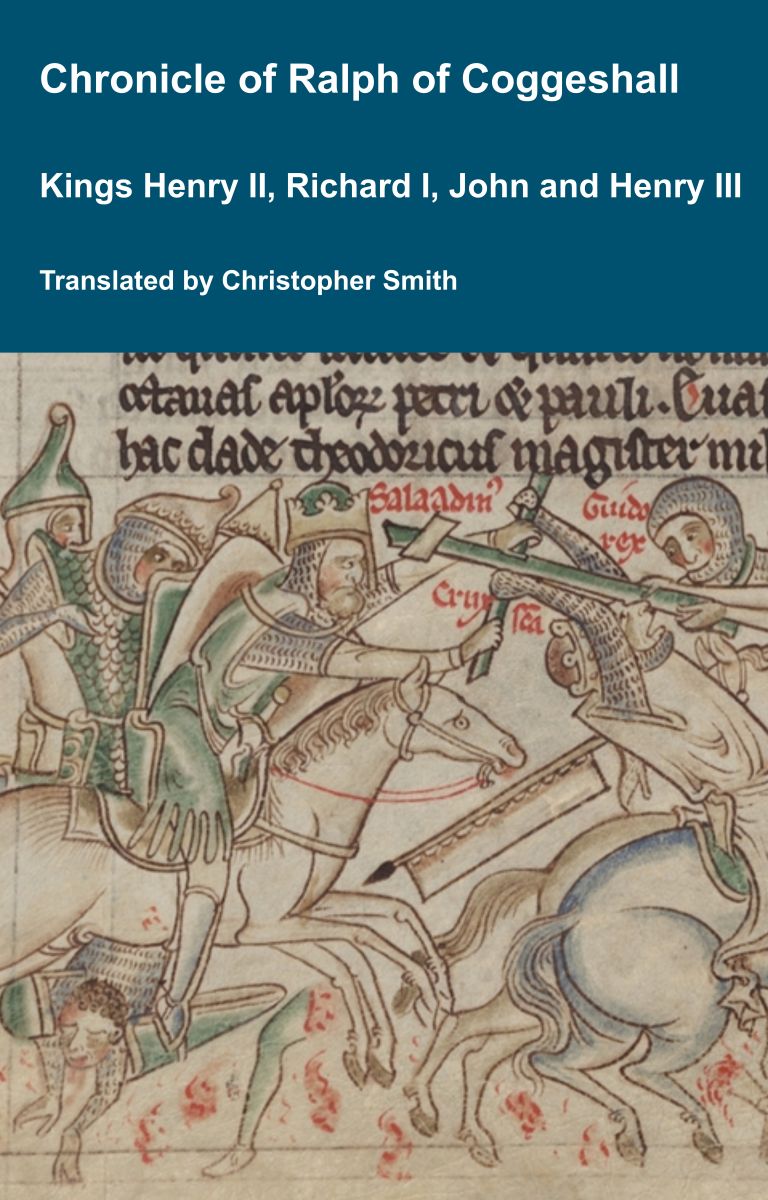
Chronicle of Abbot Ralph of Coggeshall
The Chronicle of Abbot Ralph of Coggeshall (Chronicon Anglicanum) is an indispensable medieval history that brings to life centuries of English and European affairs through the eyes of a learned Cistercian monk. Ralph of Coggeshall, abbot of the Abbey of Coggeshall in Essex in the early 13th century, continued and expanded his community’s chronicle, documenting events from the Norman Conquest of 1066 into the tumultuous reign of King Henry III. Blending eyewitness testimony, careful compilation, and the monastic commitment to record-keeping, this chronicle offers a rare narrative of political intrigue, royal power struggles, and social upheaval in England and beyond. Ralph’s work captures the reigns of pivotal figures such as Richard I and King John, providing invaluable insights into their characters, decisions, and the forces that shaped medieval rule. More than a simple annal, Chronicon Anglicanum conveys the texture of medieval life and governance, making it a rich source for scholars and readers fascinated by English history, monastic authorship, and the shaping of the medieval world.
Available at Amazon in eBook and Paperback format.
20th February 1563. The sam day was bered at my lord of Bedford('s) one master Sant John, with vj skochyons of armes of bokeram.
22nd February 1563. The xxij day of Feybruary, was Shroyff-monday, at Charyngcrosse [Map] ther was a man cared of iiij men, and a-for hym a bagpype playng, a shame and a drum playhyng, and a xx lynkes bornyng a-bowtt hym, because ys next neybor('s) wyff ded bett here hosband; ther-for yt (is) ordered that ys next naybor shall ryd a-bowtt the plase.... gayff xxiiij good gownes .... gayff a lx gowne and cottes of blake and .... worshephull men and women to bryng her; [and the] cheyrche was hangyd with blake and armes, ... skochyons of armes; and master Beycun mad the sermon; [and so] home to ys plase to dener.
February 1563. The ... day of Feybruary was cared by water unto the .... vj on master Foskue ... of the Poolles.
4th March 1563. The iiij day (of) Marche ther was a man's dowther dwellyng in sant James in Garlyke heyff, in the plase that w[as the] yerle of Wosetur('s) plase, she was delevered with a chyld, and after caste yt owt of a wyndow in-to Temes, and after Daker co ...
8th March 1563. The viij day of Marche wher hangyd at Tyburne [Map] x men; [one] was Brutun, and (blank) after browth bake to sant Pulkurs ther to be bered, and ther master Veron the vecar mad a sermon for them.
8th March 1563. The sam (day) mastores Bacun was chyrched at sant Androw's in warderobe, the wyff of master Bacun sergantt of the catre unto quen Mare, and after she whent home unto here father's howse master Blakwelle, and so she and a grett compene of gentyll women had a grett dener as cold be had as for lentt, as for fysse.
17th March 1563. The xvij day of Marche dyd on master Lynsey armorer dwellyng in Byshope-gatt strett dyd hang hym-seylff in a preve howse with-in ys hone howse, for he had ys offes taken away from hym by on that he had browth up.
17th March 1563. The sam day ther was a mad [maid] dwellyng in Hay lane with master Campyon berbruar [beer brewer] in grett Allalowes in Temes-strett dyd falle owt of a wyndow and brake her neke.
17th March 1563. The sam day at the Well with ij [2] bokettes in sant Martens [Map] ther was (a) woman dwellyng ther toke a pere of sherers for to have cutt here throwtt, butt she myssyd the pype in here syknes and madnes, and with a day after she ded and was bered ther in the parryche.... and to the Masselsay [Map] to the .... that he had a lysens for to kyll fl[esh.]
March 1563. [The .. ] day of Marche ther stod a man at Powlles [with a white] shett a-bowtt hym for gettyng ys owne dowther .., that after she ded.
Henrici Quinti, Angliæ Regis, Gesta, is a first-hand account of the Agincourt Campaign, and subsequent events to his death in 1422. The author of the first part was a Chaplain in King Henry's retinue who was present from King Henry's departure at Southampton in 1415, at the siege of Harfleur, the battle of Agincourt, and the celebrations on King Henry's return to London. The second part, by another writer, relates the events that took place including the negotiations at Troye, Henry's marriage and his death in 1422.
Available at Amazon in eBook and Paperback format.
21st March 1563. The xxj day of Marche dyd pryche at Powlles crosse [Map] the byshope of Wynchastur [aged 53], and mad a godly sermon.
22nd March 1563. The xxij day of Marche was mad for ser Wylliam Fuwilliam that ded in the tym of kyng Henre the viijth and was bered [in the county] of Northamtun, furst a nuw standard and a penon and armes, [coat] armur, elmett and mantyll, crest, targett, and sword; and the old tak[en away; the] crest a busse of fethers standyng with-in a crown of gold.
21st March 1563. The xxj day of Marche tydynges cam to the cowrt that on off the quen's shypes callyd the Grahond was lost gohyng to Nuwhavyn; the captayn was ser Thomas Fynche [deceased] knyghtt of Kent, and ys brodur and on of my lord Cobbam('s) brodur and ij of my lord Whentforth ('s) bredurne [John Wentworth [deceased] and James Wentworth [deceased]] and mony gentyll men and mynstorels; [one] of my lord of Warwyke('s) newys [nephews], and a good mastur; and mony [good] marenars and sawgears [soldiers] to the nombur of (blank)
26th March 1563. The xxvj day Marche was bered the good lade Chastur [at] Rayston, the wyff of ser Robartt Chastur knyght, with a pennon of armes and a iiij dosen of skochyons and a vj of bokeram, and the chyrche hangyd with blake and armes, and master Somersett was the harold; and ther was mony mornars in blake, and grett mon [moan] mad for her, and a sarmon, and a grett dolle of money, and mett and drynke, and after a grett dener.
29th March 1563. The xxix day of Marche was browthe from sant Savyour's late abbay in Barmsey-strett to be bered my good lade Lane the wyff of ser Robart Lane of Northamtunshyre, and was bered in sant Towllys in Sowthwarke [Map], and ded in chyld-bede; and with xx clarkes, and a-for the corse a xij of her servandes in blake cottes a-for here, and then cam serten gentyll-men mornars, and then cam the penon of armes borne by a gentyll-man, and then cam master Clarenshux [aged 53], and next the corse borne by vj women, and iiij gentyll-men mornars beyryng the iiij corners of the palle of blake velvett, and with armes, and after to the chyrche, and syngyng the clarkes; andt her dyd pryche master Coverdalle [aged 75].
March 1563. [The .. day of March was buried master David Woodroffe, alderman and haberd]asher [of London,] .... and I blake gownes and cottes and .... whent a-for hym and after a xx clarkes [with their surplices] a-pon ther armes, and next iiij althermen in [violet]; then cam a morner, beyryng hys pennon of ys [arms], a harold beyryng ys cotte armur, and next master Clarenshux [aged 53] [in his] cott armur kyng of armes, and next cam the corse covered with a pall of blake velvett and with armes hangyng of ytt, and vj [mourners] beyreng the corse, and next ij pennons borne on evere syd; [the chief] mornar master Voderoff ys eldest (son), and next master Stonhowse ys sune [in law, and a]nodur sune and a-nodur sune-elaw, and mony odur mornars, [to the] chyrche, and then mony women mornars; the iiij althermen [sir William] Garrett, ser Thomas Offeley [aged 63], ser Wylliam Chastur and master Cristoffer D[raper]; and (the) chyrche hangyd with blake and armes rond a-bowtt, andin .... the chyrche was raylles mad and hangyd with blake, [and] the strett hangyd with blake and armes, and the howse; and .... dyd pryche; and after they offered ys cott and pennon of armes, and all the mornars and the craft offered, and after [to his place] to dener.
31st March 1563. The xxx day of Marche in Kent master Marlow, a marchand [living] at Crayford, dyd ryd to ys farme a mylle off to loke [over it], and after ryd in-to the marche [marsh] a-pon the walle, and by mysf[ortune] fell of on ys horse, and ded for lake of help, for ther [was no]body with hym to help ym.
1st April 1563. The furst day of Aprell ther was a man dwellyng at the Bryghowse, on Chalenger a baker of the Bryg-howse; he was send for to the yeld-hall a-for my lord mayre [aged 54] and the althermen, and he was juged to go be-twyne ij of the off-ffesars of the hospetall to the bryg-howse, and a-for him was cared a fyne pelere by on of the hospetalle.
7th April 1563. The vii day of Aprell at sant Katheryns be-yond the Towre [Map] the wyff of the syne of the Rose a tavarne was set on the pelere for ettyng of rowe flesse [raw flesh] and rostyd boyth, and iiij women was sett in the stokes all nyght tyll ther hosbandes dyd feyche them hom.
April 1563. The (blank) day of Aprell cam serten of the consell to the Byshope('s) hed in Lumbardstrett.... ys fase toward the hors taylle .... hym and that he was taken for tellyng .... honest men of talle pellettes.
12th April 1563. The xij day of Aprell, was Ester monday, dyd pryche at sant Mare spyttyll master Horne [aged 53] the byshope of Wynchastur, and ther was my lord mare [aged 54] and the althermen in skarlett, and certen juges and serjantes of the law, and mony worshephulle men and women, and the masturs of the hospetall with ther gren stayffes in ther handes, [and the] chylderyne of the hospetall boyth boysse and wenchys in bluw [coats and] red capes [caps] to the nombur of a (blank), and ther was geydered at the sermon for the Frenche men [refugees] in-to England women and chylderyn the sum of xlv li.
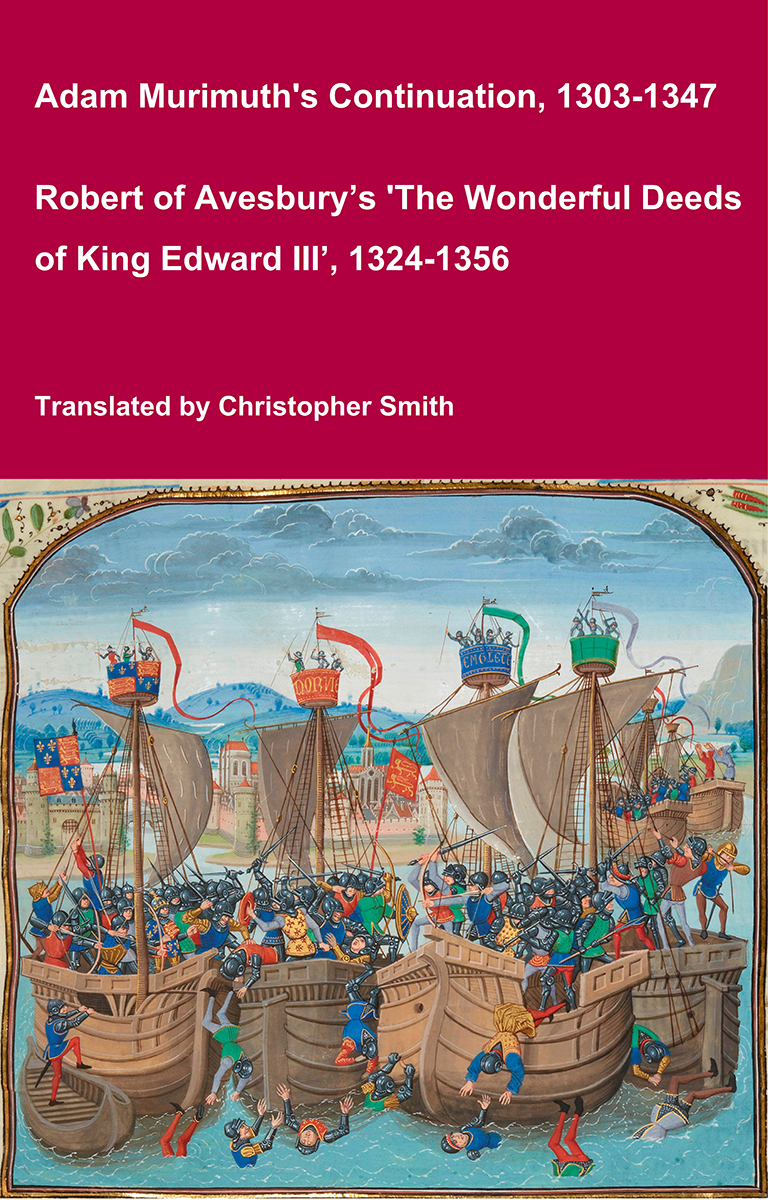
Adam Murimuth's Continuation and Robert of Avesbury’s 'The Wonderful Deeds of King Edward III'
This volume brings together two of the most important contemporary chronicles for the reign of Edward III and the opening phases of the Hundred Years’ War. Written in Latin by English clerical observers, these texts provide a vivid and authoritative window into the political, diplomatic, and military history of fourteenth-century England and its continental ambitions. Adam Murimuth Continuatio's Chronicarum continues an earlier chronicle into the mid-fourteenth century, offering concise but valuable notices on royal policy, foreign relations, and ecclesiastical affairs. Its annalistic structure makes it especially useful for establishing chronology and tracing the development of events year by year. Complementing it, Robert of Avesbury’s De gestis mirabilibus regis Edwardi tertii is a rich documentary chronicle preserving letters, treaties, and official records alongside narrative passages. It is an indispensable source for understanding Edward III’s claim to the French crown, the conduct of war, and the mechanisms of medieval diplomacy. Together, these works offer scholars, students, and enthusiasts a reliable and unembellished account of a transformative period in English and European history. Essential for anyone interested in medieval chronicles, the Hundred Years’ War, or the reign of Edward III.
Available at Amazon in eBook and Paperback format.
13th April 1563. The xiij day of Aprell dyd pryche at sant Mare spyttyll tuwysday in Ester weeke master Colle parsun of Hehenger in Essex and (dean elect) of Norwyche, and my lord mare [aged 54] and ij juges and the althermen and byshopes, with all the masturs of the hospetall and the chylderyn.
14th April 1563. The xiiij day of Aprell dyd pryche at the spyttylle the wedynsday the dene of Powlles [aged 46] in Ester wyke.
18th April 1563. The xviij day of Aprell dyd pryche at Powlles crosse [Map] master Bradley, and he declaryd the iij sermons that was prychyd at the spyttylle.

18th April 1563. The sam day at after-none was cristenyd my lord mayre's [aged 54] son; the godfathers wher, on [one] the yerle of Penbroke [aged 62], and (unfinished)
18th April 1563. The sam day in Sowthwarke was cristenyd the dowther of master Necolles, the god-father master Spryngham, the godmodurs my [lady] Garrett and my lade Bowyes, and after to the bryghe-howse to her father('s), and ther was a grett bankett at master Necolles plase.
22nd April 1563. The xxij day of Aprell, was sant Gorge's evyn, at v of the cloke the knyghtes of the Garter cam downe from the quen('s) chambur thrugh the halle to here chapell, and yt was strod with gren ryssys, [and all] the haroldes in ther cott armurs, master Perkullys, master Ruges-dragon, master Lanckaster, master Rychmond, and master Somersett, and master Norray [aged 65] and master Clarenshux [aged 53], master Garter [aged 53], and master dene, my lord of Hunsdon [aged 37], my lord Montyguw [aged 34], my lord Robartt [aged 30], my lord of Lughborow [aged 42], the yerle of Shrowsbere [aged 35], my lord admeralle [aged 51], my lord chamburlayn, the yerle of Ruttland [aged 36], the yerle of Darbe [aged 53], the marques of Northamtun [aged 51], the duke of Northfoke [aged 27], (the) yerle of Arundell [aged 50], and the yerle of Penbroke [aged 62], and so evere man to ys own plase in the chapell of ther owne sett.... cam a prosessyon up thrugh the halle to .... furst the serjant of the vestre with a sylver rod, [then the] chylderyn in ther surples, and then the qwyre sy[nging the English] prosessyon in copes of cloth of gold to the nombur of .... haroldes of armes and sergantes of armes, furst Ruges[croix and] Ruge-dragon, and then cam master Lonkastur and master Rychmond and master [Somerset;] furst my lord of Hunsdon, my lord Montyguw, my lord Robartt, my lord of Lowthborow, my lord admeralle, my lord chamburlayn, the yerle of Rutland, the yerle of [Shrewsbury,] the yerle of Darbe, the yerle of Penbroke, the marques of [Northampton,] the yerle of Arundell, the duke of Northfoke; and then [master Garter,] master Norres, the dene of the chapell, they iij in cremesun saten v[elvet;] and next the byshope of Wynchestur and ser Wylliam Peter in [robes of] cremesun velvett with red crosses on ther robes, and ser .... and the yerle of Northumberland bare the sword, and the(n) the [Queen] in her robe, and master Knolles bare the quen('s) trayn, and after ....
24th April 1563. The xxiiij day of Aprell was a proclamasyon by my [lord mayor [aged 54]] that no mylle-man shuld bryng nodur melle nor whet [from] May-day unto Myghellmas next, a-pon pene of (blank), tyll they had spentt the whett and rye that the cete [had made] provessyon for.
24th April 1563. The sam day was elected knyghtes of the Garter the yerle of Northumberland [aged 35] and the yerle of Warwyke [aged 33].
25th April 1563. The xxv day of Aprell ded master Chamley the recorder of Lo[ndon.]
30th April 1563. The xxx day of Aprelle was cared to berehyng from sant Margett in Lothbere unto sant Donstones in Whest [Map] master Chamley the recorder, and ther was a C [100] mornars in blake, and the swardbayrer, and my lord mare and dyvers althermen and the reseduw [...] vyolett, and a lx gowne to pore men; and sant Donstones cherche hangyd with blake and armes, and raylles mad for the body; and so they whentt throughe Chep-syd, and so to Nuwgat, and so up Flett strett to sant Donstones, furst ij porters in blake, and then the pore men, and then serten mornars, and on bayryng ys baner of armes, and then ij haroldes of armes, and on ys cot beyryng, and then cam the corse with a pall of blake velvett and with armes, and then cam ij mornars baryng ij pennons of armes, and then the mornars cam, ser Thomas Lee, ser Wylliam Garrett, ser Thomas Offeley [aged 63], master John Whytt, and after my lord mayre; and after ij C. of the yn of the cortes to the chyrche, and a xx of clarkes syngyng; and master Goodman [aged 34] mad the sermon; and after to the plase to dener, for ther was the grettyst dener that ever I sawe.... strett, and he gayff for ys .... of rattes coller unto xxx pore men, and .... chyrche was hangyd with blake and armes ... the mornars and the corse hangyd with blake and armes ... furst whent the pore men, then cam a mornar beyryng a pennon of armes, and next a harold beyryng ys cote armur, and then cam the corse with a pall of blake velvett and with [arms, and] then the clarkes metyng the corse, and then cam master ... cheyff mornar, and dyvers odur mornars; and the dene of Westmynster mad the sermon.
5th May 1563. The v day of May was bered at Powlles ser Peter .... sum-tym Popes collectur and prebendare of Powlles; master Sercotte was ys sectur; with a ij dosen of skochyons, .. master (blank) mad the sermon, and bered a-for wher that the postulles mas [apostles mass] was keptt and songe.
10th May 1563. The x day of May was cared to be bered from Chanell row unto sant Margattes at Westmynster [Map] ser James Stumpe knyght, with ij haroldes of armes, one beyryng ys helmet and crest, and master Somersett beyryng ys cote armur; furst pore men whent a-for a mornars, and then a clarke syngyng, and next a mornar beyryng ys standard and anodur ys pennon of armes, and then the haroldes, and then cam the corse with a pall of blake velvett a-pon hym, and with armes, and a herse for the body hangyd with blake and armes, and the chyrche hangyd.
May 1563. The (blank) day of May was mad for on master Gyfford [aged 40] of Northamtunshyre sqwyre a pennon and a cote of armur and a ij dosen of armes.
May 1563. The (blank) day of May was mayd for a gentyllman of Dovre ys nam (blank) the wyche he was drownyd at Rye [going] with ser Thomas Fynche; he had a pennon of armes and a cote armur and a dosen of skochyons.
11th May 1563. The xj day of May was a fyre in Barbykan at my lade Suffoke's plase be-syd the Red-crosse strett, by a Frenche man that kept the plase-a part bornyd.
Anne Boleyn. Her Life as told by Lancelot de Carle's 1536 Letter.
In 1536, two weeks after the execution of Anne Boleyn, her brother George and four others, Lancelot du Carle, wrote an extraordinary letter that described Anne's life, and her trial and execution, to which he was a witness. This book presents a new translation of that letter, with additional material from other contemporary sources such as Letters, Hall's and Wriothesley's Chronicles, the pamphlets of Wynkyn the Worde, the Memorial of George Constantyne, the Portuguese Letter and the Baga de Secrets, all of which are provided in Appendices.
Available at Amazon in eBook and Paperback format.
23rd May 1563. The xxiij day of May .... lord the duke of Northfoke [aged 27] was .... vycont Montyguw [aged 34] and my lord of Luthborow [aged 42] .... and the yerle of Northumberland [aged 35] and the yerle of [Warwick] [aged 33] stallyd knyghtes of the Garter; and ser Henry Sydney [aged 34] was depute for the yerle of Warwyke, and he bare ys hode and ys coller of the garter a-pone ys arme.


29th May 1563. The xxix day of May be-twyn iij and iiij a[fter noon] came a grett clape of thondur and after a grett [rain] that yt rane in-to many men's howses, [and lasted] tylle nyght.
3rd June 1563. The iij day of June was bered in sant James [Garlick-hithe?] master Coldwell gentyllman and a laer [lawyer] with halff a [dozen] skochyons of bokeram, and ther was a x mornars .... and women, and ther was a xij clarkes syngyng .... ded of a laske; and master Beycon mad the sermon.
10th June 1563. The x day of June was a degre [decree] mayd a-for my lord [the duke] of Northfoke [aged 27], and master Garter [aged 53] and master Clarenshux [aged 53] and master Norrey [aged 65], that master Garter have the berehyng of all knyghtes of the Garter and all yerles and ther [wives] and all lordes and ther wyffes and vyconttes.

10th June 1563. The sam day ded my lord Pagett [aged 57] at Draytun.
13th June 1563. The xiij day of June by a stylle the fyre had taken hold of a pese of tymber; yf that ther had not bene good helpe yt had done myche hurt, for yt was a-monge the drapers in Watlyngstrett be-syd Bowe lane.
14th June 1563. The xiiij day of June the Quen('s) [aged 29] grace removyd from Whythall by water toward Grenwyche [Map], and a-bowt Ratclyff [Map] and Lymhowse [Map] capten Stukely dyd shuwe here grace the pleysur that cold be on the water with shuttyng of gones after lyke warle with plahhyng of drumes and trum[pets.]
June 1563. [The . day of June was the funeral of the lord Paget [aged 57]] .... with a standard and a grett banar .... banar-rolles of armes and a cott armur .... garter, helme, and crest, and mantylles and sword .... dosen of skochyons, and a iiij dosen of penselles [about the] herse.
16th June 1563. The xvj day of June dyd ryd in a care [to the] yeld-hall [Map] docthur Langton the phesyssyon in a g[own] of damaske lynyd with velvett and a cott of velvett .... and a cape [cap] of velvett, and he had pynd a bluw ho[od on] ys cape, and so cam thrugh Chepe-syd on the market [day,] and so a-bowtt London, for was taken with ij wenchys yonge a-tones.
19th June 1563. The xix day of June yt raynyd swett showrs tyll x of the cloke.
19th June 1563. The sam day in the mornyng ther was sett on dyvers chyrche dorres, be-cause that he sayd that they dyd not ryng when that the quen whent to Grenwyche, and that they shuld not open the chyrche dors tyll that he had a nobull on evere chyrche by the water syde from Tempull bare unto the Towre, but he cold gett no thyng yett.
26th June 1563. The xxvj day of June ther was taken in Dystaffe lane the persun of Abchyrche be-syd London stone .... he havyng a wyff, and wher that he la a-bowtt .... have hys pleasur on her, and offered her serten money, and the plase [ap-] ponted, and she mad her fryndes [aware] of yt, and so they stod in a plases tyll he had mad .... off with gowne and jakett, and downe with hosse .... whether that any .... that the curett and the chyrche wardens .... howse wher the plage [plague] shall hapen .... they .... that they shall not come to the chyrche for the spase.... next folohyng after that the plage has bene, and so [a cross was] sett at evere dore of bluw and a wrytyng un[der] ....
5th July 1563. The v day of July ded master Ellys Oggraffe of Lan .... Harfordshyre sqwyre, and bered the x day of July.
9th July 1563. The ix day of July cam a commondementt .... that evere man in evere strett and lane for to ma[ke fires] iij tymes in the weke for to have the ere opon .... sese the plage [plague] in the cete, and yff ytt plese God so .... so to contenew the fyre in evere strett and lane [every] Wedynsday and Fryday.
8th July 1563. The viij day of July cam a commondementt that [all] halles of craftes in London shuld fynd to the iiij .... in alle the hast that may be, for to goo to Porthm [outh] in all the sped that may.
13th July 1563. The xiij day of July master Clarenshux [aged 53] rod toward Suffoke a-pon ys vesytassyon [visitation] of ys offes.
16th July 1563. The xvj day of July was bered in the parryche of saynt Step[hen's by] London stone master Berre sqwyre and draper and marchand of the stapull, [with a] harold of armes, and he had a cott armur and a penon .... of skochyons of armes, and ys plase was hangyd with blake .... the cherche hangyd with blake and armes, and [there were] all the craft in ther leverey; ser Wylliam Ch[ester] [aged 54] cheyff mornar, and master Argall next, and master John Bere, [and then the] corse with a pall of blake velvett and mony .... mad the sermon, and all dune to the plase [to dinner, for there was a] grett dener.... bered in lytyl Allalows .... master Crolley [aged 46] mad the [sermon] ....
July 1563. The .. day of July was on (blank) Penred [that had a] chyld to lerne, and for a sm[all fault did] bett [beat] hym so [severely] with a leden gyrdyll with bu[ckles, that he left] no skyne [on his] body and .... almost pu .... ys master was sett on the pelere and wypyd with [... that his] blude ran downe, and with that my lord mare [aged 54] [passed] thrughe Chepe-syd the boye was sett on the pelere, [and his c]oatt was taken of ys body that my lord and all the [people] myght see how that he was beyten, the petest [piteous] [sight to] se at any tyme.
July 1563. The sam tym was a proclamassyon mad that [no] Englys man so-mever he was had lyberte to take [no] Frenche man by water and by lande, and to take shyp[s, mon]aye and goodes, and the men to ransum; and at after-none wen ... e that cold take one, they that wold myght have hym.
The History of William Marshal was commissioned by his son shortly after William’s death in 1219 to celebrate the Marshal’s remarkable life; it is an authentic, contemporary voice. The manuscript was discovered in 1861 by French historian Paul Meyer. Meyer published the manuscript in its original Anglo-French in 1891 in two books. This book is a line by line translation of the first of Meyer’s books; lines 1-10152. Book 1 of the History begins in 1139 and ends in 1194. It describes the events of the Anarchy, the role of William’s father John, John’s marriages, William’s childhood, his role as a hostage at the siege of Newbury, his injury and imprisonment in Poitou where he met Eleanor of Aquitaine and his life as a knight errant. It continues with the accusation against him of an improper relationship with Margaret, wife of Henry the Young King, his exile, and return, the death of Henry the Young King, the rebellion of Richard, the future King Richard I, war with France, the death of King Henry II, and the capture of King Richard, and the rebellion of John, the future King John. It ends with the release of King Richard and the death of John Marshal.
Available at Amazon in eBook and Paperback format.
31st July 1563. The xxxj day of July was a-nodur proclamassyon that no man shuldmedyll with no Frenchman, nodur with no in-bas [sador] nor ys servandes, nor fre-denesun [free denizen].
3rd August 1563. The iij day of August was a-nodur proclamassyon .... who shuld not medyll with no Frenche man.
4th August 1563. The iiij day of August was a-nodur proclamassyon [from] my lord mare [aged 54] that ther ys on [one] man hyred [to kill] doges as many as he cane fynd in the stretts, and has a fee for loke every day and nyght.
28th July 1563. The xxviij day of July was the great news that Newhaveyn by owr men and the Frenchmen .... mony a man slayne ther.
3rd August 1563. The iij day of August owr .... Porthmowth and so evere da ....
August 1563. The viij day .... mares of London .... late shreyff .... Palmer la .... late ....
pastes, head-dresses for brides 240. "Paste for a lady or woman, unes paces." Palsgrave. Parishes kept "pastes" to let out at weddings, as they did the herse-cloths for funerals: and the customary charge made at St. Margaret's Westminster in the reigns of Edward VI. and Mary was xijd. In the inventory of the churchgoods of that parish in 1564, occurs, "Cerclet for brydes. Item, one past for brydes sett with perle and stone." But at this time its use seems to have been discontinued, as no such receipts occur as before.