

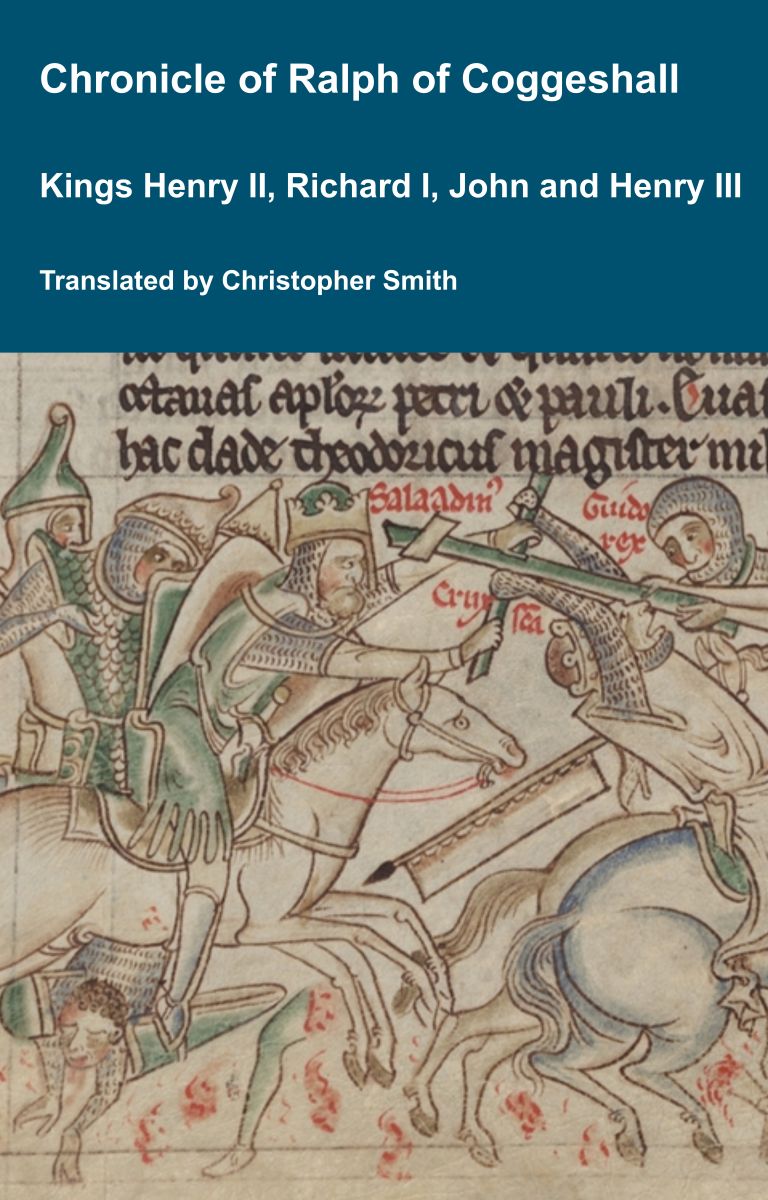
Chronicle of Abbot Ralph of Coggeshall
The Chronicle of Abbot Ralph of Coggeshall (Chronicon Anglicanum) is an indispensable medieval history that brings to life centuries of English and European affairs through the eyes of a learned Cistercian monk. Ralph of Coggeshall, abbot of the Abbey of Coggeshall in Essex in the early 13th century, continued and expanded his community’s chronicle, documenting events from the Norman Conquest of 1066 into the tumultuous reign of King Henry III. Blending eyewitness testimony, careful compilation, and the monastic commitment to record-keeping, this chronicle offers a rare narrative of political intrigue, royal power struggles, and social upheaval in England and beyond. Ralph’s work captures the reigns of pivotal figures such as Richard I and King John, providing invaluable insights into their characters, decisions, and the forces that shaped medieval rule. More than a simple annal, Chronicon Anglicanum conveys the texture of medieval life and governance, making it a rich source for scholars and readers fascinated by English history, monastic authorship, and the shaping of the medieval world.
Available at Amazon in eBook and Paperback format.
 John Evelyn's Diary January 1679
 Whitehall Palace
 John Evelyn's Diary July 1679
 Hyde Park
 Windsor, Berkshire
 Eton College
 Cliveden, Buckinghamshire
 John Evelyn's Diary October 1679
 John Evelyn's Diary November 1679
 St Margaret's Church, Westminster
 John Evelyn's Diary December 1679
John Evelyn's Diary 1679 is in John Evelyn's Diary 1670s.
15th January 1679. I went with my Lady Sunderland [aged 33] to Chelsea, and dined with the Countess of Bristol [aged 59] [her mother] in the great house, formerly the Duke of Buckingham's, a spacious and excellent place for the extent of ground and situation in a good air. The house is large but ill-contrived, though my Lord of Bristol, who purchased it after he sold Wimbledon to my Lord Treasurer [aged 46], expended much money on it. There were divers pictures of Titian and Vandyke, and some of Bassano, very excellent, especially an Adonis and Venus, a Duke of Venice, a butcher in his shambles selling meat to a Swiss; and of Vandyke, my Lord of Bristol's picture, with the Earl of Bedford's at length, in the same table. There was in the garden a rare collection of orange trees, of which she was pleased to bestow some upon me.



16th January 1679. I supped this night with Mr. Secretary at one Mr. Houblon's [aged 49], a French merchant, who had his house furnished en Prince, and gave us a splendid entertainment.
25th January 1679. The Long Parliament, which had sat ever since the Restoration, was dissolved by persuasion of the Lord Treasurer [aged 46], though divers of them were believed to be his pensioner. At this, all the politicians were at a stand, they being very eager in pursuit of the late plot of the Papists.
30th January 1679. Dr. Cudworth [aged 62] preached before the King [aged 48] at Whitehall [Map], on 2 Timothy iii. 5, reckoning up the perils of the last times, in which, among other wickedness, treasons should be one of the greatest, applying it to the occasion, as committed under a form of reformation and godliness; concluding that the prophecy did intend more particularly the present age, as one of the last times; the sins there enumerated, more abundantly reigning than ever.
4th February 1679. Dr. Pierce, Dean of Salisbury, preached on 1 John, iv. 1, "Try the Spirits, there being so many delusory ones gone forth of late into the world"; he inveighed against the pernicious doctrines of Mr. Hobbes.
4th February 1679. My brother Evelyn, was now chosen Knight for the County of Surrey, carrying it against my Lord Longford and Sir Adam Brown, of Bechworth Castle. The country coming in to give him their suffrages were so many, that I believe they ate and drank him out near £2,000, by a most abominable custom.
1st April 1679. My friend, Mr. Godolphin [aged 33], was now made one of the Lords Commissioners of the Treasury, and of the Privy Council.
4th April 1679. The Bishop of Gloucester preached in a manner very like Bishop Andrews, full of divisions, and scholastical, and that with much quickness. The Holy Communion followed.
20th April 1679. Easter day. Our vicar preached exceedingly well on 1 Cor. v. 7. The Holy Communion followed, at which I and my daughter, Mary [aged 14] (now about fourteen years old), received for the first time. The Lord Jesus continue his grace unto her, and improve this blessed beginning!
24th April 1679. The Duke of York [aged 45], voted against by the Commons for his recusancy, went over to Flanders; which made much discourse.


4th June 1679. I dined with Mr. Pepys [aged 46] in the Tower of London [Map], he having been committed by the House of Commons for misdemeanors in the Admiralty when he was secretary; I believe he was unjustly charged. Here I saluted my Lords Stafford [aged 64] and Petre [aged 53], who were committed for the Popish plot.


Henrici Quinti, Angliæ Regis, Gesta, is a first-hand account of the Agincourt Campaign, and subsequent events to his death in 1422. The author of the first part was a Chaplain in King Henry's retinue who was present from King Henry's departure at Southampton in 1415, at the siege of Harfleur, the battle of Agincourt, and the celebrations on King Henry's return to London. The second part, by another writer, relates the events that took place including the negotiations at Troye, Henry's marriage and his death in 1422.
Available at Amazon in eBook and Paperback format.
7th June 1679. I saw the magnificent cavalcade and entry of the Portugal Ambassador [aged 53].
17th June 1679. I was godfather to a son of Sir Christopher Wren [aged 55], surveyor of his Majesty's [aged 49] buildings, that most excellent and learned person, with Sir William Fermor [aged 30], and my Lady Viscountess Newport, wife of the Treasurer of the Household [aged 59].


17th June 1679. Thence to Chelsea, to Sir Stephen Fox [aged 52], and my lady, in order to the purchase of the Countess of Bristol's [aged 59] house there, which she desired me to procure a chapman for.

19th June 1679. I dined at Sir Robert Clayton's [aged 50] with Sir Robert Viner [aged 48], the great banker.
22nd June 1679. There were now divers Jesuits executed about the plot, and a rebellion in Scotland of the fanatics, so that there was a sad prospect of public affairs.
25th June 1679. The new Commissioners of the Admiralty came to visit me, viz, Sir Henry Capell [aged 41], brother to the Earl of Essex [aged 47], Mr. Finch [aged 31], eldest son to the Lord Chancellor [aged 57], Sir Humphry Winch [aged 57], Sir Thomas Meeres [aged 45], Mr. Hales, with some of the Commissioners of the Navy. I went with them to London.


1st July 1679. I dined at Sir William Godolphin's [aged 39], and with that learned gentleman went to take the air in Hyde Park [Map], where was a glorious cortège.
6th July 1679. Now were there papers, speeches, and libels, publicly cried in the streets against the Dukes of York [aged 45] and Lauderdale [aged 63], etc., obnoxious to the Parliament, with too much and indeed too shameful a liberty; but the people and Parliament had gotten head by reason of the vices of the great ones.


6th July 1679. There was now brought up to London a child, son of one Mr. Wotton, formerly amanuensis to Dr. Andrews, Bishop of Winton, who both read and perfectly understood Hebrew, Greek, Latin, Arabic, Syriac, and most of the modern languages; disputed in divinity, law, and all the sciences; was skillful in history, both ecclesiastical and profane; in politics; in a word, so universally and solidly learned at eleven years of age, that he was looked on as a miracle. Dr. Lloyd [aged 42], one of the most deeply learned divines of this nation in all sorts of literature, with Dr. Burnet [aged 35], who had severely examined him, came away astonished, and they told me they did not believe there had the like appeared in the world. He had only been instructed by his father, who being himself a learned person, confessed that his son knew all that he himself knew. But, what was more admirable than his vast memory, was his judgment and invention, he being tried with divers hard questions, which required maturity of thought and experience. He was also dexterous in chronology, antiquities, mathematics. In sum, an intellectus universalis, beyond all that we read of Picus Mirandula, and other precocious wits, and yet withal a very humble child.


14th July 1679. I went to see how things stood at Parson's Green, my Lady Viscountess Mordaunt (now sick in Paris [Map], whither she went for health) having made me a trustee for her children, an office I could not refuse to this most excellent, pious, and virtuous lady, my long acquaintance.
The History of William Marshal was commissioned by his son shortly after William’s death in 1219 to celebrate the Marshal’s remarkable life; it is an authentic, contemporary voice. The manuscript was discovered in 1861 by French historian Paul Meyer. Meyer published the manuscript in its original Anglo-French in 1891 in two books. This book is a line by line translation of the first of Meyer’s books; lines 1-10152. Book 1 of the History begins in 1139 and ends in 1194. It describes the events of the Anarchy, the role of William’s father John, John’s marriages, William’s childhood, his role as a hostage at the siege of Newbury, his injury and imprisonment in Poitou where he met Eleanor of Aquitaine and his life as a knight errant. It continues with the accusation against him of an improper relationship with Margaret, wife of Henry the Young King, his exile, and return, the death of Henry the Young King, the rebellion of Richard, the future King Richard I, war with France, the death of King Henry II, and the capture of King Richard, and the rebellion of John, the future King John. It ends with the release of King Richard and the death of John Marshal.
Available at Amazon in eBook and Paperback format.
15th July 1679. I dined with Mr. Sidney Godolphin [aged 34], now one of the Lords Commissioners of the Treasury.
18th July 1679. I went early to the Old Bailey Sessions House, to the famous trial of Sir George Wakeman, one of the Queen's [aged 40] physicians, and three Benedictine monks; the first (whom I was well acquainted with, and take to be a worthy gentleman abhorring such a fact), for intending to poison the King [aged 49]; the others as accomplices to carry on the plot, to subvert the government, and introduce Popery. The bench was crowded with the judges, Lord Mayor justices, and innumerable spectators. The chief accusers, Dr. Oates [aged 29] (as he called himself), and one Bedlow, a man of inferior note. Their testimonies were not so pregnant, and I fear much of it from hearsay, but swearing positively to some particulars, which drew suspicion upon their truth; nor did circumstances so agree, as to give either the bench or jury so entire satisfaction as was expected. After, therefore, a long and tedious trial of nine hours, the jury brought them in not guilty, to the extraordinary triumph of the Papists, and without sufficient disadvantage and reflections on witnesses, especially Oates and Bedlow.
18th July 1679. This was a happy day for the lords in the Tower, who, expecting their trial, had this gone against the prisoners at the bar, would all have been in the utmost hazard. For my part, I look on Oates [aged 29] as a vain, insolent man, puffed up with the favour of the Commons for having discovered something really true, more especially as detecting the dangerous intrigue of Coleman, proved out of his own letters, and of a general design which the Jesuited party of the Papists ever had and still have, to ruin the Church of England; but that he was trusted with those great secrets he pretended, or had any solid ground for what he accused divers noblemen of, I have many reasons to induce my contrary belief. That among so many commissions as he affirmed to have delivered to them from P. Oliva and the Pope,-he who made no scruple of opening all other papers, letters, and secrets, should not only not open any of those pretended commissions, but not so much as take any copy or witness of any one of them, is almost miraculous. But the Commons (some leading persons I mean of them) had so exalted him that they took all he said for Gospel, and without more ado ruined all whom he named to be conspirators; nor did he spare whoever came in his way. But, indeed, the murder of Sir Edmundbury Godfrey [aged 57], suspected to have been compassed by the Jesuits' party for his intimacy with Coleman (a busy person whom I also knew), and the fear they had that he was able to have discovered things to their prejudice, did so exasperate not only the Commons, but all the nation, that much of these sharpnesses against the more honest Roman Catholics who lived peaceably, is to be imputed to that horrid fact.
18th July 1679. The sessions ended, I dined or rather supped (so late it was) with the judges in the large room annexed to the place, and so returned home. Though it was not my custom or delight to be often present at any capital trials, we having them commonly so exactly published by those who take them in short-hand, yet I was inclined to be at this signal one, that by the ocular view of the carriages and other circumstances of the managers and parties concerned, I might inform myself, and regulate my opinion of a cause that had so alarmed the whole nation.
22nd July 1679. Dined at Clapham, Surrey, at Sir D. Gauden's; went thence with him to Windsor, Berkshire [Map], to assist him in a business with his Majesty [aged 49]. I lay that night at Eton College [Map], the Provost's lodgings (Dr. Craddock), where I was courteously entertained.
23rd July 1679. To Court: after dinner, I visited that excellent painter, Verrio [aged 43], whose works in fresco in the King's [aged 49] palace, at Windsor, Berkshire [Map], will celebrate his name as long as those walls last. He showed us his pretty garden, choice flowers, and curiosities, he himself being a skillful gardener.
23rd July 1679. I went to Clifden [Map], that stupendous natural rock, wood, and prospect, of the Duke of Buckingham's [aged 51], and buildings of extraordinary expense. The grots in the chalky rocks are pretty: it is a romantic object, and the place altogether answers the most poetical description that can be made of solitude, precipice, prospect, or whatever can contribute to a thing so very like their imaginations. The stand, somewhat like Frascati as to its front, and on the platform is a circular view to the utmost verge of the horizon, which, with the serpenting of the Thames, is admirable. The staircase is for its materials singular; the cloisters, descents, gardens, and avenue through the wood, august and stately; but the land all about wretchedly barren, and producing nothing but fern. Indeed, as I told his Majesty [aged 49] that evening (asking me how I liked Clifden) without flattery, that it did not please me so well as Windsor, Berkshire [Map] for the prospect and park, which is without compare; there being but one only opening, and that narrow, which led one to any variety; whereas that of Windsor is everywhere great and unconfined.


23rd July 1679. Returning, I called at my cousin Evelyn's, who has a very pretty seat in the forest, two miles by hither Clifden [Map], on a flat, with gardens exquisitely kept, though large, and the house a staunch good old building, and what was singular, some of the rooms floored dove tail-wise without a nail, exactly close. One of the closets is pargeted with plain deal, set in diamond, exceeding staunch and pretty.
7th August 1679. Dined at the Sheriff's, when, the Company of Drapers and their wives being invited, there was a sumptuous entertainment, according to the forms of the city, with music, etc., comparable to any prince's service in Europe.
8th August 1679. I went this morning to show my Lord Chamberlain [aged 61], his Lady [aged 45], and the Duchess of Grafton [aged 11], the incomparable work of Mr. Gibbon [aged 31], the carver, whom I first recommended to his Majesty [aged 49], his house being furnished like a cabinet, not only with his own work, but divers excellent paintings of the best hands. Thence, to Sir Stephen Fox's [aged 52], where we spent the day.


31st August 1679. After evening service, to see a neighbour, one Mr. Bohun, related to my son's [aged 24] late tutor of that name, a rich Spanish merchant, living in a neat place, which he has adorned with many curiosities, especially several carvings of Mr. Gibbons [aged 31], and some pictures by Streeter.
Chronicle of Walter of Guisborough
A canon regular of the Augustinian Guisborough Priory, Yorkshire, formerly known as The Chronicle of Walter of Hemingburgh, describes the period from 1066 to 1346. Before 1274 the Chronicle is based on other works. Thereafter, the Chronicle is original, and a remarkable source for the events of the time. This book provides a translation of the Chronicle from that date. The Latin source for our translation is the 1849 work edited by Hans Claude Hamilton. Hamilton, in his preface, says: 'In the present work we behold perhaps one of the finest samples of our early chronicles, both as regards the value of the events recorded, and the correctness with which they are detailed; Nor will the pleasing style of composition be lightly passed over by those capable of seeing reflected from it the tokens of a vigorous and cultivated mind, and a favourable specimen of the learning and taste of the age in which it was framed.'
Available at Amazon in eBook and Paperback format.
13th September 1679. To Windsor, Berkshire [Map], to congratulate his Majesty [aged 49] on his recovery; I kissed the Duke's [aged 45] hand, now lately returned from Flanders to visit his brother the King, on which there were various bold and foolish discourses, the Duke of Monmouth [aged 30] being sent away.

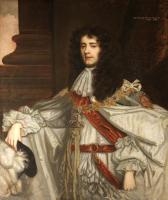
19th September 1679. My Lord Sunderland [aged 38], one of the principal Secretaries of State, invited me to dinner, where was the King's [aged 49] natural son, the Earl of Plymouth [aged 22], the Earl of Shrewsbury [aged 19], Earl of Essex [aged 47], Earl of Mulgrave [aged 31], Mr. Hyde, and Mr. Godolphin [aged 34]. After dinner I went to prayers at Eton College [Map], and visited Mr. Henry Godolphin [aged 31], fellow there, and Dr. Craddock.


25th September 1679. Mr. Slingsby [aged 58] and Signor Verrio [aged 43] came to dine with me, to whom I gave China oranges off my own trees, as good, I think, as were ever eaten.
6th October 1679. A very wet and sickly season.
23rd October 1679. Dined at my Lord Chamberlain's [aged 61], the King [aged 49] being now newly returned from his Newmarket, Suffolk recreations.
4th November 1679. Dined at the Lord Mayor's [aged 50]; and, in the evening, went to the funeral of my pious, dear, and ancient learned friend, Dr. Jasper Needham, who was buried at St Bride's Church, Fleet Street. He was a true and holy Christian, and one who loved me with great affection. Dr. Dove preached with an eulogy due to his memory. I lost in this person one of my dearest remaining sincere friends.
5th November 1679. I was invited to dine at my Lord Teviotdale's, a Scotch Earl, a learned and knowing nobleman. We afterward went to see Mr. Montague's new palace near Bloomsbury, built by our curator, Mr. Hooke [aged 44], somewhat after the French; it was most nobly furnished, and a fine, but too much exposed garden.
6th November 1679. Dined at the Countess of Sunderland's [aged 33], and was this evening at the remarriage of the Duchess of Grafton [aged 11] to the Duke [aged 16] his Majesty's [aged 49] natural son), she being now twelve years old. The ceremony was performed in my Lord Chamberlain's [aged 61] (her father's) lodgings at Whitehall by the Bishop of Rochester [aged 54], his Majesty being present. A sudden and unexpected thing, when everybody believed the first marriage would have come to nothing; but, the measure being determined, I was privately invited by my Lady [aged 45], her mother, to be present. I confess I could give her little joy, and so I plainly told her, but she said the King would have it so, and there was no going back. This sweetest, most hopeful, most beautiful, child, and most virtuous, too, was sacrificed to a boy that had been rudely bred, without anything to encourage them but his Majesty's pleasure. I pray God the sweet child find it to her advantage, who, if my augury deceive me not, will in a few years be such a paragon as were fit to make the wife of the greatest Prince in Europe! I staid supper, where his Majesty sat between the Duchess of Cleveland [aged 38] (the mother of the Duke of Grafton) and the sweet Duchess the bride; there were several great persons and ladies, without pomp. My love to my Lord Arlington's family, and the sweet child made me behold all this with regret, though as the Duke of Grafton affects the sea, to which I find his father intends to use him, he may emerge a plain, useful and robust officer: and were he polished, a tolerable person; for he is exceedingly handsome, by far surpassing any of the King's other natural issue.
8th November 1679. At Sir Stephen Fox's [aged 52], and was agreeing for the Countess of Bristol's [aged 59] house at Chelsea, within £500.
18th November 1679. I dined at my Lord Mayor's [aged 50], being desired by the Countess of Sunderland [aged 33] to carry her thither on a solemn day, that she might see the pomp and ceremony of this Prince of Citizens, there never having been any, who for the stateliness of his palace, prodigious feasting, and magnificence, exceeded him. This Lord Mayor's acquaintance had been from the time of his being apprentice to one Mr. Abbot, his uncle [Note. His mother's brother], who being a scrivener, and an honest worthy man, one who was condemned to die at the beginning of the troubles forty years past, as concerned in the commission of array for King Charles I had escaped with his life; I often used his assistance in money matters. Robert Clayton, then a boy, his nephew, became, after his uncle Abbot's death, so prodigiously rich and opulent, that he was reckoned one of the wealthiest citizens. He married a free-hearted woman, who became his hospitable disposition; and having no children, with the accession of his partner and fellow apprentice, who also left him his estate, he grew excessively rich. He was a discreet magistrate, and though envied, I think without much cause. Some believed him guilty of hard dealing, especially with the Duke of Buckingham [aged 51], much of whose estate he had swallowed, but I never saw any ill by him, considering the trade he was of. The reputation and known integrity of his uncle, Abbot, brought all the royal party to him, by which he got not only great credit, but vast wealth, so as he passed this office with infinite magnificence and honor.
20th November 1679. I dined with Mr. Slingsby [aged 58], Master of the Mint, with my wife [aged 44], invited to hear music, which was exquisitely performed by four of the most renowned masters: Du Prue, a Frenchman, on the lute; Signor Bartholomeo, an Italian, on the harpsichord; Nicholao on the violin; but, above all, for its sweetness and novelty, the viol d'amore of five wire strings played on with a bow, being but an ordinary violin, played on lyre-way, by a German. There was also a flute douce, now in much request for accompanying the voice. Mr. Slingsby, whose son and daughter played skillfully, had these meetings frequently in his house.
21st November 1679. I dined at my Lord Mayor's [aged 50], to accompany my worthiest and generous friend, the Earl of Ossory [aged 45]; it was on a Friday, a private day, but the feast and entertainment might have become a King. Such an hospitable costume and splendid magistrature does no city in the world show, as I believe.

23rd November 1679. Dr. Allestree [aged 57] preached before the household on St. Luke xi. 2; Dr. Lloyd [aged 42] on Matt. xxiii. 20, before the King [aged 49], showing with how little reason the Papists applied those words of our blessed Savior to maintain the pretended infallibility they boast of. I never heard a more Christian and excellent discourse; yet were some offended that he seemed to say the Church of Rome was a true church; but it was a captious mistake; for he never affirmed anything that could be more to their reproach, and that such was the present Church of Rome, showing how much it had erred. There was not in this sermon so much as a shadow for censure, no person of all the clergy having testified greater zeal against the errors of the Papists than this pious and most learned person. I dined at the Bishop of Rochester's [aged 54], and then went to St. Paul's to hear that great wit, Dr. Sprat [aged 44], now newly succeeding Dr. Outram, in the cure of St. Margaret's [Map]. His talent was a great memory, never making use of notes, a readiness of expression in a most pure and plain style of words, full of matter, easily delivered.
26th November 1679. I met the Earl of Clarendon with the rest of my fellow executors of the Will of my late Lady Viscountess Mordaunt, namely, Mr. Laurence Hyde [aged 37], one of the Commissioners of the Treasury, and lately Plenipotentiary-Ambassador at Nimeguen; Andrew Newport [aged 59]; and Sir Charles Wheeler [aged 59]; to examine and audit and dispose of this year's account of the estate of this excellent Lady, according to the direction of her Will.


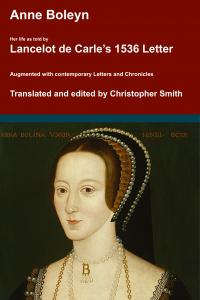
Anne Boleyn. Her Life as told by Lancelot de Carle's 1536 Letter.
In 1536, two weeks after the execution of Anne Boleyn, her brother George and four others, Lancelot du Carle, wrote an extraordinary letter that described Anne's life, and her trial and execution, to which he was a witness. This book presents a new translation of that letter, with additional material from other contemporary sources such as Letters, Hall's and Wriothesley's Chronicles, the pamphlets of Wynkyn the Worde, the Memorial of George Constantyne, the Portuguese Letter and the Baga de Secrets, all of which are provided in Appendices.
Available at Amazon in eBook and Paperback format.
27th November 1679. I went to see Sir John Stonehouse [aged 40], with whom I was treating a marriage between my son [aged 59] and his daughter-in-law [aged 20] [Note. Means step-daughter. Martha Spencer was the daughter of Martha Briggs who re-married John Stonhouse 2nd Baronet after her first husband Richard Spencer died in 1668].
28th November 1679. Came over the Duke of Monmouth [aged 30] from Holland unexpectedly to his Majesty [aged 49]; while the Duke of York [aged 46] was on his journey to Scotland, whither the King sent him to reside and govern. The bells and bonfires of the city at this arrival of the Duke of Monmouth publishing their joy, to the no small regret of some at Court. This Duke, whom for distinction they called the Protestant Duke (though the son of an abandoned woman), the people made their idol.
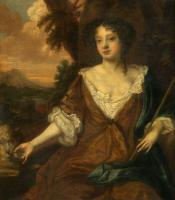
4th December 1679. I dined, together with Lord Ossory [aged 45] and the Earl of Chesterfield [aged 45], at the Portugal Ambassador's [aged 53], now newly come, at Cleveland House, a noble palace, too good for that infamous.... [Note. Probably a reference to Barbara Villiers 1st Duchess of Cleveland [aged 39]] The staircase is sumptuous, and the gallery and garden; but, above all, the costly furniture belonging to the Ambassador, especially the rich Japan cabinets, of which I think there were a dozen. There was a billiard table, with as many more hazards as ours commonly have; the game being only to prosecute the ball till hazarded, without passing the port, or touching the pin; if one miss hitting the ball every time, the game is lost, or if hazarded. It is more difficult to hazard a ball, though so many, than in our table, by reason the bound is made so exactly even, and the edges not stuffed; the balls are also bigger, and they for the most part use the sharp and small end of the billiard stick, which is shod with brass, or silver. The entertainment was exceedingly civil; but, besides a good olio, the dishes were trifling, hashed and condited after their way, not at all fit for an English stomach, which is for solid meat. There was yet good fowls, but roasted to coal, nor were the sweetmeats good.


30th December 1679. I went to meet Sir John Stonehouse [aged 40], and give him a particular of the settlement on my son [aged 59], who now made his addresses to the young lady [aged 20] his daughter-in-law [Note. Step-daughter], daughter of Lady Stonehouse.