

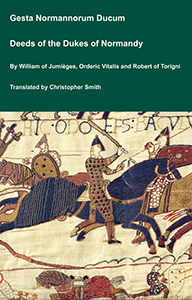
The Deeds of the Dukes of Normandy
The Gesta Normannorum Ducum [The Deeds of the Dukes of Normandy] is a landmark medieval chronicle tracing the rise and fall of the Norman dynasty from its early roots through the pivotal events surrounding the Norman Conquest of England. Originally penned in Latin by the monk William of Jumièges shortly before 1060 and later expanded at the behest of William the Conqueror, the work chronicles the deeds, politics, battles, and leadership of the Norman dukes, especially William’s own claim to the English throne. The narrative combines earlier historical sources with firsthand information and oral testimony to present an authoritative account of Normandy’s transformation from a Viking settlement into one of medieval Europe’s most powerful realms. William’s history emphasizes the legitimacy, military prowess, and governance of the Norman line, framing their expansion, including the conquest of England, as both divinely sanctioned and noble in purpose. Later chroniclers such as Orderic Vitalis and Robert of Torigni continued the history, extending the coverage into the 12th century, providing broader context on ducal rule and its impact. Today this classic work remains a foundational source for understanding Norman identity, medieval statesmanship, and the historical forces that reshaped England and Western Europe between 800AD and 1100AD.
Available at Amazon in eBook and Paperback format.
 John Evelyn's Diary February 1688
 John Evelyn's Diary March 1688
 John Evelyn's Diary May 1688
 John Evelyn's Diary June 1688
 John Evelyn's Diary July 1688
 John Evelyn's Diary August 1688
 John Evelyn's Diary October 1688
 John Evelyn's Diary November 1688
 John Evelyn's Diary December 1688
John Evelyn's Diary 1688 is in John Evelyn's Diary 1680s.
12th January 1688. Mr. Slingsby, Master of the Mint, being under very deplorable circumstances on account of his creditors, and especially the King, I did my endeavor with the Lords of the Treasury to be favorable to him.
12th January 1688. My Lord Arran [aged 29], eldest son to the Duke of Hamilton [aged 53], being now married to Lady Ann Spencer [aged 21], eldest daughter of the Earl of Sunderland [aged 46], Lord President of the Council, I and my family had most glorious favors sent us, the wedding being celebrated with extraordinary splendor.
15th January 1688. There was a solemn and particular office used at our, and all the churches of London and ten miles round, for a thanksgiving to God, for her Majesty [aged 29] being with child.
22nd January 1688. This afternoon I went not to church, being employed on a religious treatise I had undertaken.
30th January 1688. Being the Martyrdom day of King Charles I, our curate made a florid oration against the murder of that excellent Prince, with an exhortation to obedience from the example of David; 1 Samuel xxvi. 6.
12th February 1688. My daughter [Note. This may refer to a daughter-in-law?] Evelyn [aged 19] going in the coach to visit in the city, a jolt (the door being not fast shut) flung her quite out in such manner, as the hind wheels passed over her a little above her knees. Yet it pleased God, besides the bruises of the wheels, she had no other harm. In two days she was able to walk, and soon after perfectly well; through God Almighty's great mercy to an excellent wife and a most dutiful and discreet daughter-in-law.
17th February 1688. I received the sad news of my niece Montague's death at Woodcot on the 15th.
15th March 1688. I gave in my account about the sick and wounded, in order to have my quietus.
23rd March 1688. Dr. Parker, Bishop of Oxford [deceased], who so lately published his extravagant treatise about transubstantiation, and for abrogating the test and penal laws, died. He was esteemed a violent, passionate, haughty man, but yet being pressed to declare for the Church of Rome, he utterly refused it. A remarkable end!

Chronicle of a Bourgeois of Valenciennes
Récits d’un bourgeois de Valenciennes aka The Chronicle of a Bourgeois of Valenciennes is a vivid 14th-century vernacular chronicle written by an anonymous urban chronicler from Valenciennes in the County of Hainaut. It survives in a manuscript that describes local and regional history from about 1253 to 1366, blending chronology, narrative episodes, and eyewitness-style accounts of political, military, and social events in medieval France, Flanders, and the Low Countries. The work begins with a chronological framework of events affecting Valenciennes and its region under rulers such as King Philip VI of France and the shifting allegiances of local nobility. It includes accounts of conflicts, sieges, diplomatic manoeuvres, and the impact of broader struggles like the Hundred Years’ War on urban life in Hainaut. Written from the perspective of a burgher (bourgeois) rather than a monastery or royal court, the chronicle offers a rare lay viewpoint on high politics and warfare, reflecting how merchants, townspeople, and civic institutions experienced the turbulence of the 13th and 14th centuries. Its narrative style combines straightforward reporting of events with moral and civic observations, making it a valuable source for readers interested in medieval urban society, regional politics, and the lived experience of war and governance in pre-modern Europe.
Available at Amazon in eBook and Paperback format.
23rd March 1688. The French Tyrant now finding he could make no proselytes among those Protestants of quality, and others, whom he had caused to be shut up in dungeons, and confined to nunneries and monasteries, gave them, after so long trial, a general releasement, and leave to go out of the Kingdom, but utterly taking their estates and their children; so that great numbers came daily into England and other places, where they were received and relieved with very considerate Christian charity. This Providence and goodness of God to those who thus constantly held out, did so work upon those miserable poor souls who, to avoid the persecution, signed their renunciation, and to save their estates went to mass, that reflecting on what they had done, they grew so affected in their conscience, that not being able to support it, they in great numbers through all the French provinces, acquainted the magistrates and lieutenants that being sorry for their apostacy, they were resolved to return to their old religion; that they would go no more to mass, but peaceably assemble when they could, to beg pardon and worship God, but so without weapons as not to give the least umbrage of rebellion or sedition, imploring their pity and commiseration; and, accordingly, meeting so from time to time, the dragoon-missioners, Popish officers and priests, fell upon them, murdered and put them to death, whoever they could lay hold on; they without the least resistance embraced death, torture, or hanging, with singing psalms and praying for their persecutors to the last breath, yet still continuing the former assembling of themselves in desolate places, suffering with incredible constancy, that through God's mercy they might obtain pardon for this lapse. Such examples of Christian behavior have not been seen since the primitive persecutions; and doubtless God will do some signal work in the end, if we can with patience and resignation hold out, and depend on his Providence.
24th March 1688. I went with Sir Charles Littleton [aged 60] to Sheen [Map], a house and estate given him by Lord Brounker; one who was ever noted for a hard, covetous, vicious man; but for his worldly craft and skill in gaming few exceeded him. Coming to die, he bequeathed all his land, house, furniture, etc., to Sir Charles, to whom he had no manner of relation, but an ancient friendship contracted at the famous siege of Colchester, forty years before. It is a pretty place, with fine gardens, and well planted, and given to one worthy of them, Sir Charles being an honest gentleman and soldier. He is brother to Sir Henry Littleton [aged 64] of Worcestershire, whose great estate he is likely to inherit, his brother being without children. They are descendants of the great lawyer of that name, and give the same arms and motto. He is married to one Mrs. Temple [aged 39], formerly Maid of Honour to the late Queen [aged 49], a beautiful lady, and he has many fine children, so that none envy his good fortune.
24th March 1688. After dinner, we went to see Sir William Temple's near to it; the most remarkable things are his orangery and gardens, where the wall-fruit-trees are most exquisitely nailed and trained, far better than I ever noted.

24th March 1688. There are many good pictures, especially of Vandyke's, in both these houses, and some few statues and small busts in the latter.

24th March 1688. From thence to Kew, to visit Sir Henry Capel's [aged 50], whose orangery and myrtetum are most beautiful and perfectly well kept. He was contriving very high palisadoes of reeds to shade his oranges during the summer, and painting those reeds in oil.
1st April 1688. In the morning, the first sermon was by Dr. Stillingfleet [aged 52], Dean of St. Paul's (at Whitehall), on Luke x. 41, 42. The Holy Communion followed, but was so interrupted by the rude breaking in of multitudes zealous to hear the second sermon, to be preached by the Bishop of Bath and Wells [aged 50], that the latter part of that holy office could hardly be heard, or the sacred elements be distributed without great trouble. The Princess being come, he preached on Mich. vii. 8, 9, 10, describing the calamity of the Reformed Church of Judah under the Babylonian persecution, for her sins, and God's delivery of her on her repentance; that as Judah emerged, so should the now Reformed Church, whenever insulted and persecuted. He preached with his accustomed action, zeal, and energy, so that people flocked from all quarters to hear him.


15th April 1688. A dry, cold, backward spring; easterly winds.
15th April 1688. The persecution still raging in France, multitudes of Protestants, and many very considerable and great persons flying hither, produced a second general contribution, the Papists, by God's Providence, as yet making small progress among us.
29th April 1688. The weather was, till now, so cold and sharp, by an almost perpetual east wind, which had continued many months, that there was little appearance of any spring, and yet the winter was very favorable as to frost and snow.
2nd May 1688. To London, about my petition for allowances upon the account of Commissioner for Sick and Wounded in the former war with Holland.
Jean de Waurin's Chronicle of England Volume 6 Books 3-6: The Wars of the Roses
Jean de Waurin was a French Chronicler, from the Artois region, who was born around 1400, and died around 1474. Waurin’s Chronicle of England, Volume 6, covering the period 1450 to 1471, from which we have selected and translated Chapters relating to the Wars of the Roses, provides a vivid, original, contemporary description of key events some of which he witnessed first-hand, some of which he was told by the key people involved with whom Waurin had a personal relationship.
Available at Amazon in eBook and Paperback format.
8th May 1688. His Majesty [aged 54], alarmed by the great fleet of the Dutch (while we had a very inconsiderable one), went down to Chatham, Kent [Map]; their fleet was well prepared, and out, before we were in any readiness, or had any considerable number to have encountered them, had there been occasion, to the great reproach of the nation; while being in profound peace, there was a mighty land army, which there was no need of, and no force at sea, where only was the apprehension; but the army was doubtless kept and increased, in order to bring in and countenance Popery, the King beginning to discover his intention, by many instances pursued by the Jesuits, against his first resolution to alter nothing in the Church Establishment, so that it appeared there can be no reliance on Popish promises.


18th May 1688. King [aged 54] enjoining the ministers to read his Declaration for giving liberty of conscience (as it was styled) in all churches of England, this evening, six Bishops, Bath and Wells [aged 50], Peterborough [aged 60], Ely [aged 50], Chichester [aged 64], St. Asaph [aged 60], and Bristol [aged 38], in the name of all the rest of the Bishops, came to his Majesty to petition him, that he would not impose the reading of it to the several congregations within their dioceses; not that they were averse to the publishing it for want of due tenderness toward dissenters, in relation to whom they should be willing to come to such a temper as should be thought fit, when that matter might be considered and settled in Parliament and Convocation; but that, the Declaration being founded on such a dispensing power as might at pleasure set aside all laws ecclesiastical and civil, it appeared to them illegal, as it had done to the Parliament in 1661 and 1672, and that it was a point of such consequence, that they could not so far make themselve parties to it, as the reading of it in church in time of divine service amounted to.
The King was so far incensed at this address, that he with threatening expressions commanded them to obey him in reading it at their perils, and so dismissed them.


20th May 1688. I went to Whitehall Chapel, where, after the morning lessons, the Declaration was read by one of the choir who used to read the chapters. I hear it was in the Abbey Church, Westminster [Map], but almost universally forborne throughout all London: the consequences of which a little time will show.
25th May 1688. All the discourse now was about the Bishops refusing to read the injunction for the abolition of the Test, etc. It seems the injunction came so crudely from the Secretary's office, that it was neither sealed nor signed in form, nor had any lawyer been consulted, so as the Bishops who took all imaginable advice, put the Court to great difficulties how to proceed against them. Great were the consults, and a proclamation was expected all this day; but nothing was done. The action of the Bishops was universally applauded, and reconciled many adverse parties, Papists only excepted, who were now exceedingly perplexed, and violent courses were every moment expected. Report was, that the Protestant secular Lords and Nobility would abet the Clergy.
25th May 1688. The Queen Dowager [aged 49], hitherto bent on her return into Portugal, now on the sudden, on allegation of a great debt owing her by his Majesty [aged 54] disabling her, declares her resolution to stay.
25th May 1688. News arrived of the most prodigious earthquake that was almost ever heard of, subverting the city of Lima and country in Peru, with a dreadful inundation following it.
8th June 1688. This day, the Archbishop of Canterbury [aged 71], with the Bishops of Ely [aged 50], Chichester [aged 64], St. Asaph [aged 60], Bristol [aged 38], Peterborough [aged 60], and Bath and Wells [aged 50], were sent from the Privy Council prisoners to the Tower [Map], for refusing to give bail for their appearance, on their not reading the Declaration for liberty of conscience; they refused to give bail, as it would have prejudiced their peerage. The concern of the people for them was wonderful, infinite crowds on their knees begging their blessing, and praying for them, as they passed out of the barge along the Tower wharf.

10th June 1688. A YOUNG PRINCE born, which will cause disputes.
13th June 1688. I went to the Tower [Map] to see the Bishops, visited the Archbishop [aged 71] and the Bishops of Ely [aged 50], St. Asaph [aged 60], and Bath and Wells [aged 50].
14th June 1688. Dined with the Lord Chancellor [aged 43].


15th June 1688. Being the first day of term, the Bishops were brought to Westminster on habeas corpus, when the indictment was read, and they were called on to plead; their counsel objected that the warrant was illegal; but, after long debate, it was overruled, and they pleaded. The Court then offered to take bail for their appearance; but this they refused, and at last were dismissed on their own recognizances to appear that day fortnight; the Archbishop in £200, the Bishops in £100 each.
17th June 1688. Was a day of thanksgiving in London and ten miles about for the young Prince's birth; a form of prayer made for the purpose by the Bishop of Rochester [aged 53].
29th June 1688. They appeared; the trial lasted from nine in the morning to past six in the evening, when the jury retired to consider of their verdict, and the Court adjourned to nine the next morning. The jury were locked up till that time, eleven of them being for an acquittal; but one (Arnold, a brewer) would not consent. At length he agreed with the others. The Chief Justice, Wright [aged 54], behaved with great moderation and civility to the Bishops. Alibone, a Papist, was strongly against them; but Holloway and Powell [aged 56] being of opinion in their favor, they were acquitted. When this was heard, there was great rejoicing; and there was a lane of people from the King's Bench [Map] to the water side, on their knees, as the Bishops passed and repassed, to beg their blessing. Bonfires were made that night, and bells rung, which was taken very ill at Court, and an appearance of nearly sixty Earls and Lords, etc., on the bench, did not a little comfort them; but indeed they were all along full of comfort and cheerful.

29th June 1688. Note, they denied to pay the Lieutenant of the Tower (Hales [aged 43], who used them very surlily), any fees, alleging that none were due.
29th June 1688. The night was solemnized with bonfires, and other fireworks, etc.
2nd July 1688. The two judges, Holloway and Powell [aged 56], were displaced.
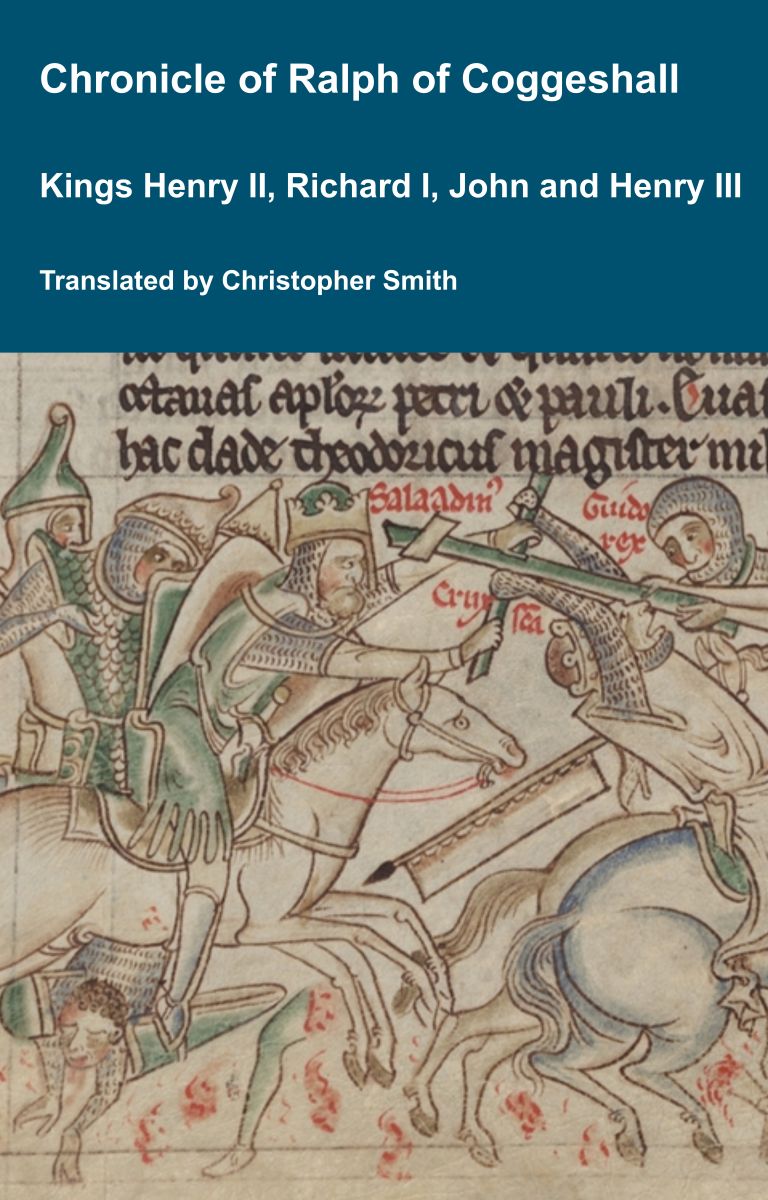
Chronicle of Abbot Ralph of Coggeshall
The Chronicle of Abbot Ralph of Coggeshall (Chronicon Anglicanum) is an indispensable medieval history that brings to life centuries of English and European affairs through the eyes of a learned Cistercian monk. Ralph of Coggeshall, abbot of the Abbey of Coggeshall in Essex in the early 13th century, continued and expanded his community’s chronicle, documenting events from the Norman Conquest of 1066 into the tumultuous reign of King Henry III. Blending eyewitness testimony, careful compilation, and the monastic commitment to record-keeping, this chronicle offers a rare narrative of political intrigue, royal power struggles, and social upheaval in England and beyond. Ralph’s work captures the reigns of pivotal figures such as Richard I and King John, providing invaluable insights into their characters, decisions, and the forces that shaped medieval rule. More than a simple annal, Chronicon Anglicanum conveys the texture of medieval life and governance, making it a rich source for scholars and readers fascinated by English history, monastic authorship, and the shaping of the medieval world.
Available at Amazon in eBook and Paperback format.
3rd July 1688. I went with Dr. Godolphin [aged 39] and his brother Sir William [aged 48] to St. Alban's [Map], to see a library he would have bought of the widow of Dr. Cartwright [NOTE. Assume Cartwright a typo for Carter], late Archdeacon of St. Alban's, a very good collection of books, especially in divinity; he was to give £300 for them. Having seen the GREAT CHURCH [Map], now newly repaired by a public contribution, we returned home.
8th July 1688. One of the King's [aged 54] chaplains preached before the Princess [aged 26] on Exodus xiv. 13, "Stand still, and behold the salvation of the Lord", which he applied so boldly to the present conjuncture of the Church of England, that more could scarce be said to encourage desponders. The Popish priests were not able to carry their cause against their learned adversaries, who confounded them both by their disputes and writings.


12th July 1688. The camp now began at Hounslow, but the nation was in high discontent.

12th July 1688. Colonel Titus [aged 38], Sir Henry Vane (son of him who was executed for his treason), and some other of the Presbyterians and Independent party, were sworn of the Privy Council, from hopes of thereby diverting that party from going over to the Bishops and Church of England, which now they began to do, foreseeing the design of the Papists to descend and take in their most hateful of heretics (as they at other times expressed them to be) to effect their own ends, now evident; the utter extirpation of the Church of England first, and then the rest would follow.
17th July 1688. This night the fireworks were played off, that had been prepared for the Queen's [aged 29] upsitting. We saw them to great advantage; they were very fine, and cost some thousands of pounds, in the pyramids, statues, etc., but were spent too soon for so long a preparation.


26th July 1688. I went to Lambeth to visit the Archbishop [aged 71], whom I found very cheerful.
10th August 1688. Dr. Tenison [aged 51] now told me there would suddenly be some great thing discovered. This was the Prince of Orange [aged 37] intending to come over.


15th August 1688. I went to Althorpe [Map], in Northamptonshire, seventy miles. A coach and four horses took up me and my son at Whitehall, and carried us to Dunstable [Map], where we arrived and dined at noon, and from thence another coach and six horses carried us to Althorpe [Map], four miles beyond Northampton, where we arrived by seven o'clock that evening. Both these coaches were hired for me by that noble Countess of Sunderland [aged 42], who invited me to her house at Althorpe, where she entertained me and my son with very extraordinary kindness; I stayed till the Thursday.
18th August 1688. Dr. Jeffryes, the minister of Althorpe, who was my Lord's chaplain when ambassador in France, preached the shortest discourse I ever heard; but what was defective in the amplitude of his sermon, he had supplied in the largeness and convenience of the parsonage house, which the doctor (who had at least £600 a year in spiritual advancement) had newly built, and made fit for a person of quality to live in, with gardens and all accommodation according therewith.
18th August 1688. My lady [aged 42] carried us to see Lord Northampton's [aged 23] Seat, a very strong, large house, built with stone, not altogether modern. They were enlarging the garden, in which was nothing extraordinary, except the iron gate opening into the park, which indeed was very good work, wrought in flowers painted with blue and gilded. There is a noble walk of elms toward the front of the house by the bowling green. I was not in any room of the house besides a lobby looking into the garden, where my Lord and his new Countess [aged 19] (Sir Stephen Fox's [aged 61] daughter, whom I had known from a child) entertained the Countess and her daughter the Countess of Arran [aged 21] (newly married to the son [aged 30] of the Duke of Hamilton [aged 53]), with so little good grace, and so dully, that our visit was very short, and so we returned to Althorpe [Map], twelve miles distant.


18th August 1688. The house, or rather palace, at Althorpe [Map], is a noble uniform pile in form of a half H, built of brick and freestone, balustered and à la moderne; the hall is well, the staircase excellent; the rooms of state, galleries, offices and furniture, such as may become a great prince. It is situated in the midst of a garden, exquisitely planted and kept, and all this in a park walled in with hewn stone, planted with rows and walks of trees, canals and fish ponds, and stored with game. And, what is above all this, governed by a lady [aged 42], who without any show of solicitude, keeps everything in such admirable order, both within and without, from the garret to the cellar, that I do not believe there is any in this nation, or in any other, that exceeds her in such exact order, without ostentation, but substantially great and noble. The meanest servant is lodged so neat and cleanly; the service at the several tables, the good order and decency-in a word, the entire economy is perfectly becoming a wise and noble person. She is one who for her distinguished esteem of me from a long and worthy friendship, I must ever honor and celebrate. I wish from my soul the Lord [aged 46], her husband (whose parts and abilities are otherwise conspicuous), was as worthy of her, as by a fatal apostasy and court-ambition he has made himself unworthy! This is what she deplores, and it renders her as much affliction as a lady of great soul and much prudence is capable of. The Countess of Bristol [aged 68], her mother, a grave and honorable lady, has the comfort of seeing her daughter and grandchildren under the same economy, especially Mr. Charles Spencer [aged 13], a youth of extraordinary hopes, very learned for his age, and ingenious, and under a Governor of great worth. Happy were it, could as much be said of the elder brother, the Lord Spencer, who, rambling about the world, dishonors both his name and his family, adding sorrow to sorrow to a mother, who has taken all imaginable care of his education. There is a daughter [aged 17] very young married to the Earl of Clancarty [aged 20], who has a great and fair estate in Ireland, but who yet gives no great presage of worth,-so universally contaminated is the youth of this corrupt and abandoned age! But this is again recompensed by my Lord Arran [aged 30], a sober and worthy gentleman, who has espoused the Lady Ann Spencer [aged 21], a young lady of admirable accomplishments and virtue.
23rd August 1688. I left this noble place and conversation, my lady having provided carriages to convey us back in the same manner as we went, and a dinner being prepared at Dunstable [Map] against our arrival. Northampton, having been lately burned and re-edified, is now become a town that for the beauty of the buildings, especially the church and townhouse, may compare with the neatest in Italy itself.
23rd August 1688. Dr. Sprat [aged 53], Bishop of Rochester, wrote a very honest and handsome letter to the Commissioners Ecclesiastical, excusing himself from sitting any longer among them, he by no means approving of their prosecuting the Clergy who refused to read the Declaration for liberty of conscience, in prejudice of the Church of England.
23rd August 1688. The Dutch make extraordinary preparations both at sea and land, which with no small progress Popery makes among us, puts us to many difficulties. The Popish Irish soldiers commit many murders and insults; the whole nation disaffected, and in apprehensions.
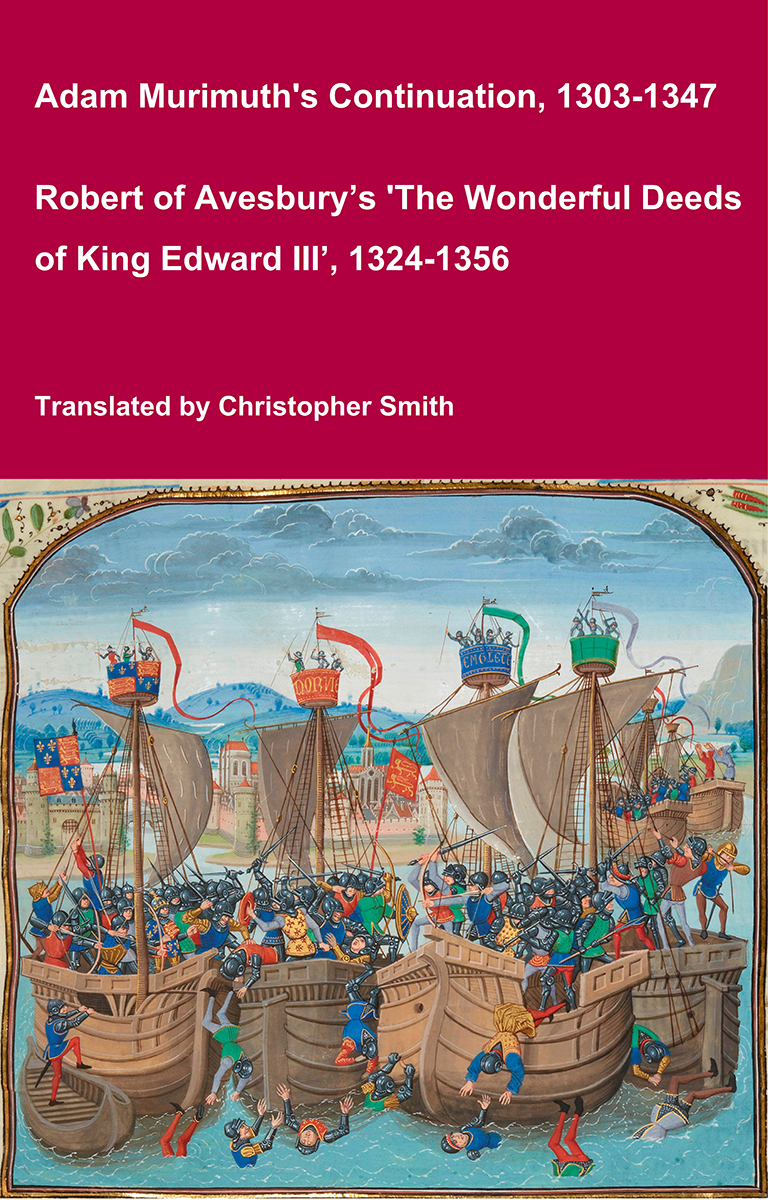
Adam Murimuth's Continuation and Robert of Avesbury’s 'The Wonderful Deeds of King Edward III'
This volume brings together two of the most important contemporary chronicles for the reign of Edward III and the opening phases of the Hundred Years’ War. Written in Latin by English clerical observers, these texts provide a vivid and authoritative window into the political, diplomatic, and military history of fourteenth-century England and its continental ambitions. Adam Murimuth Continuatio's Chronicarum continues an earlier chronicle into the mid-fourteenth century, offering concise but valuable notices on royal policy, foreign relations, and ecclesiastical affairs. Its annalistic structure makes it especially useful for establishing chronology and tracing the development of events year by year. Complementing it, Robert of Avesbury’s De gestis mirabilibus regis Edwardi tertii is a rich documentary chronicle preserving letters, treaties, and official records alongside narrative passages. It is an indispensable source for understanding Edward III’s claim to the French crown, the conduct of war, and the mechanisms of medieval diplomacy. Together, these works offer scholars, students, and enthusiasts a reliable and unembellished account of a transformative period in English and European history. Essential for anyone interested in medieval chronicles, the Hundred Years’ War, or the reign of Edward III.
Available at Amazon in eBook and Paperback format.
23rd August 1688. After long trials of the doctors to bring up the little Prince of Wales by hand (so many of her Majesty's children having died infants) not succeeding, a country nurse, the wife of a tile maker, is taken to give it suck.
18th September 1688. I went to London, where I found the Court in the utmost consternation on report of the Prince of Orange's [aged 37] landing; which put Whitehall into so panic a fear, that I could hardly believe it possible to find such a change.
18th September 1688. Writs were issued in order to a Parliament, and a declaration to back the good order of elections, with great professions of maintaining the Church of England, but without giving any sort of satisfaction to the people, who showed their high discontent at several things in the Government.
18th September 1688. Earthquakes had utterly demolished the ancient Smyrna, and several other places in Greece, Italy, and even in the Spanish Indies, forerunners of greater calamities. God Almighty preserve his Church and all who put themselves under the shadow of his wings, till these things be overpassed.
30th September 1688. The Court in so extraordinary a consternation, on assurance of the Prince of Orange's [aged 37] intention to land, that the writs sent forth for a Parliament were recalled.
7th October 1688. Dr. Tenison [aged 52] preached at St. Martin's [Map] on 2 Tim. iii. 16, showing the Scriptures to be our only rule of faith, and its perfection above all traditions. After which, near 1,000 devout persons partook of the Communion. The sermon was chiefly occasioned by a Jesuit, who in the Masshouse on the Sunday before had disparaged the Scripture and railed at our translation, which some present contradicting, they pulled him out of the pulpit, and treated him very coarsely, insomuch that it was like to create a great disturbance in the city.
7th October 1688. Hourly expectation of the Prince of Orange's [aged 37] invasion heightened to that degree, that his Majesty [aged 54] thought fit to abrogate the Commission for the dispensing Power (but retaining his own right still to dispense with all laws) and restore the ejected Fellows of Magdalen College, Oxford. In the meantime, he called over 5,000 Irish, and 4,000 Scots, and continued to remove Protestants and put in Papists at Portsmouth and other places of trust, and retained the Jesuits about him, increasing the universal discontent. It brought people to so desperate a pass, that they seemed passionately to long for and desire the landing of that Prince, whom they looked on to be their deliverer from Popish tyranny, praying incessantly for an east wind, which was said to be the only hindrance of his expedition with a numerous army ready to make a descent. To such a strange temper, and unheard of in former times, was this poor nation reduced, and of which I was an eyewitness. The apprehension was (and with reason) that his Majesty's forces would neither at land nor sea oppose them with that vigor requisite to repel invaders.
7th October 1688. The late imprisoned Bishops were now called to reconcile matters, and the Jesuits hard at work to foment confusion among the Protestants by their usual tricks. A letter was sent to the Archbishop of Canterbury [aged 71], informing him, from good hands, of what was contriving by them. A paper of what the Bishops advised his Majesty was published. The Bishops were enjoined to prepare a form of prayer against the feared invasion. A pardon published. Soldiers and mariners daily pressed.
7th October 1688. NOTE. The Letter was written by John Evelyn ...
7th October 1688. My Lord, The honor and reputation which your Grace's piety, prudence, and signal courage, have justly merited and obtained, not only from the sons of the Church of England, but even universally from those Protestants among us who are Dissenters from her discipline; God Almighty's Providence and blessing upon your Grace's vigilancy and extraordinary endeavors will not suffer to be diminished in this conjuncture. The conversation I now and then have with some in place who have the opportunity of knowing what is doing in the most secret recesses and cabals of our Church's adversaries, obliges me to acquaint you, that the calling of your Grace and the rest of the Lords Bishops to Court, and what has there of late been required of you, is only to create a jealousy and suspicion among well-meaning people of such compliances, as it is certain they have no cause to apprehend. The plan of this and of all that which is to follow of seeming favour thence, is wholly drawn by the Jesuits, who are at this time more than ever busy to make divisions among us, all other arts and mechanisms having hitherto failed them. They have, with other things contrived that your Lordships the Bishops should give his Majesty advice separately, without calling any of the rest of the Peers, which, though maliciously suggested, spreads generally about the town. I do not at all question but your Grace will speedily prevent the operation of this venom, and that you will think it highly necessary so to do, that your Grace is also enjoined to compose a form of prayer, wherein the Prince of Orange is expressly to be named the Invader: of this I presume not to say anything; but for as much as in all the Declarations, etc., which have hitherto been published in pretended favour of the Church of England, there is not once the least mention of the Reformed or Protestant Religion, but only of the Church of England as by Law Established, which Church the Papists tell us is the Church of Rome, which is (say they) the Catholic Church of England-that only is established by Law; the Church of England in the Reformed sense so established, is but by an usurped authority. The antiquity of THAT would by these words be explained, and utterly defeat this false and subdolous construction, and take off all exceptions whatsoever; if, in all extraordinary offices, upon these occasions, the words Reformed and Protestant were added to that of the Church of England by Law established. And whosoever threatens to invade or come against us, to the prejudice of that Church, in God's name, be they Dutch or Irish, let us heartily pray and fight against them. My Lord, this is, I confess, a bold, but honest period; and, though I am well assured that your Grace is perfectly acquainted with all this before, and therefore may blame my impertinence, as that does αλλοτριοεπισκοπειν; yet I am confident you will not reprove the zeal of one who most humbly begs your Grace's pardon, with your blessing. Lond., 10th October 1688.
14th October 1688. The King's [aged 55] birthday. No guns from the Tower as usual. The sun eclipsed at its rising. This day signal for the victory of William the Conqueror against Harold, near Battel, in Sussex. The wind, which had been hitherto west, was east all this day. Wonderful expectation of the Dutch fleet. Public prayers ordered to be read in the churches against invasion.
28th October 1688. A tumult in London on the rabble demolishing a Popish chapel that had been set up in the city.
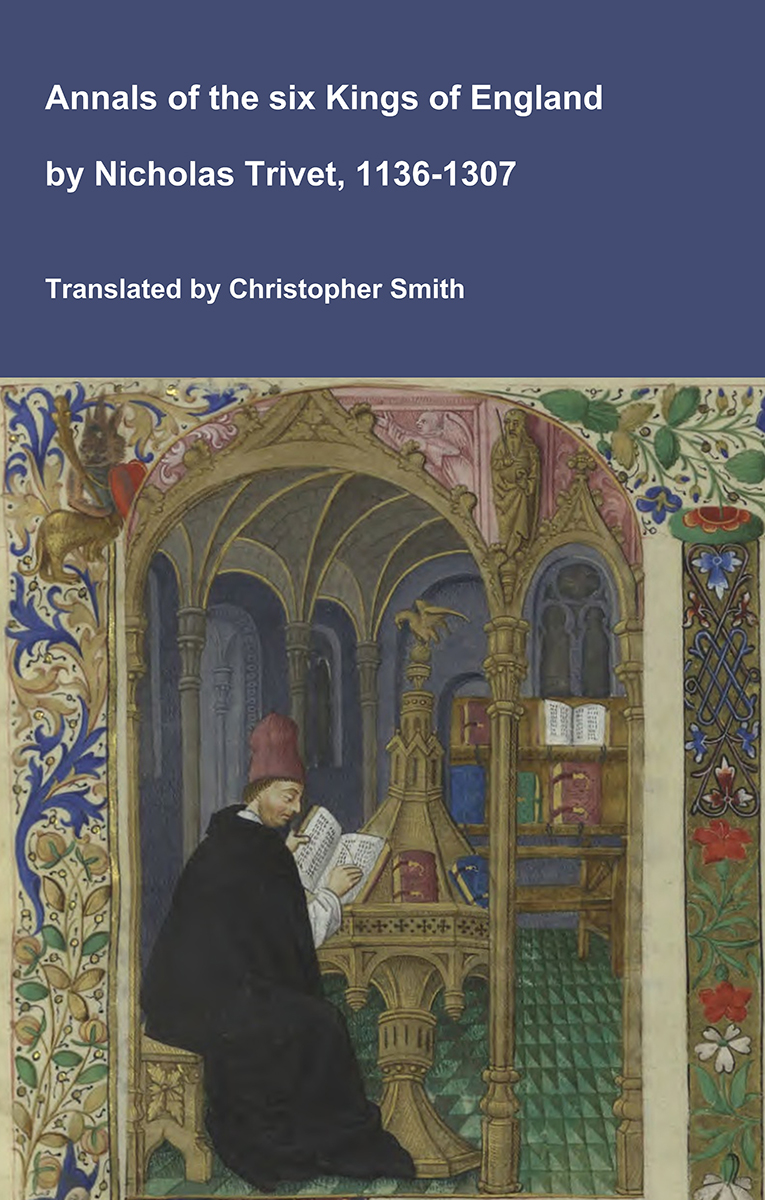
Annals of the six Kings of England by Nicholas Trivet
Translation of the Annals of the Six Kings of England by that traces the rise and rule of the Angevin aka Plantagenet dynasty from the mid-12th to early 14th century. Written by the Dominican scholar Nicholas Trivet, the work offers a vivid account of English history from the reign of King Stephen through to the death of King Edward I, blending political narrative with moral reflection. Covering the reigns of six monarchs—from Stephen to Edward I—the chronicle explores royal authority, rebellion, war, and the shifting balance between crown, church, and nobility. Trivet provides detailed insight into defining moments such as baronial conflicts, Anglo-French rivalry, and the consolidation of royal power under Edward I, whose reign he describes with particular immediacy. The Annals combines careful year-by-year reporting with thoughtful interpretation, presenting history not merely as a sequence of events but as a moral and political lesson. Ideal for readers interested in medieval history, kingship, and the origins of the English state, this chronicle remains a valuable and accessible window into the turbulent world of the Plantagenet kings.
Available at Amazon in eBook and Paperback format.
29th October 1688. Lady Sunderland [aged 42] acquainted me with his Majesty's [aged 55] taking away the Seals from Lord Sunderland [aged 47], and of her being with the Queen [aged 30] to intercede for him. It is conceived that he had of late grown remiss in pursuing the interest of the Jesuitical counsels; some reported one thing, some another; but there was doubtless some secret betrayed, which time may discover.
29th October 1688. There was a Council called, to which were summoned the Archbishop of Canterbury [aged 71], the Judges, the Lord Mayor, etc. The Queen Dowager [aged 49], and all the ladies and lords who were present at the Queen Consort's [aged 30] labor, were to give their testimony upon oath of the Prince of Wales's birth, recorded both at the Council Board and at the Chancery a day or two after. This procedure was censured by some as below his Majesty [aged 55] to condescend to, on the talk of the people. It was remarkable that on this occasion the Archbishop, Marquis of Halifax [aged 54], the Earls of Clarendon and Nottingham [aged 41], refused to sit at the Council table among Papists, and their bold telling his Majesty that whatever was done while such sat among them was unlawful and incurred praemunire;-at least, if what I heard be true.
30th October 1688. I dined with Lord Preston [aged 39], made Secretary of State, in the place of the Earl of Sunderland [aged 47].

30th October 1688. Visited Mr. Boyle, when came in the Duke of Hamilton [aged 53] and Earl of Burlington [aged 76]. The Duke told us many particulars of Mary Queen of Scots, and her amours with the Italian favorite, etc.
31st October 1688. My birthday, being the 68th year of my age. O blessed Lord, grant that as I grow in years, so may I improve in grace! Be thou my protector this following year, and preserve me and mine from those dangers and great confusions that threaten a sad revolution to this sinful nation! Defend thy church, our holy religion, and just laws, disposing his Majesty [aged 55] to listen to sober and healing counsels, that if it be thy blessed will, we may still enjoy that happy tranquility which hitherto thou hast continued to us! Amen, Amen!
1st November 1688. Dined with Lord Preston [aged 39], with other company, at Sir Stephen Fox's [aged 61]. Continual alarms of the Prince of Orange [aged 37], but no certainty. Reports of his great losses of horse in the storm, but without any assurance. A man was taken with divers papers and printed manifestoes, and carried to Newgate [Map], after examination at the Cabinet Council. There was likewise a declaration of the States for satisfaction of all public ministers at The Hague, except to the English and the French. There was in that of the Prince's an expression, as if the Lords both spiritual and temporal had invited him over, with a deduction of the causes of his enterprise. This made his Majesty [aged 55] convene my Lord of Canterbury [aged 71] and the other Bishops now in town, to give an account of what was in the manifesto, and to enjoin them to clear themselves by some public writing of this disloyal charge.
2nd November 1688. It was now certainly reported by some who saw the fleet, and the Prince [aged 37] embark, that they sailed from the Brill on Wednesday morning, and that the Princess of Orange [aged 26] was there to take leave of her husband.
4th November 1688. Fresh reports of the Prince [aged 38] being landed somewhere about Portsmouth [Map], or the Isle of Wight [Map], whereas it was thought it would have been northward. The Court in great hurry.
5th November 1688. I went to London; heard the news of the Prince [aged 38] having landed at Torbay, coming with a fleet of near 700 sail, passing through the Channel with so favorable a wind, that our navy could not intercept, or molest them. This put the King [aged 55] and Court into great consternation, they were now employed in forming an army to stop their further progress, for they were got into Exeter [Map], and the season and ways very improper for his Majesty's forces to march so great a distance.
5th November 1688. The Archbishop of Canterbury [aged 71] and some few of the other Bishops and Lords in London, were sent for to Whitehall, and required to set forth their abhorrence of this invasion. They assured his Majesty [aged 55] that they had never invited any of the Prince's [aged 38] party, or were in the least privy to it, and would be ready to show all testimony of their loyalty; but, as to a public declaration, being so few, they desired that his Majesty would call the rest of their brethren and Peers, that they might consult what was fit to be done on this occasion, not thinking it right to publish anything without them, and till they had themselves seen the Prince's manifesto, in which it was pretended he was invited in by the Lords, spiritual and temporal. This did not please the King; so they departed.
5th November 1688. A declaration was published, prohibiting all persons to see or read the Prince's [aged 38] manifesto, in which was set forth at large the cause of his expedition, as there had been one before from the States.
5th November 1688. These are the beginnings of sorrow, unless God in his mercy prevent it by some happy reconciliation of all dissensions among us. This, in all likelihood, nothing can effect except a free Parliament; but this we cannot hope to see, while there are any forces on either side. I pray God to protect and direct the King [aged 55] for the best and truest interest of his people!-I saw his Majesty touch for the evil, Piten the Jesuit, and Warner officiating.
Abbot John Whethamstede’s Chronicle of the Abbey of St Albans
Abbot John Whethamstede's Register aka Chronicle of his second term at the Abbey of St Albans, 1451-1461, is a remarkable text that describes his first-hand experience of the beginning of the Wars of the Roses including the First and Second Battles of St Albans, 1455 and 1461, respectively, their cause, and their consequences, not least on the Abbey itself. His text also includes Loveday, Blore Heath, Northampton, the Act of Accord, Wakefield, and Towton, and ends with the Coronation of King Edward IV. In addition to the events of the Wars of the Roses, Abbot John, or his scribes who wrote the Chronicle, include details in the life of the Abbey such as charters, letters, land exchanges, visits by legates, and disputes, which provide a rich insight into the day-to-day life of the Abbey, and the challenges faced by its Abbot.
Available at Amazon in eBook and Paperback format.
14th November 1688. The Prince [aged 38] increases everyday in force. Several Lords go in to him. Lord Cornbury [aged 26] carries some regiments, and marches to Honiton, Devon, the Prince's headquarters. The city of London in disorder; the rabble pulled down the nunnery newly bought by the Papists of Lord Berkeley [aged 60], at St. John's. The Queen [aged 30] prepares to go to Portsmouth, Hampshire [Map] for safety, to attend the issue of this commotion, which has a dreadful aspect.
18th November 1688. It was now a very hard frost. The King [aged 55] goes to Salisbury to rendezvous the army, and return to London. Lord Delamere [aged 36] appears for the Prince [aged 38] in Cheshire. The nobility meet in Yorkshire. The Archbishop of Canterbury [aged 71] and some Bishops, and such Peers as were in London, address his Majesty to call a Parliament. The King invites all foreign nations to come over. The French take all the Palatinate, and alarm the Germans more than ever.

29th November 1688. I went to the Royal Society. We adjourned the election of a President to 23d of April, by reason of the public commotions, yet dined together as of custom this day.
2nd December 1688. Dr. Tenison [aged 52] preached at St. Martin's [Map] on Psalm xxxvi. 5, 6, 7, concerning Providence. I received the blessed Sacrament. Afterward, visited my Lord Godolphin [aged 43], then going with the Marquis of Halifax [aged 55] and Earl of Nottingham [aged 41] as Commissioners to the Prince of Orange [aged 38]; he told me they had little power. Plymouth, Devon [Map] declared for the Prince. Bath, Somerset [Map], York [Map], Hull [Map], Bristol, Gloucestershire [Map], and all the eminent nobility and persons of quality through England, declare for the Protestant religion and laws, and go to meet the Prince, who every day sets forth new Declarations against the Papists. The great favorites at Court, Priests and Jesuits, fly or abscond. Everything, till now concealed, flies abroad in public print, and is cried about the streets. Expectation of the Prince coming to Oxford, Oxfordshire [Map]. The Prince of Wales and great treasure sent privily to Portsmouth, Hampshire [Map], the Earl of Dover [aged 52] being Governor. Address from the Fleet not grateful to his Majesty [aged 55]. The Papists in offices lay down their commissions, and fly. Universal consternation among them; it looks like a revolution.

7th December 1688. My son went toward Oxford, Oxfordshire [Map]. I returned home.
9th December 1688. Lord Sunderland [aged 47] meditates flight. The rabble demolished all Popish chapels, and several Papist lords and gentlemen's houses, especially that of the Spanish Ambassador, which they pillaged, and burned his library.
13th December 1688. The King [aged 55] flies to sea, puts in at Faversham, Kent [Map] for ballast; is rudely treated by the people; comes back to Whitehall.
13th December 1688. The Prince of Orange [aged 38] is advanced to Windsor, Berkshire [Map], is invited by the King [aged 55] to St. James's [Map], the messenger sent was the Earl of Faversham [aged 47], the General of the Forces, who going without trumpet, or passport, is detained prisoner by the Prince, who accepts the invitation, but requires his Majesty to retire to some distant place, that his own guards may be quartered about the palace and city. This is taken heinously and the King goes privately to Rochester, Kent [Map]; is persuaded to come back; comes on the Sunday; goes to mass, and dines in public, a Jesuit saying grace (I was present).
17th December 1688. That night was a Council; his Majesty [aged 38] refuses to assent to all the proposals; goes away again to Rochester, Kent [Map].
18th December 1688. I saw the King [aged 55] take barge to Gravesend, Kent [Map] at twelve o'clock-a sad sight! The Prince [aged 38] comes to St. James's [Map], and fills Whitehall with Dutch guards. A Council of Peers meet about an expedient to call a Parliament; adjourn to the House of Lords. The Chancellor, Earl of Peterborough [aged 67], and divers others taken. The Earl of Sunderland [aged 47] flies; Sir Edward Hale [aged 43], Walker, and others, taken and secured.
18th December 1688. All the world go to see the Prince [aged 38] at St. James's [Map], where there is a great Court. There I saw him, and several of my acquaintance who came over with him. He is very stately, serious and reserved. The English soldiers sent out of town to disband them; not well pleased.
26th December 1688. The Peers and such Commoners as were members of the Parliament at Oxford, being the last of Charles II meeting, desire the Prince of Orange [aged 38] to take on him the disposal of the public revenue till a convention of Lords and Commons should meet in full body, appointed by his circular letters to the shires and boroughs, 22d of January. I had now quartered upon me a Lieutenant-Colonel and eight horses.
The History of William Marshal was commissioned by his son shortly after William’s death in 1219 to celebrate the Marshal’s remarkable life; it is an authentic, contemporary voice. The manuscript was discovered in 1861 by French historian Paul Meyer. Meyer published the manuscript in its original Anglo-French in 1891 in two books. This book is a line by line translation of the first of Meyer’s books; lines 1-10152. Book 1 of the History begins in 1139 and ends in 1194. It describes the events of the Anarchy, the role of William’s father John, John’s marriages, William’s childhood, his role as a hostage at the siege of Newbury, his injury and imprisonment in Poitou where he met Eleanor of Aquitaine and his life as a knight errant. It continues with the accusation against him of an improper relationship with Margaret, wife of Henry the Young King, his exile, and return, the death of Henry the Young King, the rebellion of Richard, the future King Richard I, war with France, the death of King Henry II, and the capture of King Richard, and the rebellion of John, the future King John. It ends with the release of King Richard and the death of John Marshal.
Available at Amazon in eBook and Paperback format.
30th December 1688. This day prayers for the Prince of Wales were first left off in our Church.