


Chronicle of a Bourgeois of Valenciennes
Récits d’un bourgeois de Valenciennes aka The Chronicle of a Bourgeois of Valenciennes is a vivid 14th-century vernacular chronicle written by an anonymous urban chronicler from Valenciennes in the County of Hainaut. It survives in a manuscript that describes local and regional history from about 1253 to 1366, blending chronology, narrative episodes, and eyewitness-style accounts of political, military, and social events in medieval France, Flanders, and the Low Countries. The work begins with a chronological framework of events affecting Valenciennes and its region under rulers such as King Philip VI of France and the shifting allegiances of local nobility. It includes accounts of conflicts, sieges, diplomatic manoeuvres, and the impact of broader struggles like the Hundred Years’ War on urban life in Hainaut. Written from the perspective of a burgher (bourgeois) rather than a monastery or royal court, the chronicle offers a rare lay viewpoint on high politics and warfare, reflecting how merchants, townspeople, and civic institutions experienced the turbulence of the 13th and 14th centuries. Its narrative style combines straightforward reporting of events with moral and civic observations, making it a valuable source for readers interested in medieval urban society, regional politics, and the lived experience of war and governance in pre-modern Europe.
Available at Amazon in eBook and Paperback format.
Keiller Collection is in Prehistory.
23rd September 1930. Pages 129-131.
Mr Gray (age 58) called me into the hut at five o'clock and paid me off, remarking as he did so that funds this time were very short (I hope he will get enough for his own "honorarium"). Mrs Gray (age 55) also joined in with a few well chosen remarks, plainly intended for my edification, although addressed to her spouse – "Really dear: I cannot keep on making up the expenses of the excavations, my purse will not allow it. I had to make up five pounds for the Ham Hill work." … In the presence of Sir Joseph and Lady Bowley, I listened meekly to all this … behaving myself with that gruelling humility one should do, in the presence of their superiors, then touching my ragged cap I backed away, and took my leave.

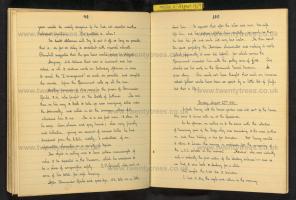
Historic Avebury. 26th August 1939. Denis Grant King's Diary Pages 97 and 98.
Saturday, August 26th 1939
Beautiful sunny weather that must remind the older folk of August 1914. It is difficult to believe in the reality of the international crisis, or indeed that the human race lacks the intelligence and good will to compose its differences without recourse to war. Still, the forces which lead nations to war gather momentum in fair weather and in foul; and every intelligent person who has lived and observed events during the past twenty years would be unduly sanguine if he had not expected another holocaust sometime. The question is, when?
No doubt statesmen will try to put it off as long as possible, that is, as far as delay is consistent with imperial interests. Churchill suggested that the zero hour would occur in August.
Anyway, Alexander Keiller (age 49) believes that war is imminent and has asked us all to continue work on Saturday afternoon to reveal the "Z arrangement" as much as possible, and complete the records, before the Government calls up all the men.
Another reminder of 1914 came in the person of Commander Gould, R.N., who fought at the Battle of Jutland. He was then on his to way to Bath to take up duties under the Admiralty and called in at the caravan, where Alexander Keiller introduced him to me. He is a six foot man, 18 stone, so he says, clean shaven and grey hair; also very friendly and talkative, giving an account of various talks he had broadcast from the B.B.C., mostly, I understood, of an informative character on a variety of topics.
His object in calling was to leave certain manuscripts of value to be deposited in the Museum, which he considered to be a place of comparative safety. L.V. Grinsell also sent us some of his MMS [manuscripts] for safe keeping.
After Commander Gould said good-bye, Alexander Keiller told me a little about him. It appears that after the War was over, his wife left him, and his distress affected him mentally, so much so that he lost his job and sank into very low water. He then spent ten years perfecting the Harrison chronometer and making it work (which apparently it never did before), for which service the government rewarded him with the paltry sum of £100. One should see his work in the Greenwich Naval Museum. A queer story. One would not have thought that such an immense robust fellow could have been so upset by a little bit of fluff; but that is life!"
27th August 1939. Denis Grant King's Diary Pages 99 and 100.