Abbot John Whethamstede’s Chronicle of the Abbey of St Albans
Abbot John Whethamstede's Register aka Chronicle of his second term at the Abbey of St Albans, 1451-1461, is a remarkable text that describes his first-hand experience of the beginning of the Wars of the Roses including the First and Second Battles of St Albans, 1455 and 1461, respectively, their cause, and their consequences, not least on the Abbey itself. His text also includes Loveday, Blore Heath, Northampton, the Act of Accord, Wakefield, and Towton, and ends with the Coronation of King Edward IV. In addition to the events of the Wars of the Roses, Abbot John, or his scribes who wrote the Chronicle, include details in the life of the Abbey such as charters, letters, land exchanges, visits by legates, and disputes, which provide a rich insight into the day-to-day life of the Abbey, and the challenges faced by its Abbot.
Available at Amazon in eBook and Paperback format.
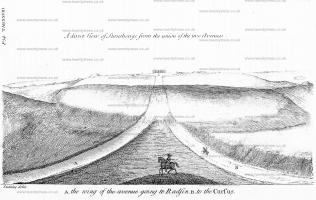
 View of Calston, Oldbury, Roman Road and Wansdyke
 Furze Knoll
 Cherhill aka Oldbury Hill Fort
 Vespasians Camp
 Stonehenge Phase 3 II Sarsen Horseshoe
 Coneybury Hill Barrow
 Salisbury Cathedral
 Haradon aka Telegraph Hill
 Ratfyn, Wiltshire
 Larkhill Viewpoint
 Stukeley's Eastern Beginning of the Avenue
List of Tables is in Stonehenge A Temple Restored To The British Druids By William Stukeley.

Table II. Prospect of the Roman Road & Wansdyke just above Caston May 20 1724. This demonstrates that Wansdyke was made before the Roman Road. [Note. Stukeley would have been stood here [Map] to record this view. Note the gibbet on top of Furze Knoll [Map]. On the left Cherhill aka Oldbury Hill Fort [Map].]
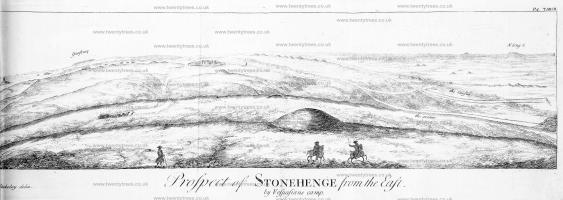
Table III. Prospect of Stonehenge from the East by Vespasians Camp [Map]. [From left to right, being south to north. Yansbury Camp [Yarnbury Castle [Map]?], who location is unknown, Stonehenge, Stonehenge Avenue [Map], Cursus and N Long Barrow.

Table IV. A view a little beyond Woodyates where the Ikening Street crosses part of a Druid's barrow. Jun 9 1724.
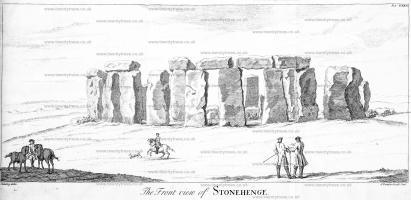
Table V. The Front View of Stonehenge.
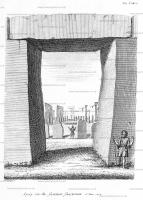
Table VII. A Peep into the Santum Sanctorum [Map].

Table X. South East Prospect from Stonehenge. [Left to right, north to south, New King Barrows, a barrow named as Kingbarrow but is likely to be Coneybury Hill Barrow [Map], the spire of Salisbury Cathedral [Map]]
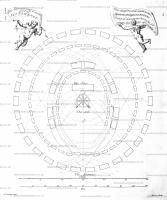
Table XI. Schematic of Stonehenge Phase 3 II Sarsens.
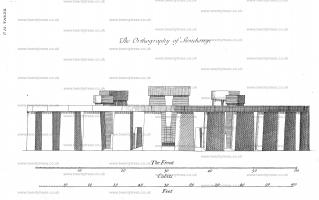
Table XII. The Orthography of Stonehenge Phase 3 II Sarsens.
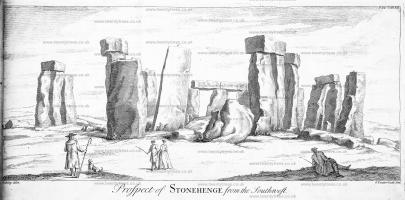
Table XIII. Prospect of Stonehenge from the Southwest.
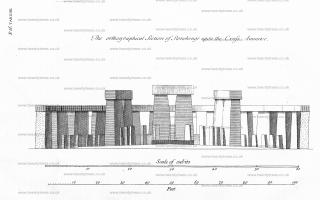
Table XIV. The orthographical Section of Stonehenge upon the Cross diameter.
Adam Murimuth's Continuation and Robert of Avesbury’s 'The Wonderful Deeds of King Edward III'
This volume brings together two of the most important contemporary chronicles for the reign of Edward III and the opening phases of the Hundred Years’ War. Written in Latin by English clerical observers, these texts provide a vivid and authoritative window into the political, diplomatic, and military history of fourteenth-century England and its continental ambitions. Adam Murimuth Continuatio's Chronicarum continues an earlier chronicle into the mid-fourteenth century, offering concise but valuable notices on royal policy, foreign relations, and ecclesiastical affairs. Its annalistic structure makes it especially useful for establishing chronology and tracing the development of events year by year. Complementing it, Robert of Avesbury’s De gestis mirabilibus regis Edwardi tertii is a rich documentary chronicle preserving letters, treaties, and official records alongside narrative passages. It is an indispensable source for understanding Edward III’s claim to the French crown, the conduct of war, and the mechanisms of medieval diplomacy. Together, these works offer scholars, students, and enthusiasts a reliable and unembellished account of a transformative period in English and European history. Essential for anyone interested in medieval chronicles, the Hundred Years’ War, or the reign of Edward III.
Available at Amazon in eBook and Paperback format.
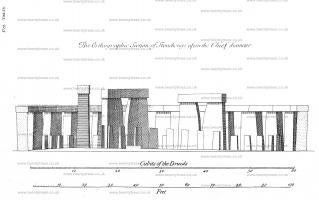
Table XV. The orthographic Section of Stonehenge upon the Chief diameter.
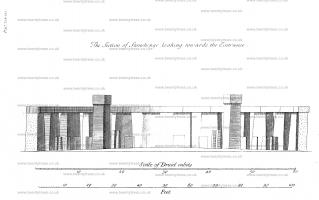
Table XVI. The Section of Stonehenge looking towards the Entrance.
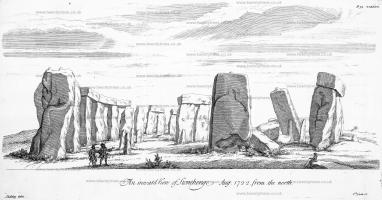
Table XVII. The inward View of Stonehenge Aug 1722 from the north.
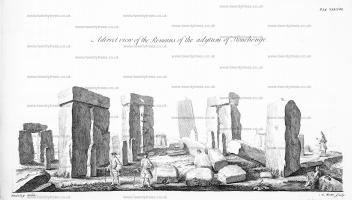
Table XVIII. A direct view of the Remains of the adytum of Stonehenge.
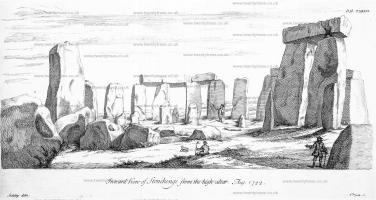
Table XIX. Inward View of Stonehenge from the high altar. Aug 1722.
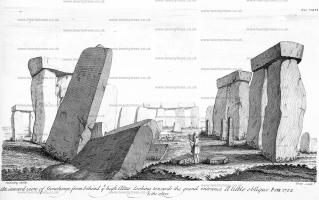
Table XX. An inward view of Stonehenge from behind ye high Altar looking towards the grand entrance. A little oblique. Aug 1722. A. the altar.
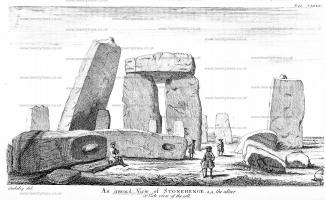
Table XXI. An inward view of Stonehenge. AA the altar or Side view of the cell.
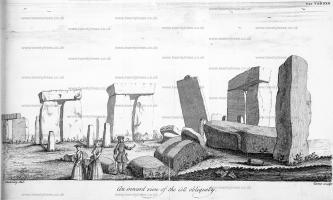
Table XXII. An inward view of the Cell [of Stonehenge] obliquely.
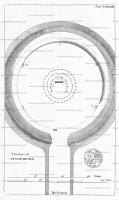
Table XXIII. The Area of Stonehenge.
In order to have a just notion of this avenue, it is necessary to go to the neighbouring height of Haradon hill [Map], on the other side the river. The largest barrow there, which I call Hara's and which probably gave name to the hill, is in the line of the avenue; the ford of Radfin lying between, as we see in the last Plate. I stood upon this hill May 11. 1724. during the total eclipse of the sun, of which I gave an account in my Itinerarium. Here is a most noble view of the work and country about Stonehenge. Whoever is upon the spot cannot fail of a great pleasure in it; especially if the fun be low, either after rising or before setting. For by that means the barrows, the only ornaments of these plains, become very visible, the ground beyond them being illuminated by the suns flaunting rays. You fee as far as Clay-hill beyond Warminster 20 miles off. You fee the spot of ground on the hill, whereon stands Vespasians camp [Map], where I conjecture the avenue to Stonehenge began, and where there was a facellum, as we conceive. From hence to that spot a valley leads very commodiously to Radfin [Map], where the original ford was.
Henrici Quinti, Angliæ Regis, Gesta, is a first-hand account of the Agincourt Campaign, and subsequent events to his death in 1422. The author of the first part was a Chaplain in King Henry's retinue who was present from King Henry's departure at Southampton in 1415, at the siege of Harfleur, the battle of Agincourt, and the celebrations on King Henry's return to London. The second part, by another writer, relates the events that took place including the negotiations at Troye, Henry's marriage and his death in 1422.
Available at Amazon in eBook and Paperback format.
This Radfin-farm [Map] seems to retain its Celtic name: meaning a ford or passage for chariots, the old way of carriage here used. Rhedeg currere, rhedegfain curfitare, in Irijh reathaini. Fin in the old Irish, is white. It regards the chalky road which went up from the ford. 'Tis a pretty place, seated in a flexure of the river, which from hence seems to bend its arms both ways, to embrace the beginning of the avenue. The place is very warm, sheltered from all winds, and especially from the north. I am persuaded it was originally a seat of an Archdruid or Druid. See Mr. Poland discoursing of the Druids houses, p. III. The nuns of Ambresbury too had a chapel there. The ford is now quite disused, because of the bridge by the town's end; and the road of it is foreclosed by hedgerows of pastures on both sides the lane, leading northwards from Ambresbury to north Wiltshire. This road lying between Radfin and the beginning of Stonehenge avenue, is sweetly adorned with viorna. We are supposed now to stand on the tumulus of Hara, an old Irish royal name, and possibly the king who was coadjutor in founding Stonehenge, who lived, it's likely, in the eastern part of Wiltshire: for which reason they directed the avenue this way.

Table XXIX. Prospect of the Cursus & Stonehenge from the North Aug 6. 1723. A. The Entrance of the Avenue [Map]. B. The 7 Barrows. C. The Kings Barrow [Coneybury Hill Barrow [Map]?]. D. Salisbury Steeple [Map]. E. Stonehenge. [The Stonehenge Greater Cursus in the foreground. Appears to have been sketched from highground at Larkhill [Map]]
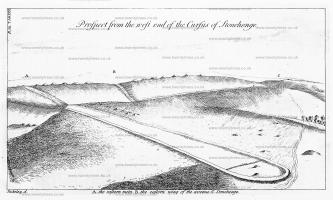
Table XXX. Prospect of the west end of the Cursus of Stonehenge. A. The eastern meta [Map]. B. the eastern wing of the avenue [Map]. C. Stonehenge.
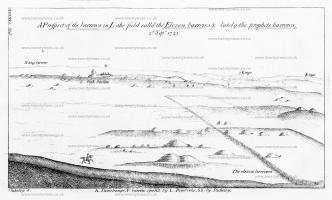
Table XXXI. A Prospect of the barrows in Lake field called Eleven barrows & lately the prophets barrows. 2d. Sepr. 1723. A. Stonehenge. Barrow opened by L. Pembroke. SS. by Stukeley.