


Text this colour links to Pages. Text this colour links to Family Trees. Text this colour are links that disabled for Guests.
Place the mouse over images to see a larger image. Click on paintings to see the painter's Biography Page.
Mouse over links for a preview. Move the mouse off the painting or link to close the popup.
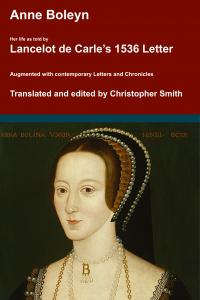
Anne Boleyn. Her Life as told by Lancelot de Carle's 1536 Letter.
In 1536, two weeks after the execution of Anne Boleyn, her brother George and four others, Lancelot du Carle, wrote an extraordinary letter that described Anne's life, and her trial and execution, to which he was a witness. This book presents a new translation of that letter, with additional material from other contemporary sources such as Letters, Hall's and Wriothesley's Chronicles, the pamphlets of Wynkyn the Worde, the Memorial of George Constantyne, the Portuguese Letter and the Baga de Secrets, all of which are provided in Appendices.
Available at Amazon in eBook and Paperback format.
Memoirs of the Anthropological Society of London is in Prehistory.
Skulls from Long Barrow, Oldbury [Map], Wilts.—In the same year (1864), in digging in a chalk-pit near the ancient British camp of Oldbury, North Wiltshire, about three miles from the elebrated megalithic circles at Avebury, two or three skeletons were uncovered at the base of the east end of what turned out to be a long barrow, of low elevation. The measurements of three skulls, which, though quite dolichocephalous, are of small size, and not very characteristic, are given in the table. Two of the skulls appear to be those of women, and are in the possession of Mr. Cunnington, of Devizes, who assisted in their exhumation. The other skull, that of a man, has been added to my collection (No. 198). Near the skeletons were a number of flint flakes, with one or two cores, from which they had been broken off. At the centre of the mound was a small irregularly-shaped cist, built up with sarsen stones: it was empty. This tumulus, though of oblong form, has not the unequivocal characters of a long barrow; it appears, however, to have belonged to that class.