

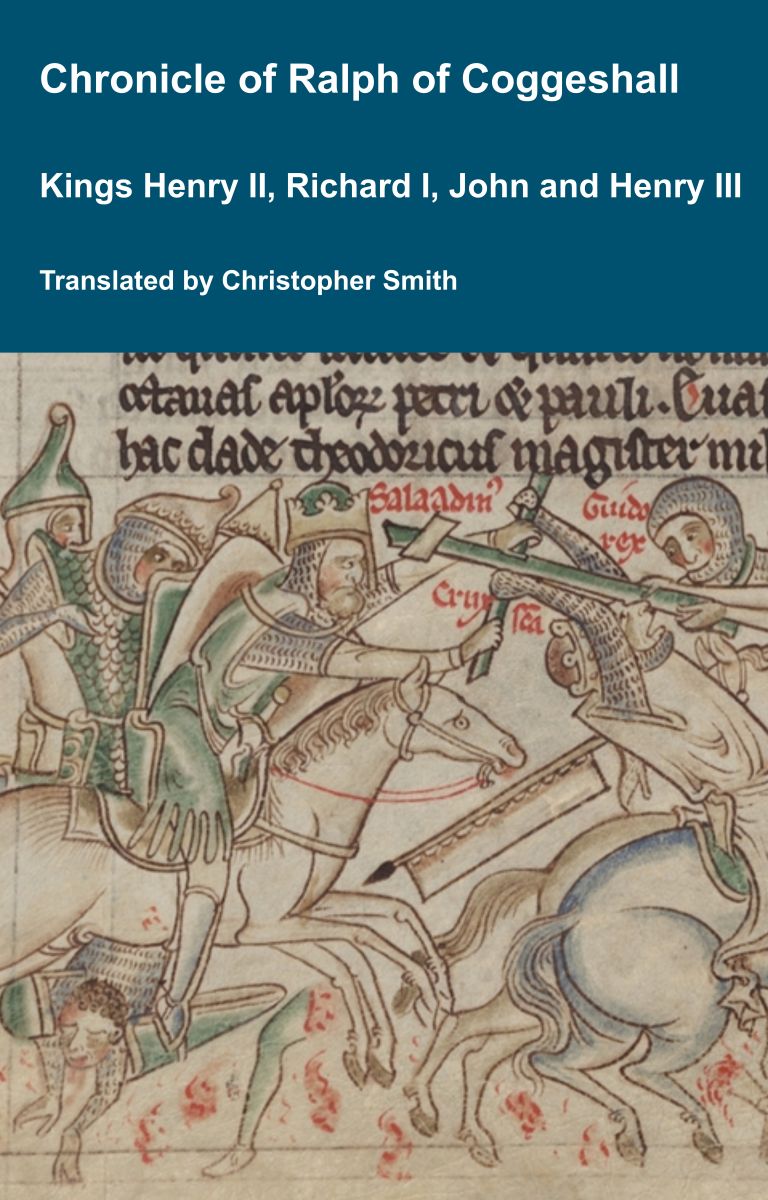
Chronicle of Abbot Ralph of Coggeshall
The Chronicle of Abbot Ralph of Coggeshall (Chronicon Anglicanum) is an indispensable medieval history that brings to life centuries of English and European affairs through the eyes of a learned Cistercian monk. Ralph of Coggeshall, abbot of the Abbey of Coggeshall in Essex in the early 13th century, continued and expanded his community’s chronicle, documenting events from the Norman Conquest of 1066 into the tumultuous reign of King Henry III. Blending eyewitness testimony, careful compilation, and the monastic commitment to record-keeping, this chronicle offers a rare narrative of political intrigue, royal power struggles, and social upheaval in England and beyond. Ralph’s work captures the reigns of pivotal figures such as Richard I and King John, providing invaluable insights into their characters, decisions, and the forces that shaped medieval rule. More than a simple annal, Chronicon Anglicanum conveys the texture of medieval life and governance, making it a rich source for scholars and readers fascinated by English history, monastic authorship, and the shaping of the medieval world.
Available at Amazon in eBook and Paperback format.
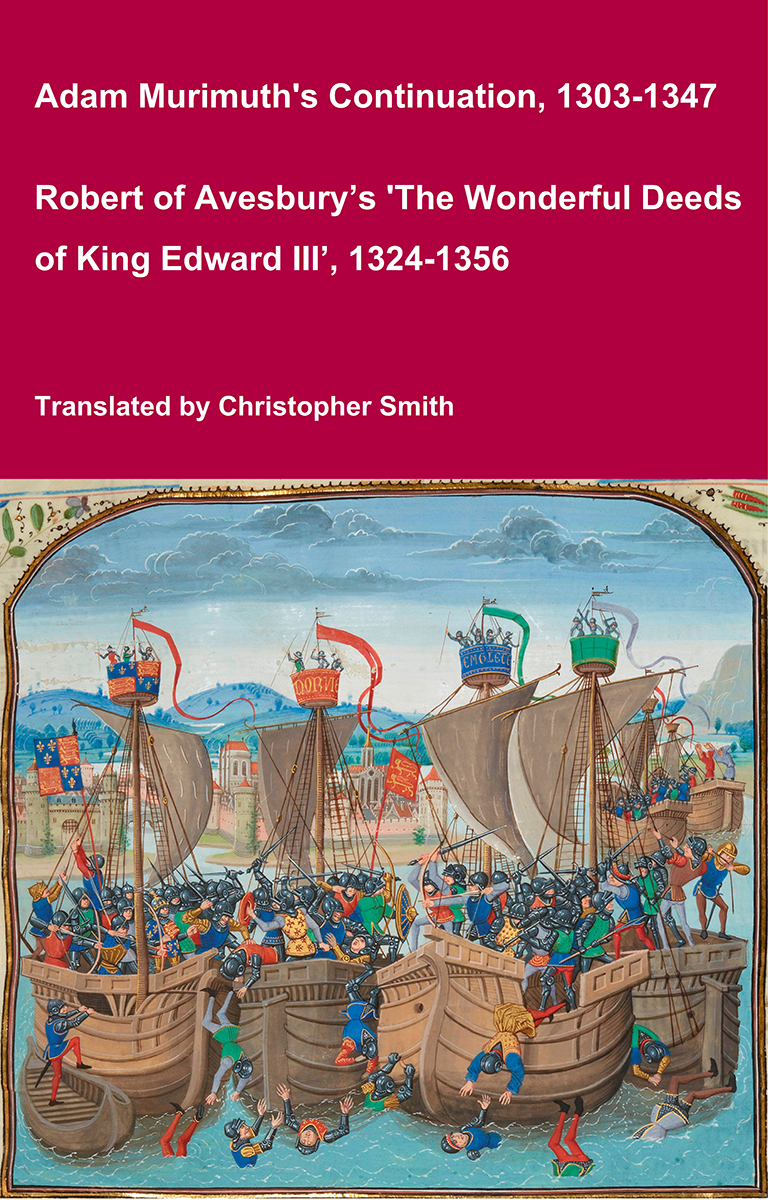 Adam Murimuth Continuation. In the year of our Lord 1316, in the tenth year of the same King Edward and the first of Pope John XXII, the same pope entered Avignon on the second day of October. There he granted, in the form customary for the poor, three successive graces and many other special favours without number. He also provided for the church of Durham by appointing Lord Louis de Beaumont, who, although noble by birth, was nevertheless only moderately literate and lame in both feet, as are many Frenchmen; and if the pope had seen him, perhaps he would not have created him. Likewise, for the church of Worcester, vacant through the death of Walter de Maidstone, he provided Master Thomas de Cobham, whose election to the church of Canterbury Pope Clement had previously rejected, as has been mentioned above. Also, for the church of Hereford, vacant through the death of Master Richard de Swinfield, he provided Master Adam Orleton on the ninth day before the Kalends of May [23rd April] in the year of our Lord 1317.
Anno Domini millesimo CCCXVI, et ipsius regis Edwardi decimo, et papæ Johannis XXII primo, idem papa intravit Avinonam IJ die Octobris, ubi fecit in forma pauperum tres gratias successive et alias speciales gratias infinitas. Providit etiam ecclesiæ Dunelmensi de domino Lodowyco de Bello monte, qui, licet fuit nobilis genere, fuit tamen mediocriter lite: ratus et claudus utroque pede, sicut sunt multi Francigenæ; quem si papa vidisset, forsitan non creasset. Item ecclesiæ Wygorniensi, vacanti per mortem Walteri de Maydenestone/ providit de magistro Thoma de Cobham, cujus electionem ad ecclesiam Cantuariensem respuit, ut præmittitur, papa Clemens. Item ecclesiæ Herefordiensi, vacanti per mortem magistri Ricardi de Swynisfeld, providit de magistro Adamo de Orletone, IX kalendas Maii, anno Domini MCCCXVII.
On 22nd May 1317 Bishop Adam Orleton was consecrated Bishop of hereford.
Constitutional History by William Stubbs. [1324] Three or four good men amongst them stood aloof from politics; three or four were honestly grateful and faithful to Edward: the conduct of the rest proves that the average of episcopal morality had sadly sunk since the death of Winchelsey. Yet Edward in his infatuation or simplicity trusted all alike, except Orlton against whom, when the prelates in the parliament of 1324 had refused to surrender him, he obtained a verdict from a jury of the country as guilty of high treason.
Chronicles of Trokelowe and Blaneforde. [1324] Another incident also occurred during the said Parliament—one harmful and deeply prejudicial to the liberty of the Holy Church of God, and to its prelates and ministers. For the venerable father, the Bishop of Hereford [Bishop Adam Orleton], was brought before the King and all the nobles of the realm, and there was accused and examined for treason, as if for the crime of high treason itself. It was alleged against him that he had knowingly received and sheltered certain enemies of the King and the realm, despite being aware of their malicious intentions, and that he had provided them with armed men, assistance, and counsel. Struck with these and other reproaches, he—being a mature man and one excellently adorned with learning—bore such insults for a time in silence, enduring them patiently. At last, entrusting his cause to the Most High Judge, whose minister he professed himself to be, he broke forth in reply, saying: 'My Lord King, with all due reverence always preserved for your royal majesty, I—though an unworthy servant of the Holy Church of God, a member thereof, and a consecrated bishop—am unable, as indeed I must not, to answer to such grave charges as have been brought against me, except by the authority of the Archbishop of Canterbury, of whom I am a suffragan, and who, after the Supreme Pontiff, is my direct judge, and with the consent of my peers, the other bishops.'
Accidit et alius casus in dicto Parliamento, Ecclesiæ sanctæ Dei libertati, suisque prælatis, sive ministris, damnosus, nimiumque præjudicialis. Nam venerabilis pater, Episcopus Herefordensis, coram Rege et cunctis regni proceribus constitutus, arrannatus extitit, et examinatus, de proditione, quasi de crimine læsæ majestatis. Cui quidem impositum fuerat, quod quosdam inimicos Regis et regni, sciens eornm præcogitatam malitiam, hospitasse, fovisse, copiam armatorum, auxi- lium, et consilium, debuit impendisse. Super quibus et aliis conviciis irrogatis pulsatus, ut erat vir maturus et litterali scientia excellenter ornatus, aliquandiu hujusmodi opprobria patienter sustinuit, obmutescens; tandem Altissimo Judici, cujus se fatebatur fore ministrum, causam committens, in hujusmodi responsum prorupit: "Domine Rex, vestra regiæ majestatis reverentia in omnibus semper salva, ego, Ecclesiæ sanctæ Dei humilis minister, membrum ejus, et Episcopus consecratus, licet indignus, ad tam ardua nobis imposita, nequimus, sicut nec debemus, absque Archiepiscopi Cantuariensis, cujus sumus Suffraganeus, post Summum Pontificem mei directi judicis, auctoritate, et aliorum parium meorum, Episcoporum, consensu, aliqualiter respondere."
In January 1327 Bishop Adam Orleton was appointed Lord High Treasurer which office he held until March 1327.
On 25th September 1327 Bishop Adam Orleton was translated to Bishop of Worcester.
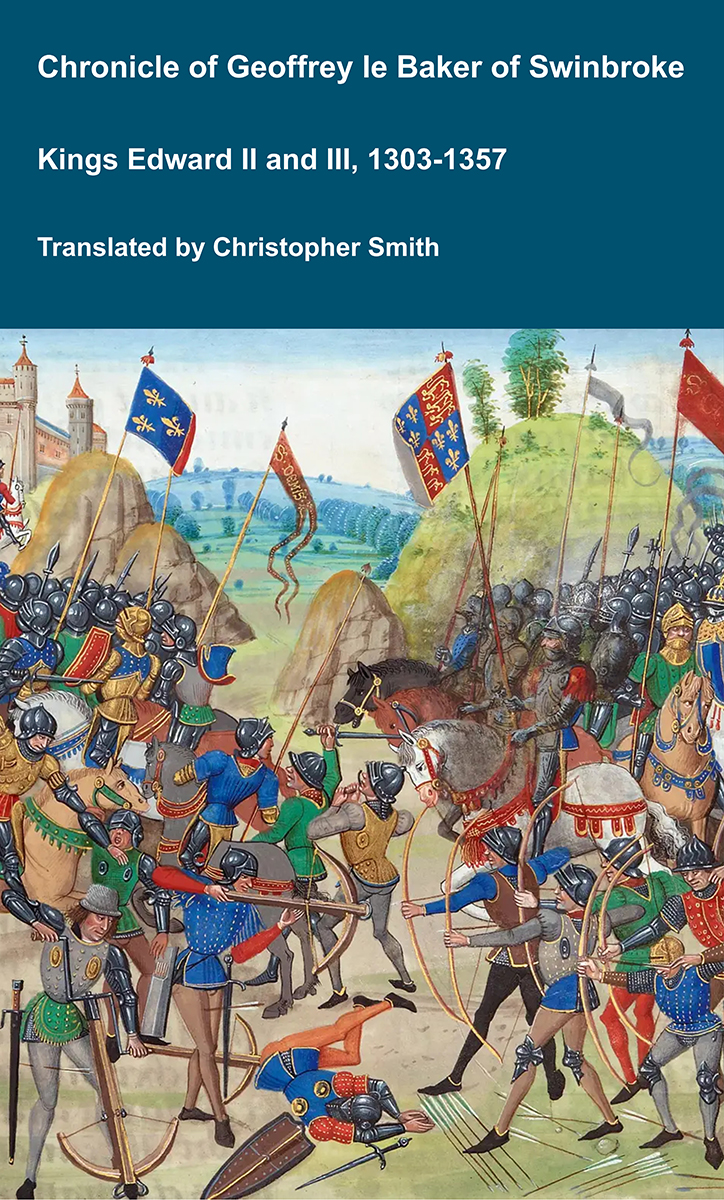 Chronicle of Geoffrey le Baker of Swinbroke. In this year, in the month of November, Walter,1 Archbishop of Canterbury, died, and he was succeeded by Master Simon de Mepham, a doctor of theology, through a canonical election. In this same year, Master Thomas de Cobham2, Bishop of Worcester, also died; and he was succeeded by papal provision by Adam Orleton, formerly Bishop of Hereford, who had gone to the papal court on behalf of his own affairs and those of the king's mother. Likewise, the pope provided the Church of Hereford with Master Thomas de Charlton, who was then present at the court.
Hoc anno, mense Novembris, obiit Walterus Cantuariensis archiepiscopus, cui successit per eleccionem canonicam magister Symon de Mepham, doctor in theologia. Hoc anno moriebatur magister Thomas de Cobham episcopus Wigorniensis; cui successit per provisionem pape Adam Torltoine, prius episcopus Herefordensis, ad curiam pro negociis propriis et matris regis profectus. Item papa providit ecclesie Herefordensi de magistro Thoma de Charletone, tunc in curia presente.
Note 1. Archbishop Walter Reynolds died on 16th November 1327.
Note 2. Thomas de Cobham, Bishop of Worcester, died on 27th August 1327.
Chronicle of Geoffrey le Baker of Swinbroke. In the same year, on the first day of December, the lord pope transferred Master Adam de Orleton, previously Bishop of Hereford and afterwards of Worcester, to the Church of Winchester. Whereupon someone composed the following verse:
"He neglected Thomas, ruled Wulfstan not well,
He chose Swithun — why? Because it paid more".
Eodem anno, primo die Decembris, transtulit dominus papa magistrum Adam de Horletone, antea episcopum Herefordensem et postea Wygorniensem, ad ecclesiam Wyntoniensem, unde quidam sic metrificavit:
"Thomam neclexit, Wlstanum non bene rexit,
Swithunum voluit; cur quia plus valuit."
On 1st December 1333 Bishop Adam Orleton was translated to Bishop of Winchester.
Henrici Quinti, Angliæ Regis, Gesta, is a first-hand account of the Agincourt Campaign, and subsequent events to his death in 1422. The author of the first part was a Chaplain in King Henry's retinue who was present from King Henry's departure at Southampton in 1415, at the siege of Harfleur, the battle of Agincourt, and the celebrations on King Henry's return to London. The second part, by another writer, relates the events that took place including the negotiations at Troye, Henry's marriage and his death in 1422.
Available at Amazon in eBook and Paperback format.
Adam Murimuth Continuation. In the same year, on the first day of December [1333], the pope transferred Master Adam Orleton from the church of Worcester to the church of Winchester at the request of the king of France. This transfer displeased the king of England, who alleged that Orleton had recently been his envoy to the king of France and had pleased the French king more than the king of England, and that he had pursued his own interests rather than the king's business. It was also said that the king of France had written to the pope on his behalf to have him transferred to Winchester. The king of England was all the more offended because he himself had written to the pope on behalf of another candidate, namely Lord Simon Montagu, for the same bishopric. He believed that his own requests for bishoprics and dignities in England ought to be heard more readily than those of the king of France. Therefore, the king retained the temporalities of the bishopric of Winchester in his own hands until the Friday after the feast of the Exaltation of the Holy Cross [16th September]. On that day the archbishop and the other bishops asked on Orleton's behalf in a parliament at London, and after the matter had been considered the king ordered the temporalities to be restored to him.
Eodem anno, primo die Decembris, transtulit papa magistrum Adam de Orltone de ecclesia Wygorniensi ad ecclesiam Wyntoniensem, ad preces regis Franciæ. Cujus translationem dominus rex Angliæ non habebat acceptam, imponens sibi quod tune ipse fuit nuncius ipsius regis Angliæ ad regem Franciæ, et quod ipse plus placuit regi Franciæ quam regi Angliæ, nec ejus negotia sed sua propria procuravit, et quod idem rex Franciæ scripsit papæ pro ipso ad Wyntoniensem ecclesiam transferendo. Item, ex eo rex Angliæ fuit eo magis offensus quod ipse pro alio, scilicet pro domino Simone de Monte acuto, domino papæ sçripsit pro episcopatu eodem; sibique vigum fuerat quod preces suæ pro episcopatibus et dignitatibus in Anglia citius audiri deberent quam preces regis Franciæ supradicti, Ideoque retinuit dominus rex temporalia episcopatus Wyntoniensis in manibus suis usque ad diem Veneris proximum post Exaltationem sanctæ Crucis; quo die archiepiscopus et ceteri episcopi in parliamento Londoniis rogaverunt pro ipso, ita quod, causa cognita, mandavit sua temporalia sibi reddi.
Adam Murimuth Continuation. Item, in this year, on the 18th day of the month of July, the lord Adam de Orleton, bishop of Winchester, an old man and full of days, died, after he had governed successively the churches of Hereford, Worcester, and Winchester, which he had ambitiously sought, for twenty-eight years, two months, and more. And soon afterwards the prior and chapter of Winchester, by virtue of a licence of Lionel, the king's son, which, upon the king's arrival in England, had been revoked by royal letters, proceeded to an election in contempt of the king, and unanimously elected a certain monk of that monastery, named John de Veneys. At this the king, greatly offended, punished them with a fine of two thousand pounds of silver; notwithstanding which, the said elect set out on his journey to the Apostolic See, because of the apostolic reservation publicly proclaimed.
Item, hoc anno, XVIIJ die mensis Julii, obiit dominus Adam de Orletone, Wyntoniensis episcopus, senex et plenus dierum, postquam ecclesias Herefordiensem, Wygorniensem et Wyntoniensem, ambitiose quæsitas, viginti octo annis, duobus mensibus et amplius rexerat successive. Et cito postea prior et capitulum Wyntoniæ, virtute licentiæ Leonelli filii regis, per adventum ipsius regis in Angliam et per literas regias revocatæ, ad electionem in contemptum regium processerunt, et quendam monachum ejusdem monasterii, nomine Johannem de Veneys, concorditer elegerunt. Ex quo rex nimis offensus ipsos pœna duarum millium librarum argenti punivit; quo non obstante, idem electus versus sedem apostolicam arripuit iter suum, propter reservationem apostolicam publice prædicatam.
On 18th July 1345 Bishop Adam Orleton died.
Chronicle of Geoffrey le Baker of Swinbroke. The queen, as previously mentioned, was in Hereford with the master of all her malice, the bishop [Bishop Adam Orleton] of that same city, presiding over the army. At the urging of Roger de Mortimer, who hated them with a deep and unrelenting hatred, though not a prophetic one, Edmund, Earl of Arundel,1 John Daniel, and Thomas Micheldever were beheaded.
Regina, ut predictum est, apud Herefordiam, cum magistro tocius sue malicie, episcopo scilicet istius civitatis, exercitui presidente, Edmundus comes Darundel, Iohannes Daniel, et Thomas Miceldevre, ad instanciam Rogeri de Mortuo mari, qui perfecto odio set non prophetico oderat illos, fuerunt decollati.
Note 1. Knighton 2546.
Chronicle of Geoffrey le Baker of Swinbroke. In the following Lent, during the parliament held in London, an inquiry1 was made by lawful men of the county of Hereford against Adam [Orleton], Bishop of Hereford, concerning his alleged support of the enemies of the king, namely his former association with Roger de Mortimer. He was accused of supplying horses and arms to Mortimer and aiding in his escape. When the said bishop, having been accused of these crimes, refused to respond, all his temporal possessions, as those of a traitor, were confiscated by royal authority. From this, Bishop Adam, bearing an implacable hatred toward the king and his allies, conceived a plan. He was a man of cunning natural intelligence, deeply experienced in worldly prudence, and skilled in executing bold deeds. He now poisoned the situation with the venom of his conceived wrath, aimed at the king's downfall and the ruin of many nobles, a story worthy of being told.
Proxima Quadragesima, in parliamento Londoniensi, inquisicione facta contra Adam episcopum Herefordensem per legales viros de comitatu Herefordie, super eo quod predictus Adam adesit quondam illis de Mortuo mari, inimicis regis, accommodans eiisdem equos et arma iuvansque ad dicti Rogeri evasionem, ipso quoque episcopo de talibus accusato nolente respondere, omnia temporalia ipsius episcopi sive proditoris auctoritate regia confiscantur. Unde inexorabile odium contra regem et eius amicos concipiens Adam predictus, vir ingenio naturali calludissimus, et prudencie mundane maximus expertor, facinorumque arduorum factuosus, ad regis degradacionem et multorum nobilium exinanicionem iracundie concepte venenum propinavit serie narranda.
Note 1. Orleton had been appointed to Hereford, in 1317, by papal provision, in opposition to the king's nominee. Accused of treason in the parliament of 1324, he was taken under the protection of the prelates; whereupon the king obtained a verdict against him from a jury, as mentioned by Baker.
Stubbs Constitutional History of England 2.387
On 28th May 1325, Edward applied to the pope for Orleton's deposition from his see. Rymer's Fœdera 2.601.