

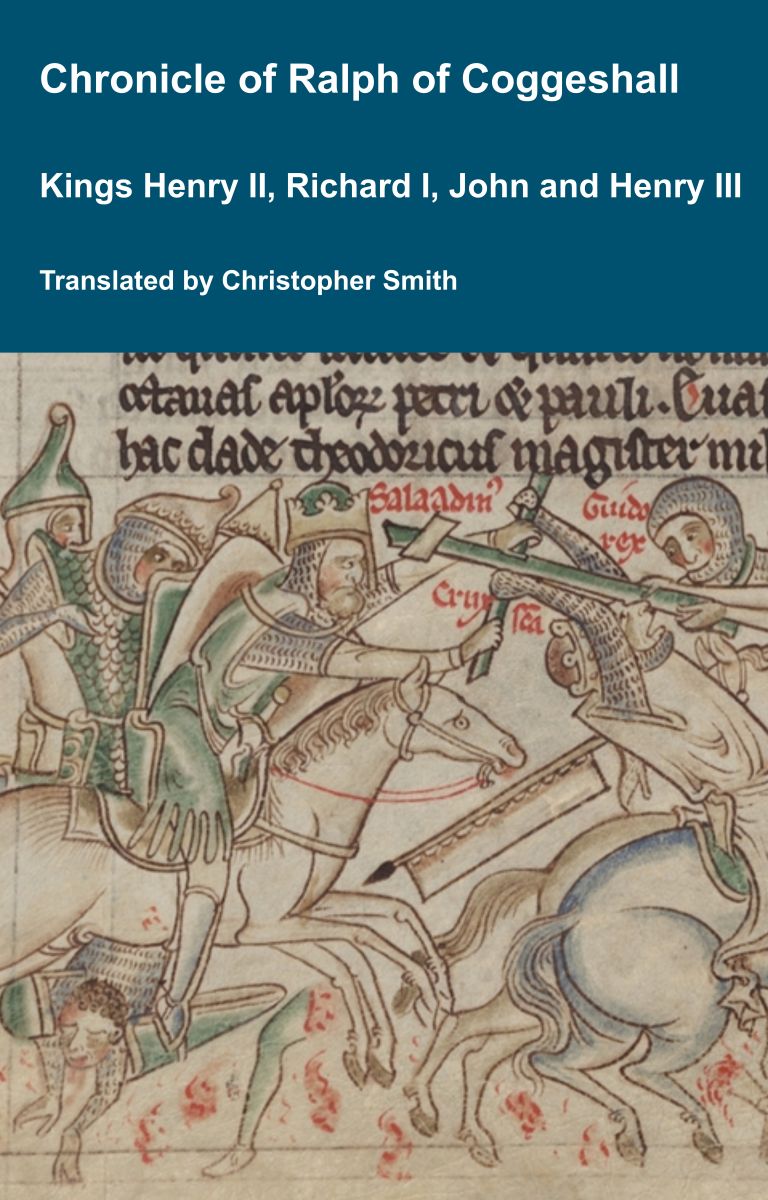
Chronicle of Abbot Ralph of Coggeshall
The Chronicle of Abbot Ralph of Coggeshall (Chronicon Anglicanum) is an indispensable medieval history that brings to life centuries of English and European affairs through the eyes of a learned Cistercian monk. Ralph of Coggeshall, abbot of the Abbey of Coggeshall in Essex in the early 13th century, continued and expanded his community’s chronicle, documenting events from the Norman Conquest of 1066 into the tumultuous reign of King Henry III. Blending eyewitness testimony, careful compilation, and the monastic commitment to record-keeping, this chronicle offers a rare narrative of political intrigue, royal power struggles, and social upheaval in England and beyond. Ralph’s work captures the reigns of pivotal figures such as Richard I and King John, providing invaluable insights into their characters, decisions, and the forces that shaped medieval rule. More than a simple annal, Chronicon Anglicanum conveys the texture of medieval life and governance, making it a rich source for scholars and readers fascinated by English history, monastic authorship, and the shaping of the medieval world.
Available at Amazon in eBook and Paperback format.
On 18th July 1335 Bishop Adam de Houghton was admitted as an advocate at the Court of Arches.
On 26th December 1339 Bishop Adam de Houghton was appointed Precentor of St David's Cathedral, Pembrokeshire [Map]. He resigned around 1350.
On 20th September 1361 Pope Innocent VI provided Bishop Adam de Houghton to be Bishop of St David's, and he was consecrated a bishop by William Evendon, bishop of Winchester, at St Mary's, Southwark [Map].
Archaeologia Volume 22 Section XVI. Aº 1376 there was a parlyament at London, whiche began about the octaves of St. George, and contynewed 9 weekes, wherein was demaunded for the Kynge a subsydye of the Commons. The knyghts of the shyre (inspyred as it is thought with the holy Ghost) after dylygent delyberation in the matter, refused to answer to suche petytions without the counsell of the nobles, & for that cause they requyred that certayn byshops, videlicet, of Norwych, Rochester, London, & Carleyll, myght covnsell them wherby with greater delyberation they myght make answere to the kyngs request. The byshops admytted to the recounsell, & hearing the allegations & petytions which the intended to propovnde, foreseinge how the matter was hard, and without great counsell not well to be brought to good effect, for that it requyred a strong hand, made answere, that by all meanes they should labour that 4 lordes which should entyerly love the kyngdome and his majesties dygnytye, should be sent for, with whose favors they myght be backed & defended if any sought to wronge them, and by them to be more incoraged stoutly to prosecute any matter that should be brought to passe for the safetye of the kyngdome, his majesties body and soule, yea, althoughe the Kynge should take the same in evill parte. The knyghtes consentynge with the byshops made request for 4 lordes without whose consent they neyther wold nor cold make anye answere in so wayghtye a matter. Then at there own election the were 4 sent vnto them, namely, the L. Henry Percye, the L. Rycharde de Stafforde, the L. Guy de Bryan, and the L. de Beuchampe,d who all sware with them, and perceyvynge there good purpose not without God's provydence consented with them, yet not without 4 erles faythfull to the land, ryche, & of poure were joyned with them, which graunted, they chose the Lord Edmond Mortymer Erle of Marche, Thomas Beuchamp Erle of Warwyke, Wm Vfford Erle of Suffolke, Rafe Stafford Erle of Stafforde, these beinge chosen it was easye to exact an othe of them, synce they ment nethynge but the kynges honor & the quyett of the lande.
Note d. It appears by the Rolls of Parliament that the Bishop of St. David's and Sir Henry Scroop, were appointed for the purposes named in the text, instead of the Bishop of Rochester and the Lord Beauchamp. The remaining ten are correctly stated above. Rot. Parl. 2. p. 322.
On 13th February 1389 Bishop Adam de Houghton died.
Between 1392 and 1389 Bishop Adam de Houghton commissioned the building work at Llawhaden Castle [Map] which comprise the majority of the ruins seen today.