

The History of William Marshal was commissioned by his son shortly after William’s death in 1219 to celebrate the Marshal’s remarkable life; it is an authentic, contemporary voice. The manuscript was discovered in 1861 by French historian Paul Meyer. Meyer published the manuscript in its original Anglo-French in 1891 in two books. This book is a line by line translation of the first of Meyer’s books; lines 1-10152. Book 1 of the History begins in 1139 and ends in 1194. It describes the events of the Anarchy, the role of William’s father John, John’s marriages, William’s childhood, his role as a hostage at the siege of Newbury, his injury and imprisonment in Poitou where he met Eleanor of Aquitaine and his life as a knight errant. It continues with the accusation against him of an improper relationship with Margaret, wife of Henry the Young King, his exile, and return, the death of Henry the Young King, the rebellion of Richard, the future King Richard I, war with France, the death of King Henry II, and the capture of King Richard, and the rebellion of John, the future King John. It ends with the release of King Richard and the death of John Marshal.
Available at Amazon in eBook and Paperback format.
On 17th April 1635 Bishop Edward Stillingfleet was born.
Samuel Pepys' Diary. 16th April 1665. Then home to dinner, where Creed dined with us, and so after dinner he and I walked to the Rolls' Chappell, expecting to hear the great Stillingfleete [aged 29] preach, but he did not; but a very sorry fellow, which vexed me. The sermon done, we parted, and I home, where I find Mr. Andrews, and by and by comes Captain Taylor, my old acquaintance at Westminster, that understands musique very well and composes mighty bravely; he brought us some things of two parts to sing, very hard; but that that is the worst, he is very conceited of them, and that though they are good makes them troublesome to one, to see him every note commend and admire them. He supped with me, and a good understanding man he is and a good scholler, and, among other things, a great antiquary, and among other things he can, as he says, show the very originall Charter to Worcester, of King Edgar's, wherein he stiles himself, Rex Marium Brittanniae, &c.; which is the great text that Mr. Selden and others do quote, but imperfectly and upon trust. But he hath the very originall, which he says he will shew me. He gone we to bed.

Samuel Pepys' Diary. 23rd April 1665. Thence to the Chappell and heard the famous young Stillingfleete [aged 30], whom I knew at Cambridge, and is now newly admitted one of the King's chaplains; and was presented, they say, to my Lord Treasurer [aged 58] for St. Andrew's, Holborne [Map], where he is now minister, with these words: that they (the Bishops of Canterbury, London, and another) believed he is the ablest young man to preach the Gospel of any since the Apostles. He did make the most plain, honest, good, grave sermon, in the most unconcerned and easy yet substantial manner, that ever I heard in my life, upon the words of Samuell to the people, "Fear the Lord in truth with all your heart, and remember the great things that he hath done for you". It being proper to this day, the day of the King's Coronation.
Samuel Pepys' Diary. 12th November 1665. Thence back by water to Captain Cocke's [aged 48], and there he and I spent a great deale of the evening as we had done of the day reading and discoursing over part of Mr. Stillingfleet's [aged 30] "Origines Sacrae", wherein many things are very good and some frivolous.
Samuel Pepys' Diary. 10th October 1666. Thence with him to Westminster, to the parish church, where the Parliament-men, and Stillingfleete [aged 31] in the pulpit. So full, no standing there; so he and I to eat herrings at the Dog taverne [Map]. And then to church again, and there was Mr. Frampton [aged 44] in the pulpit, they cry up so much, a young man, and of a mighty ready tongue. I heard a little of his sermon, and liked it; but the crowd so great, I could not stay.
Samuel Pepys' Diary. 21st October 1666. Lord's Day. Up, and with my wife to church, and her new woman Barker with her the first time. The girle will, I think, do very well. Here a lazy sermon, and so home to dinner, and took in my Lady Pen [aged 42] and Peg [aged 15] (Sir William being below with the fleete), and mighty merry we were, and then after dinner presently (it being a mighty cool day) I by coach to White Hall, and there attended the Cabinet, and was called in before the King [aged 36] and them to give an account of our want of money for Tangier [Map], which troubles me that it should be my place so often and so soon after one another to come to speak there of their wants-the thing of the world that they love least to hear of, and that which is no welcome thing to be the solicitor for-and to see how like an image the King sat and could not speak one word when I had delivered myself was very strange; only my Chancellor [aged 57] did ask me, whether I thought it was in nature at this time to help us to anything. So I was referred to another meeting of the Lords Commissioners for Tangier and my Lord Treasurer [aged 59], and so went away, and by coach home, where I spent the evening in reading Stillingfleet's [aged 31] defence of the Archbishopp, the part about Purgatory, a point I had never considered before, what was said for it or against it, and though I do believe we are in the right, yet I do not see any great matter in this book.


Samuel Pepys' Diary. 16th January 1667. So after supper a little to the office, to enter my journall, and then home to bed. Talk there is of a letter to come from Holland, desiring a place of treaty; but I do doubt it. This day I observe still, in many places, the smoking remains of the late fire: the ways mighty bad and dirty. This night Sir R. Ford [aged 53] told me how this day, at Christ Church Hospital, they have given a living over £200 per annum to Mr. Sanchy, my old acquaintance, which I wonder at, he commending him mightily; but am glad of it. He tells me, too, how the famous Stillingfleete [aged 31] was a Bluecoat boy. The children at this day are provided for in the country by the House, which I am glad also to hear.
Samuel Pepys' Diary. 24th January 1668. Up before day to my Tangier accounts, and then out and to a Committee of Tangier, where little done but discourse about reduction of the charge of the garrison, and thence to Westminster about orders at the Exchequer, and at the Swan [Map] I drank, and there met with a pretty ingenious young Doctor of physic, by chance, and talked with him, and so home to dinner, and after dinner carried my wife to the Temple [Map], and thence she to a play, and I to St. Andrew's church [Map], in Holburne, at the 'Quest House, where the company meets to the burial of my cozen Joyce; and here I staid with a very great rabble of four or five hundred people of mean condition, and I staid in the room with the kindred till ready to go to church, where there is to be a sermon of Dr. Stillingfleete [aged 32], and thence they carried him to St. Sepulchre's. But it being late, and, indeed, not having a black cloak to lead her with, or follow the corps, I away, and saw, indeed, a very great press of people follow the corps. I to the King's playhouse, to fetch my wife, and there saw the best part of "The Mayden Queene", which, the more I see, the more I love, and think one of the best plays I ever saw, and is certainly the best acted of any thing ever the House did, and particularly Becke Marshall, to admiration. Found my wife and Deb., and saw many fine ladies, and sat by Colonell Reames [aged 54], who understands and loves a play as well as I, and I love him for it. And so thence home; and, after being at the Office, I home to supper, and to bed, my eyes being very bad again with overworking with them.
Samuel Pepys' Diary. 4th February 1668. After dinner I abroad by coach to Kate Joyce's, where the jury did sit where they did before, about her husband's death, and their verdict put off for fourteen days longer, at the suit of somebody, under pretence of the King [aged 37]; but it is only to get money out of her to compound the matter. But the truth is, something they will make out of Stillingfleete's [aged 32] sermon, which may trouble us, he declaring, like a fool, in his pulpit, that he did confess that his losses in the world did make him do what he did. This do vex me to see how foolish our Protestant Divines are, while the Papists do make it the duty of Confessor to be secret, or else nobody would confess their sins to them. All being put off for to-day, I took my leave of Kate, who is mightily troubled at it for her estate sake, not for her husband; for her sorrow for that, I perceive, is all over. I home, and, there to my office busy till the evening, and then home, and there my wife and Deb. and I and Betty Turner [aged 15], I employed in the putting new titles to my books, which we proceeded on till midnight, and then being weary and late to bed.
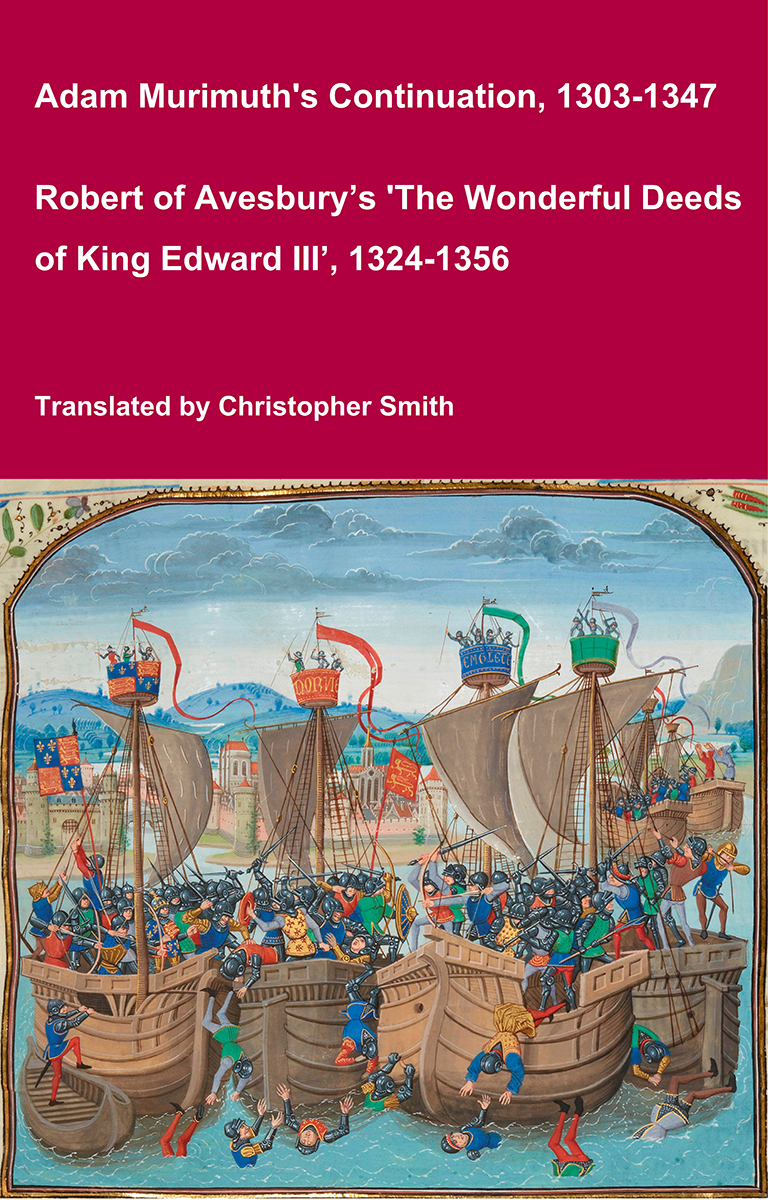
Adam Murimuth's Continuation and Robert of Avesbury’s 'The Wonderful Deeds of King Edward III'
This volume brings together two of the most important contemporary chronicles for the reign of Edward III and the opening phases of the Hundred Years’ War. Written in Latin by English clerical observers, these texts provide a vivid and authoritative window into the political, diplomatic, and military history of fourteenth-century England and its continental ambitions. Adam Murimuth Continuatio's Chronicarum continues an earlier chronicle into the mid-fourteenth century, offering concise but valuable notices on royal policy, foreign relations, and ecclesiastical affairs. Its annalistic structure makes it especially useful for establishing chronology and tracing the development of events year by year. Complementing it, Robert of Avesbury’s De gestis mirabilibus regis Edwardi tertii is a rich documentary chronicle preserving letters, treaties, and official records alongside narrative passages. It is an indispensable source for understanding Edward III’s claim to the French crown, the conduct of war, and the mechanisms of medieval diplomacy. Together, these works offer scholars, students, and enthusiasts a reliable and unembellished account of a transformative period in English and European history. Essential for anyone interested in medieval chronicles, the Hundred Years’ War, or the reign of Edward III.
Available at Amazon in eBook and Paperback format.
Samuel Pepys' Diary. 9th May 1669. Lord's Day. Up; and, after dressing in my best suit with gold trimming, I to the Office, and there with Gibson and Tom finishing against to-morrow my notes upon Commanders' Instructions; and, when church-time, to church with my wife, leaving them at work. Dr. Mills preached a dull sermon, and so we home to dinner; and thence by coach to St. Andrew's [Map], Holborne, thinking to have heard Dr. Stillingfleete [aged 34] preach, but we could not get a place, and so to St. Margaret's, Westminster [Map], and there heard a sermon, and did get a place, the first we have heard there these many years, and here at a distance I saw Betty Michell, but she is become much a plainer woman than she was a girl.
On 10th December 1674 John Vaughan of Transgoed [aged 71] died at Serjeants' Inn. He was buried at Temple Church, London [Map] on 22nd December 1674. His marble monument was destroyed in WWII. Edward Stillingfleet [aged 39] preached his funeral sermon. His son Edward Vaughan [aged 39] inherited a Cardiganshire estate worth £1,200 each year.
In 1678 Bishop Edward Stillingfleet [aged 42] was appointed Dean St Paul's Cathedral.

Around 1680 Mary Beale aka Cradock [aged 46]. Portrait of Bishop Edward Stillingfleet [aged 44] when Dean of St Pauls.
John Evelyn's Diary. 21st February 1680. Shrove-Tuesday. My son [aged 25] was married to Mrs. Martha Spencer [aged 21], daughter to my Lady Stonehouse by a former gentleman, at St. Andrew's [Map], Holborn, by our Vicar, borrowing the church of Dr. Stillingfleet [aged 44], Dean of St. Paul's, the present incumbent. We afterward dined at a house in Holborn; and, after the solemnity and dancing was done, they were bedded at Sir John Stonehouse's [aged 41] lodgings in Bow Street, Convent Garden.
John Evelyn's Diary. 1st April 1688. In the morning, the first sermon was by Dr. Stillingfleet [aged 52], Dean of St. Paul's (at Whitehall), on Luke x. 41, 42. The Holy Communion followed, but was so interrupted by the rude breaking in of multitudes zealous to hear the second sermon, to be preached by the Bishop of Bath and Wells [aged 50], that the latter part of that holy office could hardly be heard, or the sacred elements be distributed without great trouble. The Princess being come, he preached on Mich. vii. 8, 9, 10, describing the calamity of the Reformed Church of Judah under the Babylonian persecution, for her sins, and God's delivery of her on her repentance; that as Judah emerged, so should the now Reformed Church, whenever insulted and persecuted. He preached with his accustomed action, zeal, and energy, so that people flocked from all quarters to hear him.
In 1689 Bishop Edward Stillingfleet [aged 53] was appointed Bishop of Worcester.

Around 1690 Mary Beale aka Cradock [aged 56] (attributed). Portrait of Bishop Edward Stillingfleet [aged 54].

John Evelyn's Diary. 13th February 1692. Mr. Boyle having made me one of the trustees for his charitable bequests, I went to a meeting of the Bishop of Lincoln [aged 55], Sir Rob.... wood, and serjeant, Rotheram, to settle that clause in the will which related to charitable uses, and especially the appointing and electing a minister to preach one sermon the first Sunday in the month, during the four summer months, expressly against Atheists, Deists, Libertines, Jews, etc., without descending to any other controversy whatever, for which £50 per annum is to be paid quarterly to the preacher; and, at the end of three years, to proceed to a new election of some other able divine, or to continue the same, as the trustees should judge convenient. We made choice of one Mr. Bentley, chaplain to the Bishop of Worcester (Dr. Stillingfleet) [aged 56]. The first sermon was appointed for the first Sunday in March, at St. Martin's [Map]; the second Sunday in April, at Bow Church [Map], and so alternately.
John Evelyn's Diary. 13th April 1694. Mr. Bentley, our Boyle Lecturer, Chaplain to the Bishop of Worcester [aged 58], came to see me.
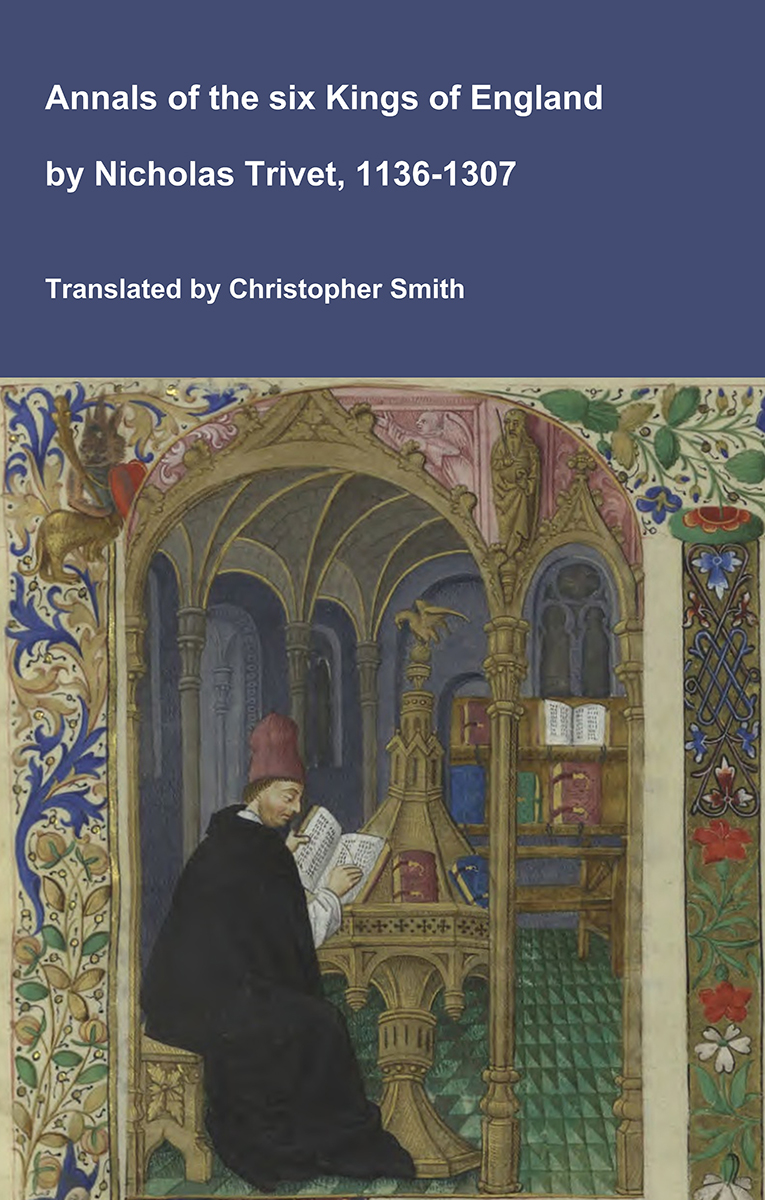
Annals of the six Kings of England by Nicholas Trivet
Translation of the Annals of the Six Kings of England by that traces the rise and rule of the Angevin aka Plantagenet dynasty from the mid-12th to early 14th century. Written by the Dominican scholar Nicholas Trivet, the work offers a vivid account of English history from the reign of King Stephen through to the death of King Edward I, blending political narrative with moral reflection. Covering the reigns of six monarchs—from Stephen to Edward I—the chronicle explores royal authority, rebellion, war, and the shifting balance between crown, church, and nobility. Trivet provides detailed insight into defining moments such as baronial conflicts, Anglo-French rivalry, and the consolidation of royal power under Edward I, whose reign he describes with particular immediacy. The Annals combines careful year-by-year reporting with thoughtful interpretation, presenting history not merely as a sequence of events but as a moral and political lesson. Ideal for readers interested in medieval history, kingship, and the origins of the English state, this chronicle remains a valuable and accessible window into the turbulent world of the Plantagenet kings.
Available at Amazon in eBook and Paperback format.
On 27th March 1699 Bishop Edward Stillingfleet [aged 63] died.
John Evelyn's Diary. 29th April 1699. I dined with the Archbishop [aged 62]; but my business was to get him to persuade the King [aged 48] to purchase the late Bishop of Worcester's [deceased] library, and build a place for his own library at St. James's, in the Park, the present one being too small.


John Evelyn's Diary. 3rd May 1699. At a meeting of the Royal Society I was nominated to be of the committee to wait on the Lord Chancellor [aged 44] to move the King [aged 48] to purchase the Bishop of Worcester's library (Dr. Edward Stillingfleet).
