

The History of William Marshal was commissioned by his son shortly after William’s death in 1219 to celebrate the Marshal’s remarkable life; it is an authentic, contemporary voice. The manuscript was discovered in 1861 by French historian Paul Meyer. Meyer published the manuscript in its original Anglo-French in 1891 in two books. This book is a line by line translation of the first of Meyer’s books; lines 1-10152. Book 1 of the History begins in 1139 and ends in 1194. It describes the events of the Anarchy, the role of William’s father John, John’s marriages, William’s childhood, his role as a hostage at the siege of Newbury, his injury and imprisonment in Poitou where he met Eleanor of Aquitaine and his life as a knight errant. It continues with the accusation against him of an improper relationship with Margaret, wife of Henry the Young King, his exile, and return, the death of Henry the Young King, the rebellion of Richard, the future King Richard I, war with France, the death of King Henry II, and the capture of King Richard, and the rebellion of John, the future King John. It ends with the release of King Richard and the death of John Marshal.
Available at Amazon in eBook and Paperback format.
In 1148 Bishop Gilbert Foliot attended the Council of Reims.

Before 1200. Choir Aisle at Hereford Cathedral [Map] left to right ...
In 1198 Bishop William de Vere died.
Bishop Gilbert Foliot.
On 16th April 1148 Bishop Robert de Bethune died in Reims just after the closure of the Council of Reims. His remains were brought to Hereford Cathedral [Map] where he was buried. See Chronicle of Wigmore.
On 27th February 1167 Bishop Robert Melun [aged 67] died.
Bishop William de Vere: he was born to Aubrey II de Vere and Adelize de Clare. In 1186 he was appointed Bishop of Hereford.
Bishop Robert de Bethune: In 1130 he was appointed Bishop of Hereford. On 28th June 1131 Bishop Robert de Bethune was consecrated at Rochester Cathedral [Map].
Bishop Robert Melun: Around 1100 he was born. On 22nd December 1163 Bishop Robert Melun was consecrated Bishop of Hereford by Archbishop Thomas Becket at Canterbury Cathedral [Map].
On 5th September 1148 Bishop Gilbert Foliot was consecrated Bishop of Hereford at Saint-Omer by Archbishop Theobald.
Around 1163 Bishop Gilbert Foliot served as Clerk to Archbishop Thomas Becket [aged 43].
On 6th March 1163 Bishop Gilbert Foliot was translated to Bishop of London.
On 28th April 1163 Bishop Gilbert Foliot was enthroned as Bishop of London.
In 1179 Wigmore Abbey [Map] was consecrated by Bishop Gilbert Foliot. It had been founded by Hugh Mortimer [aged 79] in 1172 - see Wigmore Chroncle.
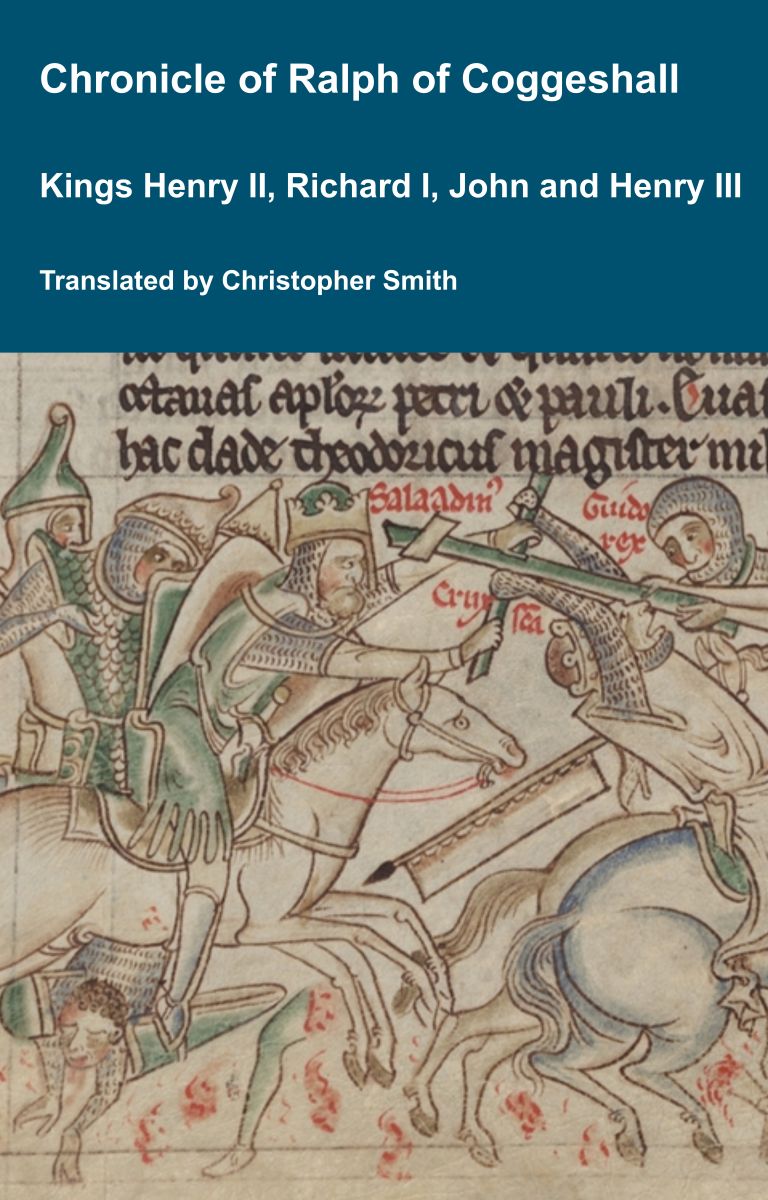 Chronicum Anglicanum by Ralph Coggeshall. Pope Urban died, and he was succeeded by Gregory the chancellor, who was also called Master Albert, who held the papacy scarcely for two months, and was buried at Pisa; he was succeeded by Pope Clement. Gilbert Foliot1, bishop of London, also died.
Obiit Urbanus papa, cui successit Gregorius cancellarius, qui et magister Albertus dictus est, qui vix per duos menses papatum tenuit, et sepultus est apud Pise, cui successit Clemens papa. Obiit Gilebertus Foliot, Londoniensis episcopus.
Note 1. Bishop Gilbert Foliot, consecrated Bishop of Hereford in 1148, translated to London 1163, died 18th February 1187.
On 18th February 1187 Bishop Gilbert Foliot died.