

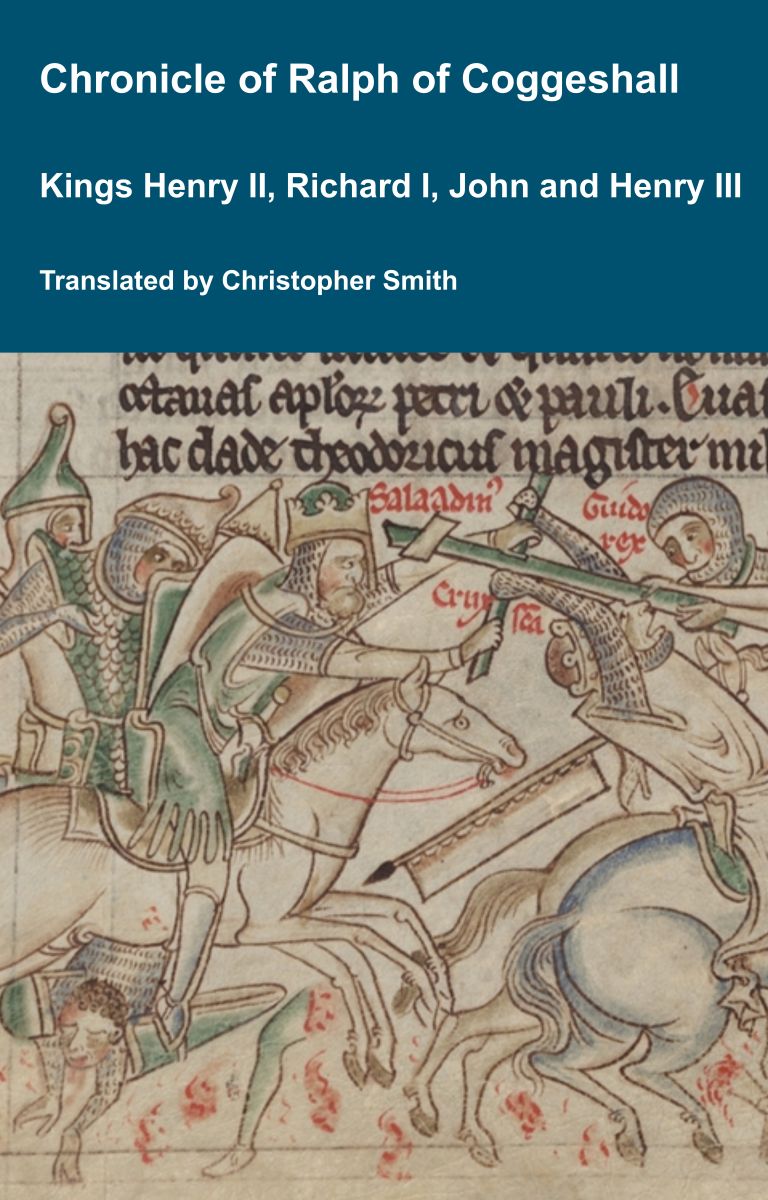
Chronicle of Abbot Ralph of Coggeshall
The Chronicle of Abbot Ralph of Coggeshall (Chronicon Anglicanum) is an indispensable medieval history that brings to life centuries of English and European affairs through the eyes of a learned Cistercian monk. Ralph of Coggeshall, abbot of the Abbey of Coggeshall in Essex in the early 13th century, continued and expanded his community’s chronicle, documenting events from the Norman Conquest of 1066 into the tumultuous reign of King Henry III. Blending eyewitness testimony, careful compilation, and the monastic commitment to record-keeping, this chronicle offers a rare narrative of political intrigue, royal power struggles, and social upheaval in England and beyond. Ralph’s work captures the reigns of pivotal figures such as Richard I and King John, providing invaluable insights into their characters, decisions, and the forces that shaped medieval rule. More than a simple annal, Chronicon Anglicanum conveys the texture of medieval life and governance, making it a rich source for scholars and readers fascinated by English history, monastic authorship, and the shaping of the medieval world.
Available at Amazon in eBook and Paperback format.
Around 1219 Bishop Oliver Sutton was born to [his father] Unamed Sutton and [his mother] Unamed Lexington.
In 1244 Bishop Oliver Sutton (age 25) held the living of St Peter's Church, Shelford [Map] as a sub-deacon.
Before 30th June 1275 Bishop Oliver Sutton (age 56) was appointed Dean of Lincoln.
On 6th February 1280 Bishop Oliver Sutton (age 61) was elected Bishop of Lincoln.
On 19th May 1280 Bishop Oliver Sutton (age 61) was consecrated Bishop of Lincoln at Lambeth Palace [Map].
On 8th September 1280 Bishop Oliver Sutton (age 61) was enthroned Bishop of Lincoln at Lincoln Cathedral [Map].
Archaeologia Volume 29 Section XIII. The arrival of the funeral procession in London appears to have been on the 14th of December, and the entombment took place on the 17th. To this date we have the testimony of Wikes, the Annals of Dunstable, and Matthew of Westminster. We have no distinct evidence in what particular religious house the body remained while in London. The position of one of the Crosses in West-Cheap may seem to guide to Saint Paul's. What house there could have been near the site of Charing Cross [Map] is a more difficult question. The funeral rites in the Abbey were performed with great magnificence; "cum summa omnium reverentia et honore, [with the greatest respect and honor of all]" says Walsingham. One thing a little dimmed the splendour and detracted from the completeness of the solemnity. There was a dispute at that time between the Abbot of Westminster and the Archbishop of Canterbury (age 59) (Peckham) which made the Archbishop unwilling to enter the Abbey; so that the Bishop of Lincoln (age 70) (Sutton) presided. We have this information from Thomas Wikes.
On 13th November 1299 Bishop Oliver Sutton (age 80) died at Nettleham.
Annals of Dunstable. In the same year the church of Ashridge [Priory] was dedicated by Oliver1, bishop of Lincoln, at the request of the earl of Cornwall, who had founded it.
Eodem anno dedicata est ecclesia de Esserugge per O[liverum] Lincolniensem episcopum, ad instantiam comitis Cornubiæ, qui eam fundavit.
Note 1. Bishop Oliver Sutton.
Annals of Dunstable. In the same year the lord Oliver, bishop of Lincoln, personally carried out the office of visitation in the house of Dunstable on the feast of Saint Donatus; yet for this he neither sought nor received procuration.
Eodem anno dominus O[liverus], episcopus Lincolniensis, in domo de Dunstaple visitationis officium bishop personaliter exercuit die Sancti Donati; procurationem tamen propter hoc non petiit nec accepit.
Jean de Waurin's Chronicle of England Volume 6 Books 3-6: The Wars of the Roses
Jean de Waurin was a French Chronicler, from the Artois region, who was born around 1400, and died around 1474. Waurin’s Chronicle of England, Volume 6, covering the period 1450 to 1471, from which we have selected and translated Chapters relating to the Wars of the Roses, provides a vivid, original, contemporary description of key events some of which he witnessed first-hand, some of which he was told by the key people involved with whom Waurin had a personal relationship.
Available at Amazon in eBook and Paperback format.
Annals of Dunstable. At the same time we caused six of our vicars in the archdeaconry of Bedford to be summoned before the lord bishop of Lincoln [Oliver Sutton, 1219-1299], because they were unwilling to contribute with us towards the fifteenth granted to the lord king for three years, according to the proportion falling upon their vicarages. But four of those vicars, after receiving the bishop's admonition to pay, soon satisfied us without difficulty. The vicars of the churches of Shefford and Houghton, however, made themselves difficult in this matter; against whom we proceeded before the lord bishop, as follows:
Eodem tempore fecimus vocari coram domino episcopo Lincolniensi¹ sex vicarios nostros in archidiaconatu Bedefordiæ; pro eo quod nolebant nobiscum archdeacontribuere quintam-decimam domino regi per trienmoned for nium concessam, pro rata portionis eorum vicarias contingentis. Sed quatuor ex ipsis vicariis, accepta de solvendo monitione domini episcopi, mox satisfecerunt nobis sine difficultate. De Segenho et Husseburne ecclesiarum vicarii se reddebant difficiles in hac parte; contra quos processimus coram domino episcopo, sic: