

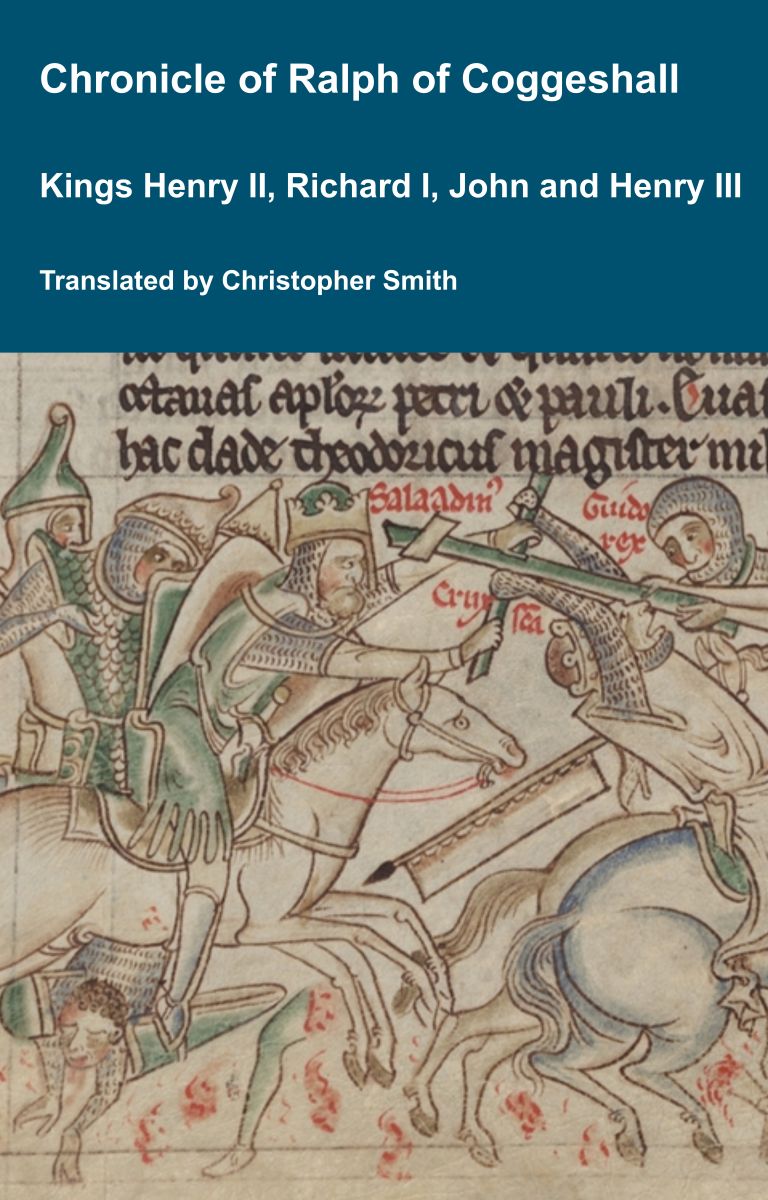
Chronicle of Abbot Ralph of Coggeshall
The Chronicle of Abbot Ralph of Coggeshall (Chronicon Anglicanum) is an indispensable medieval history that brings to life centuries of English and European affairs through the eyes of a learned Cistercian monk. Ralph of Coggeshall, abbot of the Abbey of Coggeshall in Essex in the early 13th century, continued and expanded his community’s chronicle, documenting events from the Norman Conquest of 1066 into the tumultuous reign of King Henry III. Blending eyewitness testimony, careful compilation, and the monastic commitment to record-keeping, this chronicle offers a rare narrative of political intrigue, royal power struggles, and social upheaval in England and beyond. Ralph’s work captures the reigns of pivotal figures such as Richard I and King John, providing invaluable insights into their characters, decisions, and the forces that shaped medieval rule. More than a simple annal, Chronicon Anglicanum conveys the texture of medieval life and governance, making it a rich source for scholars and readers fascinated by English history, monastic authorship, and the shaping of the medieval world.
Available at Amazon in eBook and Paperback format.
In 1515 Bishop Thomas Watson was born.
On 18th November 1553 Bishop Thomas Watson [aged 38] was elected Dean of Durham.
On 15th April 1556 Bishop Thomas Watson [aged 41] was elected Bishop of Lincoln.
Henry Machyn's Diary. 15th April 1556. The xv day of Aprell was electyd at Grenwyche bysshope of Wynchastur master doctur Whyt [aged 46], byshope of Lynckolne; and doctur Westun [aged 41], dene of Westmynster, to be bysshope of Lynckolne; and the dene of Durram to be bysshope of Karlelle.
Henry Machyn's Diary. 26th January 1557. [The xxvj day of January went to Cambridge, Watson [aged 42] bishop elect of Lincoln, Scot bishop of Chester, and Christopherson bishop elect of Chichester,] comyssyoners to the [lord cardinal, to the] chyrche of sant Mares [Map], and thay toke up on Martin [Bucer] that was bered ther, and Paulus Phagius [was] taken up at Sant Myghelle cherche that was [buried there,] and after brentt [burned] boyth.
Henry Machyn's Diary. 17th March 1557. The xvij day of Marche cam rydyng from kyng Phelype [aged 29] from be-yond the see unto the court at Grenwyche [Map], to owre quen [aged 41], with letters in post, my lord Robart Dudley [aged 24], and after master Kemp of the preve chambur, that the kyng wold com to Cales [Map] the xvij day of Marche; and the sam day dyd pryche a-for the quen the nuwe bysshope of Lynckolne doctur Watsun [aged 42].


Henry Machyn's Diary. 3rd April 1557. The iij day of Aprell dyd pryche doctur Wattsun [aged 42] bysshope of Lynckolne at Allallows the Mor in ... at after-non, wher was grett audyens of pepull.
Henry Machyn's Diary. 22nd April 1557. The xxij of Aprell dyd pryche at sant Mare speytyll [doctor] Watsun [aged 42] nuw-choyssen bysshope of Lynckolne a godly sermon.
On 15th August 1557 Bishop Thomas Watson [aged 42] was consecrated Bishop of Lincoln by Archbishop Nicholas Heath [aged 56].
Chronicle of a Bourgeois of Valenciennes
Récits d’un bourgeois de Valenciennes aka The Chronicle of a Bourgeois of Valenciennes is a vivid 14th-century vernacular chronicle written by an anonymous urban chronicler from Valenciennes in the County of Hainaut. It survives in a manuscript that describes local and regional history from about 1253 to 1366, blending chronology, narrative episodes, and eyewitness-style accounts of political, military, and social events in medieval France, Flanders, and the Low Countries. The work begins with a chronological framework of events affecting Valenciennes and its region under rulers such as King Philip VI of France and the shifting allegiances of local nobility. It includes accounts of conflicts, sieges, diplomatic manoeuvres, and the impact of broader struggles like the Hundred Years’ War on urban life in Hainaut. Written from the perspective of a burgher (bourgeois) rather than a monastery or royal court, the chronicle offers a rare lay viewpoint on high politics and warfare, reflecting how merchants, townspeople, and civic institutions experienced the turbulence of the 13th and 14th centuries. Its narrative style combines straightforward reporting of events with moral and civic observations, making it a valuable source for readers interested in medieval urban society, regional politics, and the lived experience of war and governance in pre-modern Europe.
Available at Amazon in eBook and Paperback format.
Henry Machyn's Diary. 20th February 1558. The xx day of Feybruary dyd pryche [at Paul's] crosse [Map] docthur Watsun [aged 43] bysshope of Lyncoln, and mad a godly sermon, for ther wer [present ten] bysshopes, be-syd my lord mare and the althermen and juges, and men of the law, and gret [audience] ther was.
Henry Machyn's Diary. 3rd April 1559. The iij day of Aprell the bysshopes and the nuw prychers mett at the abbay a-for my lord keper of the brod seylle, and dyvers of the consell, and ther to gyff a answer of the matter; the sam nyght, my lord bysshope of Wynchester [aged 49] and my lord of Lynkolne [aged 44] was send to the towre of London [Map] by the gard by water, to the Old Swane, and to Belynsgatt after.
Henry Machyn's Diary. 26th June 1559. The sam day was deprevyd of ther bysshoprykes the bysshope of Wynchestur [aged 49] and the bysshope of Lynckolne [aged 44] at master Hawse the kyng('s) shreyff in Mynsyon lane, and the bysshope of Wynchester to the Towre [Map] agayne, and the bysshope of Lynckolne delevered a-way.
Note. P. 201. Bishops deprived. Mr. Bruce has given a list of the deprived bishops, founded upon documents in Rymer's Fœdera, in Hayward's Annals of Q. Eliz. p. 27.
Henry Machyn's Diary. 20th May 1560. The xx day of May was send to the Towre [Map] master Fecknam [aged 45], docthur Wattsun [aged 45] latt byshope of Lynkolne, and docthur Colle [aged 60] latt dene of Powlles, and docthur Chadsay; and at nyght abowtt viij of the cloke was send to the Flett [Map] docthur Score [aged 50], and master Fecknam the last abbot of Westmynster, to Towre [Map].
Henry Machyn's Diary. 29th May 1560. The xxix day of May toke ther gorney [journey] into Skotteland master Syssell [aged 39] secretore and master docthur Wattun [aged 45] my (unfinished).


On 27th September 1584 or 15th October 1584 Bishop Thomas Watson [aged 69] died at Wisbech Castle [Map] having been confined for the previous twenty-five years.