

Chronicle of a Bourgeois of Valenciennes
Récits d’un bourgeois de Valenciennes aka The Chronicle of a Bourgeois of Valenciennes is a vivid 14th-century vernacular chronicle written by an anonymous urban chronicler from Valenciennes in the County of Hainaut. It survives in a manuscript that describes local and regional history from about 1253 to 1366, blending chronology, narrative episodes, and eyewitness-style accounts of political, military, and social events in medieval France, Flanders, and the Low Countries. The work begins with a chronological framework of events affecting Valenciennes and its region under rulers such as King Philip VI of France and the shifting allegiances of local nobility. It includes accounts of conflicts, sieges, diplomatic manoeuvres, and the impact of broader struggles like the Hundred Years’ War on urban life in Hainaut. Written from the perspective of a burgher (bourgeois) rather than a monastery or royal court, the chronicle offers a rare lay viewpoint on high politics and warfare, reflecting how merchants, townspeople, and civic institutions experienced the turbulence of the 13th and 14th centuries. Its narrative style combines straightforward reporting of events with moral and civic observations, making it a valuable source for readers interested in medieval urban society, regional politics, and the lived experience of war and governance in pre-modern Europe.
Available at Amazon in eBook and Paperback format.
Paternal Family Tree: Killgrew
Maternal Family Tree: Frideswide Frowyk 1528
In 1636 [his father] Thomas Killigrew [aged 23] and [his mother] Cecilia Crofts [aged 26] were married.


On or before 16th April 1637, the date he was baptised at St Martin in the Fields Church [Map], Henry Killigrew was born to [his father] Thomas Killigrew [aged 25] and [his mother] Cecilia Crofts [aged 27].
In 1655 [his father] Thomas Killigrew [aged 42] and [his step-mother] Charlotte Hesse [aged 26] were married.

Samuel Pepys' Diary. 24th November 1662. Sir J. Minnes [aged 63], Sir W. Batten [aged 61], and I, going forth toward White Hall, we hear that the King [aged 32] and Duke [aged 29] are come this morning to the Tower to see the Dunkirk money! So we by coach to them, and there went up and down all the magazines with them; but methought it was but poor discourse and frothy that the King's companions (young Killigrew [aged 25] among the rest) about the codpieces of some of the men in armour there to be seen, had with him. We saw none of the money, but Mr. Slingsby did show the King, and I did see, the stamps of the new money that is now to be made by Blondeau's fashion1, which are very neat, and like the King.
Note 1. Peter Blondeau was employed by the Commonwealth to coin their money. After the Restoration, November 3rd, 1662, he received letters of denization, and a grant for being engineer of the Mint in the Tower of London, and for using his new invention for coining gold and silver with the mill and press, with the fee of £100 per annum (Walpole's "Anecdotes of Painting").

Samuel Pepys' Diary. 1st September 1666. Up and at the office all the morning, and then dined at home. Got my new closet made mighty clean against to-morrow. Sir W. Pen [aged 45] and my wife and Mercer and I to "Polichinelly", but were there horribly frighted to see Young Killigrew [aged 29] come in with a great many more young sparks; but we hid ourselves, so as we think they did not see us.
Samuel Pepys' Diary. 21st October 1666. This afternoon walking with Sir H. Cholmly [aged 34] long in the gallery, he told me, among many other things, how Harry Killigrew [aged 29] is banished the Court lately, for saying that my Baroness Castlemayne [aged 25] was a little lecherous girle when she was young.... This she complained to the King [aged 36] of, and he sent to the Duke of York [aged 33], whose servant he is, to turn him away. The Duke of York hath done it, but takes it ill of my Lady that he was not complained to first. She attended him to excute it, but ill blood is made by it. He told me how Mr. Williamson [aged 33] stood in a little place to have come into the House of Commons, and they would not choose him; they said, "No courtier". And which is worse, Bab May [aged 38] went down in great state to Winchelsea [Map] with the Duke of York's letters, not doubting to be chosen; and there the people chose a private gentleman in spite of him, and cried out they would have no Court pimp to be their burgesse; which are things that bode very ill. This afternoon I went to see and sat a good while with Mrs. Martin, and there was her sister Doll, with whom, contrary to all expectation, I did what I would, and might have done anything else.


Samuel Pepys' Diary. 22nd July 1667. So up to my Chancellor's [aged 58], where was a Committee of Tangier in my Lord's roome, where he is to hear causes, where all the judges' pictures hang up, very fine. Here I read my letter to them, which was well received, and they did fall seriously to discourse the want of money and other particulars, and to some pretty good purpose. But to see how Sir W. Coventry [aged 39] did oppose both my Chancellor and the Duke of York [aged 33] himself, about the Order of the Commissioners of the Treasury to me for not paying of pensions, and with so much reason, and eloquence so natural, was admirable. And another thing, about his pressing for the reduction of the charge of Tangier, which they would have put off to another time; "But", says he, "the King [aged 37] suffers so much by the putting off of the consideration of reductions of charge, that he is undone; and therefore I do pray you, sir, to his Royal Highness, that when any thing offers of the kind, you will not let it escape you". Here was a great bundle of letters brought hither, sent up from sea, from a vessel of ours that hath taken them after they had been flung over by a Dutchman; wherein, among others, the Duke of York did read the superscription of one to De Witt, thus "To the most wise, foreseeing and discreet, These, &c."; which, I thought with myself, I could have been glad might have been duly directed to any one of them at the table, though the greatest men in this kingdom. The Duke of York, the Chancellor, my Lord Duke of Albemarle [aged 58], Arlington, Ashley, Peterborough, and Coventry (the best of them all for parts), I perceive they do all profess their expectation of a peace, and that suddenly, and do advise of things accordingly, and do all speak of it (and expressly, I remember, the Duke of Albemarle), saying that they hoped for it. Letters were read at the table from Tangier that Guiland is wholly lost, and that he do offer Arzill to us to deliver it to us. But Sir W. Coventry did declare his opinion that we should have nothing to do with it, and said that if Tangier were offered us now, as the King's condition is, he would advise against the taking it; saying, that the King's charge is too great, and must be brought down, it being, like the fire of this City, never to be mastered till you have brought it under you; and that these places abroad are but so much charge to the King, and we do rather hitherto strive to greaten them than lessen them; and then the King is forced to part with them, "as", says he, "he did with Dunkirke", by my Lord Tiviott's making it so chargeable to the King as he did that, and would have done Tangier, if he had lived: I perceive he is the only man that do seek the King's profit, and is bold to deliver what he thinks on every occasion. Having broke up here, I away with Mr. Gawden in his coach to the 'Change [Map], and there a little, and then home and dined, and then to the office, and by and by with my wife to White Hall (she to Unthanke's), and there met Creed and did a little business at the Treasury chamber, and then to walk in Westminster Hall [Map] an hour or two, with much pleasure reflecting upon our discourse to-day at the Tangier meeting, and crying up the worth of Sir W. Coventry. Creed tells me of the fray between the Duke of Buckingham [aged 39] at the Duke's playhouse the last Saturday (and it is the first day I have heard that they have acted at either the King's or Duke's houses this month or six weeks) and Henry Killigrew [aged 30], whom the Duke of Buckingham did soundly beat and take away his sword, and make a fool of, till the fellow prayed him to spare his life; and I am glad of it; for it seems in this business the Duke of Buckingham did carry himself very innocently and well, and I wish he had paid this fellow's coat well. I heard something of this at the 'Change [Map] to-day: and it is pretty to hear how people do speak kindly of the Duke of Buckingham, as one that will enquire into faults; and therefore they do mightily favour him. And it puts me in mind that, this afternoon, Billing [aged 44], the Quaker, meeting me in the Hall, come to me, and after a little discourse did say, "Well", says he, "now you will be all called to an account"; meaning the Parliament is drawing near. This done I took coach and took up my wife, and so home, and after a little at the office I home to my chamber a while, and then to supper and to bed.


 Become a Member via our Buy Me a Coffee page to read more.
Samuel Pepys' Diary. 19th May 1669. With my coach to St. James's; and there finding the Duke of York [aged 35] gone to muster his men, in Hyde Park, I alone with my boy thither, and there saw more, walking out of my coach as other gentlemen did, of a soldier's trade, than ever I did in my life: the men being mighty fine, and their Commanders, particularly the Duke of Monmouth [aged 20]; but me-thought their trade but very easy as to the mustering of their men, and the men but indifferently ready to perform what was commanded, in the handling of their arms. Here the news was first talked of Harry Killigrew's [aged 32] being wounded in nine places last night, by footmen, in the highway, going from the Park in a Hackney-coach towards Hammersmith, to his house at Turnham Greene: they being supposed to be my Lady Shrewsbury's [aged 27] men, she being by, in her coach with six horses; upon an old grudge of his saying openly that he had lain with her.

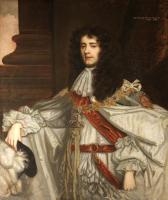


Samuel Pepys' Diary. 19th May 1669. By and by the Duke of York [aged 35] comes, and readily took me to his closet, and received my petition, and discoursed about my eyes, and pitied me, and with much kindness did give me his consent to be absent, and approved of my proposition to go into Holland to observe things there, of the Navy; but would first ask the King's leave, which he anon did, and did tell me that the King [aged 38] would be a good master to me, these were his words, about my eyes, and do like of my going into Holland, but do advise that nobody should know of my going thither, but pretend that I did go into the country somewhere, which I liked well. Glad of this, I home, and thence took out my wife, and to Mr. Holliard's [aged 60] about a swelling in her cheek, but he not at home, and so round by Islington [Map] and eat and drink, and so home, and after supper to bed. In discourse this afternoon, the Duke of York did tell me that he was the most amazed at one thing just now, that ever he was in his life, which was, that the Duke of Buckingham [aged 41] did just now come into the Queen's [aged 30] bed-chamber, where the King was, and much mixed company, and among others, Tom Killigrew [aged 57], the father of Harry [aged 32], who was last night wounded so as to be in danger of death, and his man is quite dead; and [Buckingham] there in discourse did say that he had spoke with some one that was by (which all the world must know that it must be his whore, my Lady Shrewsbury [aged 27]), who says that they did not mean to hurt, but beat him, and that he did run first at them with his sword; so that he do hereby clearly discover that he knows who did it, and is of conspiracy with them, being of known conspiracy with her, which the Duke of York did seem to be pleased with, and said it might, perhaps, cost him his life in the House of Lords; and I find was mightily pleased with it, saying it was the most impudent thing, as well as the most foolish, that ever he knew man do in all his life.
Become a Member via our Buy Me a Coffee page to read more.
Kings Wessex: Great x 19 Grand Son of King Edmund "Ironside" I of England
Kings Gwynedd: Great x 16 Grand Son of Owain "Great" King Gwynedd
Kings Seisyllwg: Great x 22 Grand Son of Hywel "Dda aka Good" King Seisyllwg King Deheubarth
Kings Powys: Great x 17 Grand Son of Maredudd ap Bleddyn King Powys
Kings Godwinson: Great x 20 Grand Son of King Harold II of England
Kings England: Great x 10 Grand Son of King Edward III of England
Kings Scotland: Great x 18 Grand Son of King Duncan I of Scotland
Kings Franks: Great x 26 Grand Son of Charles "Charlemagne aka Great" King of the Franks King Lombardy Holy Roman Emperor
Kings France: Great x 19 Grand Son of Hugh I King of the Franks
Kings Duke Aquitaine: Great x 23 Grand Son of Ranulf I Duke Aquitaine
Great x 2 Grandfather: John Killigrew 
Great x 1 Grandfather: William Killigrew
GrandFather: Robert Killigrew
Great x 2 Grandfather: Thomas Saunders
Great x 1 Grandmother: Margery Saunders
Father: Thomas Killigrew
Great x 1 Grandfather: Henry Woodhouse
GrandMother: Mary Woodhouse
Great x 4 Grandfather: John Bacon 
Great x 3 Grandfather: Robert Bacon
Great x 4 Grandmother: Agnes Cockfield
Great x 2 Grandfather: Nicholas Bacon
Great x 4 Grandfather: John Cage
Great x 3 Grandmother: Isabel or Eleanor Cage
Great x 1 Grandmother: Anne Bacon
Great x 3 Grandfather: William Ferneley of West Creeting in Suffolk 
Great x 2 Grandmother: Jane Ferneley
Henry Killigrew 10 x Great Grand Son of King Edward III of England
Great x 4 Grandfather: John Crofts
Great x 3 Grandfather: John Crofts
Great x 2 Grandfather: Edmund Croftes
Great x 1 Grandfather: Thomas Crofts
Great x 3 Grandfather: Thomas Kitson 
Great x 2 Grandmother: Elizabeth Kitson
Great x 4 Grandfather: John Donnington of Stoke Newington
Great x 3 Grandmother: Margaret Donnington Countess Bath
GrandFather: John Crofts 8 x Great Grand Son of King Edward III of England
Great x 2 Grandfather: John Poley
Great x 1 Grandmother: Susannah Crofts 7 x Great Grand Daughter of King Edward III of England
Great x 4 Grandfather: Richard Wentworth 5th Baron Despencer  5 x Great Grand Son of King Edward III of England
Great x 3 Grandfather: Thomas Wentworth 1st Baron Wentworth 6 x Great Grand Son of King Edward III of England
Great x 4 Grandmother: Anne Tyrrell Baroness Despencer  7 x Great Grand Daughter of King Edward I of England
Great x 2 Grandmother: Anne Wentworth 6 x Great Grand Daughter of King Edward III of England
Great x 4 Grandfather: Adrian Fortescue  9 x Great Grand Son of King John of England
Great x 3 Grandmother: Margaret Fortescue Baroness Wentworth 5 x Great Grand Daughter of King Edward III of England
Great x 4 Grandmother: Anne Stonor 4 x Great Grand Daughter of King Edward III of England
Mother: Cecilia Crofts 9 x Great Grand Daughter of King Edward III of England
Great x 4 Grandfather: Ralph Shirley  11 x Great Grand Son of King Henry I "Beauclerc" England
Great x 3 Grandfather: Richard Shirley 12 x Great Grand Son of King Henry I "Beauclerc" England
Great x 4 Grandmother: Jane Bellingham
Great x 2 Grandfather: William Shirley 13 x Great Grand Son of King Henry I "Beauclerc" England
Great x 1 Grandfather: Thomas Shirley 14 x Great Grand Son of King Henry I "Beauclerc" England
GrandMother: Mary Shirley 10 x Great Grand Daughter of King Henry III of England
Great x 4 Grandfather: Thomas Kempe
Great x 3 Grandfather: William Kempe
Great x 2 Grandfather: Thomas Kempe 8 x Great Grand Son of King Henry III of England
Great x 4 Grandfather: Robert Browne  6 x Great Grand Son of King Henry III of England
Great x 3 Grandmother: Eleanor Browne 7 x Great Grand Daughter of King Henry III of England
Great x 1 Grandmother: Anne Kempe 9 x Great Grand Daughter of King Henry III of England
Great x 4 Grandfather: William Cheney
Great x 3 Grandfather: Thomas Cheney
Great x 4 Grandmother: Margaret aka Agnes Young
Great x 2 Grandmother: Katherine Cheney
Great x 4 Grandfather: Thomas Frowyk
Great x 3 Grandmother: Frideswide Frowyk