

Abbot John Whethamstede’s Chronicle of the Abbey of St Albans
Abbot John Whethamstede's Register aka Chronicle of his second term at the Abbey of St Albans, 1451-1461, is a remarkable text that describes his first-hand experience of the beginning of the Wars of the Roses including the First and Second Battles of St Albans, 1455 and 1461, respectively, their cause, and their consequences, not least on the Abbey itself. His text also includes Loveday, Blore Heath, Northampton, the Act of Accord, Wakefield, and Towton, and ends with the Coronation of King Edward IV. In addition to the events of the Wars of the Roses, Abbot John, or his scribes who wrote the Chronicle, include details in the life of the Abbey such as charters, letters, land exchanges, visits by legates, and disputes, which provide a rich insight into the day-to-day life of the Abbey, and the challenges faced by its Abbot.
Available at Amazon in eBook and Paperback format.
John Benjamin Stone is in Photographers.
On 9th February 1838 John Benjamin Stone was born.
On 5th June 1867 John Benjamin Stone [aged 29] and Jane Parker [aged 18] were married.
Inb 1895 John Benjamin Stone [aged 56] was elected MP Birmingham East which seat he held until 1909.
In 1896 John Benjamin Stone [aged 57] was appointed the first Mayor of Sutton Coldfield, Warwickshire when he new Municipal Corporation was created. he was in office for four years.
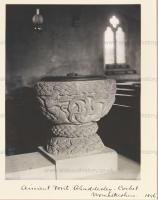
1896. John Benjamin Stone [aged 57]. Photograph of the font at St Cassian's Church, Chaddesley Corbet [Map].
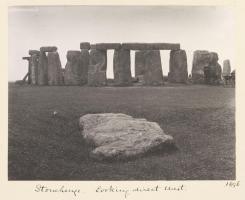
1896. John Benjamin Stone [aged 57]. Photograph of Stonehenge.
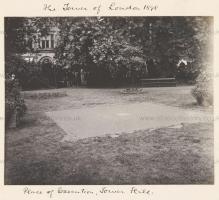
1896. John Benjamin Stone [aged 57]. Photograph of the Place of Execution on Tower Hill [Map] adjacent to the Tower of London.
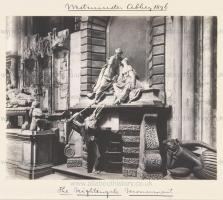
1896. John Benjamin Stone [aged 57]. Photograph of the "Nightingale Monument" at Westminster Abbey to Elizabeth Shirley and her husband Joseph Gascoigne who adopted the surname Nightingale following the death of his kinsman Robert Nightingale. Elizabeth and Joseph are buried in a vault in the north ambulatory nearby. The monument is by the sculptor Louis Francois Roubiliac.
Elizabeth Shirley: In 1704 she was born to Washington Shirley 2nd Earl Ferrers and Mary Levinge Countess Ferrers. On 24th June 1725 Joseph Gascoigne aka Nightingale and she were married. She the daughter of Washington Shirley 2nd Earl Ferrers and Mary Levinge Countess Ferrers. On 17th August 1734 Elizabeth Shirley died in childbirth following the premature birth of her daughter Elizabeth as a result of the shock caused by a violent flash of lightning.
Joseph Gascoigne aka Nightingale: In 1695 he was born to Joseph Gascoigne. In 1727 Joseph Gascoigne aka Nightingale was elected MP Stafford. On 16th July 1752 he died.
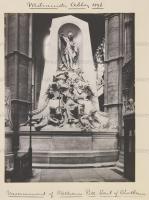
1896. John Benjamin Stone [aged 57]. Photograph of the monument of William "The Elder" Pitt 1st Earl Chatham at Westminster Abbey.
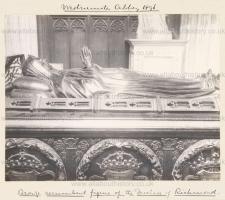
1896. John Benjamin Stone [aged 57]. Photograph of the monument of Margaret Beaufort Countess Richmond at the King Henry VII Chapel, Westminster Abbey [Map]
William of Worcester's Chronicle of England
William of Worcester, born around 1415, and died around 1482 was secretary to John Fastolf, the renowned soldier of the Hundred Years War, during which time he collected documents, letters, and wrote a record of events. Following their return to England in 1440 William was witness to major events. Twice in his chronicle he uses the first person: 1. when writing about the murder of Thomas, 7th Baron Scales, in 1460, he writes '… and I saw him lying naked in the cemetery near the porch of the church of St. Mary Overie in Southwark …' and 2. describing King Edward IV's entry into London in 1461 he writes '… proclaimed that all the people themselves were to recognize and acknowledge Edward as king. I was present and heard this, and immediately went down with them into the city'. William’s Chronicle is rich in detail. It is the source of much information about the Wars of the Roses, including the term 'Diabolical Marriage' to describe the marriage of Queen Elizabeth Woodville’s brother John’s marriage to Katherine, Dowager Duchess of Norfolk, he aged twenty, she sixty-five or more, and the story about a paper crown being placed in mockery on the severed head of Richard, 3rd Duke of York.
Available at Amazon in eBook and Paperback format.
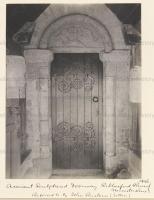
1896. John Benjamin Stone [aged 57]. Photograph of the tympanum at St Leonard's Church, Ribbesford [Map].

1896. John Benjamin Stone [aged 57]. Photograph of the Silbury Hill [Map] at Avebury.
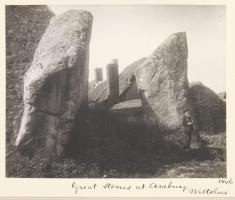
1896. John Benjamin Stone [aged 57]. Photograph of Avebury North Circle Cove [Map].
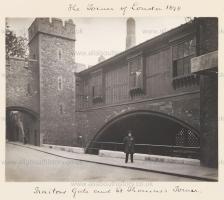
1898. John Benjamin Stone [aged 59]. Photograph of the Bloody Tower [Map], Wakefield Tower [Map], Traitor's Gate [Map] and St Thomas's Tower [Map] at the Tower of London.
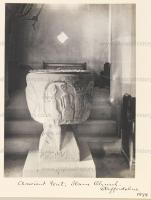
1898. John Benjamin Stone [aged 59]. Photograph of the font at Church of the Holy Cross, Ilam [Map].
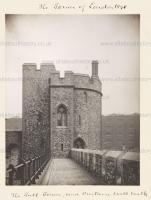
1898. John Benjamin Stone [aged 59]. Photograph of the Salt Tower, Tower of London [Map].
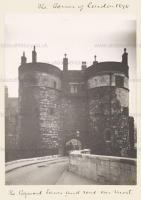
1898. John Benjamin Stone [aged 59]. Photograph of the Byward Tower, Tower of London [Map].
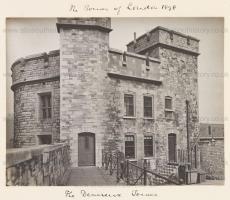
1898. John Benjamin Stone [aged 59]. Photograph of the Devereux Tower, Tower of London [Map].
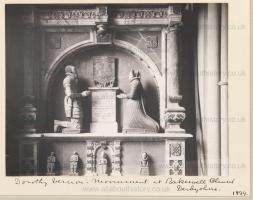
1899. John Benjamin Stone [aged 60]. Photograph of the monument to Dorothy Vernon at All Saint's Church, Bakewell, Derbyshire [Map].
Dorothy Vernon: In 1531 she was born to George Vernon "King of the Peak" and Margaret Tailboys. Before 22nd March 1572 John Manners and she were married. He the son of Thomas Manners 1st Earl of Rutland and Eleanor Paston Countess Rutland. They were fourth cousin once removed. He a great x 5 grandson of King Edward III of England.
William of Worcester's Chronicle of England
William of Worcester, born around 1415, and died around 1482 was secretary to John Fastolf, the renowned soldier of the Hundred Years War, during which time he collected documents, letters, and wrote a record of events. Following their return to England in 1440 William was witness to major events. Twice in his chronicle he uses the first person: 1. when writing about the murder of Thomas, 7th Baron Scales, in 1460, he writes '… and I saw him lying naked in the cemetery near the porch of the church of St. Mary Overie in Southwark …' and 2. describing King Edward IV's entry into London in 1461 he writes '… proclaimed that all the people themselves were to recognize and acknowledge Edward as king. I was present and heard this, and immediately went down with them into the city'. William’s Chronicle is rich in detail. It is the source of much information about the Wars of the Roses, including the term 'Diabolical Marriage' to describe the marriage of Queen Elizabeth Woodville’s brother John’s marriage to Katherine, Dowager Duchess of Norfolk, he aged twenty, she sixty-five or more, and the story about a paper crown being placed in mockery on the severed head of Richard, 3rd Duke of York.
Available at Amazon in eBook and Paperback format.
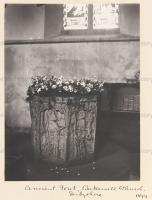
1899. John Benjamin Stone [aged 60]. Photograph of the ancient font at All Saint's Church, Bakewell, Derbyshire [Map].
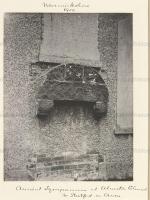
1900. John Benjamin Stone [aged 61]. Photograph of the tympanums at St James' Church, Alveston [Map].
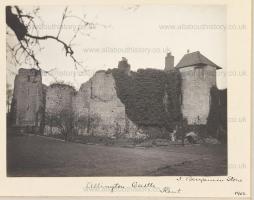
1902. John Benjamin Stone [aged 63]. Photograph of the Allington Castle [Map].

1903. John Benjamin Stone [aged 64]. Photograph of the town walls at Hedingham Castle [Map].
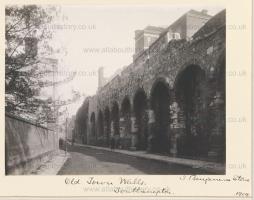
1904. John Benjamin Stone [aged 65]. Photograph of the town walls at Southampton, Hampshire [Map].
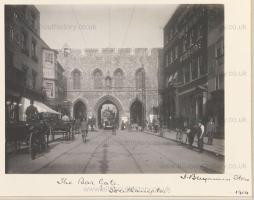
1904. John Benjamin Stone [aged 65]. Photograph of the Bargate, Southampton [Map].

1904. John Benjamin Stone [aged 65]. Photograph of the crypt at Hereford Cathedral [Map].
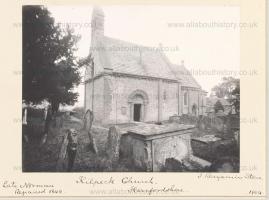
1904. John Benjamin Stone [aged 65]. Photograph of the Church of St Mary and St David, Kilpeck [Map].
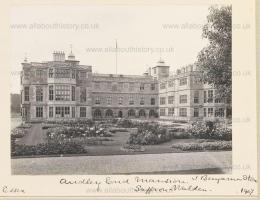
1904. John Benjamin Stone [aged 65]. Photograph of the Audley End House, Saffron Walden [Map].
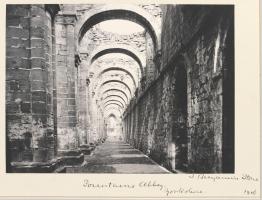
1906. John Benjamin Stone [aged 67]. Photograph of Fountains Abbey, North Yorkshire [Map].
Chronicle of Walter of Guisborough
A canon regular of the Augustinian Guisborough Priory, Yorkshire, formerly known as The Chronicle of Walter of Hemingburgh, describes the period from 1066 to 1346. Before 1274 the Chronicle is based on other works. Thereafter, the Chronicle is original, and a remarkable source for the events of the time. This book provides a translation of the Chronicle from that date. The Latin source for our translation is the 1849 work edited by Hans Claude Hamilton. Hamilton, in his preface, says: 'In the present work we behold perhaps one of the finest samples of our early chronicles, both as regards the value of the events recorded, and the correctness with which they are detailed; Nor will the pleasing style of composition be lightly passed over by those capable of seeing reflected from it the tokens of a vigorous and cultivated mind, and a favourable specimen of the learning and taste of the age in which it was framed.'
Available at Amazon in eBook and Paperback format.
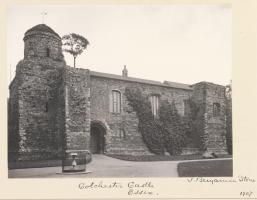
1907. John Benjamin Stone [aged 68]. Photograph of Colchester Castle, Essex.

1908. John Benjamin Stone [aged 69]. Photograph of St Mary's Abbey, York [Map].
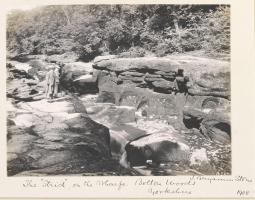
1908. John Benjamin Stone [aged 69]. Photograph of The Strid, West Yorkshire.

1908. John Benjamin Stone [aged 69]. Photograph of Monk Bar, York [Map] from without.

1908. John Benjamin Stone [aged 69]. Photograph of St Mary's Abbey, York [Map].

August 1908. John Benjamin Stone [aged 70]. Photograph of Bootham Bar, York from without.

August 1908. John Benjamin Stone [aged 70]. Photograph of the inner side of Bootham Bar, York.

August 1908. John Benjamin Stone [aged 70]. Photograph of the outer side of Micklegate Bar, York [Map].

August 1908. John Benjamin Stone [aged 70]. Photograph of the inner side of Micklegate Bar, York [Map].
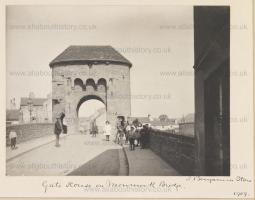
1909. John Benjamin Stone [aged 70]. Photograph of the Monnow Bridge, Monmouth [Map].
On 2nd July 1914 John Benjamin Stone [aged 76] died at his home, The Grange, Erdington. His wife Jane Parker [aged 65] died three days later on 5th July 1914. They were buried together on 7th July 1914 at Holy Trinity Church, Sutton Coldfield [Map].
