

Chronicle of Walter of Guisborough
A canon regular of the Augustinian Guisborough Priory, Yorkshire, formerly known as The Chronicle of Walter of Hemingburgh, describes the period from 1066 to 1346. Before 1274 the Chronicle is based on other works. Thereafter, the Chronicle is original, and a remarkable source for the events of the time. This book provides a translation of the Chronicle from that date. The Latin source for our translation is the 1849 work edited by Hans Claude Hamilton. Hamilton, in his preface, says: 'In the present work we behold perhaps one of the finest samples of our early chronicles, both as regards the value of the events recorded, and the correctness with which they are detailed; Nor will the pleasing style of composition be lightly passed over by those capable of seeing reflected from it the tokens of a vigorous and cultivated mind, and a favourable specimen of the learning and taste of the age in which it was framed.'
Available at Amazon in eBook and Paperback format.
On 25th July 1633 Joseph Williamson was born in Bridekirk, Cockermouth.
In 1660 Joseph Williamson [aged 26] entered the service of the Secretary of State for the Southern Department, Sir Edward Nicholas [aged 66], retaining his position under the succeeding secretary, Sir Henry Bennet [aged 42], afterwards Earl of Arlington.


Samuel Pepys' Diary. 10th August 1663. Thence by coach with my Lords Peterborough [aged 41] and Sandwich to my Lord Peterborough's house; and there, after an hour's looking over some fine books of the Italian buildings, with fine cuts; and also my Lord Peterborough's bowes and arrows, of which he is a great lover, we sat down to dinner, my Lady [aged 41] coming down to dinner also, and there being Mr. Williamson [aged 30], that belongs to Sir H. Bennet [aged 45], whom I find a pretty understanding and accomplished man, but a little conceited.

Samuel Pepys' Diary. 18th November 1664. Up and to the office, and thence to the Committee of the Fishery at White Hall, where so poor simple doings about the business of the Lottery, that I was ashamed to see it, that a thing so low and base should have any thing to do with so noble an undertaking. But I had the advantage this day to hear Mr. Williamson [aged 31] discourse, who come to be a contractor with others for the Lotterys, and indeed I find he is a very logicall man and a good speaker. But it was so pleasant to see my Lord Craven [aged 56], the chaireman, before many persons of worth and grave, use this comparison in saying that certainly these that would contract for all the lotteries would not suffer us to set up the Virginia lottery for plate before them, "For", says he, "if I occupy a wench first, you may occupy her again your heart out you can never have her maidenhead after I have once had it", which he did more loosely, and yet as if he had fetched a most grave and worthy instance. They made mirth, but I and others were ashamed of it.
Samuel Pepys' Diary. 12th July 1665. Heard Mr. Williamson [aged 31] repeat at Hampton Court [Map] to-day how the King of France [aged 26] hath lately set out a most high arrest against the Pope, which is reckoned very lofty and high1.
Note 1. Arret. The rupture between Alexander VII and Louis XIV. was healed in 1664, by the treaty signed at Pisa, on February 12th. On August 9th, the pope's nephew, Cardinal Chigi, made his entry into Paris, as legate, to give the King [aged 35] satisfaction for the insult offered at Rome by the Corsican guard to the Duc de Crequi, the French ambassador; (see January 25th, 1662-63). Cardinal Imperiali, Governor of Rome, asked pardon of the King in person, and all the hard conditions of the treaty were fulfilled. But no arret against the pope was set forth in 1665. On the contrary, Alexander, now wishing to please the King, issued a constitution on February 2nd, 1665, ordering all the clergy of France, without any exception, to sign a formulary condemning the famous five propositions extracted from the works of Jansenius; and on April 29th, the King in person ordered the parliament to register the bull. The Jansenist party, of course, demurred to this proceeding; the Bishops of Alais, Angers, Beauvais, and Pamiers, issuing mandates calling upon their clergy to refuse. It was against these mandates, as being contrary to the King's declaration and the pope's intentions, that the arret was directed. B.
Samuel Pepys' Diary. 22nd November 1665. This day the first of the Oxford Gazettes come out, which is very pretty, full of newes, and no folly in it. Wrote by Williamson [aged 32].
Samuel Pepys' Diary. 8th February 1666. Thence to Captain Cocke's [aged 49], where Mr. Williamson [aged 32], Wren [aged 37], Boldell and Madam Williams, and by and by Lord Bruncker [aged 46], he having been with the King [aged 35] and Duke [aged 32] upon the water to-day, to see Greenwich, Kent [Map] house, and the yacht Castle is building of, and much good discourse.
Samuel Pepys' Diary. 1st March 1666. But blessed be God! a good Bill this week we have; being but 237 in all, and 42 of the plague, and of them but six in the City: though my Lord Bruneker [aged 46] says, that these six are most of them in new parishes where they were not the last week. Here was with us also Mr. Williamson [aged 32], who the more I know, the more I honour.

Samuel Pepys' Diary. 16th June 1666. At noon home to dinner and then down to Woolwich, Kent [Map] and Deptford, Kent [Map] to look after things, my head akeing from the multitude of businesses I had in my head yesterday in settling my accounts. All the way down and up, reading of "The Mayor of Quinborough", a simple play. At Deptford, Kent [Map], while I am there, comes Mr. Williamson [aged 32], Sir Arthur Ingram [aged 49] and Jacke Fen, to see the new ships, which they had done, and then I with them home in their boat, and a very fine gentleman Mr. Williamson is. It seems the Dutch do mightily insult of their victory, and they have great reason1. Sir William Barkeley [deceased] was killed before his ship taken; and there he lies dead in a sugar-chest, for every body to see, with his flag standing up by him. And Sir George Ascue [aged 50] is carried up and down the Hague for people to see. Home to my office, where late, and then to bed.
Note 1. This treatment seems to have been that of the Dutch populace alone, and there does not appear to have been cause of complaint against the government. Respecting Sir W. Berkeley's body the following notice was published in the "London Gazette" of July 15th, 1666 (No. 69 [Note. actually issue 70]) "Whitehall, July 15. This day arrived a Trumpet from the States of Holland, who came over from Calais in the Dover packet-boat, with a letter to his Majesty, that the States have taken order for the embalming the body of Sir William Berkeley, which they have placed in the chapel of the great church at the Hague, a civility they profess to owe to his corpse, in respect to the quality of his person, the greatness of his command, and of the high courage and valour he showed in the late engagement; desiring his Majesty to signify his pleasure about the further disposal of it". "Frederick Ruysch, the celebrated Dutch anatomist, undertook, by order of the States-General, to inject the body of the English Admiral Berkeley, killed in the sea-fight of 1666; and the body, already somewhat decomposed, was sent over to England as well prepared as if it had been the fresh corpse of a child. This produced to Ruysch, on the part of the States-General, a recompense worthy of their liberality, and the merit of the anatomist", "James's Medical Dictionary"..
 Become a Member via our Buy Me a Coffee page to read more.
Samuel Pepys' Diary. 12th July 1666. She being gone, I to White Hall and there to Lord Arlington's [aged 48], and met Mr. Williamson [aged 32], and find there is no more need of my trouble about the Galliott, so with content departed, and went straight home, where at the office did the most at the office in that wearied and sleepy state I could, and so home to supper, and after supper falling to singing with Mercer did however sit up with her, she pleasing me with her singing of "Helpe, helpe", 'till past midnight and I not a whit drowsy, and so to bed.
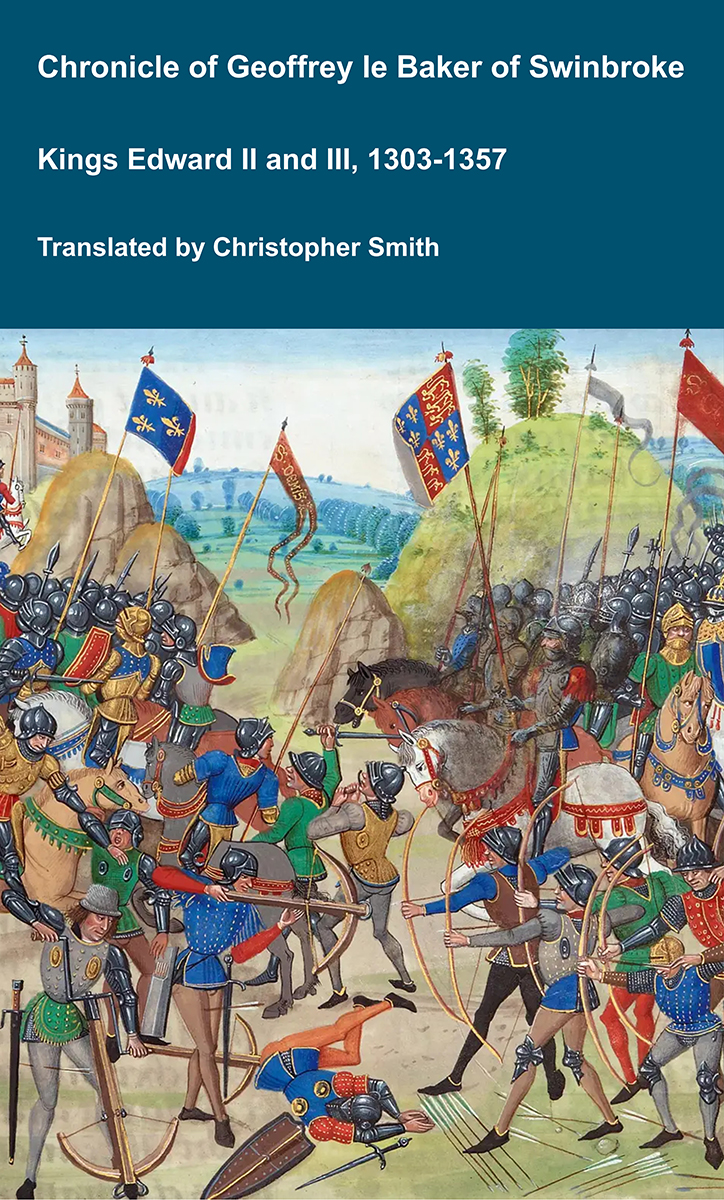
Chronicle of Geoffrey le Baker of Swinbroke
Baker was a secular clerk from Swinbroke, now Swinbrook, an Oxfordshire village two miles east of Burford. His Chronicle describes the events of the period 1303-1356: Gaveston, Bannockburn, Boroughbridge, the murder of King Edward II, the Scottish Wars, Sluys, Crécy, the Black Death, Winchelsea and Poitiers. To quote Herbert Bruce 'it possesses a vigorous and characteristic style, and its value for particular events between 1303 and 1356 has been recognised by its editor and by subsequent writers'. The book provides remarkable detail about the events it describes. Baker's text has been augmented with hundreds of notes, including extracts from other contemporary chronicles, such as the Annales Londonienses, Annales Paulini, Murimuth, Lanercost, Avesbury, Guisborough and Froissart to enrich the reader's understanding. The translation takes as its source the 'Chronicon Galfridi le Baker de Swynebroke' published in 1889, edited by Edward Maunde Thompson.
Available at Amazon in eBook and Paperback format.
Samuel Pepys' Diary. 31st July 1666. The Court being empty, the King [aged 36] being gone to Tunbridge [Map], and the Duke of Yorke [aged 32] a-hunting. I had some discourse with Povy [aged 52], who is mightily discontented, I find, about his disappointments at Court; and says, of all places, if there be hell, it is here. No faith, no truth, no love, nor any agreement between man and wife, nor friends. He would have spoke broader, but I put it off to another time; and so parted. Then with Creed and read over with him the narrative of the late [fight], which he makes a very poor thing of, as it is indeed, and speaks most slightingly of the whole matter. Povy discoursed with me about my Lord Peterborough's [aged 44] £50 which his man did give me from him, the last year's salary I paid him, which he would have Povy pay him again; but I have not taken it to myself yet, and therefore will most heartily return him, and mark him out for a coxcomb. Povy went down to Mr. Williamson's [aged 33], and brought me up this extract out of the Flanders' letters to-day come: That Admiral Everson, and the Admiral and Vice-Admiral of Freezeland, with many captains and men, are slain; that De Ruyter [aged 59] is safe, but lost 250 men out of his own ship; but that he is in great disgrace, and Trump in better favour; that Bankert's ship is burned, himself hardly escaping with a few men on board De Haes; that fifteen captains are to be tried the seventh of August; and that the hangman was sent from Flushing [Map] to assist the Council of Warr. How much of this is true, time will shew.


Samuel Pepys' Diary. 21st October 1666. This afternoon walking with Sir H. Cholmly [aged 34] long in the gallery, he told me, among many other things, how Harry Killigrew [aged 29] is banished the Court lately, for saying that my Baroness Castlemayne [aged 25] was a little lecherous girle when she was young.... This she complained to the King [aged 36] of, and he sent to the Duke of York [aged 33], whose servant he is, to turn him away. The Duke of York hath done it, but takes it ill of my Lady that he was not complained to first. She attended him to excute it, but ill blood is made by it. He told me how Mr. Williamson [aged 33] stood in a little place to have come into the House of Commons, and they would not choose him; they said, "No courtier". And which is worse, Bab May [aged 38] went down in great state to Winchelsea [Map] with the Duke of York's letters, not doubting to be chosen; and there the people chose a private gentleman in spite of him, and cried out they would have no Court pimp to be their burgesse; which are things that bode very ill. This afternoon I went to see and sat a good while with Mrs. Martin, and there was her sister Doll, with whom, contrary to all expectation, I did what I would, and might have done anything else.


John Evelyn's Diary. 2nd December 1666. Dined with me Monsieur Kiviet [aged 39], a Dutch gentleman-pensioner of Rotterdam, who came over for protection, being of the Prince of Orange's [aged 16] party, now not welcome in Holland. The King [aged 36] knighted him for some merit in the Prince's behalf. He should, if caught, have been beheaded with Monsieur Buat, and was brother-in-law to Van Tromp, the sea-general. With him came Mr. Gabriel Sylvius, and Mr. Williamson [aged 33], secretary to Lord Arlington [aged 48]; M. Kiviet came to examine whether the soil about the river of Thames would be proper to make clinker bricks, and to treat with me about some accommodation in order to it.


Samuel Pepys' Diary. 3rd July 1667. Thence, not pleased, away to White Hall to Mr. Williamson [aged 33], and by and by my Lord Arlington [aged 49] about Mr. Lanyon's business, and it is pretty to see how Mr. Williamson did altogether excuse himself that my business was not done when I come to my Lord and told him my business; "Why", says my Lord, "it hath been done, and the King [aged 37] signed it several days ago", and so it was and was in Mr. Williamson's hands, which made us both laugh, and I in innocent mirth, I remember, said, it is pretty to see in what a condition we are that all our matters now-a-days are undone, we know not how, and done we know not when. He laughed at it, but I have since reflected on it, and find it a severe speech as it might be taken by a chief minister of state, as indeed Mr. Williamson is, for he is indeed the Secretary. But we fell to other pleasant talk, and a fine gentleman he is, and so gave him £5 for his fee, and away home, and to Sir W. Batten's [aged 66] to talk a little, and then to the office to do a little business, and so home to supper and read myself asleep, and then to bed.

Samuel Pepys' Diary. 6th July 1667. Thence with joyful heart to White Hall to ask Mr. Williamson [aged 33] the news, who told me that Mr. Coventry [aged 39] is coming over with a project of a peace; which, if the States agree to, and our King, when their Ministers on both sides have shewed it them, we shall agree, and that is all: but the King [aged 37], I hear, do give it out plain that the peace is concluded.
Samuel Pepys' Diary. 10th February 1668. Thence with Cocke [aged 51] home to his house and there left him, and I home, and there got my wife to read a book I bought to-day, and come out to-day licensed by Joseph Williamson [aged 34] for Lord Arlington [aged 50], shewing the state of England's affairs relating to France at this time, and the whole body of the book very good and solid, after a very foolish introduction as ever I read, and do give a very good account of the advantage of our league with Holland at this time. So, vexed in my mind with the variety of cares I have upon me, and so to bed.
Samuel Pepys' Diary. 6th March 1668. Up betimes, and with Sir Prince to Sir W. Coventry's [aged 40] chamber: where the first word he said to me was, "Good-morrow, Mr. Pepys, that must be Speaker of the Parliament-house:" and did protest I had got honour for ever in Parliament. He said that his brother [aged 49], that sat by him, admires me; and another gentleman said that I could not get less than £1000 a-year if I would put on a gown and plead at the Chancery-bar; but, what pleases me most, he tells me that the Sollicitor-Generall did protest that he thought I spoke the best of any man in England. After several talks with him alone, touching his own businesses, he carried me to White Hall, and there parted; and I to the Duke of York's [aged 34] lodgings, and find him going to the Park, it being a very fine morning, and I after him; and, as soon as he saw me, he told me, with great satisfaction, that I had converted a great many yesterday, and did, with great praise of me, go on with the discourse with me. And, by and by, overtaking the King [aged 37], the King and Duke of York come to me both; and he [the King] said, "Mr. Pepys, I am very glad of your success yesterday"; and fell to talk of my well speaking; and many of the Lords there. My Lord Barkeley [aged 66] did cry the up for what they had heard of it; and others, Parliament-men there, about the King, did say that they never heard such a speech in their lives delivered in that manner. Progers, of the Bedchamber, swore to me afterwards before Brouncker [aged 48], in the afternoon, that he did tell the King that he thought I might teach the Sollicitor-Generall. Every body that saw me almost come to me, as Joseph Williamson [aged 34] and others, with such eulogys as cannot be expressed. From thence I went to Westminster Hall [Map], where I met Mr. G. Montagu [aged 45], who come to me and kissed me, and told me that he had often heretofore kissed my hands, but now he would kiss my lips: protesting that I was another Cicero, and said, all the world said the same of me. Mr. Ashburnham [aged 64], and every creature I met there of the Parliament, or that knew anything of the Parliament's actings, did salute me with this honour:-Mr. Godolphin [aged 33];-Mr. Sands, who swore he would go twenty mile, at any time, to hear the like again, and that he never saw so many sit four hours together to hear any man in his life, as there did to hear me; Mr. Chichly [aged 53],-Sir John Duncomb,-and everybody do say that the Kingdom will ring of my abilities, and that I have done myself right for my whole life: and so Captain Cocke [aged 51], and others of my friends, say that no man had ever such an opportunity of making his abilities known; and, that I may cite all at once, Mr. Lieutenant of the Tower did tell me that Mr. Vaughan [aged 64] did protest to him, and that, in his hearing it, said so to the Duke of Albemarle [aged 59], and afterwards to W. Coventry, that he had sat twenty-six years in Parliament and never heard such a speech there before: for which the Lord God make me thankful! and that I may make use of it not to pride and vain-glory, but that, now I have this esteem, I may do nothing that may lessen it! I spent the morning thus walking in the Hall, being complimented by everybody with admiration: and at noon stepped into the Legg with Sir William Warren, who was in the Hall, and there talked about a little of his business, and thence into the Hall a little more, and so with him by coach as far as the Temple [Map] almost, and there 'light, to follow my Lord Brouncker's coach, which I spied, and so to Madam Williams's, where I overtook him, and agreed upon meeting this afternoon, and so home to dinner, and after dinner with W. Pen [aged 46], who come to my house to call me, to White Hall, to wait on the Duke of York, where he again and all the company magnified me, and several in the Gallery: among others, my Lord Gerard [aged 50], who never knew me before nor spoke to me, desires his being better acquainted with me; and [said] that, at table where he was, he never heard so much said of any man as of me, in his whole life. We waited on the Duke of York, and thence into the Gallery, where the House of Lords waited the King's coming out of the Park, which he did by and by; and there, in the Vane-room, my Lord Keeper delivered a message to the King, the Lords being about him, wherein the Barons of England, from many good arguments, very well expressed in the part he read out of, do demand precedence in England of all noblemen of either of the King's other two kingdoms, be their title what it will; and did shew that they were in England reputed but as Commoners, and sat in the House of Commons, and at conferences with the Lords did stand bare. It was mighty worth my hearing: but the King did only say that he would consider of it, and so dismissed them.


Become a Member via our Buy Me a Coffee page to read more.
Samuel Pepys' Diary. 5th November 1668. Up, and Willet come home in the morning, and, God forgive me! I could not conceal my content thereat by smiling, and my wife observed it, but I said nothing, nor she, but away to the office. Presently up by water to White Hall, and there all of us to wait on the Duke of York [aged 35], which we did, having little to do, and then I up and down the house, till by and by the Duke of York, who had bid me stay, did come to his closet again, and there did call in me and Mr. Wren; and there my paper, that I have lately taken pains to draw up, was read, and the Duke of York pleased therewith; and we did all along conclude upon answers to my mind for the Board, and that that, if put in execution, will do the King's business. But I do now more and more perceive the Duke of York's trouble, and that he do lie under great weight of mind from the Duke of Buckingham's [aged 40] carrying things against him; and particularly when I advised that he would use his interest that a seaman might come into the room of W. Pen [aged 47], who is now declared to be gone from us to that of the Victualling, and did shew how the Office would now be left without one seaman in it, but the Surveyour and the Controller, who is so old as to be able to do nothing, he told me plainly that I knew his mind well enough as to seamen, but that it must be as others will. And Wren did tell it me as a secret, that when the Duke of York did first tell the King [aged 38] about Sir W. Pen's leaving of the place, and that when the Duke of York did move the King that either Captain Cox or Sir Jer. Smith might succeed him, the King did tell him that that was a matter fit to be considered of, and would not agree to either presently; and so the Duke of York could not prevail for either, nor knows who it shall be. The Duke of York did tell me himself, that if he had not carried it privately when first he mentioned Pen's leaving his place to the King, it had not been done; for the Duke of Buckingham and those of his party do cry out upon it, as a strange thing to trust such a thing into the hands of one that stands accused in Parliament: and that they have so far prevailed upon the King that he would not have him named in Council, but only take his name to the Board; but I think he said that only D. Gawden's name shall go in the patent; at least, at the time when Sir Richard Browne [aged 63] asked the King the names of D. Gawden's security, the King told him it was not yet necessary for him to declare them. And by and by, when the Duke of York and we had done, and Wren brought into the closet Captain Cox and James Temple [Map] About business of the Guiney Company, and talking something of the Duke of Buckingham's concernment therein, and says the Duke of York, "I will give the Devil his due, as they say the Duke of Buckingham hath paid in his money to the Company", or something of that kind, wherein he would do right to him. The Duke of York told me how these people do begin to cast dirt upon the business that passed the Council lately, touching Supernumeraries, as passed by virtue of his authority there, there being not liberty for any man to withstand what the Duke of York advises there; which, he told me, they bring only as an argument to insinuate the putting of the Admiralty into Commission, which by all men's discourse is now designed, and I perceive the same by him. This being done, and going from him, I up and down the house to hear news: and there every body's mouth full of changes; and, among others, the Duke of York's regiment of Guards, that was raised during the late war at sea, is to be disbanded: and also, that this day the King do intend to declare that the Duke of Ormond [aged 58] is no more Deputy of Ireland, but that he will put it into Commission. This day our new Treasurers did kiss the King's hand, who complimented them, as they say, very highly, that he had for a long time been abused in his Treasurer, and that he was now safe in their hands. I saw them walk up and down the Court together all this morning; the first time I ever saw Osborne, who is a comely gentleman. This day I was told that my Lord Anglesey [aged 54] did deliver a petition on Wednesday in Council to the King, laying open, that whereas he had heard that his Majesty had made such a disposal of his place, which he had formerly granted him for life upon a valuable consideration, and that, without any thing laid to his charge, and during a Parliament's sessions, he prayed that his Majesty would be pleased to let his case be heard before the Council and the judges of the land, who were his proper counsel in all matters of right: to which, I am told, the King, after my Lord's being withdrawn, concluded upon his giving him an answer some few days hence; and so he was called in, and told so, and so it ended. Having heard all this I took coach and to Mr. Povy's [aged 54], where I hear he is gone to the Swedes Resident in Covent Garden [Map], where he is to dine. I went thither, but he is not come yet, so I to White Hall to look for him, and up and down walking there I met with Sir Robert Holmes [aged 46], who asking news I told him of Sir W. Pen's going from us, who ketched at it so as that my heart misgives me that he will have a mind to it, which made me heartily sorry for my words, but he invited me and would have me go to dine with him at the Treasurer's, Sir Thomas Clifford [aged 38], where I did go and eat some oysters; which while we were at, in comes my Lord Keeper and much company; and so I thought it best to withdraw. And so away, and to the Swedes Agent's, and there met Mr. Povy; where the Agent would have me stay and dine, there being only them, and Joseph Williamson [aged 35], and Sir Thomas Clayton; but what he is I know not. Here much extraordinary noble discourse of foreign Princes, and particularly the greatness of the King of France [aged 30], and of his being fallen into the right way of making the Kingdom great, which [none] of his ancestors ever did before. I was mightily pleased with this company and their discourse, so as to have been seldom so much in all my life, and so after dinner up into his upper room, and there did see a piece of perspective, but much inferior to Mr. Povy's.
Become a Member via our Buy Me a Coffee page to read more.
In 1669 Joseph Williamson [aged 35] was elected MP Thetford.
Samuel Pepys' Diary. 9th January 1669. Up, and at the office all the morning, and at noon, my Lord Brouncker [aged 49], Mr. Wren [aged 40], Joseph Williamson [aged 35], and Captain Cocke [aged 52], dined with me; and, being newly sat down, comes in, by invitation of Williamson's, the Lieutenant of the Tower, and he brings in with him young Mr. Whore, whose father, of the Tower, I know.-And here I had a neat dinner, and all in so good manner and fashion, and with so good company, and everything to my mind, as I never had more in my life-the company being to my heart's content, and they all well pleased. So continued, looking over my books and closet till the evening, and so I to the Office and did a good deal of business, and so home to supper and to bed with my mind mightily pleased with this day's management, as one of the days of my life of fullest content.
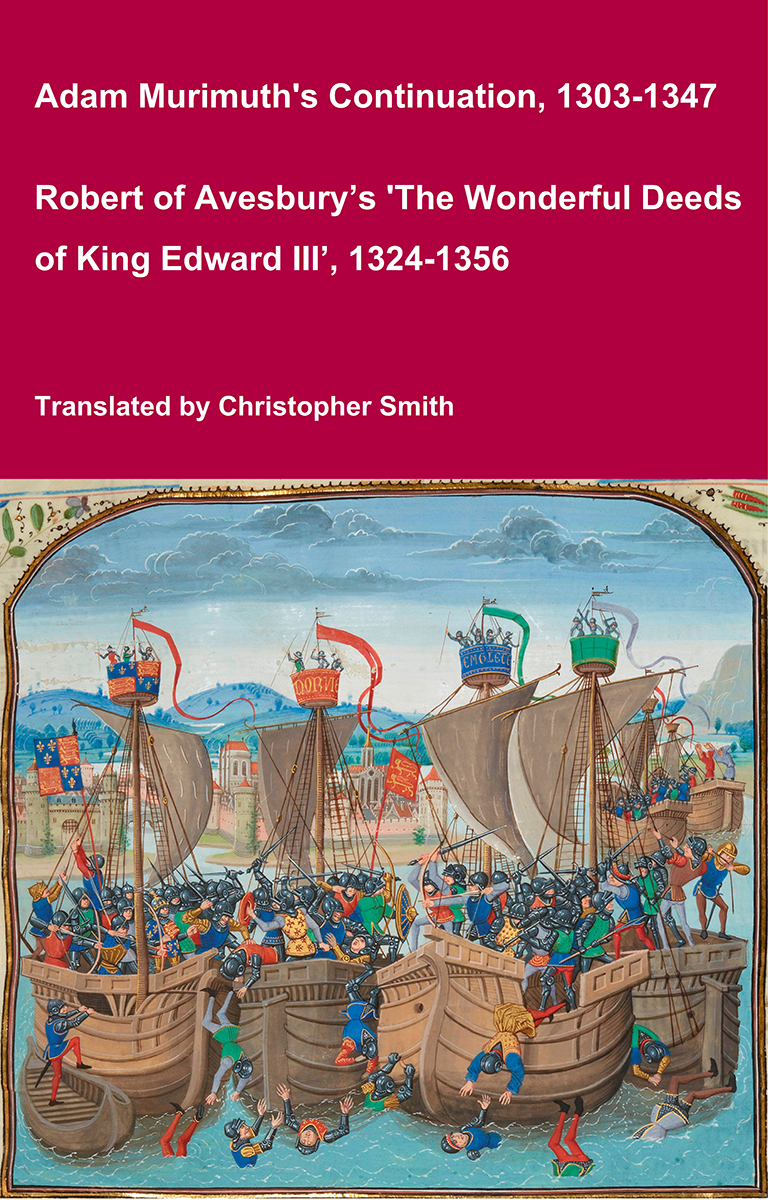
Adam Murimuth's Continuation and Robert of Avesbury’s 'The Wonderful Deeds of King Edward III'
This volume brings together two of the most important contemporary chronicles for the reign of Edward III and the opening phases of the Hundred Years’ War. Written in Latin by English clerical observers, these texts provide a vivid and authoritative window into the political, diplomatic, and military history of fourteenth-century England and its continental ambitions. Adam Murimuth Continuatio's Chronicarum continues an earlier chronicle into the mid-fourteenth century, offering concise but valuable notices on royal policy, foreign relations, and ecclesiastical affairs. Its annalistic structure makes it especially useful for establishing chronology and tracing the development of events year by year. Complementing it, Robert of Avesbury’s De gestis mirabilibus regis Edwardi tertii is a rich documentary chronicle preserving letters, treaties, and official records alongside narrative passages. It is an indispensable source for understanding Edward III’s claim to the French crown, the conduct of war, and the mechanisms of medieval diplomacy. Together, these works offer scholars, students, and enthusiasts a reliable and unembellished account of a transformative period in English and European history. Essential for anyone interested in medieval chronicles, the Hundred Years’ War, or the reign of Edward III.
Available at Amazon in eBook and Paperback format.
Samuel Pepys' Diary. 15th March 1669. Thence back to the Rolls, and did a little more business: and so by water to White Hall, whither. I went to speak with Mr. Williamson [aged 35], that if he hath any papers relating to the Navy I might see them, which he promises me: and so by water home, with great content for what I have this day found, having got almost as much as I desire of the history of the Navy, from 1618 to 1642, when the King [aged 38] and Parliament fell out.
Samuel Pepys' Diary. 17th March 1669. Up, and by water to see Mr. Wren [aged 40], and then Mr. Williamson [aged 35], who did shew me the very original bookes of propositions made by the Commissioners for the Navy, in 1618, to my great content; but no other Navy papers he could now shew me.
Samuel Pepys' Diary. 18th April 1669. Lord's Day. Up, and all the morning till 2 o'clock at my Office, with Gibson and Tom, about drawing up fair my discourse of the Administration of the Navy, and then, Mr. Spong being come to dine with me, I in to dinner, and then out to my Office again, to examine the fair draught; and so borrowing Sir J. Minnes's [aged 70] coach, he going with Colonel Middleton, I to White Hall, where we all met and did sign it and then to my Lord Arlington's [aged 51], where the King [aged 38], and the Duke of York [aged 35], and Prince Rupert [aged 49], as also Ormond and the two Secretaries, with my Lord Ashly [aged 47] and Sir T. Clifton [aged 38] was. And there, by and by, being called in, Mr. Williamson [aged 35] did read over our paper, which was in a letter to the Duke of York, bound up in a book with the Duke of York's Book of Instructions. He read it well; and, after read, we were bid to withdraw, nothing being at all said to it. And by and by we were called in again, and nothing said to that business; but another begun, about the state of this year's action, and our wants of money, as I had stated the same lately to our Treasurers; which I was bid, and did largely, and with great content, open. And having so done, we all withdrew, and left them to debate our supply of money; to which, being called in, and referred to attend on the Lords of the Treasury, we all departed. And I only staid in the House till the Council rose; and then to the Duke of York, who in the Duchess's chamber come to me, and told me that the book was there left with my Lord Arlington, for any of the Lords to view that had a mind, and to prepare and present to the King what they had to say in writing, to any part of it, which is all we can desire, and so that rested. The Duke of York then went to other talk; and by and by comes the Prince of Tuscany [aged 26] to visit him, and the Duchess [aged 32]; and I find that he do still remain incognito, and so intends to do all the time he stays here, for avoiding trouble to the King and himself, and expence also to both.




Become a Member via our Buy Me a Coffee page to read more.
Samuel Pepys' Diary. 3rd May 1669. Thence to White Hall, and met with Creed, and I took him to the Harp and Ball, and there drank a cup of ale, he and I alone, and discoursed of matters; and I perceive by him that he makes no doubt but that all will turn to the old religion, for these people cannot hold things in their hands, nor prevent its coming to that; and by his discourse fits himself for it, and would have my Lord Sandwich [aged 43] do so, too, and me. After a little talk with him, and particularly about the ruinous condition of Tangier, which I have a great mind to lay before the Duke of York [aged 35], before it be too late, but dare not, because of his great kindness to Lord Middleton [aged 61], we parted, and I homeward; but called at Povy's [aged 55], and there he stopped me to dinner, there being Mr. Williamson [aged 35], the Lieutenant of the Tower, Mr. Childe, and several others. And after dinner, Povy and I together to talk of Tangier; and he would have me move the Duke of York in it, for it concerns him particularly, more than any, as being the head of us; and I do think to do it.


John Evelyn's Diary. 23rd January 1672. To London, in order to Sir Richard Browne [aged 67], my father-in-law, resigning his place as Clerk of the Council to Joseph Williamson [aged 38], Esq, who was admitted, and was knighted. This place his Majesty [aged 41] had promised to give me many years before; but, upon consideration of the renewal of our lease and other reasons, I chose to part with it to Sir Joseph, who gave us and the rest of his brother clerks a handsome supper at his house; and, after supper, a concert of music.

In December 1672 Charles Stewart 6th Duke Lennox 3rd Duke Richmond [aged 33] drowned at Elsinor. Duke Lennox, Duke Richmond, Earl March, Earl Lichfield. Baron Stuart extinct. His sister [his future wife] Katherine [aged 32] succeeded 7th Baroness Clifton of Leighton Bromswold in Huntingdonshire.
In 1674 Joseph Williamson [aged 40] was appointed Secretary of State for the Northern Department having practically purchased this position from Arlington [aged 56] for £6,000.
John Evelyn's Diary. 22nd July 1674. I went to Windsor, Berkshire [Map] with my wife [aged 39] and son [aged 19] to see my daughter Mary [aged 9], who was there with my Lady Tuke and to do my duty to his Majesty [aged 44]. Next day, to a great entertainment at Sir Robert Holmes's [aged 52] at Cranbourne Lodge, Windsor, in the Forest; there were his Majesty, the Queen [aged 35], Duke [aged 40], Duchess [aged 15], and all the Court. I returned in the evening with Sir Joseph Williamson [aged 40], now declared Secretary of State. He was son of a poor clergyman somewhere in Cumberland, brought up at Queen's College, Oxford, of which he came to be a fellow; then traveled with ... and returning when the King was restored, was received as a clerk under Mr. Secretary Nicholas. Sir Henry Bennett [aged 56] (now Lord Arlington) succeeding, Williamson is transferred to him, who loving his ease more than business (though sufficiently able had he applied himself to it) remitted all to his man Williamson; and, in a short time, let him so into the secret of affairs, that (as his Lordship himself told me) there was a kind of necessity to advance him; and so, by his subtlety, dexterity, and insinuation, he got now to be principal Secretary; absolutely Lord Arlington's creature, and ungrateful enough. It has been the fate of this obliging favorite to advance those who soon forgot their original. Sir Joseph was a musician, could play at Jeu de Goblets, exceedingly formal, a severe master to his servants, but so inward with my Lord O'Brien [aged 32], that after a few months of that gentleman's death, he married his widow [aged 34], who, being sister and heir of the Duke of Richmond, brought him a noble fortune. It was thought they lived not so kindly after marriage as they did before. She was much censured for marrying so meanly, being herself allied to the Royal family.


In 1677 Joseph Williamson [aged 43] was appointed President of the Royal Society.
John Evelyn's Diary. 30th November 1677. Sir Joseph Williamson [aged 44], Principal Secretary of State, was chosen President of the Royal Society, after my Lord Viscount Brouncker [aged 57] had possessed the chair now sixteen years successively, and therefore now thought fit to CHANGE, that prescription might not prejudice.
John Evelyn's Diary. 4th December 1677. Being the first day of his [aged 44] taking the chair, he gave us a magnificent supper.
Before 1st September 1678 Henry O'Brien [aged 36] and [his future wife] Katherine Stewart [aged 38] were married. He the son of Henry O'Brien 7th Earl Thomond [aged 58] and Anne O'Brien Countess Thomond. They were third cousin once removed.
Henrici Quinti, Angliæ Regis, Gesta, is a first-hand account of the Agincourt Campaign, and subsequent events to his death in 1422. The author of the first part was a Chaplain in King Henry's retinue who was present from King Henry's departure at Southampton in 1415, at the siege of Harfleur, the battle of Agincourt, and the celebrations on King Henry's return to London. The second part, by another writer, relates the events that took place including the negotiations at Troye, Henry's marriage and his death in 1422.
Available at Amazon in eBook and Paperback format.
In December 1678 Joseph Williamson [aged 45] and Katherine Stewart [aged 38] were married three months after the death of her first husband leading to speculation they had commenced a relationship whilst she was married to her first husband.

John Evelyn's Diary. 29th January 1683. Supped at Sir Joseph Williamson's [aged 49], where was a select company of our Society, Sir William Petty [aged 59], Dr. Gale [aged 48] (that learned schoolmaster of St. Paul's), Dr. Whistler, Mr. Hill, etc. The conversation was philosophical and cheerful, on divers considerable questions proposed; as of the hereditary succession of the Roman Emperors; the Pica mentioned in the preface to our Common Prayer, which signifies only the Greek Kalendarium. These were mixed with lighter subjects.
In 1690 Joseph Williamson [aged 56] was elected MP Rochester.
After 12th September 1692 [his brother-in-law] Charles Livingston 2nd Earl of Newburgh and Frances Brudenell Countess Newburgh were married. She by marriage Countess of Newburgh. He the son of James Livingston 1st Earl Newburgh and Catherine Howard Countess Newburgh. They were fourth cousins.
In 1694 [his brother-in-law] Charles Livingston 2nd Earl of Newburgh died. Viscount of Newburgh extinct. His daughter Charlotte succeeded 3rd Countess of Newburgh, 3rd Viscountess of Kinnaird.
On 3rd October 1701 Joseph Williamson [aged 68] died in Cobham, Kent. He was buried in Westminster Abbey [Map]. He left £6,000 and his library to Queen's College, Oxford.
In 1702 [his former wife] Katherine Stewart [aged 62] died. Her fourth cousin Katherine [aged 38] succeeded 8th Baroness Clifton of Leighton Bromswold in Huntingdonshire.