

Chronicle of a Bourgeois of Valenciennes
Récits d’un bourgeois de Valenciennes aka The Chronicle of a Bourgeois of Valenciennes is a vivid 14th-century vernacular chronicle written by an anonymous urban chronicler from Valenciennes in the County of Hainaut. It survives in a manuscript that describes local and regional history from about 1253 to 1366, blending chronology, narrative episodes, and eyewitness-style accounts of political, military, and social events in medieval France, Flanders, and the Low Countries. The work begins with a chronological framework of events affecting Valenciennes and its region under rulers such as King Philip VI of France and the shifting allegiances of local nobility. It includes accounts of conflicts, sieges, diplomatic manoeuvres, and the impact of broader struggles like the Hundred Years’ War on urban life in Hainaut. Written from the perspective of a burgher (bourgeois) rather than a monastery or royal court, the chronicle offers a rare lay viewpoint on high politics and warfare, reflecting how merchants, townspeople, and civic institutions experienced the turbulence of the 13th and 14th centuries. Its narrative style combines straightforward reporting of events with moral and civic observations, making it a valuable source for readers interested in medieval urban society, regional politics, and the lived experience of war and governance in pre-modern Europe.
Available at Amazon in eBook and Paperback format.
Around 1618 Major General Charles Fleetwood was born.
On 20th September 1643 the First Battle of Newbury was fought at Newbury, Berkshire [Map] with King Charles I of England, Scotland and Ireland [aged 42] commanding the Royalist army and Robert Devereux 3rd Earl Essex [aged 52] commanding the victorious Parliamentary army. For King Charles I of England, Scotland and Ireland John Byron 1st Baron Byron [aged 44] fought with distinction.
Henry Bertie was killed.
Robert Dormer 1st Earl Carnarvon [aged 33] was killed. His son Charles [aged 10] succeeded 2nd Earl Carnarvon, 3rd Baron Dormer of Wyng in Buckinghamshire, 3rd Baronet Dormer of Wyng in Buckinghamshire.
William Villiers 2nd Viscount Grandison [aged 29] was killed. His brother John succeeded 3rd Viscount Grandison.
Edward Villiers [aged 23] fought.
Lucius Carey 2nd Viscount Falkland [aged 33] was killed. His son Lucius [aged 11] succeeded 3rd Viscount Falkland.
Richard Neville [aged 28] served under the Earl Carnarvon. Carnarvon was killed and Neville took up the command as a Colonel of Horse.
Major General Charles Fleetwood [aged 25] was wounded.


On 15th June 1646 Henry Ireton [aged 35] and [his future wife] Bridget Cromwell [aged 22] were married. She the daughter of [his future father-in-law] Oliver Cromwell [aged 47] and [his future mother-in-law] Elizabeth Bourchier [aged 48].


On 29th January 1649 King Charles I of England, Scotland and Ireland [aged 48] fifty-seven commissioners signed King Charles' Death Warrant at Westminster Hall [Map]. Two further names were added subsequently.
3 [his future father-in-law] Oliver Cromwell
10 Thomas Maulever 1st Baronet
14 Major-General William Goffe
21 Admiral Richard Deane
42 John Jones
45 Major General Charles Fleetwood
55 John Downes
57 Thomas Scot
58 John Carew
The commissioners who sat at the trial but did not sign the Death Warrant included:
William Monson 1st Viscount Monson [aged 50]
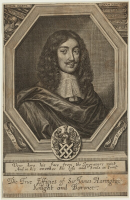
James Harington 3rd Baronet [aged 41]
The Captain of the Guard was Daniel Axtell [aged 27]. The guards included Francis Hacker, Matthew Tomlinson [aged 31].
The Solicitor-General was John Cook [aged 41].

In 1652 Major General Charles Fleetwood [aged 34] and Bridget Cromwell [aged 28] were married. She the daughter of Oliver Cromwell [aged 52] and Elizabeth Bourchier [aged 54].
In 1652 Major General Charles Fleetwood [aged 34] was appointed Lord Deputy of Ireland.

Around 1654. Robert Walker [aged 55]. Portrait of Major General Charles Fleetwood [aged 36].
On 18th November 1657 Thomas Belasyse 1st Earl Fauconberg [aged 30] and [his sister-in-law] Mary Cromwell Countess Fauconberg [aged 20] were married. She by marriage Viscountess Faunconberg. She the daughter of [his father-in-law] Oliver Cromwell [aged 58] and [his mother-in-law] Elizabeth Bourchier [aged 59].


On 3rd September 1658 [his father-in-law] Oliver Cromwell [aged 59] died at Whitehall Palace [Map]. His son [his brother-in-law] Richard [aged 31] succeeded Lord Protector.
Samuel Pepys' Diary. 3rd March 1660. To Westminster Hall [Map], where I found that my Lord was last night voted one of the Generals at Sea, and Monk [aged 51] the other. I met my Lord in the Hall, who bid me come to him at noon. I met with Mr. Pierce the purser, Lieut. Lambert [aged 40], Mr. Creed, and Will. Howe, and went with them to the Swan [Map] tavern. Up to my office, but did nothing. At noon home to dinner to a sheep's head. My brother Tom [aged 26] came and dined with me, and told me that my mother was not very well, and that my Aunt Fenner was very ill too. After dinner I to Warwick House, in Holborn, to my Lord, where he dined with my Lord of Manchester [aged 58], Sir Dudley North [aged 77], my Lord Fiennes [aged 52], and my Lord Barkly. I staid in the great hall, talking with some gentlemen there, till they all come out. Then I, by coach with my Lord, to Mr. Crew's [aged 62], in our way talking of publick things, and how I should look after getting of his Commissioner's despatch. He told me he feared there was new design hatching, as if Monk had a mind to get into the saddle. Here I left him, and went by appointment to Hering, the merchant, but missed of my money, at which I was much troubled, but could not help myself. Returning, met Mr. Gifford, who took me and gave me half a pint of wine, and told me, as I hear this day from many, that things are in a very doubtful posture, some of the Parliament being willing to keep the power in their hands. After I had left him, I met with Tom Harper, who took me into a place in Drury Lane, where we drank a great deal of strong water, more than ever I did in my life at onetime before. He talked huge high that my [his brother-in-law] Lord Protector [aged 33] would come in place again, which indeed is much discoursed of again, though I do not see it possible. Hence home and wrote to my father at Brampton by the post. So to bed. This day I was told that my Lord General Fleetwood [aged 42] told my lord that he feared the King of Sweden is dead of a fever at Gottenburg.


In 1662 [his wife] Bridget Cromwell [aged 38] died.
Samuel Pepys' Diary. 22nd January 1662. Thence to the Hall, where I heard the House had ordered all the King's murderers, that remain, to be executed, but Fleetwood [aged 44] and Downes [aged 53].
In 1664 Major General Charles Fleetwood [aged 46] and Mary Coke were married.
William of Worcester's Chronicle of England
William of Worcester, born around 1415, and died around 1482 was secretary to John Fastolf, the renowned soldier of the Hundred Years War, during which time he collected documents, letters, and wrote a record of events. Following their return to England in 1440 William was witness to major events. Twice in his chronicle he uses the first person: 1. when writing about the murder of Thomas, 7th Baron Scales, in 1460, he writes '… and I saw him lying naked in the cemetery near the porch of the church of St. Mary Overie in Southwark …' and 2. describing King Edward IV's entry into London in 1461 he writes '… proclaimed that all the people themselves were to recognize and acknowledge Edward as king. I was present and heard this, and immediately went down with them into the city'. William’s Chronicle is rich in detail. It is the source of much information about the Wars of the Roses, including the term 'Diabolical Marriage' to describe the marriage of Queen Elizabeth Woodville’s brother John’s marriage to Katherine, Dowager Duchess of Norfolk, he aged twenty, she sixty-five or more, and the story about a paper crown being placed in mockery on the severed head of Richard, 3rd Duke of York.
Available at Amazon in eBook and Paperback format.
On 4th October 1692 Major General Charles Fleetwood [aged 74] died.