

William of Worcester's Chronicle of England
William of Worcester, born around 1415, and died around 1482 was secretary to John Fastolf, the renowned soldier of the Hundred Years War, during which time he collected documents, letters, and wrote a record of events. Following their return to England in 1440 William was witness to major events. Twice in his chronicle he uses the first person: 1. when writing about the murder of Thomas, 7th Baron Scales, in 1460, he writes '… and I saw him lying naked in the cemetery near the porch of the church of St. Mary Overie in Southwark …' and 2. describing King Edward IV's entry into London in 1461 he writes '… proclaimed that all the people themselves were to recognize and acknowledge Edward as king. I was present and heard this, and immediately went down with them into the city'. William’s Chronicle is rich in detail. It is the source of much information about the Wars of the Roses, including the term 'Diabolical Marriage' to describe the marriage of Queen Elizabeth Woodville’s brother John’s marriage to Katherine, Dowager Duchess of Norfolk, he aged twenty, she sixty-five or more, and the story about a paper crown being placed in mockery on the severed head of Richard, 3rd Duke of York.
Available at Amazon in eBook and Paperback format.
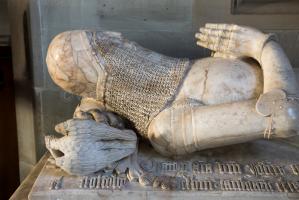
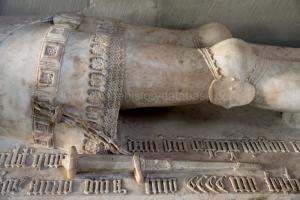
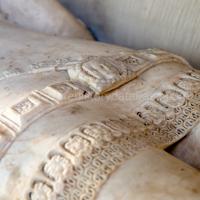
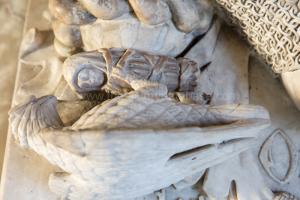
After 1423. St Peter's Church, Elford [Map]. Monument to John Stanley. Early Plate Bascinet Period. Maiden's Face Buckle. Eagle and Baby Crest; the legend associated with Sir John's descent from his ancestor, Sir Thomas Latham, whose wanted his barren wife to adopt his illegitimate son so he placed the baby in a nearby eagle's nest. His wife was delighted with this 'miracle' and took the child as her own.
Historic England states ... "Knight of circa 1370, alabaster, with bogus Gothic inscription by Richardson to Sir John Stanley, died 1474".
Mark Downing, President of the Church Monuments Society states on FB ... My research concludes c.1410. On a modern alabaster tomb-chest in the north-east corner of the south aisle. Stebbing Shaw quotes the inscription and expenses by Humphrey Stanley who probably acquired the effigy from a dissolved monastic house, with the inscription added c.1540 by possibly a Burton-on-Trent workshop. Restored and re-cut by Richardson in 1848/49. He states that he renewed the eagle crest, parts of the basinet, aventail, left arm, gauntlets, grip of the dagger, rowel spurs, spur straps, first part of the inscription and tomb-chest. Inscription on the right side of the slab: Orate pro aia d'ni Joh'is Stanley milit quondam d'ni de pype clyfton caumpuyle elforde et stotfolde et hui' Cantarie et capelle fundator' Anno d'ni Mil'simo CCCCMO Septuagesimo quarto. It is worth commenting that the rapier sword was not introduced until the sixteenth century and that this sword was cut into the slab when the inscription was added.
Humphrey Stanley: Around 1450 he was born to John Stanley and Elizabeth Vernon at Pipe, Staffordshire. On 19th March 1505 Humphrey Stanley died.
In 1762 Stebbing Shaw was born to [his father] Stebbing Shaw at Stone, Staffordshire [Map]. He was educated at Repton School [Map].
On 24th May 1780 Stebbing Shaw (age 18) was admitted as a pensioner at Queen's College, Cambridge University [Map]. He graudated BA in 1784, MA in 1787 and BD in 1796.
On 4th February 1784 Stebbing Shaw (age 22) was elected scholar of Queen's College, Cambridge University [Map] and on 13th January 1786 he was elected a Fellow.
Around 1785 Stebbing Shaw (age 23) became tutor to Francis Burdett 5th Baronet (age 14) grandson of Robert Burdett 4th Baronet (age 68).
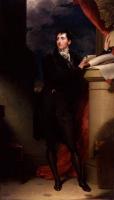

On 5th March 1795 Stebbing Shaw (age 33) was elected Fellow of the Society of Antiquaries of London.
In 1798 Stebbing Shaw (age 36) published his first volume of the History and Antiquities of Staffordshire with part of the second volume being published in 1801.
Before 1799 [his father] Stebbing Shaw was appointed Rector of St Peter's Church, Hartshorne [Map].
On 27th April 1799 [his father] Stebbing Shaw died.
Jean de Waurin's Chronicle of England Volume 6 Books 3-6: The Wars of the Roses
Jean de Waurin was a French Chronicler, from the Artois region, who was born around 1400, and died around 1474. Waurin’s Chronicle of England, Volume 6, covering the period 1450 to 1471, from which we have selected and translated Chapters relating to the Wars of the Roses, provides a vivid, original, contemporary description of key events some of which he witnessed first-hand, some of which he was told by the key people involved with whom Waurin had a personal relationship.
Available at Amazon in eBook and Paperback format.
On 27th April 1799 Stebbing Shaw (age 37) succeeded his father as Rector of St Peter's Church, Hartshorne [Map].
On 28th October 1802 Stebbing Shaw (age 40) died.