

William of Worcester's Chronicle of England
William of Worcester, born around 1415, and died around 1482 was secretary to John Fastolf, the renowned soldier of the Hundred Years War, during which time he collected documents, letters, and wrote a record of events. Following their return to England in 1440 William was witness to major events. Twice in his chronicle he uses the first person: 1. when writing about the murder of Thomas, 7th Baron Scales, in 1460, he writes '… and I saw him lying naked in the cemetery near the porch of the church of St. Mary Overie in Southwark …' and 2. describing King Edward IV's entry into London in 1461 he writes '… proclaimed that all the people themselves were to recognize and acknowledge Edward as king. I was present and heard this, and immediately went down with them into the city'. William’s Chronicle is rich in detail. It is the source of much information about the Wars of the Roses, including the term 'Diabolical Marriage' to describe the marriage of Queen Elizabeth Woodville’s brother John’s marriage to Katherine, Dowager Duchess of Norfolk, he aged twenty, she sixty-five or more, and the story about a paper crown being placed in mockery on the severed head of Richard, 3rd Duke of York.
Available at Amazon in eBook and Paperback format.
Paternal Family Tree: Legh
Around 1509 Thomas Leigh was born to [his father] Roger Leigh [aged 26] at Stoneleigh, Warwickshire [Map].
Around 1536 [his son] Rowland Leigh of Longbarrow was born to Thomas Leigh [aged 27] at Stoneleigh, Warwickshire [Map]. He married in or before 1585 Catherine Berkeley and had issue.
Around 1542 [his son] Thomas Leigh 1st Baronet was born to Thomas Leigh [aged 33] at Stoneleigh, Warwickshire [Map]. He married in or before 1573 Katharine Spencer and had issue.
Around 1551 [his son] William Leigh was born to Thomas Leigh [aged 42] in Stoneleigh, Warwickshire [Map]. He married before 1579 Frances Harrington and had issue.
In 1555 [his father] Roger Leigh [aged 72] died at Stoneleigh, Warwickshire [Map].
In October 1558 Thomas Leigh [aged 49] was appointed Lord Mayor of London.
Henry Machyn's Diary. 17th November 1558. The xvij day of November be-twyn v and vj in the mornyng ded quen Mare [aged 42], the vj yere of here grace('s) rayne, the wyche Jhesu have mercy on her solle! Amen.
[The same] day, be-twyne a xj and xij a' fornoon, the lady Elizabeth was proclamyd quen Elsabeth [aged 25], quen of England, France and Yrland, and deffender of the feyth, by dyvers haroldes of armes and trumpetors, and dukes, lordes [and knights,] the wyche was ther present, the duke of Norfoke [aged 22], [the] lord tresorer [aged 75], the yerle of Shrousbere [aged 58], and the yerele of Bedford [aged 31], and the lord mayre [aged 49] and the althermen, and dyver odur lordes and knyghtes.'
The sam day, at after-non, all the chyrches in London dyd ryng, and at nyght dyd make bonefyres and set tabulls in the strett, and ded ett and drynke and mad mere [merry] for the newe quen Elsabeth, quen Mare('s) syster.
Note. P. 178. A proclamation of queen Elizabeth, dated 18 November, declaring the date of her accession to have been "from the beginning of the xvijth," will be found in The Egerton Papers, p. 28.
Henry Machyn's Diary. 12th January 1559. The xij day the Qwen('s) [aged 25] grace toke her barge at Whytt-halle toward the Towre, and shott the bryge, and my lord mare [aged 50] and the althermen, and all the craftes, in barges with stremars and baners of ther armes.


Henry Machyn's Diary. 15th January 1559. The xv day was the crounasyon of quen Elsabeth [aged 25] at Westmynster abbay [Map], and theyr all the trumpettes, and knyghtes, and lordes, and haroldes of armes in ther cotte armurs; and after all they in ther skarlett, and all the bysshopes in skarlett, and the Quen, and all the fottmen waytyng a-pone the quene, to Westmynster hall; ther mett all the byshoppes, and all the chapell with iij crosses, and in ther copes, the byshoppes mytered, and syngyng Salve festa dyes; and all the strett led with gravell, and bluw cloth unto the abbay, and raylled on evere syd, and so to the abbay to masse, and ther her grasse was crounyd; and evere offeser rede against she shuld go to dener to Westmynster hall [Map], and evere offeser to take ys offes at serves a-pone ther landes; and my lord mare [aged 50] and the althermen.
Henry Machyn's Diary. 7th April 1559. The vij day was chosen at Yeld-halle [Map] a-for my lord mayre [aged 50] and the masters the althermen, and all the comm(on)ers of the cete, and the craftes of London, the masters of the bryghows, master Wylliam Draper, yrmonger, and master Assyngton, lether-seller.
Henry Machyn's Diary. After 7th April 1559. The (blank) day cam from Franse my lord chamburlayn Haward [aged 38] and my lord bysshope of Elly [aged 53] and master doctur Wotton, and (unfinished) .... ye Tempull, and ix .... dener, and ther dynyd the consell and dyvers notabyll .... and juges, and my lord mayre [aged 50] and the althermen, and the [officers of the] Chansseres [Chancery] and the Flett [Map], and the Kyngesbynshe [Map], and the Marshalsea [Map]; [and they] gayff gownes of ij collers, morreys and mustars, and ... ij collers ... hondered; and at v of cloke at after-non [the new] serganttes whent unto sant Thomas of Acurs in a ... gowne and skarlette hodes a-bowt ther nekes, and whyt [hoods on] ther hedes, and no capes [caps]; and after they whent unto Powles [Map] with typstayffes and offesers of the Kyngbynche [Map], and odur plasses, and [they were] browth be ij old serganttes, one after a-nodur in skarlett ... of north syd, and ther thay stod tyll thay had brou[th them] unto ix sondre pellers [pillars] of the north syd, and after the ... cam unto the furst, and after to the reseduu; and thay whe[nt back] unto the Tempull on a-lone [one-by-one], and a-for whent the ... and the rulers and the Chansere and of the Kyngbynche [ij and ij to]gether, and after cam a hondered in parte cottes of ...
Note. P. 195. The serjeants' feast. This took place at the Inner Temple on the 19th of April. In the second line read, "and ix. [serjeants made]." Dugdale, indeed, gives the names of ten as having been called to the degree by writ tested by the queen on the 12th Dec. namely, Thomas Carus, Reginald Corbet, John Welsh, John Southcote, William Simmonds, George Wall, Richard Harper, Ranulph Cholmley, Nicholas Powtrell, and John Birch; and to these was added Richard Weston by writ dated 24 Jan. making in all eleven. Dugdale's Chronica Series.
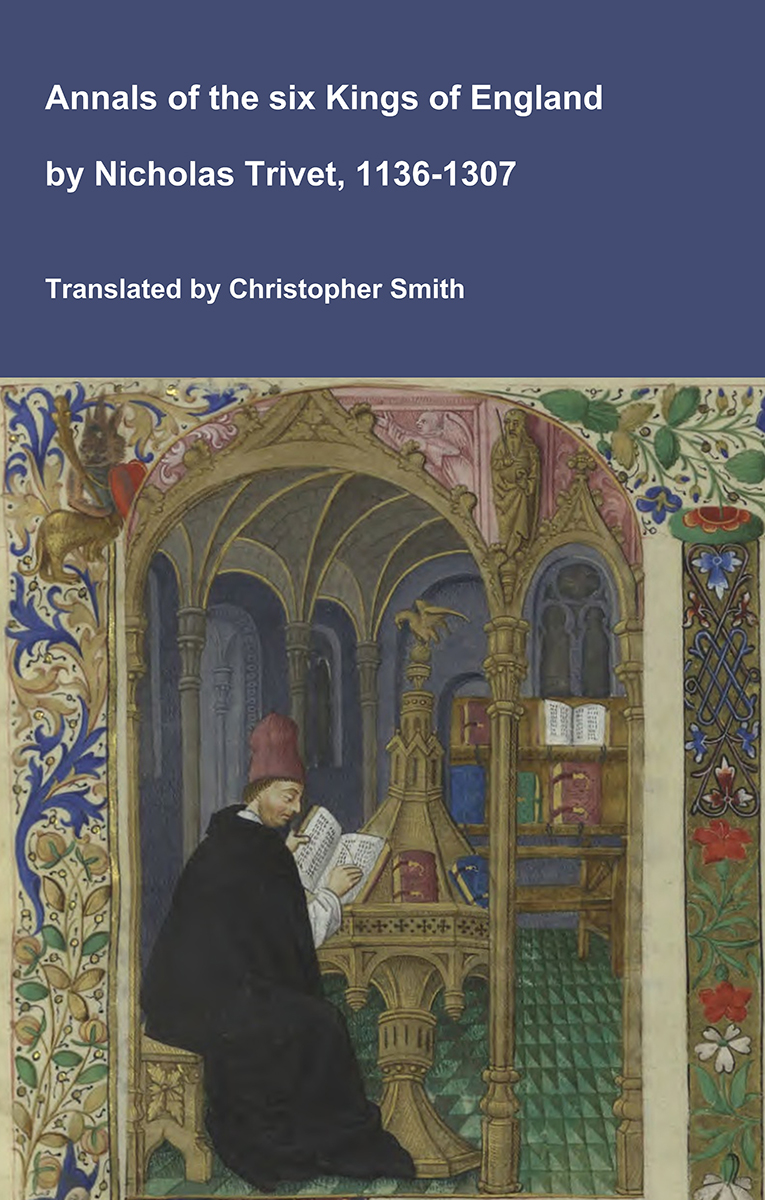
Annals of the six Kings of England by Nicholas Trivet
Translation of the Annals of the Six Kings of England by that traces the rise and rule of the Angevin aka Plantagenet dynasty from the mid-12th to early 14th century. Written by the Dominican scholar Nicholas Trivet, the work offers a vivid account of English history from the reign of King Stephen through to the death of King Edward I, blending political narrative with moral reflection. Covering the reigns of six monarchs—from Stephen to Edward I—the chronicle explores royal authority, rebellion, war, and the shifting balance between crown, church, and nobility. Trivet provides detailed insight into defining moments such as baronial conflicts, Anglo-French rivalry, and the consolidation of royal power under Edward I, whose reign he describes with particular immediacy. The Annals combines careful year-by-year reporting with thoughtful interpretation, presenting history not merely as a sequence of events but as a moral and political lesson. Ideal for readers interested in medieval history, kingship, and the origins of the English state, this chronicle remains a valuable and accessible window into the turbulent world of the Plantagenet kings.
Available at Amazon in eBook and Paperback format.
Henry Machyn's Diary. 8th April 1559. The viij day of Aprell ther was a proclamasion of pesse [peace] betwyne the Quene('s) [aged 25] grace and Hare the French kyng [aged 40], and Dolphyn the kyng of Skottes [aged 15], for ever, boyth by water and land; and ther was vj trumpeters and v haroldes of armes, master Garter and master Clarenshux, proclamyd yt, and Lankoster, Ruge Crosse, and Bluwmantyll, and my lord mayre [aged 50] and all the althermen in skarlett; and Bluw-mantyll dyd proclaymyd that no players shuld play no more tyll a serten tyme of no mans players; but the mare or shreyff, balle [bailiff], constabull, or odur offesers take them, lay them in presun, and the quen('s) commondement layd on them.
Note. P. 193. Peace with France. See Hayward's Elizabeth, p. 36; Hayward dates the proclamation the 7th instead of the 8th April. The treaty, which was signed by Elizabeth at Westminster on the 20th Jan. and by Henry at Chateau-Cambray on the 2d April, is printed by Rymer, Fœdera, vol. xv. pp. 505–516.
Henry Machyn's Diary. 15th May 1559. The xv day of May dyd pryche at Powlles [cross] [Map] master Gryndalle [aged 40], and ther was the quens consell, the duke of Norfoke [aged 23], my lord keper of the seylle, and my lord of Arundell [aged 47], my lord treysorer [aged 76], my lord marques of Northamtun [aged 47], my lord admerall [aged 49], my lord of Sussex [aged 34], my lord of Westmorland [aged 34], my lord of Rutland [aged 32], and mony mo lordes and knyghtes, my lord mare [aged 50] and the althermen; and after sermon done they whent to my lord mayre to dener, and my lord Russell [aged 32].


Henry Machyn's Diary. 21st May 1559. The xxj day of May dyd pryche at Powlles crosse [Map] master Horne [aged 49], and ther was my lord mayre [aged 50] and the althermen and mony juges and sergantes of the law, and a grett nombur of pepull to the nombur (blank)
Henry Machyn's Diary. 11th June 1559. The xj day of June dyd pryche at Powlles [Map] master [Sandys] [aged 40], and ther was my lorde mayre [aged 50] and the althermen, and my lord of Bedford [aged 32], and with dyvers odur nobull men; and postulles [Apostles] masse mad an end that day, and masse a' Powlles was non that day, and the new dene toke possessyon that was afore, by my lord of Bedford, and thys was on sant Barnabe day; and the sam nyght thay had no evyng-song at Powlles.
Henry Machyn's Diary. 18th June 1559. The xviij day of June dyd pryche at Powlles crosse [Map] docthur Juell [aged 37], and ther was my lord mare [aged 50] and the althermen and master comtroller of the quens howse ser Edward Rogers [aged 61], and mony mo, boyth men and women.
Henry Machyn's Diary. 1st July 1559. The furst day of July all the craftes of London send owt a (blank) men of armes, as well be-sene as ever was when owt of London, boyth waffelers in cott of velvet and cheynes, with gunes, mores-pykes, and halbardes, and flages, and in-to the duke of Suffoke('s) parke in Sowthwarke, and ther they mustered a-for my lord mayre [aged 50]; and ther was a howsse for bred and dryng [drink], to gyffe the sawgyars [soldiers] to ett and drynke, and they then after thay lay and mustered in sant Gorges ffeld tyll x of the cloke. [The next morning they removed towards Greenwich, Kent [Map] to the court there, and thence into Greenwich park, where they tarried] tyll viij of the cloke, and then thay [marched] to the lawne, and ther thay mustered in harnes, [and the gunners] in shurttes of maylle, and at v of the cloke at nyght the Quen [aged 25] [came] in to the galere of the parke gatt, and the inbassadurs and lordes [and ladies, to a] grett nombur, and my lord marques, and my lord admerall [aged 49], and my [lord Robert Dudley [aged 27], and] dyvers mo lordes and knyghtes, and they rod to and fro [to view them, and] to sett the ij batelles in a-ray; and after cam trumpeters bluwing [on] boyth partes, and the drumes and fluttes; and iij ansettes [onsets] in evere bat[elle]; so thay marchyd forward, and so the gunes shott and the morespykes [en]contered to-gether with gratt larum, and after reculyd bake [again]; after the towne army lost ther pykes and ther gunes and bylle .. rely, and contenent they wher sturyd with a-larum; and so evere man toke to ther weypons agayne; by and by the trumpetes and the drumes and gones playd, and shott, and so they whent to-gether as fast as they could. Al thys wyll the Quen('s) grace and the inbasadurs and the lordes and lades be-held the skymychsyng; and after they reculyd bake agayn; and after master chamburlayn and dyvers of the commenars and the wyffelers cam to the Quen, and ther the Quen('s) grace thankyd them hartely, and all the cette [city]; and contenent ther was the grettest showtt that ever was hard, and hurlyng up of capes [caps], that her grace was so mere [merry], for ther was a-buyff above lyk M [1000] pepull besyd the men that mustered; and after ther was runyng at the tyltt, and after evere [man] home to London and odur plasses.
Note. P. 202. Muster before the queen in Greenwich park. Stowe has described this muster at some length. The Grocers' company were, by a precept from the lord mayor, required to contribute to it "190 personnes, apte and picked men; whereof 60 to be with calyvers, flaskes, touche-boxes, morions, swordes, and daggers; 95 to be in corselettes, with halbertes, swordes, and daggers, for a shewe at Greenwich." Heath's Hist, of the Grocers' Company, p. 65.
Henry Machyn's Diary. 25th July 1559. The sam nyght was the Mersers' super, and ther supyd my lord mare [aged 50] and my lord treysorer [aged 76] and dyvers of the consell and dyvers althermen, and ther was chossen the shreyff for the quen master Logee, altherman and groser, for the yere to cume and nowe.
Henry Machyn's Diary. 24th August 1559. [The xxiiij day of August, the lord] mare [aged 50] and the althermen and the [sheriffs? w]her at the wrastelyng at Clarke-in-well [Map], and it was the fayre day of thynges kept in Smyth-feld [Map], [being] sant Bathellmuw (day), and the same day my lord [mayor] came home thrugh Chepe, and a-gaynst Yrmonger [lane] and a-gaynst sant Thomas of Acurs ij [2] gret [bonfires] of rodes and of Mares and Johns [sculptures of Saint Marys and Saint Johns] and odur emages [images], ther thay wher bornyd [burned] with gret wondur.
Henry Machyn's Diary. 27th August 1559. The xxvij day of August ther was a tentt sett up at Fynsbere for my lord mare [aged 50] and the enbassadurs and the masters the althermen, and mony commenars, and ther was the shutyng of the standard for the best gune, and dyvers odur dyd shut for odur games, after the wyche was .. to be wrastelyng-Bathellmuw day and iij [3] sondays after.
Henry Machyn's Diary. 10th September 1559. The x day of September dyd pryche at Powlles [cross] [Map] Torner, and ther was my lord mayre [aged 50] and the [aldermen], and grett audyens of pepull boyth of the cowrt, [city, and country.]
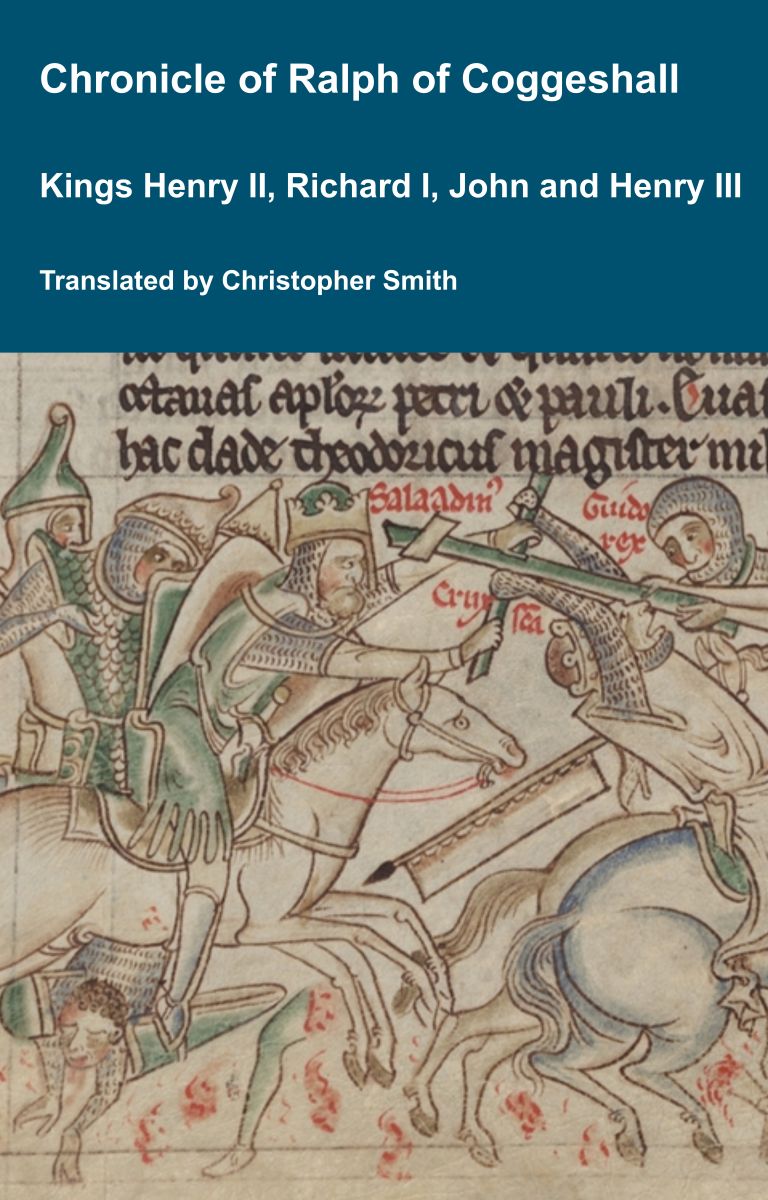
Chronicle of Abbot Ralph of Coggeshall
The Chronicle of Abbot Ralph of Coggeshall (Chronicon Anglicanum) is an indispensable medieval history that brings to life centuries of English and European affairs through the eyes of a learned Cistercian monk. Ralph of Coggeshall, abbot of the Abbey of Coggeshall in Essex in the early 13th century, continued and expanded his community’s chronicle, documenting events from the Norman Conquest of 1066 into the tumultuous reign of King Henry III. Blending eyewitness testimony, careful compilation, and the monastic commitment to record-keeping, this chronicle offers a rare narrative of political intrigue, royal power struggles, and social upheaval in England and beyond. Ralph’s work captures the reigns of pivotal figures such as Richard I and King John, providing invaluable insights into their characters, decisions, and the forces that shaped medieval rule. More than a simple annal, Chronicon Anglicanum conveys the texture of medieval life and governance, making it a rich source for scholars and readers fascinated by English history, monastic authorship, and the shaping of the medieval world.
Available at Amazon in eBook and Paperback format.
Henry Machyn's Diary. 17th September 1559. [The xvij day of September did preach at Paul's cross [Map] master Veron a new] prycher, and ther was my lord mare [aged 50] and .. grett audyense, and ther he sayd, Wher ar the bysshopes [and] old prechers? now they hyd ther hedes.
Henry Machyn's Diary. 24th September 1559. The xxiiij day of September dyd pryche at Powlles crosse [Map] (blank) Huntyngtun the prycher, and ther was my lord mare [aged 50] and my masters the althermen, and grett [audience] of pepull.
On 17th November 1571 Thomas Leigh [aged 62] died.
Great x 2 Grandfather: Piers Legh
Great x 1 Grandfather: John Leigh
GrandFather: Richard Leigh
Father: Roger Leigh