


Anne Boleyn. Her Life as told by Lancelot de Carle's 1536 Letter.
In 1536, two weeks after the execution of Anne Boleyn, her brother George and four others, Lancelot du Carle, wrote an extraordinary letter that described Anne's life, and her trial and execution, to which he was a witness. This book presents a new translation of that letter, with additional material from other contemporary sources such as Letters, Hall's and Wriothesley's Chronicles, the pamphlets of Wynkyn the Worde, the Memorial of George Constantyne, the Portuguese Letter and the Baga de Secrets, all of which are provided in Appendices.
Available at Amazon in eBook and Paperback format.
Walter Crane is in Painters.
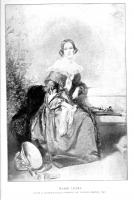
In 1840 [his father] Thomas Crane [aged 31] and [his mother] Marie Kearsley were married.
On 15th August 1845 Walter Crane was born to Thomas Crane [aged 37] and Marie Kearsley in Liverpool, Lancashire [Map] at Maryland Street, Liverpool [Map]. Her father was a "maltster," a prosperous man in a good position in Chester. His mother seems to have died early, and her father married a second time.

1846. [his father] Thomas Crane [aged 37]. Portrait of his son Walter Crane.
In July 1859 [his father] Thomas Crane [aged 51] died.
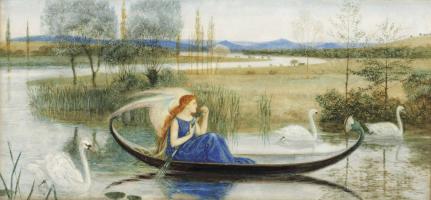
Between 1861 and 1871. Walter Crane [aged 15]. "The Enchanted Boat". This drawing illustrates an episode from Shelley's Prometheus Unbound, Asia's song, Act II, sc. V: "My soul is like an enchanted boat, Which, like a sleeping swan, doth float Upon the silver waves of thy sweet singing; And thine doth like an angel sit Beside a helm conducting it, Whilst all the winds with melody are ringing."
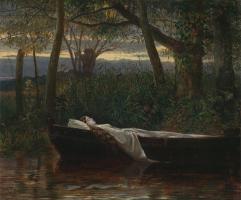
1862. Walter Crane [aged 16]. "The Lady of Shalott". Exhibited at the Royal Academy.
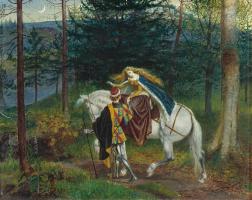
1865. Walter Crane [aged 19]. "La Belle Dame Sans Merci by John Keats".
On 6th September 1871 Walter Crane [aged 26] and Mary Frances Andrews [aged 25] were married at All Souls, Marylebone [Map]. See An Artist's Reminiscences.
In 1873 [his daughter] Beatrice Crane was born to Walter Crane [aged 27] and [his wife] Mary Frances Andrews [aged 27] in Rome.
William of Worcester's Chronicle of England
William of Worcester, born around 1415, and died around 1482 was secretary to John Fastolf, the renowned soldier of the Hundred Years War, during which time he collected documents, letters, and wrote a record of events. Following their return to England in 1440 William was witness to major events. Twice in his chronicle he uses the first person: 1. when writing about the murder of Thomas, 7th Baron Scales, in 1460, he writes '… and I saw him lying naked in the cemetery near the porch of the church of St. Mary Overie in Southwark …' and 2. describing King Edward IV's entry into London in 1461 he writes '… proclaimed that all the people themselves were to recognize and acknowledge Edward as king. I was present and heard this, and immediately went down with them into the city'. William’s Chronicle is rich in detail. It is the source of much information about the Wars of the Roses, including the term 'Diabolical Marriage' to describe the marriage of Queen Elizabeth Woodville’s brother John’s marriage to Katherine, Dowager Duchess of Norfolk, he aged twenty, she sixty-five or more, and the story about a paper crown being placed in mockery on the severed head of Richard, 3rd Duke of York.
Available at Amazon in eBook and Paperback format.
On 6th May 1876 [his son] Lionel Francis Crane was born to Walter Crane [aged 30] and [his wife] Mary Frances Andrews [aged 30]. He married (1) July 1913 Gertrude Sandes, daughter of Frederick Sandes and Mary Emma Jones aka "Miss Clive" (2) 1921 Winifred Gertrude Sandes, daughter of Frederick Sandes and Mary Emma Jones aka "Miss Clive".
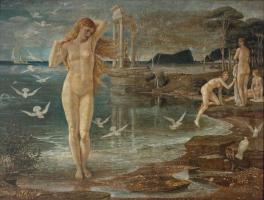
1877. Walter Crane [aged 31]. "The Renaissance of Venus".
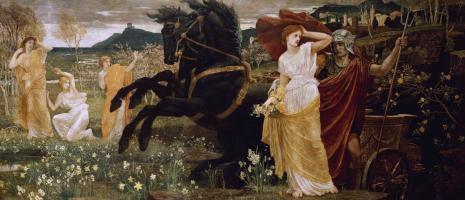
1878. Walter Crane [aged 32]. "The Fate of Persephone".
In 1880 [his son] Lancelot Crane was born to Walter Crane [aged 34] and [his wife] Mary Frances Andrews [aged 34].
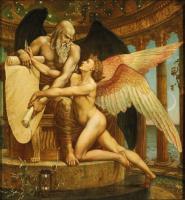
1882. Walter Crane [aged 36]. "The Roll of Fate".
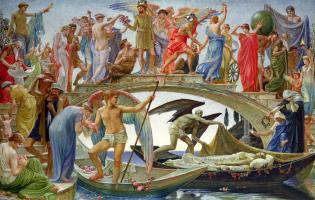
1882. Walter Crane [aged 36]. "The Bridge of Life".
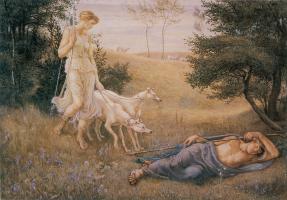
1883. Walter Crane [aged 37]. "Diana and Endymion".
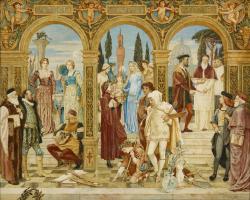
1885-86. Walter Crane [aged 39]. "The Apotheosis of Italian Art". Models for the central Florentine Group: Lisa Romana Stillman [aged 19] as Fiammetta, the artist Walter Crane as Cimabue [in the white costume], the artist's [his wife] wife [aged 39] as Beatrice, and their son the young Giotto. See An Artist's Reminiscences.
Lisa Romana Stillman: On 2nd December 1865 she was born to William James Stillman and Marie Spartali aka Stillman. On 11th February 1946 she died.
Mary Frances Andrews: In 1846 she was born. On 6th September 1871 Walter Crane and she were married at All Souls, Marylebone [Map]. See An Artist's Reminiscences. On 18th December 1914 Mary Frances Andrews committed suicide by jumping in front of a train. Her death was attributed to temporary insanity.

1886. Walter Crane [aged 40]. "Laura Reading". Laura was a young woman for whom the poet Petrarch nursed an unrequited passion. The story has obvious parallels with that of Dante and Beatrice, but it attracted far less attention from artists working in the romantic tradition.

1886. Frederick Hollyer [aged 47]. Photograph of Walter Crane [aged 40].
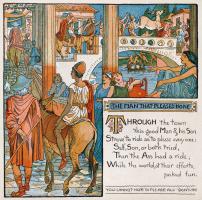
1887. Walter Crane [aged 41]. Illustration for Baby's Own Aesop.
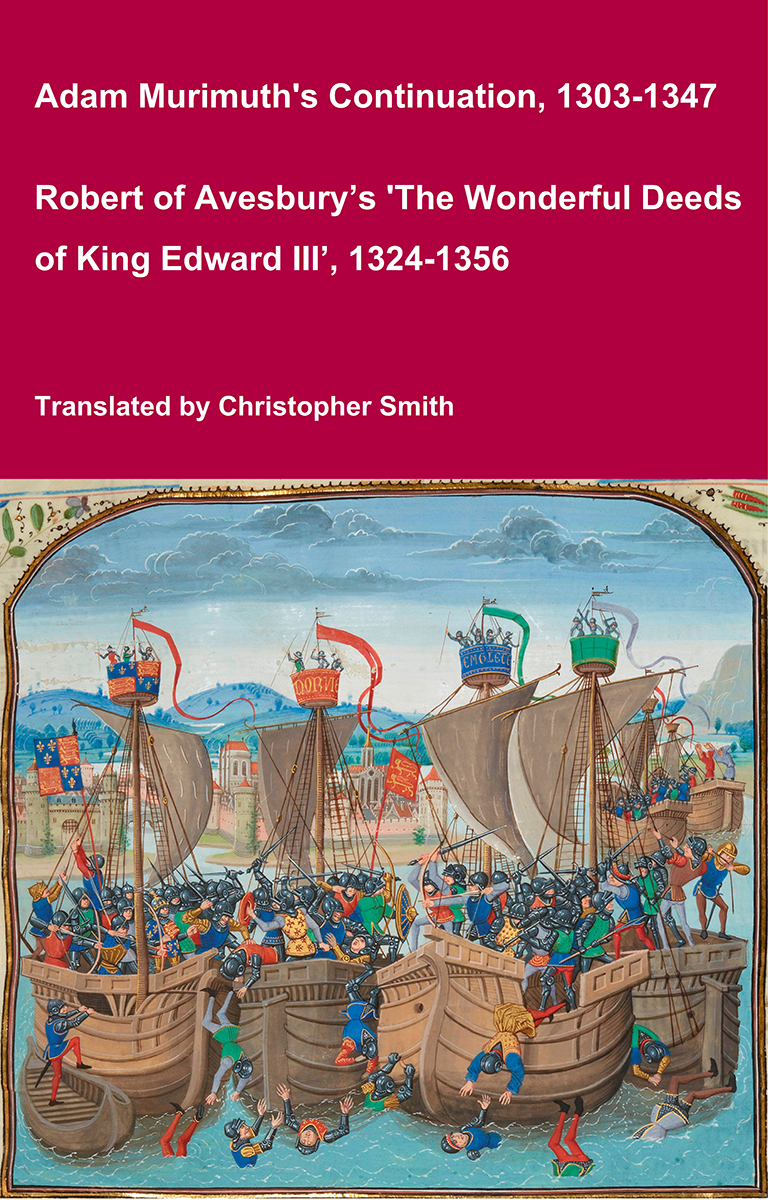
Adam Murimuth's Continuation and Robert of Avesbury’s 'The Wonderful Deeds of King Edward III'
This volume brings together two of the most important contemporary chronicles for the reign of Edward III and the opening phases of the Hundred Years’ War. Written in Latin by English clerical observers, these texts provide a vivid and authoritative window into the political, diplomatic, and military history of fourteenth-century England and its continental ambitions. Adam Murimuth Continuatio's Chronicarum continues an earlier chronicle into the mid-fourteenth century, offering concise but valuable notices on royal policy, foreign relations, and ecclesiastical affairs. Its annalistic structure makes it especially useful for establishing chronology and tracing the development of events year by year. Complementing it, Robert of Avesbury’s De gestis mirabilibus regis Edwardi tertii is a rich documentary chronicle preserving letters, treaties, and official records alongside narrative passages. It is an indispensable source for understanding Edward III’s claim to the French crown, the conduct of war, and the mechanisms of medieval diplomacy. Together, these works offer scholars, students, and enthusiasts a reliable and unembellished account of a transformative period in English and European history. Essential for anyone interested in medieval chronicles, the Hundred Years’ War, or the reign of Edward III.
Available at Amazon in eBook and Paperback format.
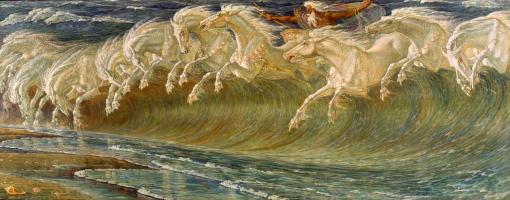
1892. Walter Crane [aged 46]. "The Horses of Neptune".
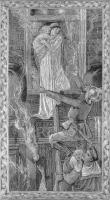
1893. Walter Crane [aged 47]. "The Union Street Fire".
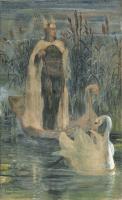
1895. Walter Crane [aged 49]. "Lohengrin".
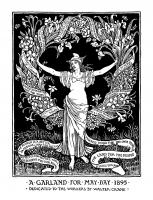
1895. Walter Crane [aged 49]. "A Garland for May Day 1895".
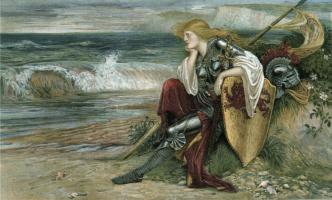
1900. Walter Crane [aged 54]. "Britomast". Spenser's Fairie Queene, Book III. See The Faerie Queene by Spenser.

Before 1904. George Frederick Watts [aged 86]. Portrait of Walter Crane [aged 58].
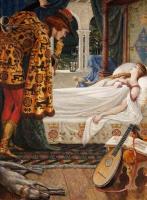
1905. Walter Crane [aged 59]. "The Briar Rose".
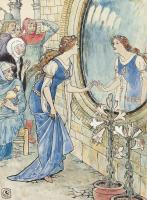
1909. Walter Crane [aged 63]. "The Mirror". Illustration for Arthur Kelly's The Rosebud and Other Tales.

In July 1913 Lionel Francis Crane [aged 37] and Gertrude Sandes [aged 41] were married. an example of Married to Two Siblings - following her death in 1920 he married her sister Winifred Gertrude Sandes [aged 42]. She the illegitmate daughter of Frederick Sandes and Mary Emma Jones aka "Miss Clive" [aged 68]. He the son of Walter Crane [aged 67] and Mary Frances Andrews [aged 67].
On 18th December 1914 [his wife] Mary Frances Andrews [aged 68] committed suicide by jumping in front of a train. Her death was attributed to temporary insanity.
On 14th March 1915 Walter Crane [aged 69] died at Horsham Hospital, West Sussex. His body was cremated at the Golders Green Crematorium, where his ashes remain.