

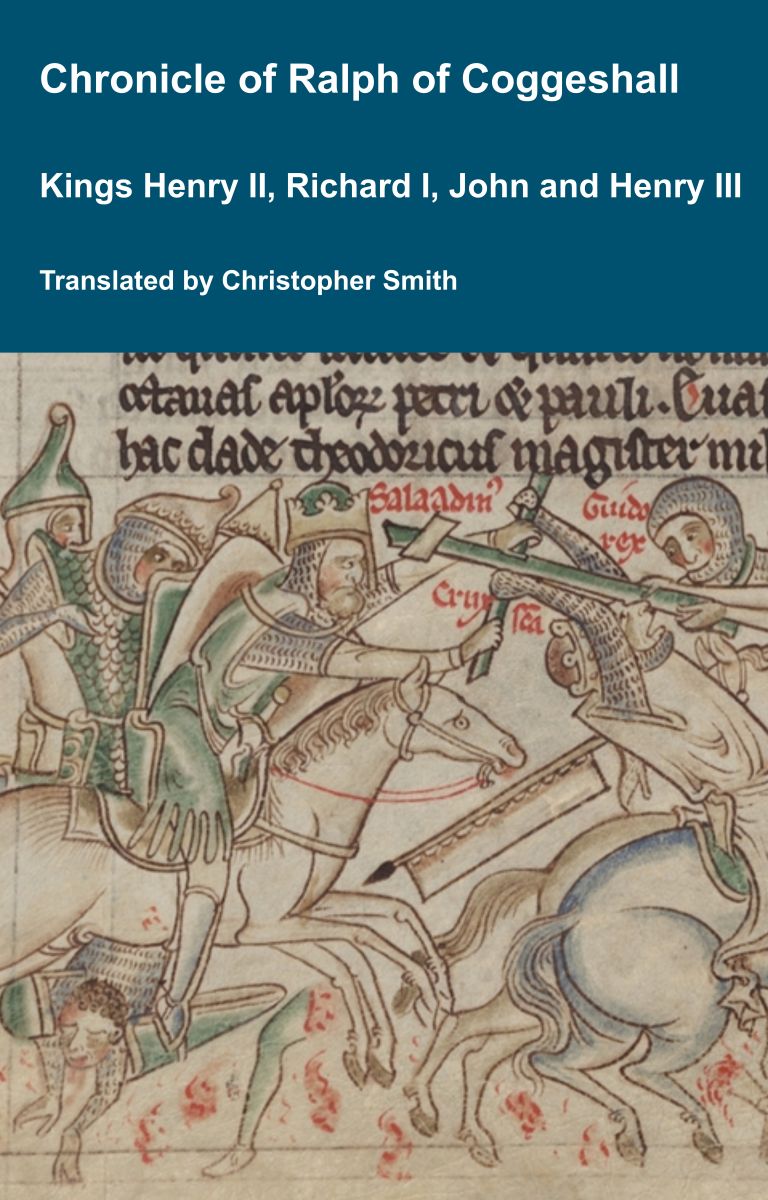
Chronicle of Abbot Ralph of Coggeshall
The Chronicle of Abbot Ralph of Coggeshall (Chronicon Anglicanum) is an indispensable medieval history that brings to life centuries of English and European affairs through the eyes of a learned Cistercian monk. Ralph of Coggeshall, abbot of the Abbey of Coggeshall in Essex in the early 13th century, continued and expanded his community’s chronicle, documenting events from the Norman Conquest of 1066 into the tumultuous reign of King Henry III. Blending eyewitness testimony, careful compilation, and the monastic commitment to record-keeping, this chronicle offers a rare narrative of political intrigue, royal power struggles, and social upheaval in England and beyond. Ralph’s work captures the reigns of pivotal figures such as Richard I and King John, providing invaluable insights into their characters, decisions, and the forces that shaped medieval rule. More than a simple annal, Chronicon Anglicanum conveys the texture of medieval life and governance, making it a rich source for scholars and readers fascinated by English history, monastic authorship, and the shaping of the medieval world.
Available at Amazon in eBook and Paperback format.
Paternal Family Tree: Mildmay
Around 1521 Walter Mildmay was born to [his father] Thomas Mildmay [aged 36] and [his mother] Agnes Read at Moulsham, Essex. He was educated at Christ's College, Cambridge University [Map].
In or before 1540 [his father] Thomas Mildmay [aged 54] and [his mother] Agnes Read were married.
In 1541 Walter Mildmay [aged 20] was elected MP Lostwithiel.
Around 1545 Walter Mildmay [aged 24] was appointed Surveyor General of the Court of Augmentations.
In 1546 Walter Mildmay [aged 25] became a student at Gray's Inn.
On 22nd February 1546 Walter Mildmay [aged 25] was knighted.
In 1547 Walter Mildmay [aged 26] was elected MP Lewes.
On 22nd May 1547 Walter Mildmay [aged 26] was knighted.
On 8th September 1549 [his son] Anthony Mildmay was born to Walter Mildmay [aged 28] and [his future wife] Mary Walsingham [aged 21]. It appears from his widow's provision for a memorial sermon to him, on the Nativity of Our Lady, 8th Sept, but in the year is unclear. To judge from the date of his entry to Peterhouse, it may have been 1549. He married 1567 Grace Sharington and had issue.


The Deeds of the Dukes of Normandy
The Gesta Normannorum Ducum [The Deeds of the Dukes of Normandy] is a landmark medieval chronicle tracing the rise and fall of the Norman dynasty from its early roots through the pivotal events surrounding the Norman Conquest of England. Originally penned in Latin by the monk William of Jumièges shortly before 1060 and later expanded at the behest of William the Conqueror, the work chronicles the deeds, politics, battles, and leadership of the Norman dukes, especially William’s own claim to the English throne. The narrative combines earlier historical sources with firsthand information and oral testimony to present an authoritative account of Normandy’s transformation from a Viking settlement into one of medieval Europe’s most powerful realms. William’s history emphasizes the legitimacy, military prowess, and governance of the Norman line, framing their expansion, including the conquest of England, as both divinely sanctioned and noble in purpose. Later chroniclers such as Orderic Vitalis and Robert of Torigni continued the history, extending the coverage into the 12th century, providing broader context on ducal rule and its impact. Today this classic work remains a foundational source for understanding Norman identity, medieval statesmanship, and the historical forces that reshaped England and Western Europe between 800AD and 1100AD.
Available at Amazon in eBook and Paperback format.
On 12th November 1549 Walter Mildmay [aged 28] was ordered by the Privy Council to examine the Westminster Palace [Map] which had been in the custody of Edward Seymour 1st Duke of Somerset [aged 49].
In 1550 Walter Mildmay [aged 29], John Dudley 1st Duke Northumberland [aged 46] and William Herbert 1st Earl Pembroke [aged 49] were directed to examine the accounts of the Royal Mint.
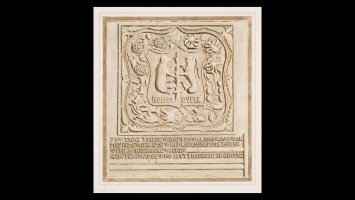

In 1552 Walter Mildmay [aged 31] was granted Apethorpe Hall, Northamptonshire.
On 1st March 1553 Walter Mildmay [aged 32] was elected MP Maldon.
On 5th October 1553 Walter Mildmay [aged 32] was elected MP Peterborough.
Around 1555 [his son] Humphrey Mildmay was born to Walter Mildmay [aged 34] and [his future wife] Mary Walsingham [aged 27]. He married Mary Capell.
Before 5th October 1557 [his mother] Agnes Read died.
Around 1558 [his daughter] Christian Mildmay was born to Walter Mildmay [aged 37] and [his future wife] Mary Walsingham [aged 30]. She married 9th June 1586 John Leveson and had issue.
On 20th December 1558 Walter Mildmay [aged 37] was employed in preparing a census of the farms of the royal revenues.
Chronicle of Walter of Guisborough
A canon regular of the Augustinian Guisborough Priory, Yorkshire, formerly known as The Chronicle of Walter of Hemingburgh, describes the period from 1066 to 1346. Before 1274 the Chronicle is based on other works. Thereafter, the Chronicle is original, and a remarkable source for the events of the time. This book provides a translation of the Chronicle from that date. The Latin source for our translation is the 1849 work edited by Hans Claude Hamilton. Hamilton, in his preface, says: 'In the present work we behold perhaps one of the finest samples of our early chronicles, both as regards the value of the events recorded, and the correctness with which they are detailed; Nor will the pleasing style of composition be lightly passed over by those capable of seeing reflected from it the tokens of a vigorous and cultivated mind, and a favourable specimen of the learning and taste of the age in which it was framed.'
Available at Amazon in eBook and Paperback format.
On 28th March 1559 Walter Mildmay [aged 38] was employed in compounding with those who refused knighthood.
On 29th October 1560 Walter Mildmay [aged 39] was employed in directing the issue of a new coinage.
In May 1563 Walter Mildmay [aged 42] was employed in selling crown lands.
On 29th January 1566 [his father] Thomas Mildmay [aged 81] died.
After 21st April 1566 Walter Mildmay [aged 45] was appointed Chancellor of the Exchequer and Auditor of the Duchy of Lancaster.
In 1567 [his son] Anthony Mildmay [aged 17] and [his daughter-in-law] Grace Sharington [aged 15] were married. They lived at Apethorpe Hall, Northamptonshire.
Before 1571 Walter Mildmay [aged 49] and Mary Walsingham [aged 42] were married.
In January 1572 Thomas Howard 4th Duke of Norfolk [aged 35] was tried for high treason for his involvement in the Ridolphi Plot. Thomas Sackville 1st Earl Dorset [aged 36] acted as judge.
George Talbot 6th Earl of Shrewsbury [aged 44] was appointed Lord High Steward for the trial.
Walter Mildmay [aged 51] helped prepare evidence against Thomas Howard 4th Duke of Norfolk.


On 16th March 1576 [his wife] Mary Walsingham [aged 48] died.
In October 1577 Walter Mildmay [aged 56] and William Cecil 1st Baron Burghley [aged 57] visited Mary Queen of Scots [aged 34] at Chatsworth House, Derbyshire [Map] after she had announced that she had important secrets to reveal to Elizabeth.


On 23rd November 1583 Walter Mildmay [aged 62] purchased the site of Emmanuel College, Cambridge University for £550 and on 11th January 1584 obtained the Queen's licence to set up Emmanuel College there.
Chronicle of a Bourgeois of Valenciennes
Récits d’un bourgeois de Valenciennes aka The Chronicle of a Bourgeois of Valenciennes is a vivid 14th-century vernacular chronicle written by an anonymous urban chronicler from Valenciennes in the County of Hainaut. It survives in a manuscript that describes local and regional history from about 1253 to 1366, blending chronology, narrative episodes, and eyewitness-style accounts of political, military, and social events in medieval France, Flanders, and the Low Countries. The work begins with a chronological framework of events affecting Valenciennes and its region under rulers such as King Philip VI of France and the shifting allegiances of local nobility. It includes accounts of conflicts, sieges, diplomatic manoeuvres, and the impact of broader struggles like the Hundred Years’ War on urban life in Hainaut. Written from the perspective of a burgher (bourgeois) rather than a monastery or royal court, the chronicle offers a rare lay viewpoint on high politics and warfare, reflecting how merchants, townspeople, and civic institutions experienced the turbulence of the 13th and 14th centuries. Its narrative style combines straightforward reporting of events with moral and civic observations, making it a valuable source for readers interested in medieval urban society, regional politics, and the lived experience of war and governance in pre-modern Europe.
Available at Amazon in eBook and Paperback format.
On 9th June 1586 [his son-in-law] John Leveson [aged 31] and [his daughter] Christian Mildmay [aged 28] were married.
Before 14th October 1586 Walter Mildmay [aged 65] went to Fotheringhay Castle, Northamptonshire [Map] to inform Mary Queen of Scots [aged 43] of her forthcoming trial in which he subsequently took part as one of the special commissioners.
On 31st May 1589 Walter Mildmay [aged 68] died at Hackney. He is buried at St Bartholomew the Less with his wife Mary Walsingham.