

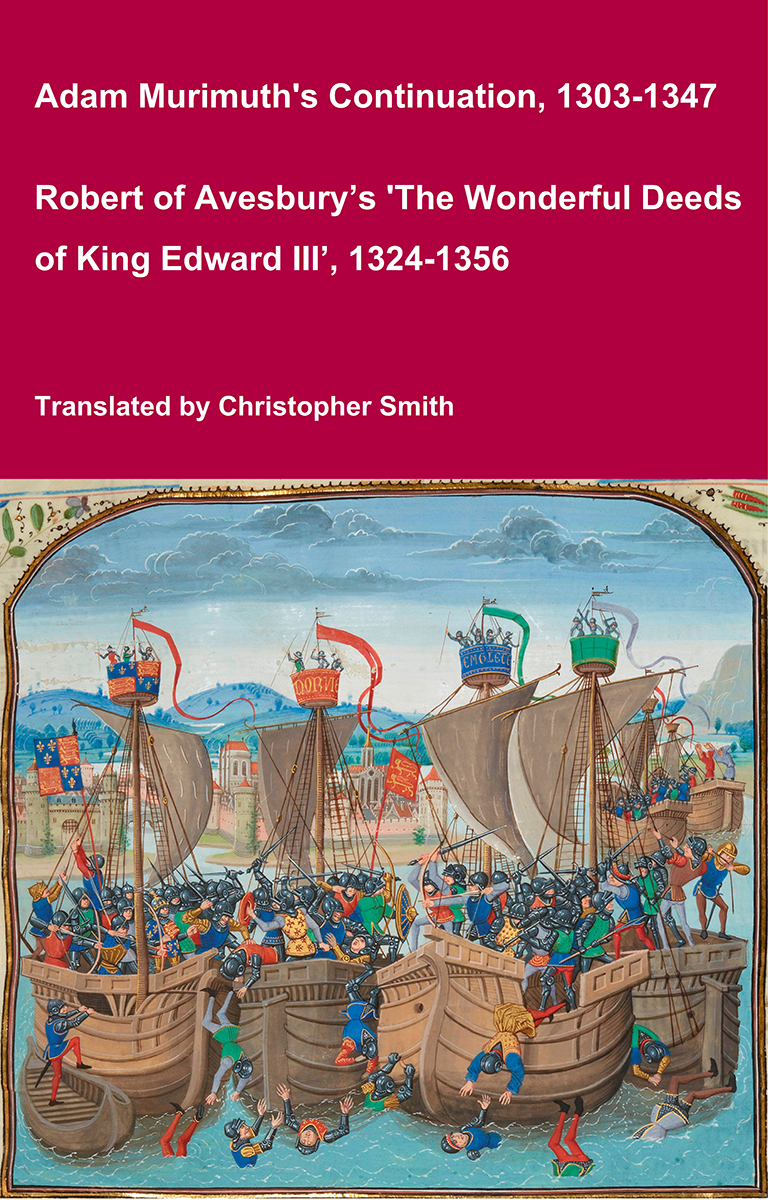
Adam Murimuth's Continuation and Robert of Avesbury’s 'The Wonderful Deeds of King Edward III'
This volume brings together two of the most important contemporary chronicles for the reign of Edward III and the opening phases of the Hundred Years’ War. Written in Latin by English clerical observers, these texts provide a vivid and authoritative window into the political, diplomatic, and military history of fourteenth-century England and its continental ambitions. Adam Murimuth Continuatio's Chronicarum continues an earlier chronicle into the mid-fourteenth century, offering concise but valuable notices on royal policy, foreign relations, and ecclesiastical affairs. Its annalistic structure makes it especially useful for establishing chronology and tracing the development of events year by year. Complementing it, Robert of Avesbury’s De gestis mirabilibus regis Edwardi tertii is a rich documentary chronicle preserving letters, treaties, and official records alongside narrative passages. It is an indispensable source for understanding Edward III’s claim to the French crown, the conduct of war, and the mechanisms of medieval diplomacy. Together, these works offer scholars, students, and enthusiasts a reliable and unembellished account of a transformative period in English and European history. Essential for anyone interested in medieval chronicles, the Hundred Years’ War, or the reign of Edward III.
Available at Amazon in eBook and Paperback format.
In 1498 William Flower was born.
In 1544 William Flower [aged 46] was appointed Rouge Croix Pursuivant of Arms in Ordinary.
In 1546 William Flower [aged 48] was appointed Chester Herald of Arms in Ordinary.
Henry Machyn's Diary. 13th December 1558. [The xiij day of December, the corpse of the late Queen [deceased] was brought from St. James's, in a charett, with the pyctur of emages [images] lyke [her person], adorned with cremesun velvett and her crowne on her hed, her septer on her hand, and mony goodly rynges on her fyngers; up the he-way [went] formett [foremost] [the] standard with the Faucon and [the Hart]; then cam a grett compene of morners; and after anodur godly standard of the Lyon and the Faucon; and then her houshold servandes, ij and ij together, in blake gownes, [the] haroldes rydyng to and fro to se them go in order; and after cam the iij standard with the Whyt Grahond and the Faucon; and then cam gentyllmen in gownes, morners; and then cam rydyng sqwyrs, bayryng of baners of armes; and then cam my lord marques of Wynchester [aged 75] on hors-bake, bayryng the baner of the armes of England in-brodered with gold; and then cam after Chester the harold [aged 60], baryng the helm and the crest and mantyll; then cam master Norroy [aged 48], bayryng the targett with the garter and the crowne; and then cam master Clarenshus [aged 48] bayreng the sword and after cam Garter [aged 48], bayryng her cot-armur, on hors-bake they all; and baners borne abowt her, with knyghts, lords, and baners a-bowt the corse; with iiij harolds bayryng on horss-bake iiij whyt baners of santes wroth with fyne gold, master Samersett, master Lanckostur, master Wyndsor, and master Yorke; and then cam the corse, with her pyctur lyung over her, and the corse covered with cloth of gold, the crosse sylver, and then cam iij (blank) with the cheyff morners; and then lades rydyn, alle in blake, trapyd to the grond; and the charett that the quen was in rode the pages of honor with baners in ther handes; and a-for the corse her chapell, and after all the monkes, and after the bysshopes in order; and so by Charyng-crosse to Westmynster abay; and at the grett dore of the chyrche evere body dyd a-lykt of ther horse; and then was gentyll-men rede [ready] to take the quen owt of her charett, and so erles and lordes whent afor her grace to the herse ward, with her pyctur borne betwyn men of worshype; and at the cherche dore met her iiij byshopes, and the abbott [aged 43], mytered, in copes, and sensyng the body; and so she lay all nyght under the herse, and her grace was wachyd. [And there were an hundred poor men in good black gowns] bayryng longe torchys, with [hoods on their heads, and arms] on them; and a-bowt her the gard bayryng [staff-torches] in blake cottes; and all the way chandlers [having] torchys, to gyffe them that had ther torchys [burnt out].
Note. P. 182. Funeral of queen Mary. The ceremonial is in the College of Arms, I. 14, ff. 19—30, and again in ff. 202—214; and the painters' charges at f. 198.


Henry Machyn's Diary. 9th September 1559. The ix day (of September) a-fore none thay cam to the chyrche from the byshope palles, the haroldes a-for them, master Garter [aged 49], master Clarenshux [aged 49], master Norrey [aged 49], master Somersett, master Chaster [aged 61], master Rechmond, master Yorke, master Wyndsor, master Lanckostur, and Ruge-crosse, Ruge-dragon, Bluw-mantyll, Perkullys, and ther thay had serves; my lord of Canturbere the meny[ster?], the bysshope Harford, Skore [aged 49], dyd pryche, and the bysshope Barlow [aged 61], thes iij had blake gownes and grett hodes lynyd with sylke, and drestes' capes [caps]; and after all done to (the bishop's) plasse to dener, for ther was offesers of the quen('s) howsse, of evere offes [office] sum, for ther was grett chere.
Henry Machyn's Diary. 15th November 1559. The xv day of November was bered at Tame my lord Wylliam of Tame [deceased], with a iij harold of armes, master Clarenshux [aged 49], master Chester [aged 61], and Ruge-dragon, with a standard, a grett baner of armes, and viij [8] baner-rolles of armes, and a xij [12] dosen skochyons, and a C [100] morners, and a lx [60] gownes for pore men, and grett dolle of money, and after a grett dener.
Note. P. 217. Funeral of lord Williams of Thame. Master of the jewel-house, temp. Edw. VI. He died on the 14th Oct. "within her majesties castell of Loudlowe in the conte of Sallop, wher he was late come, being lorde precydent ther appoincted of her grace's counsell in the said marches:" his body was brought to Thame, and a long account of his interment is preserved in I. 9, in Coll. Arm. f. 150b.
Henry Machyn's Diary. 15th October 1560. The xv day of October was bered [the countess] [Note. This is a mistake for the Earl?] of Shrowsbere, Frances [deceased], in Halumshyre, with [iij heralds] of armes, master Garter [aged 50], master Chester [aged 62], master Lankostur; .... with a standard, a grett baner of armes, [and baner-]rolles of mareges [marriages ie alliances], and a x dosen penselles, .... skochyons of armes, and a mageste and valans ... dosen of bokeram skochyons, and a thousand in .... and cottes with the pore men and women, and a grett dolle of money, and of mett and drynke, for all that cam, and all the prestes and clarkes of ....cam, and had boyth money and mett and drynke.
Note. P. 244. Funeral of Francis earl of Shrewsbury, K.G. Misled by the diarist's spelling of the name Frances, the word "countess" was inadvertently inserted instead of "earl." He died at his manor of Sheffield 28 Sept. 1560, and the funeral took place at the same place on the 21st Oct. The ceremonial at full is printed in Peck's Desiderata Curiosa, lib. vii. pp. 17–21; and also in Hunter's Hallamshire, p. 56.
Henry Machyn's Diary. 6th September 1561. The vj of September [was the funeral] of ser James Bullen, and standard, [coat armour,] and elmett, targett, and sword, and a vj dos [en of scocheons of] armes, and master Chester [aged 63] was harold.
Note. P. 266. Funeral of sir James Boleyne. One of the uncles of queen Anne Boleyne. He was of Blickling, co. Norfolk, and was buried there on the 5th Dec. 1561; having died without issue. See the pedigree of Boleyne in Clutterbuck's Hertfordshire, vol. iii. p. 94; and see the History of Norfolk, by Blomefield and Parkin, fol. vol. iii. p. 627.
On 8th February 1562 William Flower [aged 64] was appointed Norrey King of Arms.
Henry Machyn's Diary. 8th February 1562. The viij day of February William Flower [aged 64], Chester herald, was appointed Norroy king of arms from the Trent north-ward; and pursewant [Blanch-Rose,] [aged 27] the servand unto my lord Robart Dudley [aged 29], was appointed Chester herald.
Chronicle of Walter of Guisborough
A canon regular of the Augustinian Guisborough Priory, Yorkshire, formerly known as The Chronicle of Walter of Hemingburgh, describes the period from 1066 to 1346. Before 1274 the Chronicle is based on other works. Thereafter, the Chronicle is original, and a remarkable source for the events of the time. This book provides a translation of the Chronicle from that date. The Latin source for our translation is the 1849 work edited by Hans Claude Hamilton. Hamilton, in his preface, says: 'In the present work we behold perhaps one of the finest samples of our early chronicles, both as regards the value of the events recorded, and the correctness with which they are detailed; Nor will the pleasing style of composition be lightly passed over by those capable of seeing reflected from it the tokens of a vigorous and cultivated mind, and a favourable specimen of the learning and taste of the age in which it was framed.'
Available at Amazon in eBook and Paperback format.
Henry Machyn's Diary. 23rd April 1562. The xxiij day of Aprell was sant Gorge's day, a[nd at Whiteh]alle the Quen('s) [aged 28] grase whent from her chapell with xii. knyghtes of the Garter in robes with colars of gold with garters, [and] xx of here chapelle, in copes of cloth of gold, to the of[fering, s]yngyne the Englys presessyon from the chapell rond [about the] halle and bake agayne to the chapelle syngyng; and master [dean of] her chapell bare a boke and a robe, and master Norres [aged 64] [bare the] blake rod in a robe, and master Garter [aged 52], all iij in cremesun saten; [and] the byshope of Wynchester [aged 52] warre ys robe of red (blank); and ser William Peter, master Clarenshux [aged 52], Somersett, Yorke, Lanckaster, Rychemond, and Chaster, Ruge-dragon, and R[ouge-croix, Port-] colles, Blumantyll, Wyndsor.


Henry Machyn's Diary. After 25th May 1562. [The .. day of May was the funeral of lady Cheyne [deceased], late wife of ser Thomas Cheyne councillor to] kyng Edward the vj and unto quen Mary and queen Elesabett [aged 28] tyll he ded, and she was beried at Toddington [Map] with mony mornars; master Garter [aged 52] and master Norrey [aged 64] [were] the haroldes, and (the) dene of Powlles [aged 45] dyd pryc[h the sermon,] for ther was grett chere, and a grett dole [as ever] in that contrey sene-iij mylles from Donstabull.
Note. P. 282. Funeral of lady Cheney. See the note on sir Thomas Cheney in p. 369. There is an effigy of the lady at Toddington; see the Topographer, 1846, vol. i. p. 156.
Henry Machyn's Diary. 20th December 1562. The xx day of Desember was bered my lord Gr[ey of Wilton] [deceased] knyght of the Garter, sum-tyme capten of Gynes, and bered [at] (blank) with a herse garnyssed with velvett and blake and armes, [with four] haroldes of armes, master Garter [aged 52] prensepalle, and master Norrey kyng at armes [aged 64], [Chest] ur harold [aged 27] and Ruge-dragon, and ther was a xx clark [es syng]yng all the way, furst ij porters in blake with blake sta[ffs and] in gownes, and then the standard borne, and then mo .... the grett baner of ys armes, and then the harold [bearing the] helmett and crest, and a-nodur the targett and the sword, and a-nodur [the coat armour;] then master Garter, and then the corse, with a ryche palle; and .... of ys men bayryng ytt; and iiij grett banar-rolles of m[arriages;] after the cheyffe mornars and after mony mornars, and th[ere did prea]che master (blank); and ther was iij dosen of bokeram skochyons of armes, and viij dosen of penselles to garnys the herse, and ... grett skochyons of pastyd paper, and the chyrche hangyd with blake and armes, and a viij dosen of skochyons of armes; and after a[ll done at] the berehyng all they when(t) bake agayne unto master de[an's] plase to dener, for ther was a nobull dener as [has] bene sene for venesun and wyld fulle.
Note. P. 297. Funeral of William lord Grey of Wilton, K.G. The circumstancial account of this ceremonial, drawn up by one of the attendant heralds, is appended to the "Commentarie of the Services" of this nobleman, in the volume edited for the Camden Society by Sir Philip Grey Egerton, Bart. The church (left blank in p. 298,) was Cheshunt, co. Hertford; the preacher was Michael Reniger; and in line 17, for "master de[an's] plase," read "master De[nny's] plase."
Henry Machyn's Diary. 22nd April 1563. The xxij day of Aprell, was sant Gorge's evyn, at v of the cloke the knyghtes of the Garter cam downe from the quen('s) chambur thrugh the halle to here chapell, and yt was strod with gren ryssys, [and all] the haroldes in ther cott armurs, master Perkullys, master Ruges-dragon, master Lanckaster, master Rychmond, and master Somersett, and master Norray [aged 65] and master Clarenshux [aged 53], master Garter [aged 53], and master dene, my lord of Hunsdon [aged 37], my lord Montyguw [aged 34], my lord Robartt [aged 30], my lord of Lughborow [aged 42], the yerle of Shrowsbere [aged 35], my lord admeralle [aged 51], my lord chamburlayn, the yerle of Ruttland [aged 36], the yerle of Darbe [aged 53], the marques of Northamtun [aged 51], the duke of Northfoke [aged 27], (the) yerle of Arundell [aged 50], and the yerle of Penbroke [aged 62], and so evere man to ys own plase in the chapell of ther owne sett.... cam a prosessyon up thrugh the halle to .... furst the serjant of the vestre with a sylver rod, [then the] chylderyn in ther surples, and then the qwyre sy[nging the English] prosessyon in copes of cloth of gold to the nombur of .... haroldes of armes and sergantes of armes, furst Ruges[croix and] Ruge-dragon, and then cam master Lonkastur and master Rychmond and master [Somerset;] furst my lord of Hunsdon, my lord Montyguw, my lord Robartt, my lord of Lowthborow, my lord admeralle, my lord chamburlayn, the yerle of Rutland, the yerle of [Shrewsbury,] the yerle of Darbe, the yerle of Penbroke, the marques of [Northampton,] the yerle of Arundell, the duke of Northfoke; and then [master Garter,] master Norres, the dene of the chapell, they iij in cremesun saten v[elvet;] and next the byshope of Wynchestur and ser Wylliam Peter in [robes of] cremesun velvett with red crosses on ther robes, and ser .... and the yerle of Northumberland bare the sword, and the(n) the [Queen] in her robe, and master Knolles bare the quen('s) trayn, and after ....

Henry Machyn's Diary. 10th June 1563. The x day of June was a degre [decree] mayd a-for my lord [the duke] of Northfoke [aged 27], and master Garter [aged 53] and master Clarenshux [aged 53] and master Norrey [aged 65], that master Garter have the berehyng of all knyghtes of the Garter and all yerles and ther [wives] and all lordes and ther wyffes and vyconttes.
In 1588 William Flower [aged 90] died.