

The History of William Marshal was commissioned by his son shortly after William’s death in 1219 to celebrate the Marshal’s remarkable life; it is an authentic, contemporary voice. The manuscript was discovered in 1861 by French historian Paul Meyer. Meyer published the manuscript in its original Anglo-French in 1891 in two books. This book is a line by line translation of the first of Meyer’s books; lines 1-10152. Book 1 of the History begins in 1139 and ends in 1194. It describes the events of the Anarchy, the role of William’s father John, John’s marriages, William’s childhood, his role as a hostage at the siege of Newbury, his injury and imprisonment in Poitou where he met Eleanor of Aquitaine and his life as a knight errant. It continues with the accusation against him of an improper relationship with Margaret, wife of Henry the Young King, his exile, and return, the death of Henry the Young King, the rebellion of Richard, the future King Richard I, war with France, the death of King Henry II, and the capture of King Richard, and the rebellion of John, the future King John. It ends with the release of King Richard and the death of John Marshal.
Available at Amazon in eBook and Paperback format.
William Harold Cubley is in Painters.
On 9th October 1816 William Harold Cubley was born at Heanor, Derbyshire [Map].
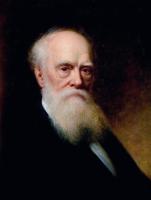
1850. William Harold Cubley (age 33). Self-portrait.
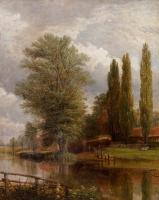
Around 1850. William Harold Cubley (age 33). "Flint's Dockyard, Newark".
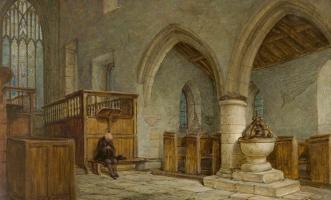
1888. William Harold Cubley (age 71). "The Chapel, Haddon Hall, Derbyshire [Map]".
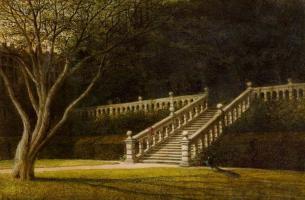
1888. William Harold Cubley (age 71). "The Terrace, Haddon Hall, Derbyshire [Map]".
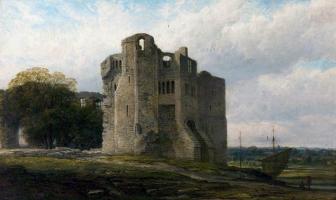
Around 1890. William Harold Cubley (age 73). "The Keep, Newark Castle, Nottinghamshire [Map]".
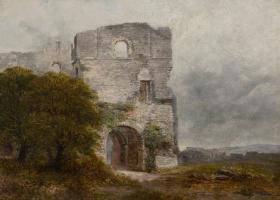
Around 1890. William Harold Cubley (age 73). "Newark Castle, Nottinghamshire [Map]".
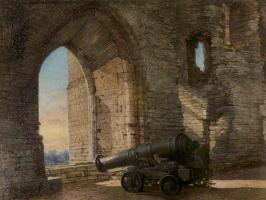
Around 1890. William Harold Cubley (age 73). "Newark Castle, Nottinghamshire [Map], with Sebastopol Cannon".
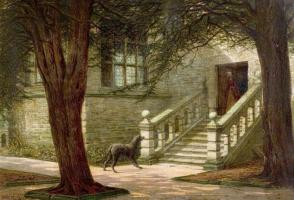
Around 1890. William Harold Cubley (age 73). "Dorothy Vernon's Doorway, Haddon Hall, Derbyshire [Map]".
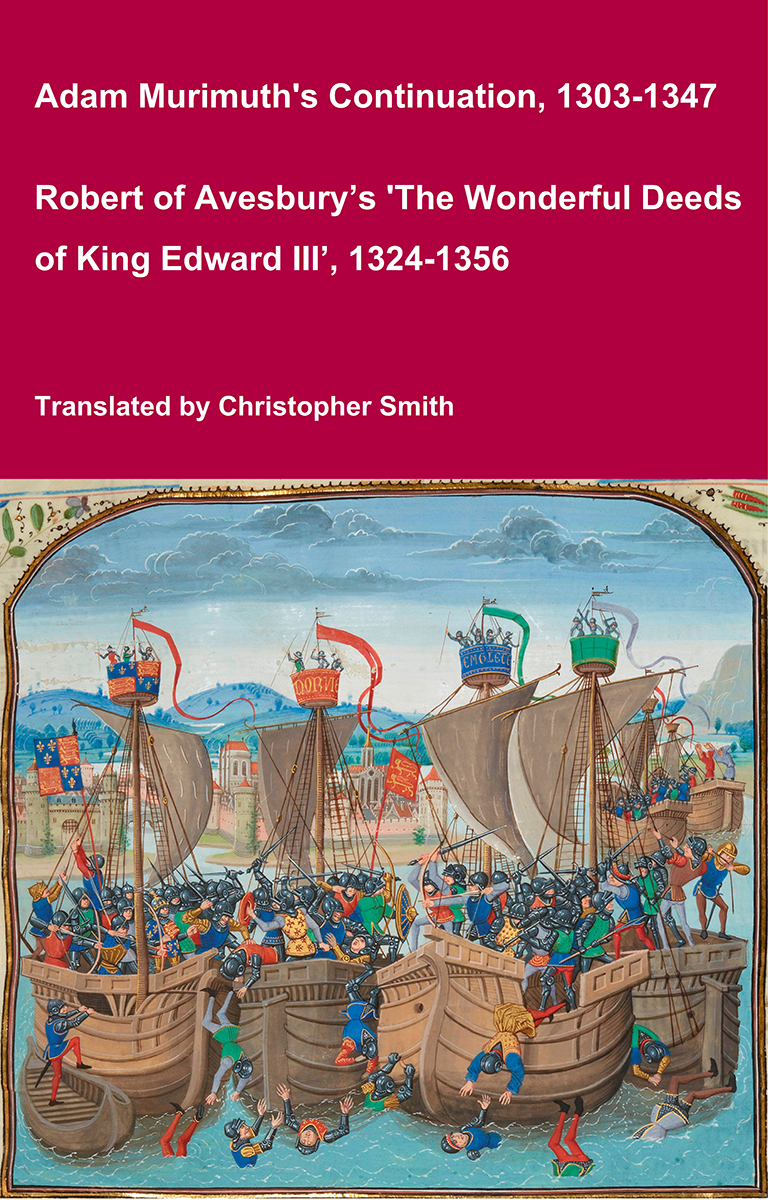
Adam Murimuth's Continuation and Robert of Avesbury’s 'The Wonderful Deeds of King Edward III'
This volume brings together two of the most important contemporary chronicles for the reign of Edward III and the opening phases of the Hundred Years’ War. Written in Latin by English clerical observers, these texts provide a vivid and authoritative window into the political, diplomatic, and military history of fourteenth-century England and its continental ambitions. Adam Murimuth Continuatio's Chronicarum continues an earlier chronicle into the mid-fourteenth century, offering concise but valuable notices on royal policy, foreign relations, and ecclesiastical affairs. Its annalistic structure makes it especially useful for establishing chronology and tracing the development of events year by year. Complementing it, Robert of Avesbury’s De gestis mirabilibus regis Edwardi tertii is a rich documentary chronicle preserving letters, treaties, and official records alongside narrative passages. It is an indispensable source for understanding Edward III’s claim to the French crown, the conduct of war, and the mechanisms of medieval diplomacy. Together, these works offer scholars, students, and enthusiasts a reliable and unembellished account of a transformative period in English and European history. Essential for anyone interested in medieval chronicles, the Hundred Years’ War, or the reign of Edward III.
Available at Amazon in eBook and Paperback format.
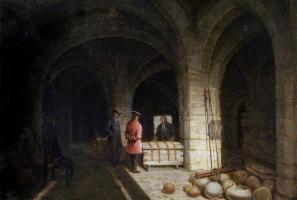
1896. William Harold Cubley (age 79). "The Crypt, Knaresborough Castle [Map]".
On 10th August 1896 William Harold Cubley (age 79) died at Bryndu, Llanberis [Map] whilst on a painting trip in Wales. He was buried at Newark-on-Trent Cemetery.