

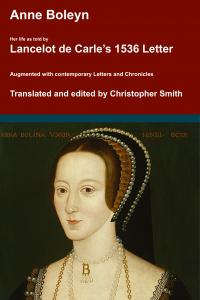
Anne Boleyn. Her Life as told by Lancelot de Carle's 1536 Letter.
In 1536, two weeks after the execution of Anne Boleyn, her brother George and four others, Lancelot du Carle, wrote an extraordinary letter that described Anne's life, and her trial and execution, to which he was a witness. This book presents a new translation of that letter, with additional material from other contemporary sources such as Letters, Hall's and Wriothesley's Chronicles, the pamphlets of Wynkyn the Worde, the Memorial of George Constantyne, the Portuguese Letter and the Baga de Secrets, all of which are provided in Appendices.
Available at Amazon in eBook and Paperback format.
Balliol College, Oxford University is in Oxford University.
Around 1436 Cardinal John Morton (age 16) educated at Balliol College, Oxford University.
Around 1505 Dean Hugh Weston was born at Burton-Overy, Leicestershire. He was educated at Balliol College, Oxford University then Lincoln College, Oxford University.
In 1592 Thomas Coventry 1st Baron Coventry (age 14) was educated at Balliol College, Oxford University.


In November 1594 George Gresley 1st Baronet (age 14) matriculated at Balliol College, Oxford University.
On 6th May 1603 Thomas Burdett 1st Baronet (age 17) matriculated at Balliol College, Oxford University.
On 8th July 1603 John Oglander (age 18) matriculated Balliol College, Oxford University.
John Evelyn's Diary. 10th May 1637. I was admitted a Fellow-commoner of Baliol College, Oxford; and, on the 29th, I was matriculated in the vestry of St. Mary's, where I subscribed the Articles, and took the oaths: Dr. Baily, head of St. John's, being vice-chancellor, afterward bishop. It appears by a letter of my father's (age 50), that he was upon treaty with one Mr. Bathurst (age 17) (afterward Doctor and President), of Trinity College, who should have been my tutor; but, lest my brother's tutor, Dr. Hobbs, more zealous in his life than industrious to his pupils, should receive it as an affront, and especially for that Fellow-commoners in Baliol were no more exempt from exercise than the meanest scholars there, my father sent me thither to one Mr. George Bradshaw (nomen invisum! yet the son of an excellent father, beneficed in Surrey). I ever thought my tutor had parts enough; but as his ambition made him much suspected of the College, so his grudge to Dr. Lawrence, the governor of it (whom he afterward supplanted), took up so much of his time, that he seldom or never had the opportunity to discharge his duty to his scholars. This I perceiving, associated myself with one Mr. James Thicknesse (then a young man of the foundation, afterward a Fellow of the house), by whose learned and friendly conversation I received great advantage. At my first arrival, Dr. Parkhurst was master: and after his decease, Dr. Lawrence, a chaplain of his Majesty's and Margaret Professor, succeeded, an acute and learned person; nor do I much reproach his severity, considering that the extraordinary remissness of discipline had (till his coming) much detracted from the reputation of that College.
On 19th January 1690 Halsewell Tynte (age 16) matriculated at Balliol College, Oxford University.
On 19th January 1690 Halsewell Tynte (age 16) matriculated at Balliol College, Oxford University.
William of Worcester's Chronicle of England
William of Worcester, born around 1415, and died around 1482 was secretary to John Fastolf, the renowned soldier of the Hundred Years War, during which time he collected documents, letters, and wrote a record of events. Following their return to England in 1440 William was witness to major events. Twice in his chronicle he uses the first person: 1. when writing about the murder of Thomas, 7th Baron Scales, in 1460, he writes '… and I saw him lying naked in the cemetery near the porch of the church of St. Mary Overie in Southwark …' and 2. describing King Edward IV's entry into London in 1461 he writes '… proclaimed that all the people themselves were to recognize and acknowledge Edward as king. I was present and heard this, and immediately went down with them into the city'. William’s Chronicle is rich in detail. It is the source of much information about the Wars of the Roses, including the term 'Diabolical Marriage' to describe the marriage of Queen Elizabeth Woodville’s brother John’s marriage to Katherine, Dowager Duchess of Norfolk, he aged twenty, she sixty-five or more, and the story about a paper crown being placed in mockery on the severed head of Richard, 3rd Duke of York.
Available at Amazon in eBook and Paperback format.
On 25th February 1699 John Evelyn 1st Baronet (age 16) matriculated at Balliol College, Oxford University.
On 7th May 1716 Thomas Gresley 4th Baronet (age 17) matriculated at Balliol College, Oxford University.
On 28th February 1724 Walter Calverley aka Blackett 2nd Baronet (age 16) entered Balliol College, Oxford University.
On 13th November 1727 Charles Mordaunt 4th Earl Peterborough 2nd Earl Monmouth (age 19) commenced his education at Balliol College, Oxford University.
Around 1729 Henry Bathurst 2nd Earl Bathurst (age 14) educated at Balliol College, Oxford University.
On 24th August 1731 William Godolphin (age 31) died at Balliol College, Oxford University.
On 25th October 1738 John Buller (age 17) matriculated Balliol College, Oxford University.
On 24th May 1739 Thomas Gresley 5th Baronet (age 16) matriculated at Balliol College, Oxford University.
In 1791 Frederick Baker 2nd Baronet (age 18) matriculated at Balliol College, Oxford University. He was awarded BA in 1792, MA in 1796.
Around 1904 Hastings William Russell 12th Duke Bedford (age 15) graduated at Balliol College, Oxford University.
George William Beaumont Howard 13th Earl Carlisle educated at Balliol College, Oxford University.
Charles James Stanley Howard 10th Earl Carlisle educated at Balliol College, Oxford University.
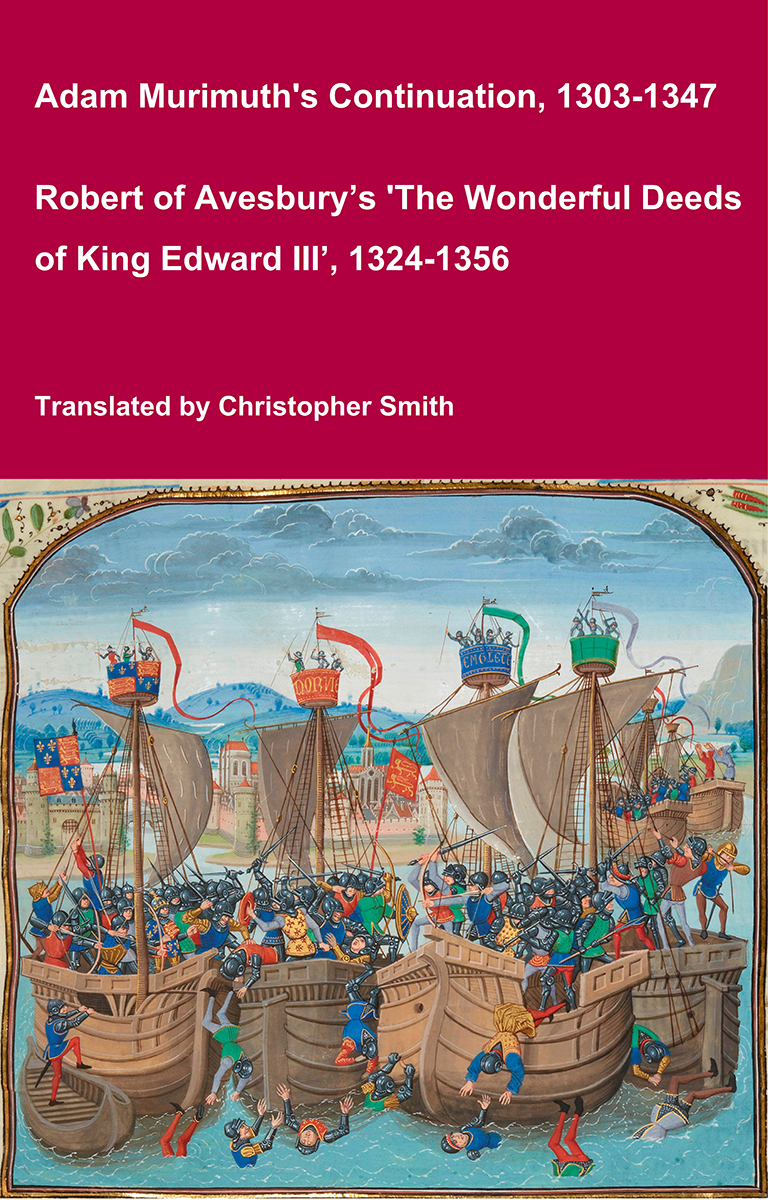
Adam Murimuth's Continuation and Robert of Avesbury’s 'The Wonderful Deeds of King Edward III'
This volume brings together two of the most important contemporary chronicles for the reign of Edward III and the opening phases of the Hundred Years’ War. Written in Latin by English clerical observers, these texts provide a vivid and authoritative window into the political, diplomatic, and military history of fourteenth-century England and its continental ambitions. Adam Murimuth Continuatio's Chronicarum continues an earlier chronicle into the mid-fourteenth century, offering concise but valuable notices on royal policy, foreign relations, and ecclesiastical affairs. Its annalistic structure makes it especially useful for establishing chronology and tracing the development of events year by year. Complementing it, Robert of Avesbury’s De gestis mirabilibus regis Edwardi tertii is a rich documentary chronicle preserving letters, treaties, and official records alongside narrative passages. It is an indispensable source for understanding Edward III’s claim to the French crown, the conduct of war, and the mechanisms of medieval diplomacy. Together, these works offer scholars, students, and enthusiasts a reliable and unembellished account of a transformative period in English and European history. Essential for anyone interested in medieval chronicles, the Hundred Years’ War, or the reign of Edward III.
Available at Amazon in eBook and Paperback format.
Archbishop George Neville educated at Balliol College, Oxford University.