

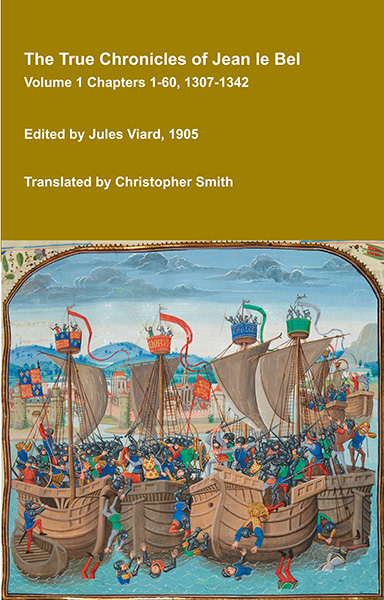
The True Chronicles of Jean le Bel Volume 1 Chapters 1-60 1307-1342
The True Chronicles of Jean le Bel offer one of the most vivid and immediate accounts of 14th-century Europe, written by a knight who lived through the events he describes, and experienced some of them first hand. Covering the early decades of the Hundred Years’ War, this remarkable chronicle follows the campaigns of Edward III of England, the politics of France and the Low Countries, and the shifting alliances that shaped medieval warfare. Unlike later historians, Jean le Bel writes with a strong sense of eyewitness authenticity, drawing on personal experience and the testimony of fellow soldiers. His narrative captures not only battles and sieges, but also the realities of military life, diplomacy, and the ideals of chivalry that governed noble society. A key source for Jean Froissart, Le Bel’s chronicle stands on its own as a compelling and insightful work, at once historical record and literary achievement. This translation builds on the 1905 edition published in French by Jules Viard, adding extensive translations from other sources Rymer's Fœdera, the Chronicles of Adam Murimuth, William Nangis, Walter of Guisborough, a Bourgeois of Valenciennes, Geoffrey le Baker of Swinbroke and Richard Lescot to enrich the original text and Viard's notes.
Available at Amazon in eBook and Paperback format.
Bexley, Kent is in Kent.
Watling Street. From Durobrivae [Map] the road continues through Park Pale, Kent [Map], Vagniacis [Map], Dartford, Kent [Map], Noviomagus [Map], Bexley, Kent [Map], down Shooter's Hill, Greenwich [Map] past Eltham Common, Kent [Map] to Greenwich Park [Map] where the road either (or both):
1. went along the Old Kent Road [Map] and crossed the River Thames at either the London Bridge [Map] or a ford near Westminster Bridge [Map] after which it continued north past St Mary-le-Bow Church, Cheapside [Map], Newgate Gate [Map], Ludgate Hill [Map] and over the River Fleet at Fleet Bridge [Map] to Marble Arch [Map].
2. continued north-west through Camberwell, Surrey [Map] crossing the River Thames near Vauxhall Bridge [Map] after which it continued north to Marble Arch [Map].
Memorials of Edward Burne-Jones 1860. A little later and we were with the Morrises [aged 26] in their new house at Upton, and the time we spent together there was one to swear by, if human happiness were doubted.
First was the arrival at Abbey Wood Station, a country place in those days, where a thin fresh air full of sweet smells met us as we walked down the platform, and outside was the wagonette sent from Red House to meet us; then a pull up the hill and a swinging drive of three miles of winding road on the higher land until, passing "Hog's Hole" on the left, we stopped at our friends' gate. I think Morris must have brought us down from town himself, for I can see the tall figure of a girl standing alone in the porch to receive us.
It was not a large house, as I have said, but purpose and proportion had been so skilfully observed in its design as to arrange for all reasonable demands and leave an impression of ample space everywhere. It stood facing a little west of north, but the longest line of the building had a sunny frontage of west by south, and beneath its windows stretched a green bowling alley where the men used to play when work was over. For it was by no means on a holiday that Edward had come down, nor only to enjoy the company of his friend again, but that they might consult together about the decoration of the house, of which much is said in the Notes from which I have so often quoted.
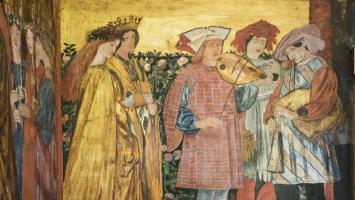
The house was strongly built of red brick, and red tiled: the porches were deep and the plan of the house was two sides of a quadrangle. In the angle was a covered well. As we talked of decorating it plans grew apace. We fixed upon a romance for the drawing-room, a great favourite of ours called Sir Degrevaunt. I designed seven pictures from that poem, of which I painted three that summer and autumn in tempera. We schemed also subjects from Troy for the hall, and a great ship carrying Greek heroes for a larger space in the hall, but these remained only as schemes, none were designed except the ship. The great settle from Red lion Square, with the three painted shutters above the scat, was put up at the end of the drawing-room, and there was a ladder to its top and a parapet round it, and a little door above, in the wall behind it, that led into the roof. There at Christmas time it was intended that minstrels should play and sing. I began a picture from the Niebelungen Lied on the inside of one of the shutters of this settle, and Morris painted in tempera a hanging below the Degrevaunt pictures, of bushy trees and parrots and labels on which he wrote the motto he adopted for his life, 'If I can.' He worked hard at this and the room began to look very beautiful."
On one of his visits to Red House Rossetti [aged 32] found many of these labels still blank, waiting for the words "If I can," and in his reckless way instantly filled them with another motto, "As I can't." When Morris saw this pleasantry, Edward said, "it would have puzzled the discriminator of words to know which of those two was most eloquent in violent English."
John Evelyn's Diary. 17th November 1666. I returned to Chatham, Kent [Map], my chariot overturning on the steep of Bexley Hill, wounded me in two places on the head; my son, Jack [aged 11], being with me, was like to have been worse cut by the glass; but I thank God we both escaped without much hurt, though not without exceeding danger.

On 25th March 1862 Mary "May" Morris was born to William Morris [aged 28] and Jane Morris nee Burden [aged 22] at the Red House. She was baptised 30th May 1862 at Christ Church, Bexleyheath. She married (1) 14th June 1890 Henry Halliday Sparling.
On 12th February 1683 Edward Brett [aged 75] died at Blendon Hall, Bexley.
On 3rd October 1556 John Champneys [aged 61] died. He was buried on 8th October 1556 at the Church of St Mary the Virgin, Bexley.
Henry Machyn's Diary. 8th October 1556. The viij day of October was bered in Kentt at a towne callyd (blank, sir John) Champney [deceased] knyght late mare of London and altherman and skynner, with ij whytt branchys, ij dosen torchys, and iiij grett tapurs; and with a harold of armes beyryng ys cote-armur, hys standard, and pennon of armes, with elmett, targatt, and sword, and vj dosen of skochyons and mony gounes and cottes; and after a grett dener to alle the contrey.
Note. P. 115. Funeral of sir John Champneys. Son of Robert Champneys of Chew in Somersetshire; he was a skinner, sheriff of London and Middlesex 1522, lord mayor 1534. Stowe notes in his Chronicle that he was blind. He bore for arms, Per pale argent and sable, a lion rampant gules, within a bordure counter-changed. (List by Wm. Smith, Rouge-dragon.) He was buried at Bexley in Kent, (see his epitaph in Thorpe's Registrum Roffense, p. 924.) His family long continued in that county (see Hasted, vol. i. p. 160, vol. iii. 326.)
On 5th September 1677 Henry Oldenburg [aged 58] died at his home in Pall Mall [Map]. He was buried at the Church of St Mary the Virgin, Bexley on 7th September 1677.
Lesnes aka Bexley Abbey is also in Abbeys in England.
Lesnes aka Bexley Abbey [Map] was founded by Richard de Luci [aged 89], Chief Justiciar of England, in 1178 as the Abbey of St Mary and St Thomas the Martyr at Lesnes.
On 14th July 1179 Richard "The Loyal" Lucy [aged 90] died at his foundation Lesnes aka Bexley Abbey [Map] where he was subsequently buried.
Abbot John Whethamstede’s Chronicle of the Abbey of St Albans
Abbot John Whethamstede's Register aka Chronicle of his second term at the Abbey of St Albans, 1451-1461, is a remarkable text that describes his first-hand experience of the beginning of the Wars of the Roses including the First and Second Battles of St Albans, 1455 and 1461, respectively, their cause, and their consequences, not least on the Abbey itself. His text also includes Loveday, Blore Heath, Northampton, the Act of Accord, Wakefield, and Towton, and ends with the Coronation of King Edward IV. In addition to the events of the Wars of the Roses, Abbot John, or his scribes who wrote the Chronicle, include details in the life of the Abbey such as charters, letters, land exchanges, visits by legates, and disputes, which provide a rich insight into the day-to-day life of the Abbey, and the challenges faced by its Abbot.
Available at Amazon in eBook and Paperback format.

Wriothesley's Chronicle [1508-1562]. February 1538. This yeare, allso in Februarie, there was an image of the Crucifixe Grace of Christe, which had bene used or longe continuance for a great pylgremage at the Abbey of Boxley [Map],a by Maydestone in Kent, called the Roode of Grace, taken from thence and brought to the Kinge at Westminstre, for certeyne idolatrie and crafte that had bene perceaved in the sayde roode, for it was made to move the eyes and lipps by stringes of haire, when they would shewe a miracle, and never perceyved till now. The Archbishop of Canterburie [aged 48] had searched the sayde image in his visitation, and so, at the Kinges commaundement, was taken thence, that the people might leave their idolatrie that had bene there used. Allso the sayde roode was sett in the markett place first at Maydstone, and there shewed openlye to the people the craft of movinge the eyes and lipps, that all the people there might see the illusion that had bene used in the sayde image by the monckes of the saide place of manye yeares tyme out of mynde, whereby they had gotten great riches in deceav- inge the people thinckinge that the sayde image had so moved by the power of God, which now playnlye appeared to the contrarye.
Note a. A Cistercian Abbey, founded by William d'Ypres, Earl of Kent, in the middle of the twelfth century.
Wriothesley's Chronicle [1508-1562]. 24th February 1538. This yeare, the 24th daie of Februarie, beinge the Soundaie of Sexagesima and Sainct Mathias daie, the image of the roode that pouie was at the Abbey of Bexley [Map], in Kent, called the Roode of Grace, and their was brought to Poules Crosse, and their, at the sermon made by the Bishopp of Rochester,b the abuses of the gracesc and engines,d used in old tyme in the said image, was declared, which image was made of paper and cloutes from the legges upward; ech legges and armes were of timber; and so the people had bene eluded and caused to doe great adolatrie by the said image, of long contynuance, to the derogation of Godes honor and great blasphamie of the name of God, as he substancially declared in his said sermon by scripture, and also how other images in the Church, used for great pilgrimages, hath caused great idolatrie to be used in this realme, and shewed how he thincketh that the idolatrie will neaver be left till the said images be taken awaie; and that the boxes that they have to gather the devotions of the people were taken awaye first, so that they should have nothing used to putt the charitie of the people in; but if their were any persons that would ofFree to such images, that the said offring might be geaven incontynent to poore people, and that the people, should be shewed howe they should ofFree no more to the said images, he doubted not butt then in short tyme they would grant that the said images might be taken awaie; also, he said, how he confessed a woman twentie yeares agoe in Oxford, which woman was the miller s wief, by the Abbey of Hailes, and how she shewed him how the abbott of the same place had given her manye Jewells that had bene offred ther at the holie bloode,a and how he would have geaven her one Jewell which she knewe verie well hanged about the said holie bloode, and said to the said abbott that she would not have that "bloude,"b2 because she was afraid because it hanged by the holie bloud, and the abbott said tush! thou art a foole, it is but a duckes bloode; and this the said bishopp shewed that it was true, as he besought God he might be damned if it were not so as he said; and also how he had shewed the King and the Counsell of the same, and that it should be knowen more openlie afterward; also, after the sermon was done, the bishopp tooke the said image of the roode into the pulpitt and brooke the vice of the same, and after gave it to the people againe, and then the rude people and boyes brake the said image in peeces, so that they left not one peece whole.
Note b. Bishop John Hilsey.
Note c. Probably a clerical error for vices, as in another place we read "the bishop broke the vice."
Note d. This rood or automaton, besides rolling its eyes and moving its lips, was so constructed that, by means of springs or vices, it could be made to bow, and shake its head, hands, and feet. See Herbert, p. 213, and Stow, ed. 1G31, p. 575.
Note a. Another great imposture was at Hales in Gloucestershire, where the blood of Christ brought from Jerusalem was showed in a chrystal vial, and was said to have this property: That if a man was in a mortal sin, and not absolved, he could not see it. Therefore, every man that came to behold this miracle was forced to continue to make presents till he bribed Heaven to give him the sight of so blessed a relic. This was now discovered to be the blood of a duck renewed every week, and one side of the vial was so thick that there was no seeing through it, but the other was trans parent. It was so placed near the altar that anyone in a secret place behind could turn which side he pleased outward. Lord Herbert in Kennett, vol. ii. p. 213.
b2. A clerical mistake for "jewel.";
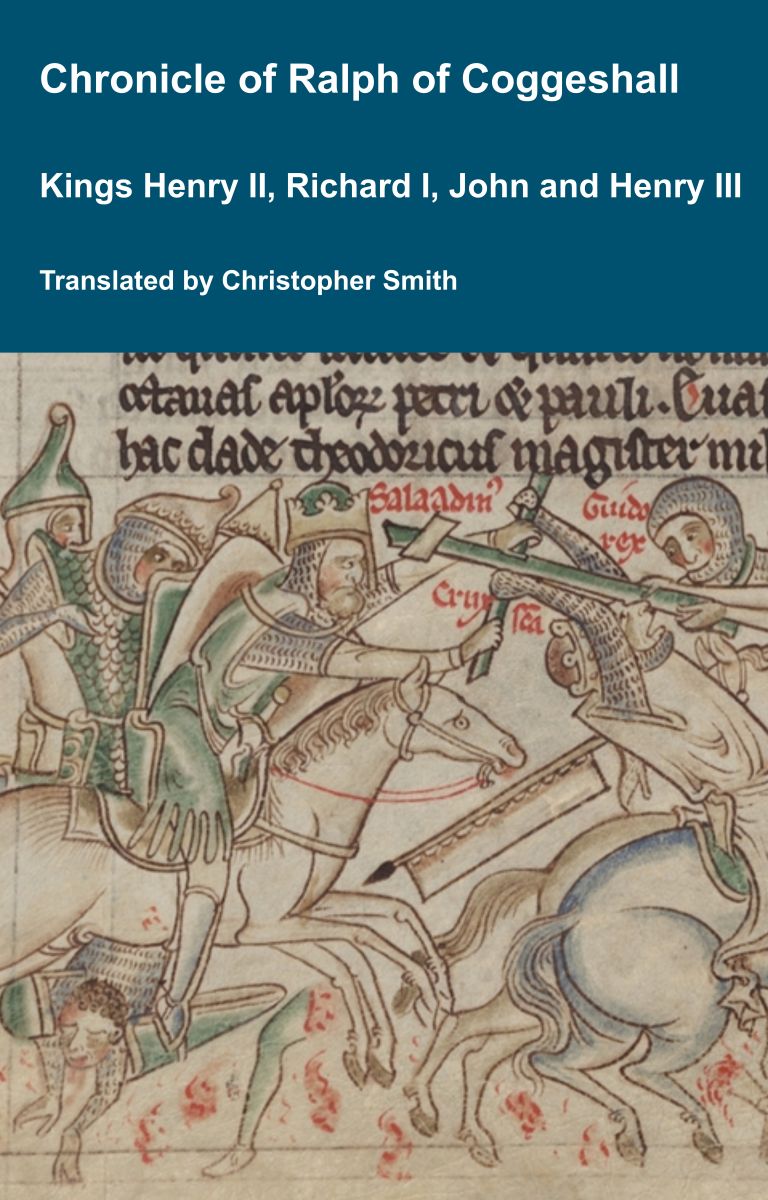 Chronicum Anglicanum by Ralph Coggeshall. Richard de Lucy died, and he lies buried at his abbey of Lesnes [Map] [Bexley, Kent]. The coinage in England was changed.
Obiit Richardus de Luci, et apud abbatiam suam de Liethnes jacet sepultus. Mutata est moneta in Anglia.
John Evelyn's Diary. 31st July 1660. I went to visit Sir Philip Warwick [aged 50], now secretary to the Lord Treasurer [aged 51], at his house in North Cray.


On 26th April 1859 William Morris [aged 25] and Jane Morris nee Burden [aged 19] were married at St Michael at the Northgate Church, Oxford after which they moved to the Red House.
Memorials of Edward Burne-Jones 1860. A little later and we were with the Morrises [aged 26] in their new house at Upton, and the time we spent together there was one to swear by, if human happiness were doubted.
First was the arrival at Abbey Wood Station, a country place in those days, where a thin fresh air full of sweet smells met us as we walked down the platform, and outside was the wagonette sent from Red House to meet us; then a pull up the hill and a swinging drive of three miles of winding road on the higher land until, passing "Hog's Hole" on the left, we stopped at our friends' gate. I think Morris must have brought us down from town himself, for I can see the tall figure of a girl standing alone in the porch to receive us.
It was not a large house, as I have said, but purpose and proportion had been so skilfully observed in its design as to arrange for all reasonable demands and leave an impression of ample space everywhere. It stood facing a little west of north, but the longest line of the building had a sunny frontage of west by south, and beneath its windows stretched a green bowling alley where the men used to play when work was over. For it was by no means on a holiday that Edward had come down, nor only to enjoy the company of his friend again, but that they might consult together about the decoration of the house, of which much is said in the Notes from which I have so often quoted.
The house was strongly built of red brick, and red tiled: the porches were deep and the plan of the house was two sides of a quadrangle. In the angle was a covered well. As we talked of decorating it plans grew apace. We fixed upon a romance for the drawing-room, a great favourite of ours called Sir Degrevaunt. I designed seven pictures from that poem, of which I painted three that summer and autumn in tempera. We schemed also subjects from Troy for the hall, and a great ship carrying Greek heroes for a larger space in the hall, but these remained only as schemes, none were designed except the ship. The great settle from Red lion Square, with the three painted shutters above the scat, was put up at the end of the drawing-room, and there was a ladder to its top and a parapet round it, and a little door above, in the wall behind it, that led into the roof. There at Christmas time it was intended that minstrels should play and sing. I began a picture from the Niebelungen Lied on the inside of one of the shutters of this settle, and Morris painted in tempera a hanging below the Degrevaunt pictures, of bushy trees and parrots and labels on which he wrote the motto he adopted for his life, 'If I can.' He worked hard at this and the room began to look very beautiful."
On one of his visits to Red House Rossetti [aged 32] found many of these labels still blank, waiting for the words "If I can," and in his reckless way instantly filled them with another motto, "As I can't." When Morris saw this pleasantry, Edward said, "it would have puzzled the discriminator of words to know which of those two was most eloquent in violent English."
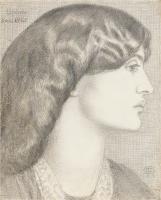
Around 25th December 1860. Dante Gabriel Rossetti [aged 32]. Portrait of Mrs William Morris aka Jane Morris nee Burden [aged 21]. Signed top-left Upton (ie the Red House) Xmas 1860.
1861. The Census records William Morris [aged 26], Jane Morris nee Burden [aged 21], Algernon Charles Swinburne [aged 23], Visitor, four servants and Jane Alicia Morris at Red House.


On 17th January 1861 Jane Alicia Morris was born to William Morris [aged 26] and Jane Morris nee Burden [aged 21] at the Red House.
On 25th March 1862 Mary "May" Morris was born to William Morris [aged 28] and Jane Morris nee Burden [aged 22] at the Red House. She was baptised 30th May 1862 at Christ Church, Bexleyheath. She married (1) 14th June 1890 Henry Halliday Sparling.