

The History of William Marshal was commissioned by his son shortly after William’s death in 1219 to celebrate the Marshal’s remarkable life; it is an authentic, contemporary voice. The manuscript was discovered in 1861 by French historian Paul Meyer. Meyer published the manuscript in its original Anglo-French in 1891 in two books. This book is a line by line translation of the first of Meyer’s books; lines 1-10152. Book 1 of the History begins in 1139 and ends in 1194. It describes the events of the Anarchy, the role of William’s father John, John’s marriages, William’s childhood, his role as a hostage at the siege of Newbury, his injury and imprisonment in Poitou where he met Eleanor of Aquitaine and his life as a knight errant. It continues with the accusation against him of an improper relationship with Margaret, wife of Henry the Young King, his exile, and return, the death of Henry the Young King, the rebellion of Richard, the future King Richard I, war with France, the death of King Henry II, and the capture of King Richard, and the rebellion of John, the future King John. It ends with the release of King Richard and the death of John Marshal.
Available at Amazon in eBook and Paperback format.
Christ Church Cathedral, Oxford is in Oxford, Oxfordshire [Map], Churches in Oxfordshire, Cathedrals in England.
In August 1345 Elizabeth Montfort Baroness Furnivall Baroness Montagu (age 70) died. She was buried at Christ Church Cathedral, Oxford [Map].
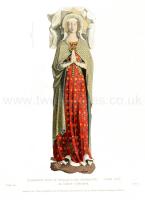
Monumental Effigies. Elizabeth, wife of William Lord Montacute, (died 1354) in Christ Church Cathedral, Oxford [Map].
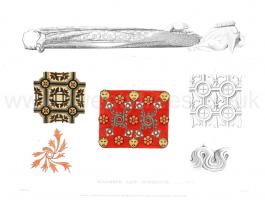
Monumental Effigies. Elizabeth, wife of William Lord Montacute, (died 1354) in Christ Church Cathedral, Oxford [Map].
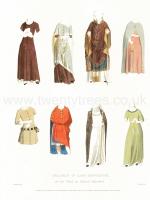
Monumental Effigies. Children of Elizabeth on her tomb in Christ Church Cathedral, Oxford [Map].
In 1493 Bishop Richard Mayew (age 53) was appointed Archdeacon of Oxford.
In 1504 Christopher Urswick (age 56) was appointed Archdeacon of Oxford.
In 1559 George Carew (age 61) was appointed Dean of Oxford.
After June 1567 Archbishop Hugh Curwen (age 67) was appointed Bishop of Oxford.
In 1632 Bishop John Bancroft (age 58) was appointed Bishop of Oxford.
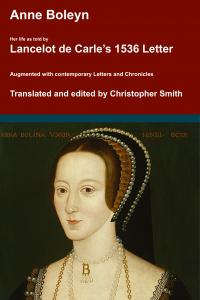
Anne Boleyn. Her Life as told by Lancelot de Carle's 1536 Letter.
In 1536, two weeks after the execution of Anne Boleyn, her brother George and four others, Lancelot du Carle, wrote an extraordinary letter that described Anne's life, and her trial and execution, to which he was a witness. This book presents a new translation of that letter, with additional material from other contemporary sources such as Letters, Hall's and Wriothesley's Chronicles, the pamphlets of Wynkyn the Worde, the Memorial of George Constantyne, the Portuguese Letter and the Baga de Secrets, all of which are provided in Appendices.
Available at Amazon in eBook and Paperback format.
After 23rd October 1642 George Stewart 9th Seigneur D'Aubigny (deceased) was buried at Christ Church Cathedral, Oxford [Map].
John Evelyn's Diary. 12th July 1654. Thence we went to New College, where the chapel was in its ancient garb, notwithstanding the scrupulosity of the times. Thence, to Christ's Church [Map], in whose library was shown us an Office of Henry VIII., the writing, miniatures, and gilding whereof is equal, if not surpassing, any curiosity I had seen of that kind; it was given by their founder, Cardinal Wolsey. The glass windows of the cathedral (famous in my time) I found much abused. The ample hall and column, that spreads its capital to sustain the roof as one goes up the stairs, is very remarkable.
John Evelyn's Diary. 24th February 1665. Dr. Fell (age 39), Canon of Christ Church, preached before the King (age 34), on 15 ch. Romans, v. 2, a very formal discourse, and in blank verse, according to his manner; however, he is a good man. Mr. Philips, preceptor to my son, went to be with the Earl of Pembroke's (age 44) son, my Lord Herbert (age 24).
In November 1665 Bishop Walter Blandford (age 49) was appointed Bishop of Oxford.
On 29th December 1670 Robert South (age 36) was appointed Canon of Christ Church.
In 1671 Bishop Nathaniel Crew 3rd Baron Crew (age 37) was appointed Bishop of Oxford.


In 1674 Bishop Henry Compton (age 42) was appointed Bishop of Oxford.

John Evelyn's Diary. 28th April 1676. The University of Oxford presented me with the "Marmora Oxoniensia Arundeliana"; the Bishop of Oxford writing to desire that I would introduce Mr. Prideaux, the editor (a young man most learned in antiquities) to the Duke of Norfolk (age 49), to present another dedicated to his Grace, which I did, and we dined with the Duke at Arundel House [Map], and supped at the Bishop of Rochester's (age 51) with Isaac Vossius (age 58).
In 1686 Bishop Samuel Parker (age 46) was appointed Bishop of Oxford by King James II of England Scotland and Ireland (age 52).


In 1699 Bishop William Talbot (age 41) was appointed Bishop of Oxford.
In 1704 Bishop Francis Atterbury (age 40) was appointed Dean of Oxford.
The History of William Marshal was commissioned by his son shortly after William’s death in 1219 to celebrate the Marshal’s remarkable life; it is an authentic, contemporary voice. The manuscript was discovered in 1861 by French historian Paul Meyer. Meyer published the manuscript in its original Anglo-French in 1891 in two books. This book is a line by line translation of the first of Meyer’s books; lines 1-10152. Book 1 of the History begins in 1139 and ends in 1194. It describes the events of the Anarchy, the role of William’s father John, John’s marriages, William’s childhood, his role as a hostage at the siege of Newbury, his injury and imprisonment in Poitou where he met Eleanor of Aquitaine and his life as a knight errant. It continues with the accusation against him of an improper relationship with Margaret, wife of Henry the Young King, his exile, and return, the death of Henry the Young King, the rebellion of Richard, the future King Richard I, war with France, the death of King Henry II, and the capture of King Richard, and the rebellion of John, the future King John. It ends with the release of King Richard and the death of John Marshal.
Available at Amazon in eBook and Paperback format.
In 1724 Bishop Thomas Tanner (age 49) became Canon of Christ Church Cathedral, Oxford [Map].
In April 1763 Archbishop John Moore (age 32) was preferred to a canonry at Christ Church Cathedral, Oxford [Map].
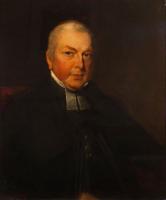
On 30th November 1799 Charles Henry Hall (age 36) was appointed Prebendary of the second stall of Christ Church Cathedral, Oxford [Map].
In 1805 Charles Henry Hall (age 42) was appointed sub-Dean of Christ Church Cathedral, Oxford [Map].
In February 1807 Charles Henry Hall (age 44) was elected Regius Professor of Divinity, and moved to the fifth stall in Christ Church Cathedral, Oxford [Map].
In 1816 Bishop Edward Legge (age 60) was appointed Bishop of Oxford.
In 1829 Bishop Richard Bagot (age 46) was appointed Bishop of Oxford.
On 17th October 1911 Bishop Charles Gore (age 58) was elected Bishop of Oxford.