

Henrici Quinti, Angliæ Regis, Gesta, is a first-hand account of the Agincourt Campaign, and subsequent events to his death in 1422. The author of the first part was a Chaplain in King Henry's retinue who was present from King Henry's departure at Southampton in 1415, at the siege of Harfleur, the battle of Agincourt, and the celebrations on King Henry's return to London. The second part, by another writer, relates the events that took place including the negotiations at Troye, Henry's marriage and his death in 1422.
Available at Amazon in eBook and Paperback format.
Church of St James the Great, Norton is in Norton, South Yorkshire [Map], Churches in South Yorkshire.
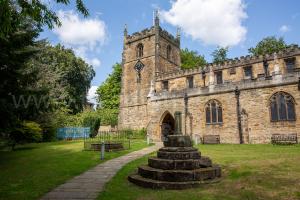
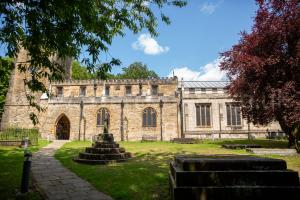
Exterior of Church of St James the Great, Norton [Map].
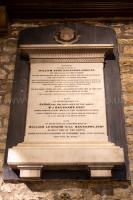
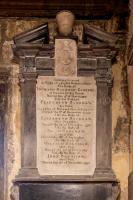
Various memorial to the Bagshawe family at the Church of St James the Great, Norton [Map] the last of which is sculpted by Fisher of York.
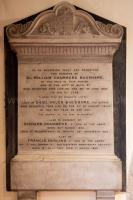
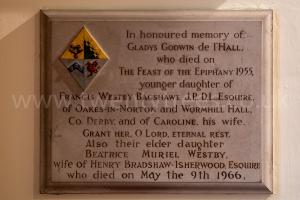
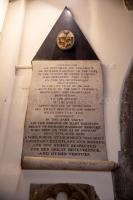
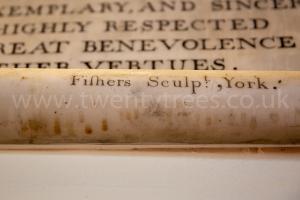
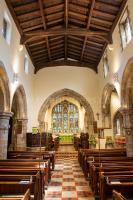
Interior of Church of St James the Great, Norton [Map].
Around 1520. Alabaster monument to William Blythe and his wife. Probably Harpur and Moorecock of Burton on Trent. Church of St James the Great, Norton [Map]. Gabled Headress with Lappets. Dogs chewing at her dress. Angels Supporting Pillow. Chest with Weepers. Gypciere.


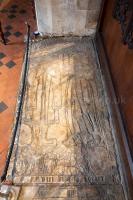
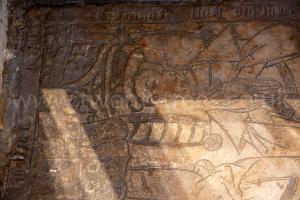
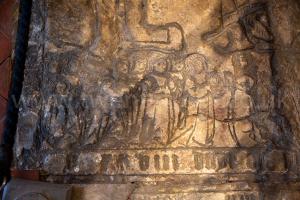
Around 1550. Floor slabs to Blythe family. Church of St James the Great, Norton [Map].
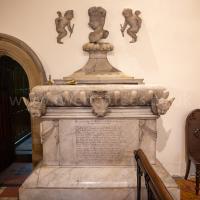
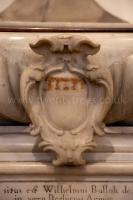
1666. Marble sarcophagus with crest above supported by putti, to Sir William Bullock at Church of St James the Great, Norton [Map].
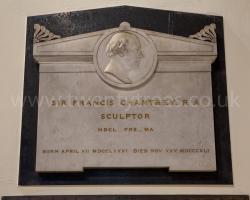
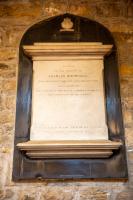
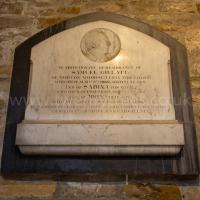
1841. Tablet with portrait medallion to Sir Francis Chantrey (age 59), 1841, by James Heffernan. Church of St James the Great, Norton [Map].
After 25th November 1841. Church of St James the Great, Norton [Map]. Monument to Francis Leggatt Chantrey (deceased).
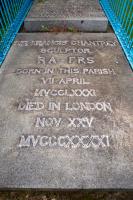
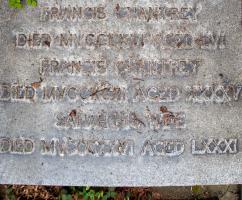
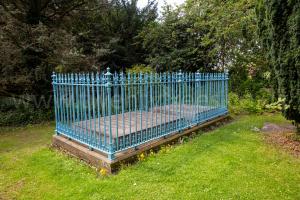
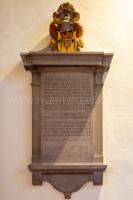
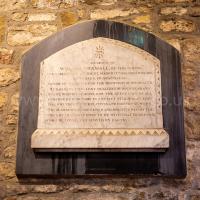
After 1866. Various memorials at the Church of St James the Great, Norton [Map].
Memorials of Francis Chantrey RA in Hallamshire and Elsewhere Part IV The in Sheffield. Ridiculous as it would be to look for the germ of his genius in any of those fictions of boyhood which I have previously mentioned, it does not seem equally immaterial here to remark, that at the time when Ramsay's apprentice first began to try his hand at modelling, there was not perhaps a large town in England that afforded fewer examples or incentives to such a pursuit than Sheffield. Three recumbent figures, and one kneeling effigy, in the "Shrewsbury Chapel," at the Parish Church [Map], comprised the monumental statuary-probably the work of Italian artists; while out-of-doors there were a respectably executed figure of Justice, by Waterworth, of Doncaster, at the head of the Shambles; a spirited profile of Shakspeare, with some dramatic symbols, on the pediment of the Theatre, executed by a wandering stranger of the name of Renilowe; a poor exhibition of the "Norfolk Arms" on the old Hospital Chapel, the joint work of one of the masons-Peter Skinner, of Gleadless and a rambling genius called "Jem Officer," from York; a small lugubrious lion over the door of the Assay Office, by H. Mozley, once an employé of Ramsay's; and, best of all, an "Angel, "in terra-cotta, with a brazen trumpet, as a sign on the inn and in the street denominated there from - the early work of Rossi, who, while a youth, lived with his father in a house opposite. Of course our young aspirant saw what works of the chisel were to be seen at Wentworth House - the present noble gallery at Chatsworth [Map] did not then exist: indeed, with the writer in the Atlas, I "happen to know that the few collections of ancient sculpture which were within his reach while he lived in the country were visited by him, and that in particular he paid two visits to Newby, whilst still a young man and still younger artist, and came away deeply impressed by the works of sculpture in that mansion." Perhaps it should be added, as somewhat remarkable, that, with the exception of the figures of the Marquis of Rockingham at Wentworth, and the Earl of Strafford at Stainbro', there did not at the period of Chantrey's apprenticeship - nor am I aware that there does at this day -- exist a single standing life-size statue, of modern man or woman, in marble or gritstone, within doors or without, either in Sheffield or within the circuit of more than a hundred miles around the town.