The History of William Marshal was commissioned by his son shortly after William’s death in 1219 to celebrate the Marshal’s remarkable life; it is an authentic, contemporary voice. The manuscript was discovered in 1861 by French historian Paul Meyer. Meyer published the manuscript in its original Anglo-French in 1891 in two books. This book is a line by line translation of the first of Meyer’s books; lines 1-10152. Book 1 of the History begins in 1139 and ends in 1194. It describes the events of the Anarchy, the role of William’s father John, John’s marriages, William’s childhood, his role as a hostage at the siege of Newbury, his injury and imprisonment in Poitou where he met Eleanor of Aquitaine and his life as a knight errant. It continues with the accusation against him of an improper relationship with Margaret, wife of Henry the Young King, his exile, and return, the death of Henry the Young King, the rebellion of Richard, the future King Richard I, war with France, the death of King Henry II, and the capture of King Richard, and the rebellion of John, the future King John. It ends with the release of King Richard and the death of John Marshal.
Available at Amazon in eBook and Paperback format.
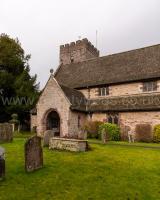
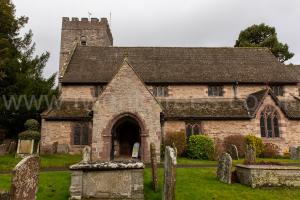
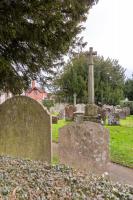
Church of St Mary Magdalene, Eardisley is in Eardisley, Herefordshire, Churches in Herefordshire.
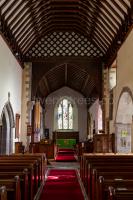
Around 1150. Church of St Mary Magdalene, Eardisley [Map] was constructed around 1150. The south aisle windows were renewed by the Gothic Revival architect Ewan Christian in 1863.
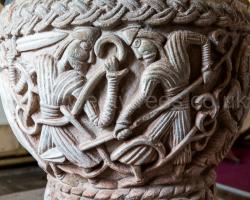
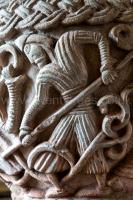
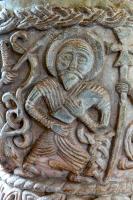
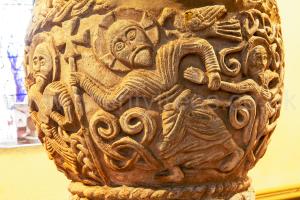
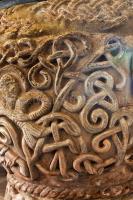
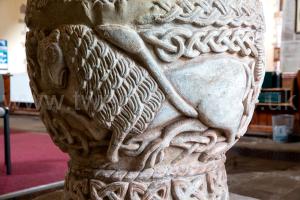
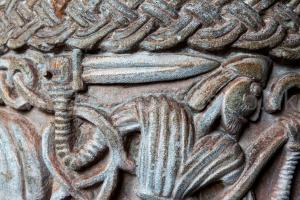
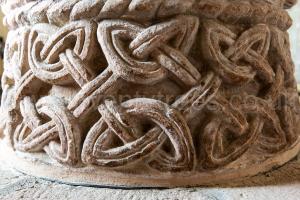
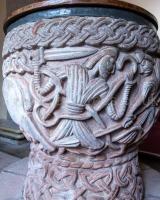
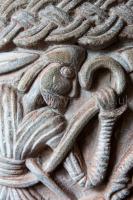
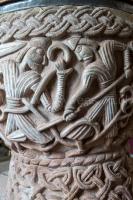
Around 1150. The Eardisley [Map] Font. A fine example of the Herefordshire School of Carving. Several scenes ... Two knights in combat, either with each other or the tendrils of evil. To the right of the knights is the Harrowing of Hell where Christ, holding the Cross, is pulling Adam by his forearm out of hell. There is another figure holding a book; unclear as to who he represents. A particularly well carved lion; possibly the Lion of Judah. The two knights prossibly represent the duel between Sir Ralph de Baskerville with his father-in-law Lord Drogo of Clifford Castle whom Baskerville alleged to have stolen some of his land. Baskerville killed Drogo then bought a pardon from the Pope.
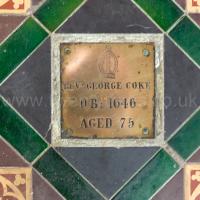
After 1646. Floor marker in the Chancel of the Church of St Mary Magdalene, Eardisley [Map] to Bishop George Coke [aged 75].
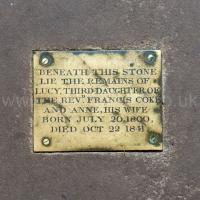
After 1646. Floor marker in the Nave of the Church of St Mary Magdalene, Eardisley [Map] to Lucy Coke.
Lucy Coke: On 20th July 1800 she was born to Francis Coke and Anne Whitcombe. On 22nd October 1844 Lucy Coke died.
On 10th December 1646 Bishop George Coke [aged 76] died. He was buried in Church of St Mary Magdalene, Eardisley [Map].
On 20th November 1734 Jane L'Estrange [aged 68] died. She was buried at the Church of St Mary Magdalene, Eardisley [Map].
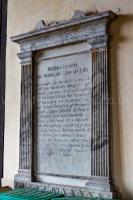
After 20th November 1734. Church of St Mary Magdalene, Eardisley [Map]. Monument to Jane L'Estrange [deceased] with the unusual inscription "Bubbles Broken".
Jane L'Estrange: Around 1666 she was born to Nicholas L'Estrange 3rd Baronet and Mary Coke. On or after 1st June 1696, the date of the licence, William Barnesley and she were married. On 20th November 1734 Jane L'Estrange died. She was buried at the Church of St Mary Magdalene, Eardisley [Map].
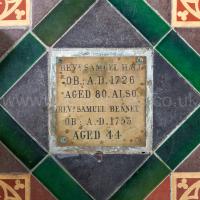
In 1736 Reverend Samuel Bennett was appointed Vicar of the Church of St Mary Magdalene, Eardisley [Map].
On 7th April 1737 William Barnesley [aged 88] died. He was buried at the Church of St Mary Magdalene, Eardisley [Map] on 12th April 1737. His son William Barnesley of Eardisley Park [aged 34] should have inherited the Eardisley estate from his father in 1737, but was defrauded by his father's solicitor, Mansel Powell, and others, who forged a will disinheriting him. He recovered his property in 1749 after a lengthy Chancery suit, vigorously pursued by his wife on his behalf. This was succeeded by a further legal dispute with relatives. After his widow's death the estate was sold in 1778 to Dr. Pettit.
Chronicle of a Bourgeois of Valenciennes
Récits d’un bourgeois de Valenciennes aka The Chronicle of a Bourgeois of Valenciennes is a vivid 14th-century vernacular chronicle written by an anonymous urban chronicler from Valenciennes in the County of Hainaut. It survives in a manuscript that describes local and regional history from about 1253 to 1366, blending chronology, narrative episodes, and eyewitness-style accounts of political, military, and social events in medieval France, Flanders, and the Low Countries. The work begins with a chronological framework of events affecting Valenciennes and its region under rulers such as King Philip VI of France and the shifting allegiances of local nobility. It includes accounts of conflicts, sieges, diplomatic manoeuvres, and the impact of broader struggles like the Hundred Years’ War on urban life in Hainaut. Written from the perspective of a burgher (bourgeois) rather than a monastery or royal court, the chronicle offers a rare lay viewpoint on high politics and warfare, reflecting how merchants, townspeople, and civic institutions experienced the turbulence of the 13th and 14th centuries. Its narrative style combines straightforward reporting of events with moral and civic observations, making it a valuable source for readers interested in medieval urban society, regional politics, and the lived experience of war and governance in pre-modern Europe.
Available at Amazon in eBook and Paperback format.
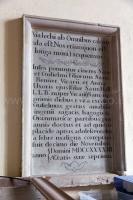
After 1743. Church of St Mary Magdalene, Eardisley [Map]. Monument to Reverend Samuel Bennett
Reverend Samuel Bennett: In 1736 he was appointed Vicar of the Church of St Mary Magdalene, Eardisley [Map]. In 1743 he died. Note the list of Vicars at the Church of St Mary Magdalene, Eardisley [Map] shows his successor in 1753? See below [Map].
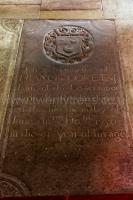
After 1750. Church of St Mary Magdalene, Eardisley [Map]. Ledger stone of Francis Coke [aged 89].
Francis Coke: On 14th May 1660 he was born to William Coke. On 10th June 1750 Francis Coke died. He was buried at the Church of St Mary Magdalene, Eardisley [Map].
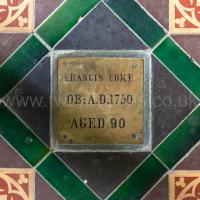
After 1750. Floor marker in the Chancel of Church of St Mary Magdalene, Eardisley [Map] to Francis Coke [aged 89].
On 10th June 1750 Francis Coke [aged 90] died. He was buried at the Church of St Mary Magdalene, Eardisley [Map].
In 1753 Richard Coke [aged 35] was appointed Vicar of the Church of St Mary Magdalene, Eardisley [Map] by the King by reason of the simony of the patron William Barnesley of Eardisley Park [aged 50].
On 23rd January 1760 William Barnesley of Eardisley Park [aged 57] died. He was buried at the Church of St Mary Magdalene, Eardisley [Map].
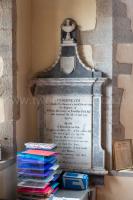
After 23rd January 1760. Church of St Mary Magdalene, Eardisley [Map]. Monument to William Barnesley of Eardisley Park [deceased] and his wife Elizabeth Price [aged 53].
Elizabeth Price: In 1707 she was born to Walter Price of Kaevenblane. On 26th August 1723 William Barnesley of Eardisley Park and she were married at the Fleet Prison [Map]. There was no issue from the marriage. On 8th April 1773 she died. She was buried at the Church of St Mary Magdalene, Eardisley [Map]
On 8th April 1773 Elizabeth Price [aged 66] died. She was buried at the Church of St Mary Magdalene, Eardisley [Map]
Henrici Quinti, Angliæ Regis, Gesta, is a first-hand account of the Agincourt Campaign, and subsequent events to his death in 1422. The author of the first part was a Chaplain in King Henry's retinue who was present from King Henry's departure at Southampton in 1415, at the siege of Harfleur, the battle of Agincourt, and the celebrations on King Henry's return to London. The second part, by another writer, relates the events that took place including the negotiations at Troye, Henry's marriage and his death in 1422.
Available at Amazon in eBook and Paperback format.
On 27th December 1793 Richard Coke [aged 76] died. He was buried at the Church of St Mary Magdalene, Eardisley [Map].
Before 1795 Francis Coke [aged 30] and Anne Whitcombe [aged 27] were married. They had thirteen children of whom six died in infancy and were buried at the Church of St Mary Magdalene, Eardisley [Map].
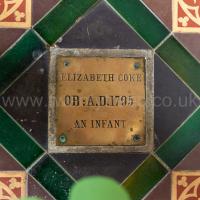
After 1795. Floor marker in the Chancel of the Church of St Mary Magdalene, Eardisley [Map] to Elizabeth Coke died 1795. Probably a daughter of Francis Coke [aged 31] and Anne Whitcombe [aged 27].
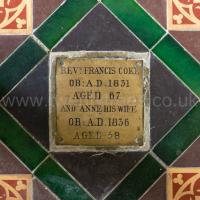
After 1831. Floor marker in the Chancel of Church of St Mary Magdalene, Eardisley [Map] to Francis Coke [aged 67] and Anne Whitcombe.
Francis Coke: Around 1764 he was born to Richard Coke. Before 1795 Francis Coke and Anne Whitcombe were married. They had thirteen children of whom six died in infancy and were buried at the Church of St Mary Magdalene, Eardisley [Map]. On 30th April 1831 Francis Coke died.
Anne Whitcombe: On 3rd May 1767 she was born to Robert Whitcombe. On 6th April 1826 she died.
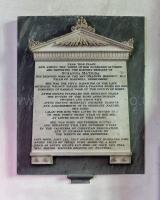
After 1833. Church of St Mary Magdalene, Eardisley [Map]. Memorial to Susanna Matilda Tayler [aged 41].
Susanna Matilda Tayler: On 3rd September 1791 she was born to Archdale Wilson Tayler. In 1813 Reverend Francis Hodgson wished to marry Susanna Matilda Tayler (sister-in-law of Henry Drury, master at Harrow School). However Susanna's mother objected to her daughter marrying Hodgson, due to his association with the infamous Byron. Her objection was overcome by Byron himself, who drove with Hodgson in a post-chaise from London to Oxford to plead the cause of his friend with Susanna's uncle Charles Henry Hall, Dean of Christ Church, Oxford. In 1815 Reverend Francis Hodgson and she were married. On 6th October 1833 she died at Lower Moor, Eardisley.
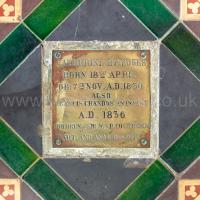
On 9th April 1840 Eliza Jane Deveruex Cockburn [aged 16] died. She was buried at the Church of St Mary Magdalene, Eardisley [Map].
Archaeologia Volume 30 Section 5. Dear Sir Henry,
I have the honor to exhibit to the Society of Antiquaries four plaster Casts of figures in alto relievo, from the south door of Kilpeck church, in Herefordshire. Two represent Apostles, holding the book of the Gospels, and a cross, with a nimbus at the back of each head: the other two are the effigies of Welsh Knights.
As specimens of infant Art the sculptures are not without interest; but our chief object in exhibiting them, is to call the attention of the Society to the Costume of the Knights. (Plate II.) They wear Phrygian caps, close vests of rayed texture, and trousers; and have knotted belts round their waists, fancifully disposed: one bears a long pointed sword, with a large guard at the hilt, and the other a speeies of mace.
The church of St. David of Kilpeck was given by Hugh, the son of William the Norman, (whose family afterwards assumed the surname of Kilpeck), to the monastery of St. Peter of Gloucester in 1134,1 and the present building was erected, we apprehend, not long after the appropriation. It is small, in the circular style throughout, and remarkable for the profusion of ornament used in the details, as may be seen in Mr. G. R. Lewis's Illustrations of this Church.
Shobdon church [Map], in the neighbourhood of Kilpeck, of which only the chancel arch now remains, was built by Oliver de Merlymond, steward to Hugh de Mortimer, about the year 1140, and seems to have been a building in the same florid Norman style as that of Kilpeck. Among the figures sculptured on the arch noticed, are several with rayed vests and trousers.
In the same district is Eardesley church [Map], and, upon the Font there, figures will be found sculptured with the trouser.
The Gauls and Britons wore trousers as we know from Martial, Diodorus, and Strabo, and on some of the Roman coins of the Britannic type we have a personification of the Province in such a costume. The parts of Herefordshire lying without Offa's Dyke were regarded, until the reign of Henry VIIL., as belonging to Wales.
Mr. Holford is in possession of a MS. formerly belonging to the family of Parker of Browsholme, and afterwards in the Townley collection, being the life and miracles of St. Edmund, King of East Anglia, written in the time of Anselm, Abbot of St. Edmund's, who governed the monastery from the year 1119to 1148. This MS. contains various miniatures, and the character of the figure of St. Edmund is often similar in certain respects to that of the, Welsh knights; and other figures in the MS. intended to represent Northmen as well as Anglo Saxons, occasionally appear habited in the trouser.
I am, Dear Sir Henry,
Yours faithfully,
JOHN GAGE ROKEWODE.
Note 1. Tanner's Not. Monast.
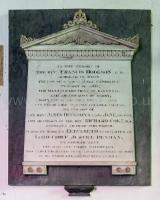
After 1852. Church of St Mary Magdalene, Eardisley [Map]. Memorial to Reverend Francis Hodgson [aged 70].
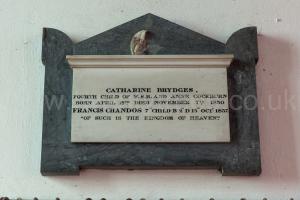
After 1853. Church of St Mary Magdalene, Eardisley [Map]. Memorial to a number of children of William Sarasfield Rositer-Cockburn 7th Baronet [aged 56] and Anne Coke [aged 56]: Eliza Jane Deveruex Cockburn, Mary Sarsfield Cockburn, Devereux Plantagenet Cockburn, Lucy Hooper Cockburn and Anne Russell Cockburn
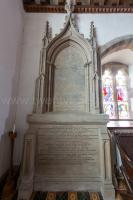
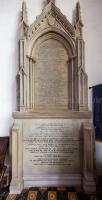
After 1853. Church of St Mary Magdalene, Eardisley [Map]. Memorial to Francis Coke.
On 12th April 1879 Anne Coke [aged 82] died at King's Caple, Herefordshire. She was buried at the Church of St Mary Magdalene, Eardisley [Map].
William of Worcester's Chronicle of England
William of Worcester, born around 1415, and died around 1482 was secretary to John Fastolf, the renowned soldier of the Hundred Years War, during which time he collected documents, letters, and wrote a record of events. Following their return to England in 1440 William was witness to major events. Twice in his chronicle he uses the first person: 1. when writing about the murder of Thomas, 7th Baron Scales, in 1460, he writes '… and I saw him lying naked in the cemetery near the porch of the church of St. Mary Overie in Southwark …' and 2. describing King Edward IV's entry into London in 1461 he writes '… proclaimed that all the people themselves were to recognize and acknowledge Edward as king. I was present and heard this, and immediately went down with them into the city'. William’s Chronicle is rich in detail. It is the source of much information about the Wars of the Roses, including the term 'Diabolical Marriage' to describe the marriage of Queen Elizabeth Woodville’s brother John’s marriage to Katherine, Dowager Duchess of Norfolk, he aged twenty, she sixty-five or more, and the story about a paper crown being placed in mockery on the severed head of Richard, 3rd Duke of York.
Available at Amazon in eBook and Paperback format.
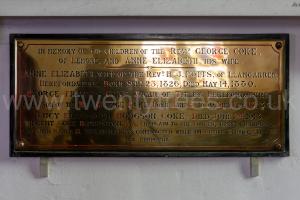
After 1913. Church of St Mary Magdalene, Eardisley [Map]. Memorial to the children of George Coke and Anne-Elizabeth Hodgson: Anne Elizabeth Coke and Reverend George Francis Coke.
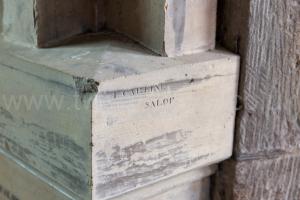
After 1913. Church of St Mary Magdalene, Eardisley [Map]. Memorial to Anne-Elizabeth Hodgson, and Lucy Coke and George Coke. Sculpted by L Carline of Salop aka Shropshire.
Anne-Elizabeth Hodgson: Around 1803 she was born to Reverend James Hodgson. In 1825 George Coke and she were married. On 28th March 1831 Anne-Elizabeth Hodgson died from childbirth eleven days after giving birth to a daughter.
George Coke: On 8th January 1797 he was born to Francis Coke and Anne Whitcombe. On 20th April 1863 George Coke died.
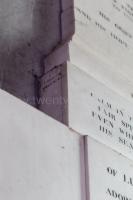
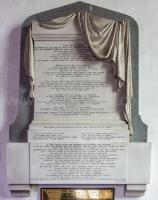
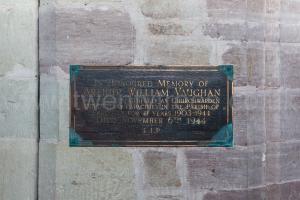
After 1944. Memorial to Arthur William Vaughan, forty-four years a Churchwarden of the Church of St Mary Magdalene, Eardisley [Map].
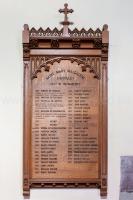
After 1997. List of the Vicars of Church of St Mary Magdalene, Eardisley [Map].