

William of Worcester's Chronicle of England
William of Worcester, born around 1415, and died around 1482 was secretary to John Fastolf, the renowned soldier of the Hundred Years War, during which time he collected documents, letters, and wrote a record of events. Following their return to England in 1440 William was witness to major events. Twice in his chronicle he uses the first person: 1. when writing about the murder of Thomas, 7th Baron Scales, in 1460, he writes '… and I saw him lying naked in the cemetery near the porch of the church of St. Mary Overie in Southwark …' and 2. describing King Edward IV's entry into London in 1461 he writes '… proclaimed that all the people themselves were to recognize and acknowledge Edward as king. I was present and heard this, and immediately went down with them into the city'. William’s Chronicle is rich in detail. It is the source of much information about the Wars of the Roses, including the term 'Diabolical Marriage' to describe the marriage of Queen Elizabeth Woodville’s brother John’s marriage to Katherine, Dowager Duchess of Norfolk, he aged twenty, she sixty-five or more, and the story about a paper crown being placed in mockery on the severed head of Richard, 3rd Duke of York.
Available at Amazon in eBook and Paperback format.
Conisbrough Castle is in Conisbrough, Castles in South Yorkshire.
After 1066 Conisbrough Castle [Map] was founded by William Warenne 1st Earl of Surrey after he had been awarded estates in Yorkshire, Norfolk and Sussex by King William "Conqueror" I of England [aged 38] for his role in the 14th October 1066 Battle of Hastings.
On 24th June 1088 William Warenne 1st Earl of Surrey died at Lewes [Map]. His son William succeeded 2nd Earl Surrey and inherited his estates including Conisbrough Castle [Map].
On 11th May 1138 William Warenne 2nd Earl of Surrey died. His son William [aged 19] succeeded 3rd Earl Surrey and inherited his estates including Conisbrough Castle [Map]. Adela Montgomery Countess of Salisbury and Surrey by marriage Countess Surrey.
On 6th January 1148 William Warenne 3rd Earl of Surrey [aged 29] died. His daughter Isabella [aged 11] succeeded 4th Countess Surrey and inherited his estates including Conisbrough Castle [Map].
In April 1164 Hamelin Warenne Earl of Surrey [aged 35] and Isabella Warenne Countess Boulogne 4th Countess of Surrey [aged 27] were married by which Conisbrough Castle [Map] came into his posession. He rebuilt the castle in stone. He by marriage Earl Surrey. She the daughter of William Warenne 3rd Earl of Surrey and Adela Montgomery Countess of Salisbury and Surrey. He the illegitmate son of Geoffrey Plantagenet Duke Normandy and Mistress Unknown. They were sixth cousins.
Around 1180 Hamelin Warenne Earl of Surrey [aged 51] commissioned the building of a stone castle at Conisbrough [Map]. The castle comprised a Circular Keep with four storeys.


Internal staircase between the first and second floors.


The finely made fireplace on the second floor with decorated capitals.

Window opening on the second floor showing the thickness of the walls of the Keep.


Garderobe on the second floor.

Window opening on the third floor.


Chapel in one of the buttresses on the third floor.

View looking east with the Railway Viaduct over the River Don in the distance.

View of the earthworks of the Outer Bailey.

Entrance to the Keep on the first floor.
In 1201 King John of England [aged 34] visited the new stone-built Conisbrough Castle [Map] whilst it was held by Hamelin Warenne Earl of Surrey [aged 72] and Isabella Warenne Countess Boulogne 4th Countess of Surrey [aged 64].
On 7th May 1202 Hamelin Warenne Earl of Surrey [aged 73] died. His son William succeeded 5th Earl Surrey and inherited his estates including Conisbrough Castle [Map]. He undertook further building work including the Great Hall and service buildings in the Inner Bailey. Maud Marshal Countess Norfolk and Surrey [aged 8] by marriage Countess Surrey.
On 27th May 1240 William Warenne 5th Earl of Surrey died. His son John [aged 9] succeeded 6th Earl Surrey and inherited his estates including Conisbrough Castle [Map].
Henrici Quinti, Angliæ Regis, Gesta, is a first-hand account of the Agincourt Campaign, and subsequent events to his death in 1422. The author of the first part was a Chaplain in King Henry's retinue who was present from King Henry's departure at Southampton in 1415, at the siege of Harfleur, the battle of Agincourt, and the celebrations on King Henry's return to London. The second part, by another writer, relates the events that took place including the negotiations at Troye, Henry's marriage and his death in 1422.
Available at Amazon in eBook and Paperback format.
On 29th September 1304 John Warenne 6th Earl of Surrey [aged 73] died at Kennington, Kent. He was buried at Lewes Priory [Map]. His grandson John [aged 18] succeeded 7th Earl Surrey and inherited his estates including Conisbrough Castle [Map].
In 1316 John Warenne 7th Earl of Surrey [aged 29] attempted to divorce his wife Joan of Bar Countess of Surrey [aged 20]. He blamed Thomas Earl of Lancaster [aged 38] for his failure to obtain a divorce so kidnapped Thomas' wife Alice de Lacy [aged 34] Thomas retaliated by capturing Conisbrough Castle [Map]; King Edward [aged 31] confirmed Thomas as the new owner. Thomas subsequenly rebelled against the King and was executed and King Edward took possession of Conisbrough Castle [Map]. Following the usurption of King Edward the castle was returned to John Warenne 7th Earl of Surrey.
In June 1347 John Warenne 7th Earl of Surrey [aged 60] died. His nephew Richard [aged 41] succeeded 8th Earl Surrey. Eleanor Plantagenet Countess Arundel and Surrey [aged 28] by marriage Countess Surrey. Conisbrough Castle [Map] reverted to the Crown.
Around 1374 Constance York Countess Gloucester was born to Edmund of Langley 1st Duke of York [aged 32] and Isabella of Castile Duchess York [aged 19] at Conisbrough Castle [Map]. She a granddaughter of King Edward III of England. She married before 7th November 1379 her third cousin once removed Thomas Despencer 1st Earl Gloucester, son of Edward Despencer 1st Baron Despencer, Baron Burghesh and Elizabeth Burghesh 3rd Baron Burghesh, and had issue.
On 20th July 1385 Richard of Conisbrough 1st Earl Cambridge was born to Edmund of Langley 1st Duke of York [aged 44] and Isabella of Castile Duchess York [aged 30] at Conisbrough Castle [Map]. Some historians suggest the father was John Holland 1st Duke Exeter [aged 33] with whom Isabella of Castile Duchess York was suspected of having an affair since 1. Richard received no lands from his father and was not mentioned either in his father's will nor his brother's will, 2. the age gap, around ten years, between Richard and his older siblings. He a grandson of King Edward III of England. He married (1) May 1406 his first cousin twice removed Anne Mortimer, daughter of Roger Mortimer 4th Earl March 3rd Earl of Ulster and Eleanor Holland Countess March and Ulster, and had issue (2) after 21st September 1411 his third cousin twice removed Maud Clifford Countess Cambridge, daughter of Thomas Clifford 6th Baron Clifford and Elizabeth Ros Baroness Clifford.
Before 1402 King Edward III of England gave Conisbrough Castle [Map] to his son Edmund of Langley 1st Duke of York [aged 60].
On 1st August 1402 Edmund of Langley 1st Duke of York [aged 61] died at King's Langley, Hertfordshire [Map]. His son Edward [aged 29] succeeded 2nd Duke York, 2nd Earl Cambridge and inherited his estates which included Conisbrough Castle [Map]. Philippa Mohun Duchess York [aged 35] by marriage Duchess York.
On 25th October 1415 King Henry V of England [aged 29] defeated a French army at the Battle of Agincourt.
The battle is described by three Chroniclers who were present:
Jean de Waurin: "1, the author of this work, know the truth of the matter, for in that assembly I was among the French".
Jean le Fevre de St Remy: "I who write this, seated on a horse among the baggage at the rear of the battle, along with the other priests who were present".
The anonymous author of the Gesta Henrici Quinti i.e. Deeds of Henry V: "while I was on the other side with the English".
Thomas Camoys 1st Baron Camoys [aged 64] commanded the Rearguard. Richard de Vere 11th Earl of Oxford [aged 30] commanded. Humphrey Lancaster 1st Duke Gloucester [aged 25] was wounded, and was protected by his brother King Henry V of England.
Edward 2nd Duke of York 1st Duke Albemarle [aged 42], commander of the Vanguard, was killed; the most senior English casualty. Duke Albemarle, Earl of Rutland and Earl Cork extinct. His nephew Richard [aged 4] succeeded 3rd Duke York and inherited his estates including Conisbrough Castle [Map].
John Fortescue [aged 35], Dafydd Gam Brecon [aged 35] and Edward Burnell [aged 44] and Roger Vaughan of Bredwardine [aged 38] were killed.
Michael de la Pole 3rd Earl Suffolk [aged 21] was killed. His brother William [aged 19] succeeded 4th Earl Suffolk, 4th Baron Pole.
On 8th April 1435 John "Butcher" Clifford 9th Baron Clifford was born to Thomas Clifford 8th Baron Clifford [aged 21] and Joan Dacre Baroness Clifford at Conisbrough Castle [Map]. He a great x 4 grandson of King Edward III of England. Coefficient of inbreeding 1.88%. He married 1454 Margaret Bromflete Baroness Clifford, daughter of Henry Bromflete 1st Baron Vesci and Eleanor Fitzhugh Baroness Darcy Knayth and Fitzhugh, and had issue.
Around 1437 Roger Clifford was born to Thomas Clifford 8th Baron Clifford [aged 22] and Joan Dacre Baroness Clifford at Conisbrough Castle [Map]. He a great x 4 grandson of King Edward III of England. Coefficient of inbreeding 1.88%. He married 1471 his third cousin twice removed Joan Courtenay, daughter of Thomas Courtenay 5th or 13th Earl Devon and Margaret Beaufort Countess Devon, and had issue.
Around 1442 Maud Clifford was born to Thomas Clifford 8th Baron Clifford [aged 27] and Joan Dacre Baroness Clifford at Conisbrough Castle [Map]. She a great x 4 granddaughter of King Edward III of England. Coefficient of inbreeding 1.88%. She married (1) before 30th December 1460 her first cousin John Harrington and had issue (2) 1463 her third cousin twice removed Edmund Sutton, son of John Sutton 1st Baron Dudley and Elizabeth Berkeley Baroness Cherleton Baroness Dudley, and had issue.
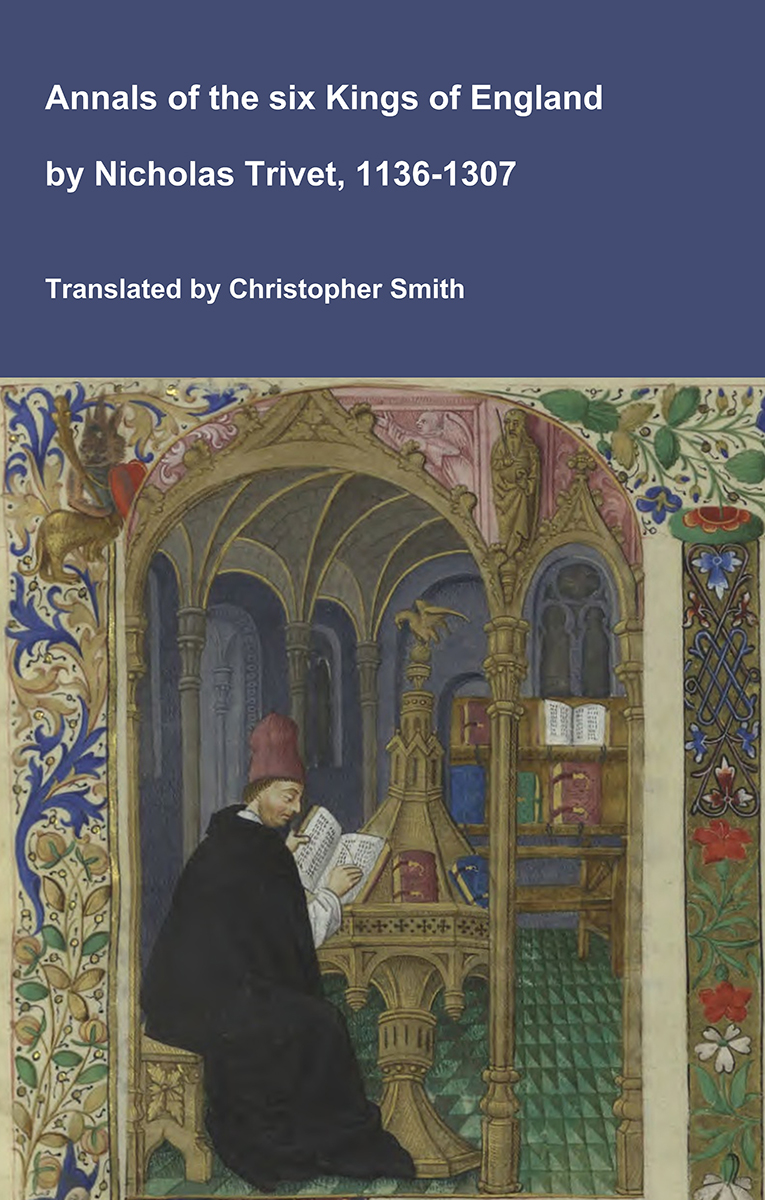
Annals of the six Kings of England by Nicholas Trivet
Translation of the Annals of the Six Kings of England by that traces the rise and rule of the Angevin aka Plantagenet dynasty from the mid-12th to early 14th century. Written by the Dominican scholar Nicholas Trivet, the work offers a vivid account of English history from the reign of King Stephen through to the death of King Edward I, blending political narrative with moral reflection. Covering the reigns of six monarchs—from Stephen to Edward I—the chronicle explores royal authority, rebellion, war, and the shifting balance between crown, church, and nobility. Trivet provides detailed insight into defining moments such as baronial conflicts, Anglo-French rivalry, and the consolidation of royal power under Edward I, whose reign he describes with particular immediacy. The Annals combines careful year-by-year reporting with thoughtful interpretation, presenting history not merely as a sequence of events but as a moral and political lesson. Ideal for readers interested in medieval history, kingship, and the origins of the English state, this chronicle remains a valuable and accessible window into the turbulent world of the Plantagenet kings.
Available at Amazon in eBook and Paperback format.

Conisbrough Castle [Map]. Interior of the Keep Tower. B Howlett, 1814.
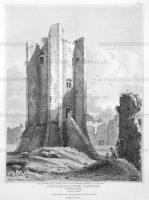
Conisbrough Castle [Map]. B Howlett, 1814.
The River Don rises at Dunford Bridge [Map] after which it flows broadly east through Penistone [Map] then south through Oughtibridge [Map], Sheffield [Map] then east through Rotherham [Map], past Conisbrough Castle [Map], Doncaster [Map] and Stainforth [Map] before joining the River Ouse at Goole [Map]. Originally the River Don was a tributary of the River Trent forming the northern boundary of the Isle of Axholme [Map] but was re-engineered by Cornelius Vermuyden as the Dutch River in the 1620s.