


Jean de Waurin's Chronicle of England Volume 6 Books 3-6: The Wars of the Roses
Jean de Waurin was a French Chronicler, from the Artois region, who was born around 1400, and died around 1474. Waurin’s Chronicle of England, Volume 6, covering the period 1450 to 1471, from which we have selected and translated Chapters relating to the Wars of the Roses, provides a vivid, original, contemporary description of key events some of which he witnessed first-hand, some of which he was told by the key people involved with whom Waurin had a personal relationship.
Available at Amazon in eBook and Paperback format.
Derby, Derbyshire is in City of Derby.
See: Derby Cathedral [Map], Derventio [Map], Irongate, Derby, King Street, Derby, Queen Street, Derby, St John's Church, Derby [Map].
After 4th January 871 Æthelwulf Mercia Earldorman Berkshire [deceased] was buried at Derby, Derbyshire [Map].
Anglo-Saxon Chronicle. 917. This year came a great naval armament over hither south from the Lidwiccians;40 and two earls with it, Ohter and Rhoald. They went then west about, till they entered the mouth of the Severn; and plundered in North-Wales everywhere by the sea, where it then suited them; and took Camlac the bishop in Archenfield, and led him with them to their ships; whom King Edward [aged 43] afterwards released for forty pounds. After this went the army all up; and would proceed yet on plunder against Archenfield [Note. South and west Herefordshire]; but the men of Hertford [Note. Probably a mistake for Hereforshire] met them, and of Glocester, and of the nighest towns; and fought with them, and put them to flight; and they slew the Earl Rhoald, and the brother of Ohter the other earl, and many of the army. And they drove them into a park; and beset them there without, until they gave them hostages, that they would depart from the realm of King Edward. And the king had contrived that a guard should be set against them on the south side of Severnmouth; west from Wales, eastward to the mouth of the Avon; so that they durst nowhere seek that land on that side. Nevertheless, they eluded them at night, by stealing up twice; at one time to the east of Watchet, Somerset, and at another time at Porlock, Somerset. There was a great slaughter each time; so that few of them came away, except those only who swam out to the ships. Then sat they outward on an island, called the Flat-holms; till they were very short of meat, and many men died of hunger, because they could not reach any meat. Thence went they to Dimmet [Note. Possibly Braunton, Devon], and then out to Ireland. This was in harvest. After this, in the same year, before Martinmas, went King Edward to Buckingham [Map] with his army, and sat there four weeks, during which he built the two forts on either side of the water, ere he departed thence. And Earl Thurkytel sought him for his lord; and all the captains, and almost all the first men that belonged to Bedford; and also many of those that belonged to Northampton. This year Ethelfleda, lady of the Mercians [aged 47], with the help of God, before Laminas, conquered the town called Derby [Map], with all that thereto belonged; and there were also slain four of her thanes, that were most dear to her, within the gates.
Note 40. The pirates of Armorica, now Bretagne; so called, because they abode day and night in their ships; from lid, a ship, and wiccian, to watch or abide day and night.
 Become a Member via our Buy Me a Coffee page to read more.
Chronicon ex Chronicis by Florence and John of Worcester. 1st May 1048. There was a great earthquake on Sunday the first of May, at Worcester [Map], Wick, Derby [Map], and many other places. Many districts of England were visited with a mortality among men and cattle; and a fire in the air, commonly called wild-fire, burnt many vills and cornfields in Derbyshire and some other districts. Edmund, bishop of Lindisfarne, died at Gloucester, but was carried by his people to Durham, and buried there. Edred succeeded him, but being struck by the divine vengeance, Ethelric, a monk of Peterborough, was appointed in his stead.
On 25th May 1714 Frances Willoughby Countess Bellomont [aged 71] died in Derby, Derbyshire [Map].
Around 1737 Anne Liddell Duchess Grafton was born to Henry Liddell 1st Baron Ravensworth [aged 29] at Derby, Derbyshire [Map]. She married (1) 29th January 1756 Augustus Henry Fitzroy 3rd Duke Grafton and had issue (2) after 23rd March 1769 John Fitzpatrick 2nd Earl Upper Ossory, son of John Fitzpatrick 1st Earl Upper Ossory and Evelyn Leveson-Gower Countess Upper Ossory, and had issue.
The River Derwent rises on Bleaklow, Derbyshire [Map] after which it passes Bamford, Derbyshire [Map], Hope, Derbyshire [Map], Hathersage, Derbyshire [Map], Grindleford, Derbyshire [Map], Baslow, Derbyshire [Map], Chatsworth House, Derbyshire [Map] passing under Chatsworth Bridge [Map], Rowsley, Derbyshire [Map] which it is joined by the Derbyshire River Wye, Matlock, Derbyshire [Map], Matlock Bath, Derbyshire [Map], Cromford, Derbyshire [Map], Ambergate, Derbyshire [Map] where it is joined by the River Amber. After Ambergate, Derbyshire [Map] it passes Belper, Derbyshire [Map], Duffield, Derbyshire [Map] then flows through the centre of Derby, Derbyshire [Map] after which it joins the River Trent around 1.4 Km east of [Map].
The Street, Derbyshire is a Roman Road that travels broadly south from Melandra aka Ardotalia [Map] to Wirksworth, Derbyshire [Map] where it joined another road which crossed the Derwent at Milford and ran on the east bank of the Derwent and to Derventio [Map] aka Derby.
For the early stages of the road information had been obtained from P. Wroe and P. Mellor (1971). A Roman Road between Buxton and Melandra Castle, Glossop (Derbyshire Archaeological Journal 1971, Volume 91).
From Melandra aka Ardotalia [Map] the road heads broadly south through Simmondley [Map], Higher Plainsteads Farm [Map], Abbots Chair [Map], Brookhouses, Hayfield [Map], through Little Hayfield, Derbyshire [Map], Bank Vale, Hayfield [Map]. In Hayfield it appears to have followed Kinder Road [Map] until it reached Spring Vale Road [Map] where it could cross the River Sett where the steep river cliff has ended. It continued more or less straight past Highgate Head Farm, Hayfield [Map], Peep o Day [Map] following the A624 until East Meats [Map] where it heads towards Gorsty Low [Map] then Breckend [Map] and Townend [Map]
Icknield Street 18d Derby to Chesterfield. From Derventio [Map] aka Derby Icknield Street takes a new alignment past Morley, Derbyshire [Map], Smithy Houses, Derbyshire [Map], Street Lane, Derbyshire [Map], Higham, Derbyshire [Map], Oakerthorpe, Derbyshire [Map], Clay Cross, Derbyshire [Map] crossing the River Rother before arriving at Chesterfield, Derbyshire [Map].
Icknield Street 18c Wall to Derby. Leaving Letocetum, Staffordshire [Map] aka Wall the Icknield Way takes a new alignment through Lichfield [Map], Streethay [Map], past Alrewas, Staffordshire [Map], through Burton-upon-Trent, Staffordshire [Map], Toyota Island, Staffordshire [Map] crossing the River Derwent before reaching Derventio [Map] aka Derby.
On 3rd September 1734 Joseph Wright of Derby was born at 28 Irongate, Derby [Map].
On 26th October 1801 Edward Strutt 1st Baron Belper was born to William Strutt [aged 45] at St Helen's House King Street, Derby [Map]. He married 28th March 1837 Amelia Harriet Otter Baroness Belper, daughter of Bishop William Otter, and had issue.
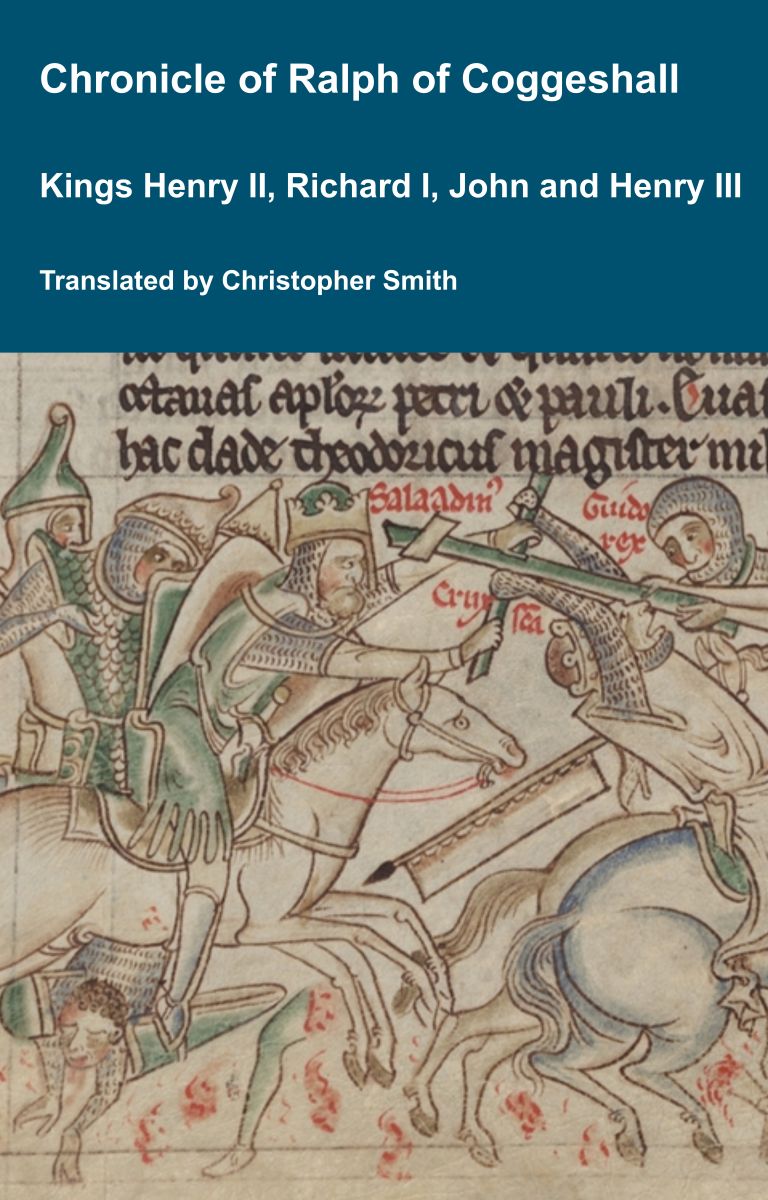
Chronicle of Abbot Ralph of Coggeshall
The Chronicle of Abbot Ralph of Coggeshall (Chronicon Anglicanum) is an indispensable medieval history that brings to life centuries of English and European affairs through the eyes of a learned Cistercian monk. Ralph of Coggeshall, abbot of the Abbey of Coggeshall in Essex in the early 13th century, continued and expanded his community’s chronicle, documenting events from the Norman Conquest of 1066 into the tumultuous reign of King Henry III. Blending eyewitness testimony, careful compilation, and the monastic commitment to record-keeping, this chronicle offers a rare narrative of political intrigue, royal power struggles, and social upheaval in England and beyond. Ralph’s work captures the reigns of pivotal figures such as Richard I and King John, providing invaluable insights into their characters, decisions, and the forces that shaped medieval rule. More than a simple annal, Chronicon Anglicanum conveys the texture of medieval life and governance, making it a rich source for scholars and readers fascinated by English history, monastic authorship, and the shaping of the medieval world.
Available at Amazon in eBook and Paperback format.
On 20th May 1840 Henry Strutt 2nd Baron Belper was born to Edward Strutt 1st Baron Belper [aged 38] and Amelia Harriet Otter Baroness Belper [aged 23] at St Helen's House King Street, Derby [Map]. He married 2nd May 1874 Margaret Coke Baroness Belper, daughter of Thomas Coke 2nd Earl of Leicester and Juliana Whitbread Countess Leicester, and had issue.
On 29th August 1797 Joseph Wright of Derby [aged 62] died at his home 28 Queen Street, Derby [Map].
St John's Church, Derby is also in Churches in Derbyshire.
On 14th September 1826 the foundation stone for St John's Church, Derby [Map] was laid.

Around 1833. Samuel Rayner [aged 26]. "St John's Church, Derby [Map]".