

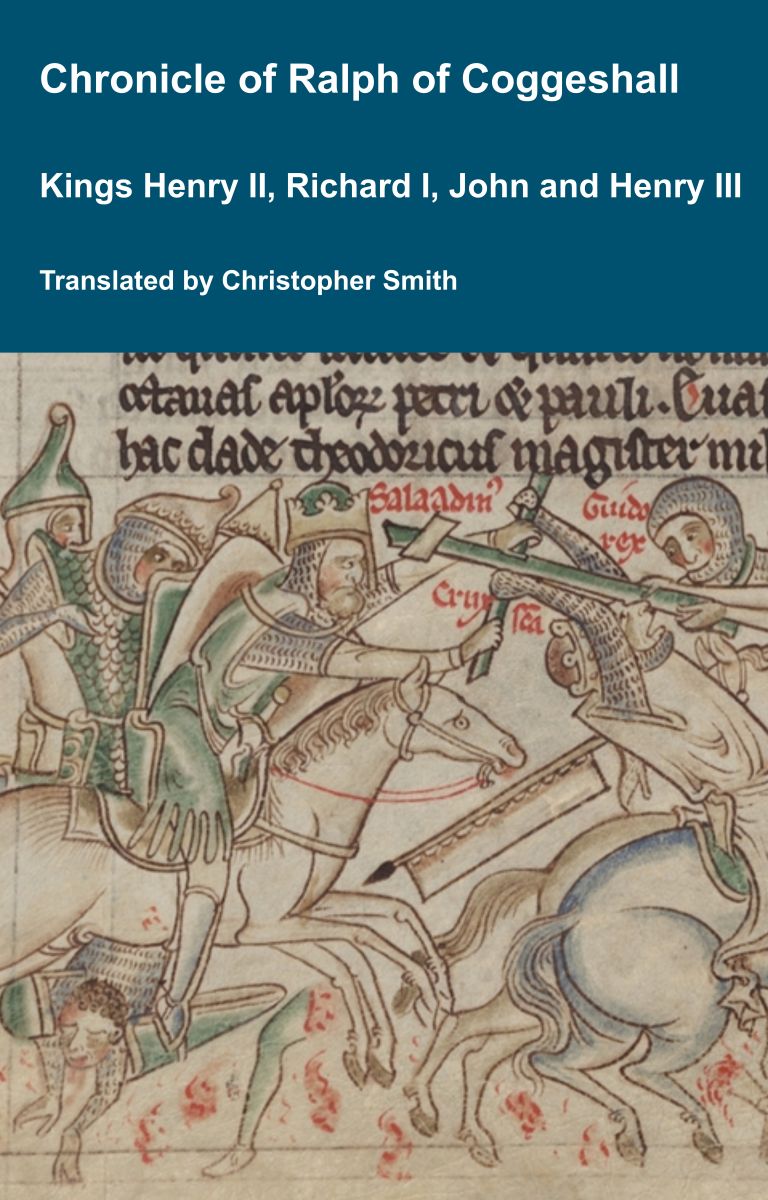
Chronicle of Abbot Ralph of Coggeshall
The Chronicle of Abbot Ralph of Coggeshall (Chronicon Anglicanum) is an indispensable medieval history that brings to life centuries of English and European affairs through the eyes of a learned Cistercian monk. Ralph of Coggeshall, abbot of the Abbey of Coggeshall in Essex in the early 13th century, continued and expanded his community’s chronicle, documenting events from the Norman Conquest of 1066 into the tumultuous reign of King Henry III. Blending eyewitness testimony, careful compilation, and the monastic commitment to record-keeping, this chronicle offers a rare narrative of political intrigue, royal power struggles, and social upheaval in England and beyond. Ralph’s work captures the reigns of pivotal figures such as Richard I and King John, providing invaluable insights into their characters, decisions, and the forces that shaped medieval rule. More than a simple annal, Chronicon Anglicanum conveys the texture of medieval life and governance, making it a rich source for scholars and readers fascinated by English history, monastic authorship, and the shaping of the medieval world.
Available at Amazon in eBook and Paperback format.
Dover Street is in Piccadilly.
See: Ely House.
John Evelyn's Diary. 18th July 1691. To London to hear Mr. Stringfellow preach his first sermon in the newly erected Church of Trinity, in Conduit Street; to which I did recommend him to Dr. Tenison [aged 54] for the constant preacher and lecturer. This Church, formerly built of timber on Hounslow-Heath by King James [aged 57] for the mass priests, being begged by Dr. Tenison, rector of St. Martin's [Map], was set up by that public-minded, charitable, and pious man near my son's dwelling in Dover Street, chiefly at the charge of the Doctor. I know him to be an excellent preacher and a fit person. This Church, though erected in St. Martin's, which is the Doctor's parish, he was not only content, but was the sole industrious mover, that it should be made a separate parish, in regard of the neighbourhood having become so populous. Wherefore to countenance and introduce the new minister, and take possession of a gallery designed for my son's family, I went to London, where, [NOTE. Text runs out?].


John Evelyn's Diary. 28th June 1699. Finding my occasions called me so often to London, I took the remainder of the lease my son had in a house in Dover Street, to which I now removed, not taking my goods from Wotton.
John Evelyn's Diary. 24th May 1700. I went from Dover street to Wotton, Surrey [Map], for the rest of the summer, and removed thither the rest of my goods from Sayes Court [Map].
John Evelyn's Diary. 7th December 1703. I removed to Dover Street, where I found all well; but houses, trees, garden, etc., at Sayes Court, Deptford [Map], suffered very much.
On 19th June 1808 Montagu Bertie 6th Earl of Abingdon was born to Montagu Bertie 5th Earl of Abingdon [aged 24] and Emily Gage Countess of Abingdon at Dover Street. He married 7th January 1835 his fourth cousin twice removed Elizabeth Lavinia Harcourt Countess Abingdon and had issue.
On 7th June 1813 George Ashburnham [aged 27] died at Dover Street.
On 3rd February 1825 James Erskine [aged 52] died at Dover Street.
On 17th July 1835 Edward Adolphus Ferdinand Seymour was born to Edward Adolphus Seymour 12th Duke of Somerset [aged 30] and Jane Georgiana Sheridan Duchess Somerset [aged 25] at Dover Street.
On 2nd July 1856 Jemima Cornwallis Countess St Germans [aged 52] died at Dover Street. She was buried at Kensal Green Cemetery [Map].
On 4th April 1836 Bishop Bowyer Sparke [aged 76] died at his home Ely House.