

The History of William Marshal was commissioned by his son shortly after William’s death in 1219 to celebrate the Marshal’s remarkable life; it is an authentic, contemporary voice. The manuscript was discovered in 1861 by French historian Paul Meyer. Meyer published the manuscript in its original Anglo-French in 1891 in two books. This book is a line by line translation of the first of Meyer’s books; lines 1-10152. Book 1 of the History begins in 1139 and ends in 1194. It describes the events of the Anarchy, the role of William’s father John, John’s marriages, William’s childhood, his role as a hostage at the siege of Newbury, his injury and imprisonment in Poitou where he met Eleanor of Aquitaine and his life as a knight errant. It continues with the accusation against him of an improper relationship with Margaret, wife of Henry the Young King, his exile, and return, the death of Henry the Young King, the rebellion of Richard, the future King Richard I, war with France, the death of King Henry II, and the capture of King Richard, and the rebellion of John, the future King John. It ends with the release of King Richard and the death of John Marshal.
Available at Amazon in eBook and Paperback format.
Fleet Prison is in Farringdon Road.
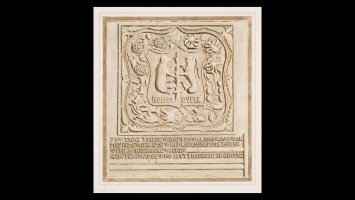
In 1534 Richard Clement of Ightham Mote [aged 52] was imprisoned in the Fleet Prison [Map] for having used excessive force in his roile as Justice of the Peace Kent during a property dispute in Shipbourne, Kent between the rector and Robert Brenner of Hadlow, a servant of Edward Guildford [aged 60] who was the father-in-law of John Dudley 1504-1553 [aged 30], the future Duke of Northumberland.
On 25th August 1537 Richard Tempest of Bracewell [aged 57] died in Fleet Prison [Map].
In 1541 William Stafford [aged 33] was committed to the Fleet Prison [Map] together with Sir John Clere and others for eating meat on Good Friday. After his release and a rebuke from the Privy Council he served on the campaign of that year in the Netherlands.

In 1543 Philip Hoby [aged 38] was briefly imprisoned at Fleet Prison [Map] on suspicion of having heretical beliefs.
Diary of Edward VI. 16th February 1551. Whalley1 was examined for perswading divers nobles of the realme to make the duke of Somerset protectour at the next parleament, and stode to the denial, th'erl of Rutlande [aged 24] affirming it manifestly.
Note 1. Richard Whalley, esquire, of Screaton, co. Nottingham, receiver of Yorkshire. "Feb. xvj. This daie th'erle of Rutlande reported unto the counsaill certain ill practices and evil wordes used by mr. Whalley verie seditiouse and of greate importe; whereunto Whalley made deniall. But upon the debateing of the matter betweene them face to face, it appeared that mr. Whalley was culpable, for the whiche he was committed to the Fleete [Map]. Th'erle of Westmorelande [aged 26] and baron Hilton were comaunded to repaire into their countreys for the more strength thereof in all events." — "Feb. xviij. Sir Frauncis Leeke was this daie called before the counsaill tooching the witnessing of the matter betweene th'erle of Rutland and mr. Whalley, and examined upon ij . questions: First, wheather he reported to mr. Whalley a comunicacion of the lorde admyrall unto th'erle of Rutlande, in a question Wheather th'erle was a Somerset or a Warwicke, or a Lyncolneshire or Nottinghamshire. And the seconde, wheather th'erle of Rutlande, imediatelye after his taike with Whalley, reaported to mr. Leeke that he misliked much Whalley's talk. To the first he utterly denyeth that ther was any such comunicacion tooching my lord admirall. And to the ijde he saithe that, at th'erle's house, the earle asked him of Whalley whan he sawe him, who tolde him he sawe him of late att his house Marie, saith th'erle, he hathe beene here with me, and pratled very muche whiche I like not." — "April ij. Mr. Whalley bounden in M1. li. by recognisaunoe t'appeare from daie to daie, and t'abide suche order as the lordes shall awards. And thereupon discharged out of the Fleete." (Council Book.) He was sent to the Tower among Somerset's friends in the following October.

Diary of Edward VI. 22nd March 1551. Sir Antony Browne [aged 22] sent to the Mete for heriag masse5, with
Note 5. "March xix. This daie sergeant Morgan [aged 40] was before the counsaill for heareing masse att Sainct Jones, in the ladie Maries house, ij. or iij. daies past; and not being able to excuse himselfe, bicause that being a learned man he shulde give so yll an example to others, he was comytted to the Fleete [Map]." — "March xxij. This daie sir Anthony Browne, knight, was examined before the counsaill, wheather he had of late hearde any masse or not. Whereunto he answered that indede twiese or thries at the New-hall and once at Rumforde, nowe as my ladie Marie was comeing hither about x. dales past, he had hearde masse: whiche being considered as a notable ill example, was thought requisite to be corrected. And therefore he was comitted to the Fleete [Map].'' (Council Book.) "Item the xxij day of Marche was Palme sonday, and on that daye were put into the Fleete dy vers gentlemen, as sir Antoni Browne, mr. [Morgan] sargant of the lawe, wyth dyvers other, for herynge of masse in my lady Mary's curte at sent Jones [Clerkenwell]." (Chronicle of the Grey Friars of London, p. 69.) "Male iiij. This dale sir Anthony Browne, knight, and Serjeant Morgan were brought before the counsaill, and upon their submission and knowledge of their offences, with warning to beware howe thei erred agayn, thei were dischardged, and set at libertie" (Council Book.) Sir Anthony Browne was afterwards made viscount Montague and a knight of the Garter by queen Mary: and the Serjeant became a judge of the queen's bench. (See Machyn's Diary, p. 366.)
On 24th March 1551 Richard Morgan was sent to Fleet Prison [Map] for hearing Mass at the chapel of Princess Mary.
In November 1552 William Stafford [aged 44] was briefly committed to the Fleet Prison [Map] for having brawled with Adrian Poynings [aged 40].
Henry Machyn's Diary. 31st July 1553. The sam tyme cam to the Flett [Map] the yerle of Ruttland [aged 26] and my lord Russell [aged 68], in hold. The qwen('s) [aged 37] grace mad [sir Thomas] Jarnyngham [Note. Thomas a mistake for Henry] vyce-chamburlayn and captayne of the garde, and ser Edward Hastyngs [aged 32] her grace mad ym the maister of the horsse the sam tym.


The History of William Marshal was commissioned by his son shortly after William’s death in 1219 to celebrate the Marshal’s remarkable life; it is an authentic, contemporary voice. The manuscript was discovered in 1861 by French historian Paul Meyer. Meyer published the manuscript in its original Anglo-French in 1891 in two books. This book is a line by line translation of the first of Meyer’s books; lines 1-10152. Book 1 of the History begins in 1139 and ends in 1194. It describes the events of the Anarchy, the role of William’s father John, John’s marriages, William’s childhood, his role as a hostage at the siege of Newbury, his injury and imprisonment in Poitou where he met Eleanor of Aquitaine and his life as a knight errant. It continues with the accusation against him of an improper relationship with Margaret, wife of Henry the Young King, his exile, and return, the death of Henry the Young King, the rebellion of Richard, the future King Richard I, war with France, the death of King Henry II, and the capture of King Richard, and the rebellion of John, the future King John. It ends with the release of King Richard and the death of John Marshal.
Available at Amazon in eBook and Paperback format.
Wriothesley's Chronicle [1508-1562]. 25th April 1554. The 25 of Aprill the jurie that quitt Sir Nicholas Throckmorton appeared before the Lord Chauncellor and the Queens Councell in the Starre Chamber at Westminster and were committed to warde. Thomas Whetstone, haberdasher, which was the foreman of the jurie, and Emanuell Lucare, marchant taylor, were sent to the Tower of London [Map], and all the rest of the jurie were sent to the Fleete [Map].
Henry Machyn's Diary. After 14th November 1554. The (blank) day of November cam to the Fleet [Map] [Barlow [aged 56]] sumtyme bysshope of (Bath and Wells), and master Kardmaker parsun of sant Brydes in Fletstret was the.... thay wher gohyng over see lyke marchands.
Henry Machyn's Diary. 10th December 1555. The x day of Desember was had to the Towre [Map] ser Anthony Kyngston [aged 47] knyght, and to the Flett [Map], and cam owt a-gayn shortely aft
Note. P. 98. Committal of sir Anthony Kingston to the Tower. This was for his "contemptuous behaviour and greate disorder by him lately comytted in the Parlemente house." He was discharged on the 24th Dec. See the minutes of the privy council, Dec. 10, 11, 18, 24. (MS. Harl. 353, ff. 146, 147.) He soon after again got into disgrace, and, being summoned to attend the privy council, died on his road to London. See Bayley's History of the Tower, pp. 449, 450.
In May 1556 Edward St Lo [aged 37] was imprisoned at the Fleet Prison [Map] for complicity in the Dudley Consipracy.
Henry Machyn's Diary. After 7th April 1559. The (blank) day cam from Franse my lord chamburlayn Haward [aged 38] and my lord bysshope of Elly [aged 53] and master doctur Wotton, and (unfinished) .... ye Tempull, and ix .... dener, and ther dynyd the consell and dyvers notabyll .... and juges, and my lord mayre [aged 50] and the althermen, and the [officers of the] Chansseres [Chancery] and the Flett [Map], and the Kyngesbynshe [Map], and the Marshalsea [Map]; [and they] gayff gownes of ij collers, morreys and mustars, and ... ij collers ... hondered; and at v of cloke at after-non [the new] serganttes whent unto sant Thomas of Acurs in a ... gowne and skarlette hodes a-bowt ther nekes, and whyt [hoods on] ther hedes, and no capes [caps]; and after they whent unto Powles [Map] with typstayffes and offesers of the Kyngbynche [Map], and odur plasses, and [they were] browth be ij old serganttes, one after a-nodur in skarlett ... of north syd, and ther thay stod tyll thay had brou[th them] unto ix sondre pellers [pillars] of the north syd, and after the ... cam unto the furst, and after to the reseduu; and thay whe[nt back] unto the Tempull on a-lone [one-by-one], and a-for whent the ... and the rulers and the Chansere and of the Kyngbynche [ij and ij to]gether, and after cam a hondered in parte cottes of ...
Note. P. 195. The serjeants' feast. This took place at the Inner Temple on the 19th of April. In the second line read, "and ix. [serjeants made]." Dugdale, indeed, gives the names of ten as having been called to the degree by writ tested by the queen on the 12th Dec. namely, Thomas Carus, Reginald Corbet, John Welsh, John Southcote, William Simmonds, George Wall, Richard Harper, Ranulph Cholmley, Nicholas Powtrell, and John Birch; and to these was added Richard Weston by writ dated 24 Jan. making in all eleven. Dugdale's Chronica Series.
Henry Machyn's Diary. 20th May 1560. The xx day of May was send to the Towre [Map] master Fecknam [aged 45], docthur Wattsun [aged 45] latt byshope of Lynkolne, and docthur Colle [aged 60] latt dene of Powlles, and docthur Chadsay; and at nyght abowtt viij of the cloke was send to the Flett [Map] docthur Score [aged 50], and master Fecknam the last abbot of Westmynster, to Towre [Map].
Henry Machyn's Diary. 10th June 1560. The sam (day) was cared to the Flett [Map] docthur Colle [aged 60] latt dene of Powlles.
Henry Machyn's Diary. 18th October 1561. The xviij day of October ther was (a) fray be-twyn my lord Montyguw('s) [aged 32] men and my lord Delaware('s) [aged 35] men, and after the ij lordes wher sent to the Flett [Map], and the men to the Masselsay [Map].
Henry Machyn's Diary. 22nd October 1561. The xxij day of October my lord Montyguw [aged 32] and my lord Delaware [aged 35] wher delevered owtt of the Flett [Map] home.
In 1580 (possibly 1579) Dean Henry Cole [aged 80] died at Fleet Prison [Map].

On 17th July 1583 Thomas Perrot [aged 30] and Dorothy Devereux Countess Northumberland [aged 19] were married. The marriage took place without the consent of the Queen to whom Dorothy was lady in Waiting for which Thomas was imprisoned in the Fleet Prison [Map]. She the daughter of Walter Devereux 1st Earl Essex and Lettice Knollys Countess Essex and Leicester [aged 39]. They were fifth cousins.

In March 1599 John Spencer was imprisoned ostensibly for having mis-treated his daughter albeit the accuser was William Compton 1st Earl of Northampton who was trying to marry the said daughter much to William's disapproval at Fleet Prison [Map].
Henrici Quinti, Angliæ Regis, Gesta, is a first-hand account of the Agincourt Campaign, and subsequent events to his death in 1422. The author of the first part was a Chaplain in King Henry's retinue who was present from King Henry's departure at Southampton in 1415, at the siege of Harfleur, the battle of Agincourt, and the celebrations on King Henry's return to London. The second part, by another writer, relates the events that took place including the negotiations at Troye, Henry's marriage and his death in 1422.
Available at Amazon in eBook and Paperback format.
In February 1601 William Herbert 3rd Earl Pembroke [aged 20] was sent to Fleet Prison [Map] for refusing to marry Mary Fitton [aged 22] when she became pregnant.


On 20th October 1602 Walter Leveson [aged 52] died at the Fleet Prison [Map].
Letters of John Chamberlain Volume 1.199. [2nd May 1610] The last widow Lady Dorset found the way to the Fleet [Map] again, where she lay sixe or seven dayes for pressing into the privie chamber and importuning the King contrary to commaundment.
In May 1613 Thomas Killigrew [aged 1] was caught talking to Thomas Overbury, a prisoner in the Tower of London [Map], and sent to the Fleet Prison [Map] for a short time. He was later accused of involvement in Overbury's murder, because he had supplied white powder to his patron, the Earl of Somerset [aged 26], but exonerated.


In May 1613 Robert Killigrew [aged 33] was imprisoned at Fleet Prison [Map].
On 17th March 1617 Gervase Clifton 1st Baron Clifton [aged 47] was prosecuted by the Star Chamber and moved to Fleet Prison [Map].
On 14th October 1618 Gervase Clifton 1st Baron Clifton [aged 48] stabbed himself to death in the Fleet Prison [Map]. His daughter Katherine [aged 26] succeeded 2nd Baroness Clifton of Leighton Bromswold in Huntingdonshire. According to a letter from Reverend Thomas Lorkin the date was the 5th of October and the location "at his lodgings in Holborn" - see Letter.
In 1619 Walter Butler 11th Earl Ormonde 4th Earl Ossory [aged 60] was imprisoned at Fleet Prison [Map] for opposing the King's scheme to bring an end to the feuding between the Fitzgerald and Butler families.39136:39136 Walter Butler 11th Earl Ormonde 4th Earl Ossory was in prison for eight years.
Around February 1621 Francis Norreys 1st Earl Berkshire [aged 41] was imprisoned at Fleet Prison [Map] for attacking, or insulting, Emanuel Scrope 1st Earl of Sunderland [aged 36] in the House of Lords in the presence the future King Charles I of England, Scotland and Ireland [aged 20].
In January 1625 King James I of England and Ireland and VI of Scotland [aged 58] signed a warrant for the trial for adultery of the Robert Howard [aged 41] and Frances Coke Viscountess Purbeck [aged 22] in the ecclesiastical Court of High Commission. The trial was likely at the instigation of her brother-in-law George Villiers 1st Duke of Buckingham [aged 32]. Robert Howard was imprisoned at the Fleet Prison [Map]. She was placed under house arrest.
In 1627 Richard Ogle of Pinchbeck [aged 74] died in Fleet Prison [Map].
Chronicle of Geoffrey le Baker of Swinbroke
Baker was a secular clerk from Swinbroke, now Swinbrook, an Oxfordshire village two miles east of Burford. His Chronicle describes the events of the period 1303-1356: Gaveston, Bannockburn, Boroughbridge, the murder of King Edward II, the Scottish Wars, Sluys, Crécy, the Black Death, Winchelsea and Poitiers. To quote Herbert Bruce 'it possesses a vigorous and characteristic style, and its value for particular events between 1303 and 1356 has been recognised by its editor and by subsequent writers'. The book provides remarkable detail about the events it describes. Baker's text has been augmented with hundreds of notes, including extracts from other contemporary chronicles, such as the Annales Londonienses, Annales Paulini, Murimuth, Lanercost, Avesbury, Guisborough and Froissart to enrich the reader's understanding. The translation takes as its source the 'Chronicon Galfridi le Baker de Swynebroke' published in 1889, edited by Edward Maunde Thompson.
Available at Amazon in eBook and Paperback format.
In July 1627 William Coryton [aged 47] was arrested for refusing to subscribe the forced loan of that year, and imprisoned in the Fleet Prison [Map], where he remained until March 1628.
Before 28th February 1632, the date he was buried at St Bride's Church, Fleet Street, Cuthbert Halsall [aged 59] died at Fleet Prison [Map].
On 21st June 1661 William Monson 1st Viscount Monson [aged 62] surrendered himself to Parliament and was imprisoned at Fleet Prison [Map] for being a Regicide. On 1st July 1661 he was brought up to the bar of the House of Commons, and, after being made to confess his crime, was degraded from all his honours and titles and deprived of his property. He was also sentenced to be drawn from the Tower through the city of London to Tyburn [Map], and so back again, with a halter about his neck, and to be imprisoned for life.
Around 1672 William Monson 1st Viscount Monson [aged 73] died at Fleet Prison [Map].

John Evelyn's Diary. 27th June 1690. I went to visit some friends in the Tower [Map], when asking for Lord Clarendon, they by mistake directed me to the Earl of Torrington [aged 42], who about three days before had been sent for from the fleet [Map], and put into the Tower [Map] for cowardice and not fighting the French fleet, which having beaten a squadron of the Hollanders, while Torrington did nothing, did now ride masters of the sea, threatening a descent.
John Evelyn's Diary. 6th April 1696. I visited Mr. Graham in the Fleet [Map].
In 1705 William Reresby 3rd Baronet [aged 37] died at Fleet Prison [Map] having gambled away the family money and estates. His brother Leonard [aged 26] succeeded 4th Baronet Reresby of Thribergh in Yorkshire.
On 22nd April 1707 John Bendish 3rd Baronet [aged 77] died whilst imprisoned for debt at the Fleet Prison [Map]. He was buried at St Mary's Church, Steeple Bumstead on 3rd May 1707. His son Henry [aged 33] succeeded 4th Baronet Bendish of Steeple Bumstead in Essex.
On 26th August 1723 William Barnesley of Eardisley Park [aged 20] and Elizabeth Price [aged 16] were married at the Fleet Prison [Map]. There was no issue from the marriage.
On 14th January 1728 Walter Vane-Fletcher [aged 35] and Mary Anne Woodward were married at Fleet Prison [Map].
In or before 1731 Anne Hamilton [aged 21] and Mary Edwards [aged 26] were married in the Chapel of Fleet Prison [Map]. She was the richest woman in England at the time having aounrd £60000. Evidence of the marriage was scant; she never used the Hamilton name, although it was reported in the Gentleman's Magazine. She eventually separated from her husband making her children illegitimate. Somewhat curiously his baptism records show his surname as Edwardes.


On 13th December 1742 Thomas Heathcote 2nd Baronet [aged 21] and Elizabeth Hinton [aged 18] were married at the Fleet Prison [Map].
Adam Murimuth's Continuation and Robert of Avesbury’s 'The Wonderful Deeds of King Edward III'
This volume brings together two of the most important contemporary chronicles for the reign of Edward III and the opening phases of the Hundred Years’ War. Written in Latin by English clerical observers, these texts provide a vivid and authoritative window into the political, diplomatic, and military history of fourteenth-century England and its continental ambitions. Adam Murimuth Continuatio's Chronicarum continues an earlier chronicle into the mid-fourteenth century, offering concise but valuable notices on royal policy, foreign relations, and ecclesiastical affairs. Its annalistic structure makes it especially useful for establishing chronology and tracing the development of events year by year. Complementing it, Robert of Avesbury’s De gestis mirabilibus regis Edwardi tertii is a rich documentary chronicle preserving letters, treaties, and official records alongside narrative passages. It is an indispensable source for understanding Edward III’s claim to the French crown, the conduct of war, and the mechanisms of medieval diplomacy. Together, these works offer scholars, students, and enthusiasts a reliable and unembellished account of a transformative period in English and European history. Essential for anyone interested in medieval chronicles, the Hundred Years’ War, or the reign of Edward III.
Available at Amazon in eBook and Paperback format.
On 15th December 1785 King George IV of Great Britain and Ireland [aged 23] and Maria Anne Smythe aka "Mrs Fitzherbert" [aged 29] were married secretly in the drawing room of her house in Park Street, London; her third marriage, his first. The marriage was invalid under English civil law because his father had not given his consent. Her uncle Henry Errington and her brother John Smythe were witnesses. The ceremony was performed by one of the prince's Chaplains in Ordinary, the Reverend Robert Burt, whose debts of £500 were paid by the prince to release him from Fleet Prison [Map] to preside at the ceremony.. He the son of King George III of Great Britain and Ireland [aged 47] and Charlotte Mecklenburg Strelitz Queen Consort England [aged 41].


In 1797 Elizabeth Luttrell "Bad Lady Betty" [aged 54] was imprisoned in the Fleet Prison [Map] for her gambling debts; and gave a hairdresser 50 pounds to marry her, which, according to the then state of the debtors' law, enabled her to procure a release.
In July 1831 William Pole Tylney Long Wellesley 4th Earl Mornington [aged 43] was imprisoned in Fleet Prison [Map] for contempt of court.