

Chronicle of Abbot Ralph of Coggeshall
The Chronicle of Abbot Ralph of Coggeshall (Chronicon Anglicanum) is an indispensable medieval history that brings to life centuries of English and European affairs through the eyes of a learned Cistercian monk. Ralph of Coggeshall, abbot of the Abbey of Coggeshall in Essex in the early 13th century, continued and expanded his community’s chronicle, documenting events from the Norman Conquest of 1066 into the tumultuous reign of King Henry III. Blending eyewitness testimony, careful compilation, and the monastic commitment to record-keeping, this chronicle offers a rare narrative of political intrigue, royal power struggles, and social upheaval in England and beyond. Ralph’s work captures the reigns of pivotal figures such as Richard I and King John, providing invaluable insights into their characters, decisions, and the forces that shaped medieval rule. More than a simple annal, Chronicon Anglicanum conveys the texture of medieval life and governance, making it a rich source for scholars and readers fascinated by English history, monastic authorship, and the shaping of the medieval world.
Available at Amazon in eBook and Paperback format.
Norwich, Norfolk is in Norfolk.
From Combretovium [Map] aka Baylham the Pye Road continues along what is now the A140 through Yaxley, Suffolk [Map] where it makes a slight change in direction, through Dickleburgh, Norfolk [Map], Long Stratton, Norfolk [Map] to Norwich, Norfolk [Map] from where it continues east to Venta Icenorium [Map] aka Caistor St Edmund.
Anglo-Saxon Chronicle. 1004. This year came Sweyne with his fleet to Norwich, Norfolk [Map], plundering and burning the whole town. Then Ulfkytel agreed with the council in East-Anglia, that it were better to purchase peace with the enemy, ere they did too much harm on the land; for that they had come unawares, and he had not had time to gather his force. Then, under the truce that should have been between them, stole the army up from their ships, and bent their course to Thetford, Norfolk [Map]. When Ulfkytel understood that, then sent he an order to hew the ships in pieces; but they frustrated his design. Then he gathered his forces, as secretly as he could. The enemy came to Thetford, Norfolk [Map] within three weeks after they had plundered Norwich; and, remaining there one night, they spoiled and burned the town; but, in the morning, as they were proceeding to their ships, came Ulfkytel with his army, and said that they must there come to close quarters. And, accordingly, the two armies met together; and much slaughter was made on both sides. There were many of the veterans of the East-Angles slain; but, if the main army had been there, the enemy had never returned to their ships. As they said themselves, that they never met with worse hand-play in England than Ulfkytel brought them.
Anglo-Saxon Chronicle. 1075. This year King William [aged 47] gave Earl Ralph [aged 33] the daughter of William Fitz-Osborne to wife. This same Ralph was British on his mother's side; but his father, whose name was also Ralph, was English; and born in Norfolk. The king therefore gave his son the earldom of Norfolk and Suffolk; and he then led the bride to Norwich [Map]. There was that bride-ale the source of man's bale. There was Earl Roger, and Earl Waltheof, and bishops, and abbots; who there resolved, that they would drive the king out of the realm of England. But it was soon told the king in Normandy how it was determined. It was Earl Roger and Earl Ralph who were the authors of that plot; and who enticed the Britons to them, and sent eastward to Denmark after a fleet to assist them. Roger went westward to his earldom, and collected his people there, to the king's annoyance, as he thought; but it was to the great disadvantage of himself. He was however prevented. Ralph also in his earldom would go forth with his people; but the castlemen that were in England and also the people of the land, came against him, and prevented him from doing anything. He escaped however to the ships at Norwich [Map].97 And his wife was in the castle; which she held until peace was made with her; when she went out of England, with all her men who wished to join her. The king afterwards came to England, and seized Earl Roger, his relative, and put him in prison. And Earl Waltheof went over sea, and bewrayed himself; but he asked forgiveness, and proffered gifts of ransom. The king, however, let him off lightly, until he98 came to England; when he had him seized. Soon after that came east from Denmark two hundred ships; wherein were two captains, Cnute Swainson, and Earl Hacco; but they durst not maintain a fight with King William. They went rather to York, and broke into St. Peter's minster, and took therein much treasure, and so went away. They made for Flanders over sea; but they all perished who were privy to that design; that was, the son of Earl Hacco, and many others with him.
Note 97. Whence he sailed to Bretagne, according to Flor. S. Dunelm, etc.; but according to Henry of Huntingdon he fled directly to Denmark, returning afterwards with Cnute and Hacco, who invaded England With a fleet of 200 sail.
Note 98. i.e. Earl Waltheof.
 Become a Member via our Buy Me a Coffee page to read more.
Anglo-Saxon Chronicle. 1122. In this year was the King Henry [aged 54] at Christmas in Norwich, Norfolk [Map], and at Easter in Northampton [Map].
On 30th October 1426 Anne Despencer Baroness Hastings, Marshal and Morley [aged 68] died at Norwich, Norfolk [Map].
On 25th March 1434 Margaret Howard [aged 59] died at Norwich, Norfolk [Map].
Wriothesley's Chronicle [1508-1562]. 1506. This yeare a great parte of the cittie of Norwich [Map] was burnt, and the towne of Berkwayeb more then halfe burnt. Also a great fier in London betwene the Custome Howsse and Billinsgate, that did great hurte.
Note b. Berkwey in Arnold, probably Berkeley in Gloucestershire.
Wriothesley's Chronicle [1508-1562]. 16th August 1531. This yeare was one burnt at Maidestone [Map] for heresie, and one Bylney [aged 36],g a priest, disgraded and burnt at Norwich, Norfolk [Map] for heresie.
Note g. Thomas Bilney, Bachelor of both Laws, was burnt on the 16th August, 1531.
On 15 or 19th August 1531 Thomas Bilney [aged 36] was burned at the stake at Norwich, Norfolk [Map] as described in Wriothesley's Chronicle.
In July 1549 Kett's Rebellion was a revolt in Norwich, Norfolk [Map] in response to the enclosure of land. The revolt was suppressed by Thomas Tresham [aged 49] who received £272, 19.6 for his services.
Chronicle of Queen Jane and Two Years of Queen Mary 1553. 12th July 1553. The xij th dale the lady Mary [aged 37] sent to Norwich [Map] to be proclaymed, but they wolde not, because they were not certeyn of the kinges death; but within a daye after they dyd not only proclayme hir, but also sent men and weapons to ayde hir.


On 8th January 1556 Anne Boleyn [aged 80] died at Norwich, Norfolk [Map].
This is a translation of the 'Memoires of Jacques du Clercq', published in 1823 in two volumes, edited by Frederic, Baron de Reissenberg. In his introduction Reissenberg writes: 'Jacques du Clercq tells us that he was born in 1424, and that he was a licentiate in law and a counsellor to Philip the Good, Duke of Burgundy, in the castellany of Douai, Lille, and Orchies. It appears that he established his residence at Arras. In 1446, he married the daughter of Baldwin de la Lacherie, a gentleman who lived in Lille. We read in the fifth book of his Memoirs that his father, also named Jacques du Clercq, had married a lady of the Le Camelin family, from Compiègne. His ancestors, always attached to the counts of Flanders, had constantly served them, whether in their councils or in their armies.' The Memoires cover a period of nineteen years beginning in in 1448, ending in in 1467. It appears that the author had intended to extend the Memoirs beyond that date; no doubt illness or death prevented him from carrying out this plan. As Reissenberg writes the 'merit of this work lies in the simplicity of its narrative, in its tone of good faith, and in a certain air of frankness which naturally wins the reader’s confidence.' Du Clercq ranges from events of national and international importance, including events of the Wars of the Roses in England, to simple, everyday local events such as marriages, robberies, murders, trials and deaths, including that of his own father in Book 5; one of his last entries.
Available at Amazon in eBook and Paperback format.

On 9th January 1564 Margaret Audley Duchess Norfolk [aged 24] died at Norwich, Norfolk [Map] following the birth of her fourth child. She was initially buried at Church of St John the Baptist, Norwich [Map]. Her remains were moved to the Church of St Michael the Archangel, Framlingham [Map].
On 30th November 1594 Bishop John Cosins was born at Norwich, Norfolk [Map].
On 28th September 1611 Colonel Augustine Warner was born to Thomas Hoverton Warner [aged 30] at Norwich, Norfolk [Map].
On 5th June 1621 Thomas Pepys was born to Talbot Pepys [aged 38] at Norwich, Norfolk [Map]. On 15th June 1621 Thomas Pepys was christended at Church of St Stephen, Norwich [Map].
On 4th April 1657 Thomas Hoverton Warner [aged 76] died at Norwich, Norfolk [Map].
John Evelyn's Diary. 17th October 1671. My Lord Henry Howard [aged 43] coming this night to visit my Lord Chamberlain, and staying a day, would needs have me go with him to Norwich, Norfolk [Map], promising to convey me back, after a day or two; this, as I could not refuse, I was not hard to be pursuaded to, having a desire to see that famous scholar and physician, Dr. T. Browne [aged 65], author of the Religio Medici and Vulgar Errors, now lately knighted. Thither, then, went my Lord and I alone, in his flying chariot with six horses; and by the way, discoursing with me of several of his concerns, he acquainted me of his going to marry his eldest son to one of the King's [aged 41] natural daughters [Note. Either Anne Fitzroy Countess Sussex [aged 10] or Charlotte Fitzroy Countess Lichfield [aged 7].], by the Duchess of Cleveland [aged 30]; by which he reckoned he should come into mighty favor. He also told me that, though he kept that idle creature, Mrs. B-- [Note. Jane Bickerton Duchess Norfolk [aged 28]], and would leave £200 a year to the son [Note. Henry Howard and Jane Bickerton had three sons; not clear which is being referred to since the eldest may have died and the reference may be to a surviving son.] he had by her, he would never marry her, and that the King himself had cautioned him against it. All the world knows how he kept his promise [Note. meaning he didn't keep his promise since Henry Howard did marry Jane Bickerton - this a case of John Evelyn writing his diary retrospectively?], and I was sorry at heart to hear what now he confessed to me; and that a person and a family which I so much honored for the sake of that noble and illustrious friend of mine, his grandfather, should dishonor and pollute them both with those base and vicious courses he of late had taken since the death of Sir Samuel Tuke [aged 56], and that of his own virtuous lady (my Lady Anne Somerset, sister to the Marquis); who, while they lived, preserved this gentleman by their example and advice from those many extravagances that impaired both his fortune and reputation.
In 1747 John Hobart 2nd Earl Buckinghamshire [aged 23] was elected MP Norwich.


In 1756 Harbord Morden aka Harbord 1st Baron Suffield [aged 21] was elected MP Norwich.
The River Wensum rises at Whissonsett, Norfolk [Map] from where it flows past Raynham, Norfolk [Map], Doughton, Norfolk [Map], Shereford, Norfolk [Map], Fakenham, Norfolk [Map], Pensthorpe, Norfolk [Map], Great Ryburgh, Norfolk [Map], Sennow Park, Norfolk [Map], Guist, Norfolk [Map], North Elmham, Norfolk [Map], Worthing, Norfolk [Map], Swanton Morley, Norfolk [Map], Mill Street, Norfolk [Map], Lyng, Norfolk [Map], Lenwade, Norfolk [Map], Attlebridge, Norfolk [Map], Ringland, Norfolk [Map], Taverham, Norfolk [Map], Drayton, Norfolk [Map], Costessey, Norfolk [Map] after which it is joined by the River Tud at Hellesdon [Map]. From Hellesdon [Map] it flows through the centre or Norwich, Norfolk [Map], past the Cow Tower, Norwich [Map], Carrow Road Stadium [Map] after which it joins the River Yare.
In 1379 William Morley 4th Baron Marshal 3rd Baron Morley [aged 60] died. He was buried at Austin Friars, Norwich [Map]. In 1379 His son Thomas [aged 25] succeeded 5th Baron Marshal, 4th Baron Morley. Joan Hastings Baroness Marshal and Morley [aged 22] by marriage Baroness Marshal, Baroness Morley.
On 23rd November 1386 Cecily Bardolf Baroness Marshal and Morley died. She was buried at Austin Friars, Norwich [Map].
Around 1456 Margery de Clifton Baroness Hastings [aged 37] died. She was buried at Austin Friars, Norwich [Map]; see Weever's Funeral Monuments Page 804: Dame Margery wife of Sir Edward Hafiings, and of Sir lohn l\pndbam,6^xx^htQtoiRobertClyfton, 145^.
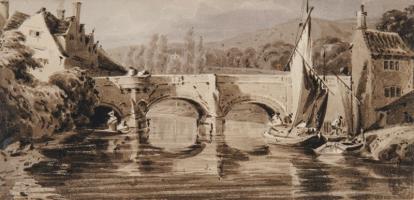
Before 1839. John Thirtle [aged 61]. "Bishop Bridge, Norwich [Map] from the South".
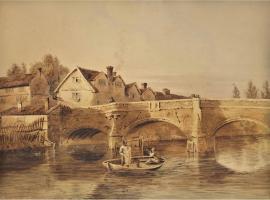
Before 1839. John Thirtle [aged 61]. Bishop Bridge, Norwich [Map].
Chronicle of a Bourgeois of Valenciennes
Récits d’un bourgeois de Valenciennes aka The Chronicle of a Bourgeois of Valenciennes is a vivid 14th-century vernacular chronicle written by an anonymous urban chronicler from Valenciennes in the County of Hainaut. It survives in a manuscript that describes local and regional history from about 1253 to 1366, blending chronology, narrative episodes, and eyewitness-style accounts of political, military, and social events in medieval France, Flanders, and the Low Countries. The work begins with a chronological framework of events affecting Valenciennes and its region under rulers such as King Philip VI of France and the shifting allegiances of local nobility. It includes accounts of conflicts, sieges, diplomatic manoeuvres, and the impact of broader struggles like the Hundred Years’ War on urban life in Hainaut. Written from the perspective of a burgher (bourgeois) rather than a monastery or royal court, the chronicle offers a rare lay viewpoint on high politics and warfare, reflecting how merchants, townspeople, and civic institutions experienced the turbulence of the 13th and 14th centuries. Its narrative style combines straightforward reporting of events with moral and civic observations, making it a valuable source for readers interested in medieval urban society, regional politics, and the lived experience of war and governance in pre-modern Europe.
Available at Amazon in eBook and Paperback format.
The River Wensum rises at Whissonsett, Norfolk [Map] from where it flows past Raynham, Norfolk [Map], Doughton, Norfolk [Map], Shereford, Norfolk [Map], Fakenham, Norfolk [Map], Pensthorpe, Norfolk [Map], Great Ryburgh, Norfolk [Map], Sennow Park, Norfolk [Map], Guist, Norfolk [Map], North Elmham, Norfolk [Map], Worthing, Norfolk [Map], Swanton Morley, Norfolk [Map], Mill Street, Norfolk [Map], Lyng, Norfolk [Map], Lenwade, Norfolk [Map], Attlebridge, Norfolk [Map], Ringland, Norfolk [Map], Taverham, Norfolk [Map], Drayton, Norfolk [Map], Costessey, Norfolk [Map] after which it is joined by the River Tud at Hellesdon [Map]. From Hellesdon [Map] it flows through the centre or Norwich, Norfolk [Map], past the Cow Tower, Norwich [Map], Carrow Road Stadium [Map] after which it joins the River Yare.
Church of St John the Baptist, Norwich is also in Churches in Norfolk.
On 9th January 1564 Margaret Audley Duchess Norfolk [aged 24] died at Norwich, Norfolk [Map] following the birth of her fourth child. She was initially buried at Church of St John the Baptist, Norwich [Map]. Her remains were moved to the Church of St Michael the Archangel, Framlingham [Map].
Church of St Peter Mancroft, Norwich is also in Churches in Norfolk.
In 1670 Archbishop Thomas Tenison [aged 33] was presented with the living of Church of St Peter Mancroft, Norwich [Map].
Church of St Stephen, Norwich is also in Churches in Norfolk.
On 5th June 1621 Thomas Pepys was born to Talbot Pepys [aged 38] at Norwich, Norfolk [Map]. On 15th June 1621 Thomas Pepys was christended at Church of St Stephen, Norwich [Map].
The River Wensum rises at Whissonsett, Norfolk [Map] from where it flows past Raynham, Norfolk [Map], Doughton, Norfolk [Map], Shereford, Norfolk [Map], Fakenham, Norfolk [Map], Pensthorpe, Norfolk [Map], Great Ryburgh, Norfolk [Map], Sennow Park, Norfolk [Map], Guist, Norfolk [Map], North Elmham, Norfolk [Map], Worthing, Norfolk [Map], Swanton Morley, Norfolk [Map], Mill Street, Norfolk [Map], Lyng, Norfolk [Map], Lenwade, Norfolk [Map], Attlebridge, Norfolk [Map], Ringland, Norfolk [Map], Taverham, Norfolk [Map], Drayton, Norfolk [Map], Costessey, Norfolk [Map] after which it is joined by the River Tud at Hellesdon [Map]. From Hellesdon [Map] it flows through the centre or Norwich, Norfolk [Map], past the Cow Tower, Norwich [Map], Carrow Road Stadium [Map] after which it joins the River Yare.
John Evelyn's Diary. 17th October 1671. Being come to the Ducal palace [Map], my Lord [aged 43] made very much of me; but I had little rest, so exceedingly desirous he was to show me the contrivance he had made for the entertainment of their Majesties, and the whole Court not long before, and which, though much of it was but temporary, apparently framed of boards only, was yet standing. As to the palace, it is an old wretched building, and that part of it newly built of brick, is very ill understood; so as I was of the opinion it had been much better to have demolished all, and set it up in a better place, than to proceed any further; for it stands in the very market-place, and, though near a river, yet a very narrow muddy one, without any extent.


The River Yare rises around Thuxton, Norfolk [Map] from where it flows past Coston, Norfolk [Map], Brandon Parva, Norfolk [Map], Barnham Broom, Norfolk [Map] after which it is joined by the River Tiffey before flowing past Marlingford, Norfolk [Map], Bawburgh, Norfolk [Map], Bowthorpe, Norfolk [Map], Colney, Norfolk [Map], Earlham Park [Map], Eaton [Map] to Old Lakenham [Map] after which it is joined by the River Wensum. Thereafter it flows past Thorpe St Andrew, Norfolk [Map], SurlIngham, Norfolk [Map], Brundall, Norfolk [Map], Buckenham, Norfolk [Map], Cantley, Norfolk [Map], Reedham, Norfolk [Map] to Berney Arms, Norfolk [Map] after which it is joined by the River Waveney then flows through Great Yarmouth, Norfolk [Map] where it is joined by the River Bure then meets the North Sea at Gorleston on Sea, Norfolk [Map].
The River Yare rises around Thuxton, Norfolk [Map] from where it flows past Coston, Norfolk [Map], Brandon Parva, Norfolk [Map], Barnham Broom, Norfolk [Map] after which it is joined by the River Tiffey before flowing past Marlingford, Norfolk [Map], Bawburgh, Norfolk [Map], Bowthorpe, Norfolk [Map], Colney, Norfolk [Map], Earlham Park [Map], Eaton [Map] to Old Lakenham [Map] after which it is joined by the River Wensum. Thereafter it flows past Thorpe St Andrew, Norfolk [Map], SurlIngham, Norfolk [Map], Brundall, Norfolk [Map], Buckenham, Norfolk [Map], Cantley, Norfolk [Map], Reedham, Norfolk [Map] to Berney Arms, Norfolk [Map] after which it is joined by the River Waveney then flows through Great Yarmouth, Norfolk [Map] where it is joined by the River Bure then meets the North Sea at Gorleston on Sea, Norfolk [Map].
The River Wensum rises at Whissonsett, Norfolk [Map] from where it flows past Raynham, Norfolk [Map], Doughton, Norfolk [Map], Shereford, Norfolk [Map], Fakenham, Norfolk [Map], Pensthorpe, Norfolk [Map], Great Ryburgh, Norfolk [Map], Sennow Park, Norfolk [Map], Guist, Norfolk [Map], North Elmham, Norfolk [Map], Worthing, Norfolk [Map], Swanton Morley, Norfolk [Map], Mill Street, Norfolk [Map], Lyng, Norfolk [Map], Lenwade, Norfolk [Map], Attlebridge, Norfolk [Map], Ringland, Norfolk [Map], Taverham, Norfolk [Map], Drayton, Norfolk [Map], Costessey, Norfolk [Map] after which it is joined by the River Tud at Hellesdon [Map]. From Hellesdon [Map] it flows through the centre or Norwich, Norfolk [Map], past the Cow Tower, Norwich [Map], Carrow Road Stadium [Map] after which it joins the River Yare.
The River Tud rises near Toftwood, Norfolk [Map] from where it flows past Yaxham, Norfolk [Map], Clippings Green, Norfolk [Map], Hockering, Norfolk [Map], Honingham, Norfolk [Map], Easton, Norfolk [Map],Costessey, Norfolk [Map] after which it joins the River Wensum at Hellesdon [Map].
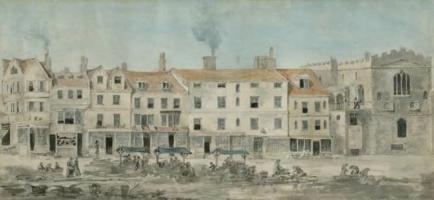
1800. Ramsay Richard Reinagle [aged 23]. "Market Place, Norwich".
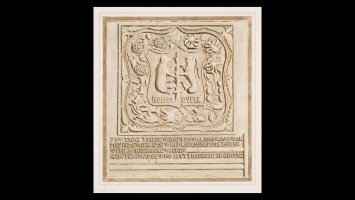
On 27th August 1549 the rebels were defeated by an army led by John Dudley 1st Duke Northumberland [aged 45]. Henry Willoughby [aged 32] was killed at Mousehold Heath, Norwich [Map].
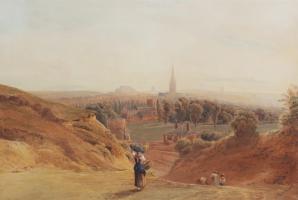
Before 1839. John Thirtle [aged 61]. "Norwich from Mousehold Heath, Norwich [Map]".
Church of St George, Norwich is also in Churches in Norfolk.
Abbot John Whethamstede’s Chronicle of the Abbey of St Albans
Abbot John Whethamstede's Register aka Chronicle of his second term at the Abbey of St Albans, 1451-1461, is a remarkable text that describes his first-hand experience of the beginning of the Wars of the Roses including the First and Second Battles of St Albans, 1455 and 1461, respectively, their cause, and their consequences, not least on the Abbey itself. His text also includes Loveday, Blore Heath, Northampton, the Act of Accord, Wakefield, and Towton, and ends with the Coronation of King Edward IV. In addition to the events of the Wars of the Roses, Abbot John, or his scribes who wrote the Chronicle, include details in the life of the Abbey such as charters, letters, land exchanges, visits by legates, and disputes, which provide a rich insight into the day-to-day life of the Abbey, and the challenges faced by its Abbot.
Available at Amazon in eBook and Paperback format.
John Welles of Norwich was born to John Welles of Norwich. He was baptised at Church of St George, Norwich [Map].
Norwich Castle is also in Castles in Norfolk.

Letters. After 1412. Letter XXXIV. Joanna de Kynnesley to King Henry IV [aged 44].
Supplicates most humbly a poor and simple woman, Joanna de Kynnesley; that whereas John de Kynnesley, her husband, by hate and malice, was put in prison within the castle of Norwich [Map], where he has long lain through false suggestions, that it would please your most gracious lordship, for the love of God, and for the souls of your most noble faher and mother, whom God assoil, to grant and give to your said suppliant your gracious letters, sealed under your seal, made in due form, directed to the Sheriff of the county of Norfolk, charging and straitly commanding him to deliver up the body of the said John out of prison, that he may go at large, to an swer before your royalty, in case any one should accuse him; and she will pray God for you and for your progenitors for ever.
Patent Rolls. 21st July 1461. Westminster Palace [Map]. The like to John Howard [aged 36], king's knight, the office of the constableship and custody of Norwich Castle [Map] from Exeter lats, with the fees as in the times of Edward III and Richard II from the issues of the counties of Norfolk and Suffolk.
John Evelyn's Diary. 17th October 1671. Next morning, I went to see Sir Thomas Browne [aged 65] (with whom I had some time corresponded by letter, though I had never seen him before); his whole house and garden being a paradise and cabinet of rarities; and that of the best collection, especially medals, books, plants, and natural things. Among other curiosities, Sir Thomas had a collection of the eggs of all the fowl and birds he could procure, that country (especially the promontory of Norfolk) being frequented, as he said, by several kinds which seldom or never go further into the land, as cranes, storks, eagles, and variety of water fowl. He led me to see all the remarkable places of this ancient city, being one of the largest, and certainly, after London, one of the noblest of England, for its venerable cathedral [Map], number of stately churches, cleanness of the streets, and buildings of flint so exquisitely headed and squared, as I was much astonished at; but he told me they had lost the art of squaring the flints, in which they so much excelled, and of which the churches, best houses, and walls, are built. The Castle [Map] is an antique extent of ground, which now they call Marsfield, and would have been a fitting area to have placed the Ducal palace in. The suburbs are large, the prospects sweet, with other amenities, not omitting the flower gardens, in which all the inhabitants excel. The fabric of stuffs brings a vast trade to this populous town.
Thomas Burgh was appointed Constable of Norwich Castle.
The River Yare rises around Thuxton, Norfolk [Map] from where it flows past Coston, Norfolk [Map], Brandon Parva, Norfolk [Map], Barnham Broom, Norfolk [Map] after which it is joined by the River Tiffey before flowing past Marlingford, Norfolk [Map], Bawburgh, Norfolk [Map], Bowthorpe, Norfolk [Map], Colney, Norfolk [Map], Earlham Park [Map], Eaton [Map] to Old Lakenham [Map] after which it is joined by the River Wensum. Thereafter it flows past Thorpe St Andrew, Norfolk [Map], SurlIngham, Norfolk [Map], Brundall, Norfolk [Map], Buckenham, Norfolk [Map], Cantley, Norfolk [Map], Reedham, Norfolk [Map] to Berney Arms, Norfolk [Map] after which it is joined by the River Waveney then flows through Great Yarmouth, Norfolk [Map] where it is joined by the River Bure then meets the North Sea at Gorleston on Sea, Norfolk [Map].
St Laurence's Church, Norwich is also in Churches in Norfolk.
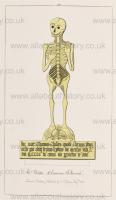
Engravings of Sepulchral Brasses Volume 2. Plate CVI. Thomas Childes, In St. Lawrence's Church [Map], Norwich, 1452.
Blomefield's Norf. iv. 267.
Though little can be said in favour of the knowledge or execution displayed in these figures, the moral intention is deserving of praise. It was wished to remind men that the robes of pride will shortly be exchanged for the winding-sheet, and that beauty and strength are hastening to the period when they will become as the spectre before them. This species of memorial [Cadaver] appeared in stone effigies, in the preceding century, on the tomb of an ecclesiastic; but that before us is the first I meet with in brass, and it may be considered early; for Gough, i. 112, says, that the oldest figure he knows of a skeleton in brass, is A. D. 1471. Of Thomas Childes himself, I find nothing more than is mentioned in the epitaph.
St Saviour's Church, Norwich is also in Churches in Norfolk.
On 6th August 1504 Archbishop Matthew Parker was born in St Saviour's Church, Norwich [Map].
In 1706 Bishop Thomas Tanner [aged 31] was appointed Rector of Thorpe, Norwich.