

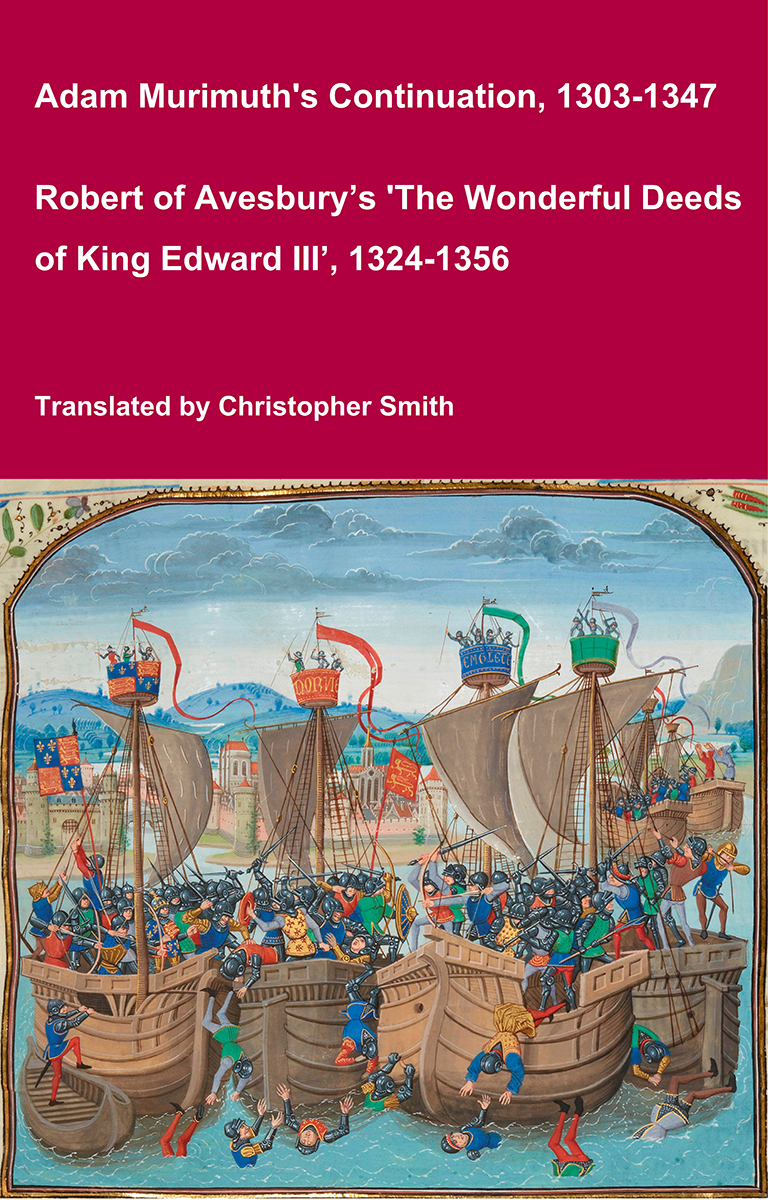
Adam Murimuth's Continuation and Robert of Avesbury’s 'The Wonderful Deeds of King Edward III'
This volume brings together two of the most important contemporary chronicles for the reign of Edward III and the opening phases of the Hundred Years’ War. Written in Latin by English clerical observers, these texts provide a vivid and authoritative window into the political, diplomatic, and military history of fourteenth-century England and its continental ambitions. Adam Murimuth Continuatio's Chronicarum continues an earlier chronicle into the mid-fourteenth century, offering concise but valuable notices on royal policy, foreign relations, and ecclesiastical affairs. Its annalistic structure makes it especially useful for establishing chronology and tracing the development of events year by year. Complementing it, Robert of Avesbury’s De gestis mirabilibus regis Edwardi tertii is a rich documentary chronicle preserving letters, treaties, and official records alongside narrative passages. It is an indispensable source for understanding Edward III’s claim to the French crown, the conduct of war, and the mechanisms of medieval diplomacy. Together, these works offer scholars, students, and enthusiasts a reliable and unembellished account of a transformative period in English and European history. Essential for anyone interested in medieval chronicles, the Hundred Years’ War, or the reign of Edward III.
Available at Amazon in eBook and Paperback format.
St Barnabas Church, Stock Gaylard is in Stock Gaylard, Dorset, Churches in Dorset.
Before 1400. St Barnabas Church, Stock Gaylard [Map]. Effigy of Ingelramus de Waleys. Early Medieval Period. When the tomb was opened a chamber measuring 4' x 1'6 by 1' was found beneath the effigy. The chamber contained a dismembered skeleton and fragments of red leather believed to be the bag in which Ingelramus' bones were brought back from the Holy Land for burial. Right Leg over Left.


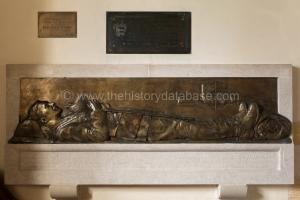
After 1917. St Barnabas Church, Stock Gaylard [Map]. Memorial to Captain Harry Farr Yeatman. Son of Harry Yeatman RN 1839-1884 whose memorial is above. Captain in the Dorsetshire Yeomanry. Killed 21st November 1917 in sight of Jerusalem. Buried Jerusalem.
Yeatman's Regiment, like the rest of the 6th Mounted Brigade, withdrew to Beit Ur al Fauqa where it received orders to advance towards Beitunia (Beituniye), nine miles north of Jerusalem and a few miles south-west of Bireh, on 21 November 1917. At about 11.30 hours the 6th Mounted Brigade, led by Yeatman's 1/1st Dorset Yeomanry, began to descend from the hills but found themselves held up once again by the western slopes of the Zeitun Ridge. The fighting here went on until late in the winter afternoon and involved several failed attempts to take the ridge. But at about 16.40 hours, Turkish reinforcements arrived and immediately counter-attacked, forcing the exhausted men of the Mounted Yeomanry Brigade, who had been holding an advanced position all day, to retire. During their withdrawal, Yeatman's Regiment lost seven officers and 44 ORs killed, wounded or missing and although its War Diary does not mention Yeatman by name, later reports confirm that when one of his men was wounded during the withdrawal, Yeatman went out to bring him in under heavy fire and was killed in action, aged 37. He is buried in Jerusalem War Cemetery, Grave E.56. His obituary in The Times says that at the time of his death, he was to be recommended for the MC. He left £3,762 13s 2d. The Zeitun Ridge was the scene of more fierce fighting and would not be taken until 27 December 1917.