

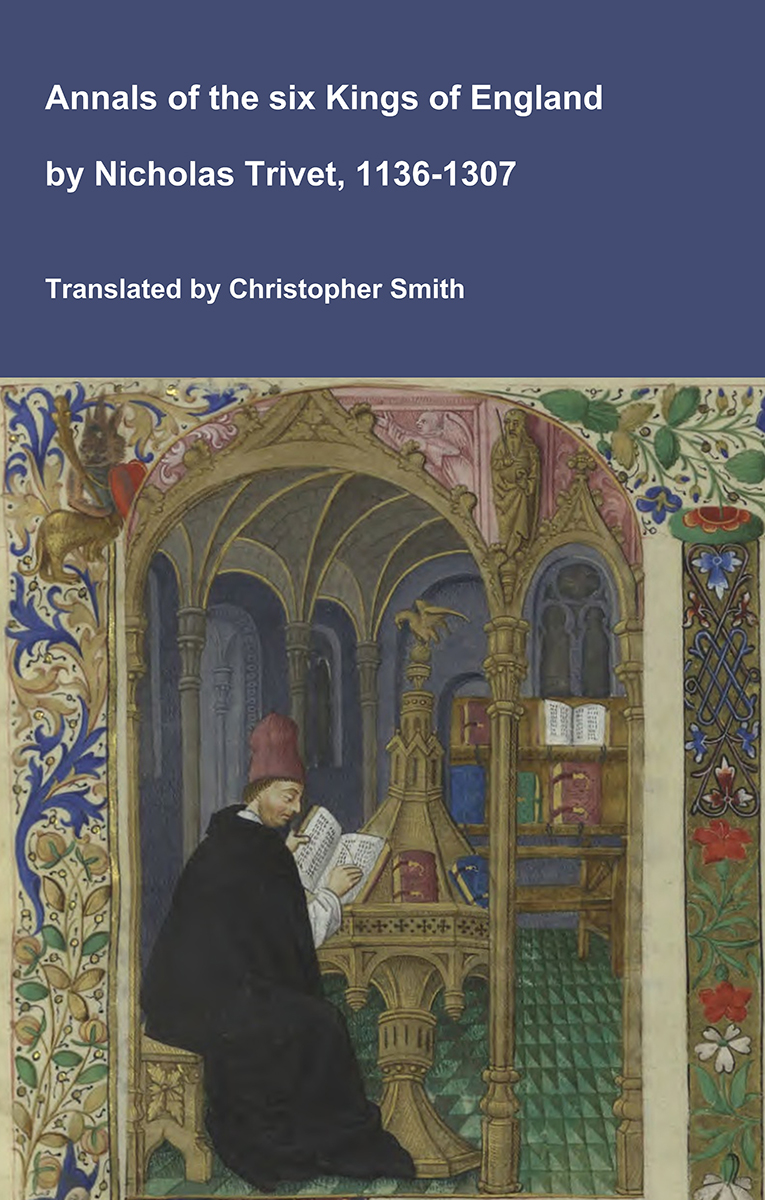
Annals of the six Kings of England by Nicholas Trivet
Translation of the Annals of the Six Kings of England by that traces the rise and rule of the Angevin aka Plantagenet dynasty from the mid-12th to early 14th century. Written by the Dominican scholar Nicholas Trivet, the work offers a vivid account of English history from the reign of King Stephen through to the death of King Edward I, blending political narrative with moral reflection. Covering the reigns of six monarchs—from Stephen to Edward I—the chronicle explores royal authority, rebellion, war, and the shifting balance between crown, church, and nobility. Trivet provides detailed insight into defining moments such as baronial conflicts, Anglo-French rivalry, and the consolidation of royal power under Edward I, whose reign he describes with particular immediacy. The Annals combines careful year-by-year reporting with thoughtful interpretation, presenting history not merely as a sequence of events but as a moral and political lesson. Ideal for readers interested in medieval history, kingship, and the origins of the English state, this chronicle remains a valuable and accessible window into the turbulent world of the Plantagenet kings.
Available at Amazon in eBook and Paperback format.
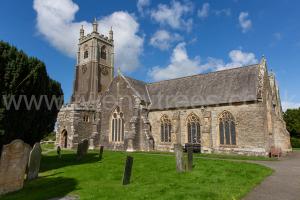
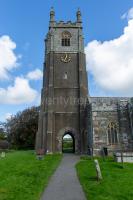
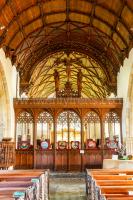
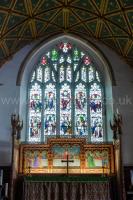
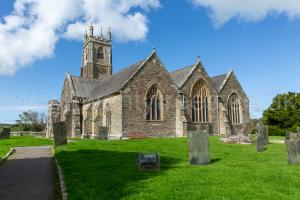
St Columb's Church, St Columb is in St Columb Major, Cornwall.
St Columb's Church, St Columb.
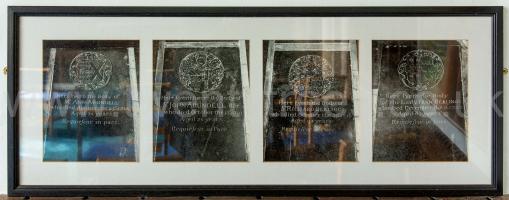
Photographs of the ledger stones at St Columb's Church, St Columb of members of the Arundell and Bellings-Arundell family, left to right: Anne Gage (age 17), John Arundell of Lanherne (age 78), Richard Bellings (age 79) and Frances Arundell (age 41).

1st March 1915. Memorial at St Columb's Church, St Columb to Walter Drummond Vyvyan, killed on the 1st March 1915. His parents were Richard Walter Comyn Vyvyan and Mary (née Foster). Walter was educated at Clifton College, Bedford Grammar School and RMC Sandhurst from where he was gazetted, in May 1907, to the King's Shropshire Light Infantry. Initially joining the 1st Battalion at Bordon, he was sent to the 2nd Battalion in India in September 1909, being promoted to Lieutenant in March 1910. After returning to England in November 1914, he was sent to France in December and, while his battalion was at Winchester preparing for front-line service, Walter was attached to the Army Cyclists of the 27th Division where he was to command a platoon of bombers. On the night of 1 March 1915, Walter was with his men at the head of an attack made by another battalion on German trenches near St Eloi (just south of Ypres) when he was killed by machine-gun fire. Owing to this fire it proved impossible to recover his body. For this action, Lt. Vyvyan was mentioned in the Dispatches of Sir John French of 31 May 1915 (with the action receiving a mention in the dispatch of 5 April).
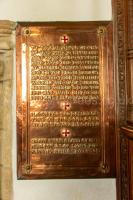
Memorials at St Columb's Church, St Columb.
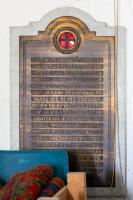
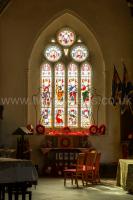

After 11th January 1955. Memorial at St Columb's Church, St Columb. On 11 January 1955, two squadron Shackleton MR.2s (WG531 and WL743) disappeared while operating near Fastnet Rock. Both missing believed to have collided. Eighteen aircrew missing presumed killed. The two Shackletons departed on a routine exercise off Fastnet Rock on the southwest Irish coast. The two maritime patrol aircraft took off from RAF St Eval at 10:14 and 10:20 respectively to carry out search exercises as part of their 15-hour patrol. Radio messages received from the two airplanes through 20:00 that night indicated that they were flying at the prescribed 85 mi (137 km) distance from one another, despite their having departed St. Eval with only six minutes' separation. From 20:58 all contact was lost. A three-day search was conducted, but both aircraft remained missing without a trace, leading to the assumption that there had been a mid-air collision. In 1966, the starboard outer (No. 4) engine of WL743 was recovered about 75 miles north of where authorities had long assumed the collision had occurred.