The Deeds of the Dukes of Normandy
The Gesta Normannorum Ducum [The Deeds of the Dukes of Normandy] is a landmark medieval chronicle tracing the rise and fall of the Norman dynasty from its early roots through the pivotal events surrounding the Norman Conquest of England. Originally penned in Latin by the monk William of Jumièges shortly before 1060 and later expanded at the behest of William the Conqueror, the work chronicles the deeds, politics, battles, and leadership of the Norman dukes, especially William’s own claim to the English throne. The narrative combines earlier historical sources with firsthand information and oral testimony to present an authoritative account of Normandy’s transformation from a Viking settlement into one of medieval Europe’s most powerful realms. William’s history emphasizes the legitimacy, military prowess, and governance of the Norman line, framing their expansion, including the conquest of England, as both divinely sanctioned and noble in purpose. Later chroniclers such as Orderic Vitalis and Robert of Torigni continued the history, extending the coverage into the 12th century, providing broader context on ducal rule and its impact. Today this classic work remains a foundational source for understanding Norman identity, medieval statesmanship, and the historical forces that reshaped England and Western Europe between 800AD and 1100AD.
Available at Amazon in eBook and Paperback format.
St James' Church, Kinnersley is in Kinnersley, Herefordshire, Churches in Herefordshire.
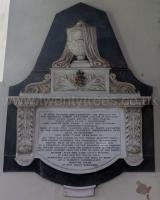
Monument at St James' Church, Kinnersley [Map] to Reverend John Clutton.
Reverend John Clutton: In 1694 he was appointed Prebendary of Hereford Cathedral. On 8th July 1760 he was born. In 1785 he was appointed Rector of St James' Church, Kinnersley [Map]. On 7th May 1838 he died.
Around 1300 the Chancel of St James' Church, Kinnersley [Map] was constructed.
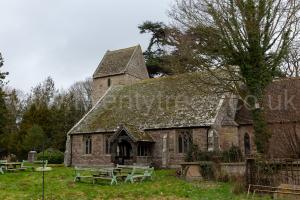
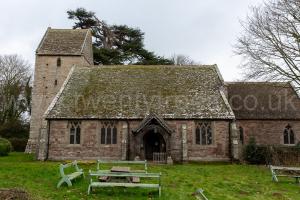
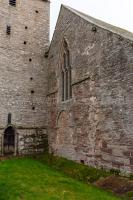
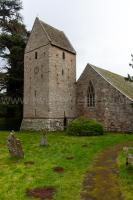
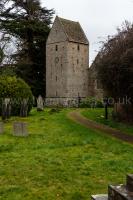
Around 1350 a Tower was added to St James' Church, Kinnersley [Map], its style being typical of churches of the Welsh March ie strong and defensive.
After 1633. Monument at St James' Church, Kinnersley [Map] to Francis Smallman [aged 68] and his wife Susan Stockmede commissioned by their son William Smallman of Kinnersley Castle [aged 18].
Susan Stockmede: Around 1565 she was born. Before 1615 Francis Smallman and she were married. On 11th August 1632 she died.
William Smallman of Kinnersley Castle: Around 1615 he was born to Francis Smallman and Susan Stockmede. On 29th September 1631 he and Lucy Whitney were married at St Giles without Cripplegate Church [Map]. They had two daughters. On 7th September 1633 Francis Smallman died. He was buried at St James' Church, Kinnersley [Map] on 9th September 1633. He had made his will on 20th July 1633 leaving his only daughter a portion of £1,000. His son William Smallman of Kinnersley Castle inherited Kinnersley Castle, Herefordshire [Map]. In 1643 he died. Lucy Smallman and her husband James Pytts inherited Kinnersley Castle, Herefordshire [Map].
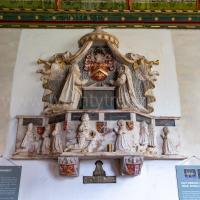
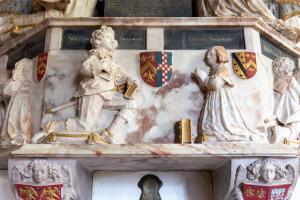
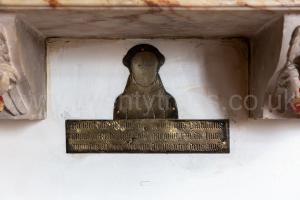
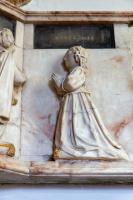
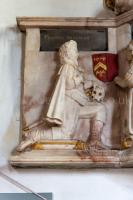
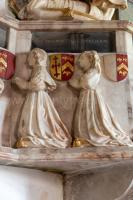
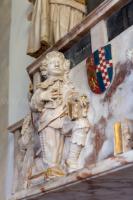
On 7th September 1633 Francis Smallman [aged 68] died. He was buried at St James' Church, Kinnersley [Map] on 9th September 1633. He had made his will on 20th July 1633 leaving his only daughter a portion of £1,000. His son William Smallman of Kinnersley Castle [aged 18] inherited Kinnersley Castle, Herefordshire [Map].
On 29th August 1737 Ann Heathcote [aged 54] died. She was buried at St James' Church, Kinnersley [Map].
On 18th September 1764 Anne Jacobsen Lady Morgan [aged 50] died. She was buried at St James' Church, Kinnersley [Map] where her uncle Theodore Jacobsen commissioned a monument by Nicholas Read [aged 31].
Anne Jacobsen Lady Morgan: In 1714 she was born to Jacob Jacobsen of Walthamstow, Essex and Ann Heathcote. On 17th December 1750 John Morgan 4th Baronet and she were married. She by marriage Lady Morgan of Langattock in Monmouthshire.


After 29th April 1767. Monument at St James' Church, Kinnersley [Map] to John Morgan 4th Baronet [deceased].
In 1785 Reverend John Clutton [aged 24] was appointed Rector of St James' Church, Kinnersley [Map].
On 29th March 1804 John Parkinson [aged 16] died at Winchester College, Winchester. Monument at St James' Church, Kinnersley [Map]
John Parkinson: Around 1788 he was born to Leonard Parkinson at Jamaica.


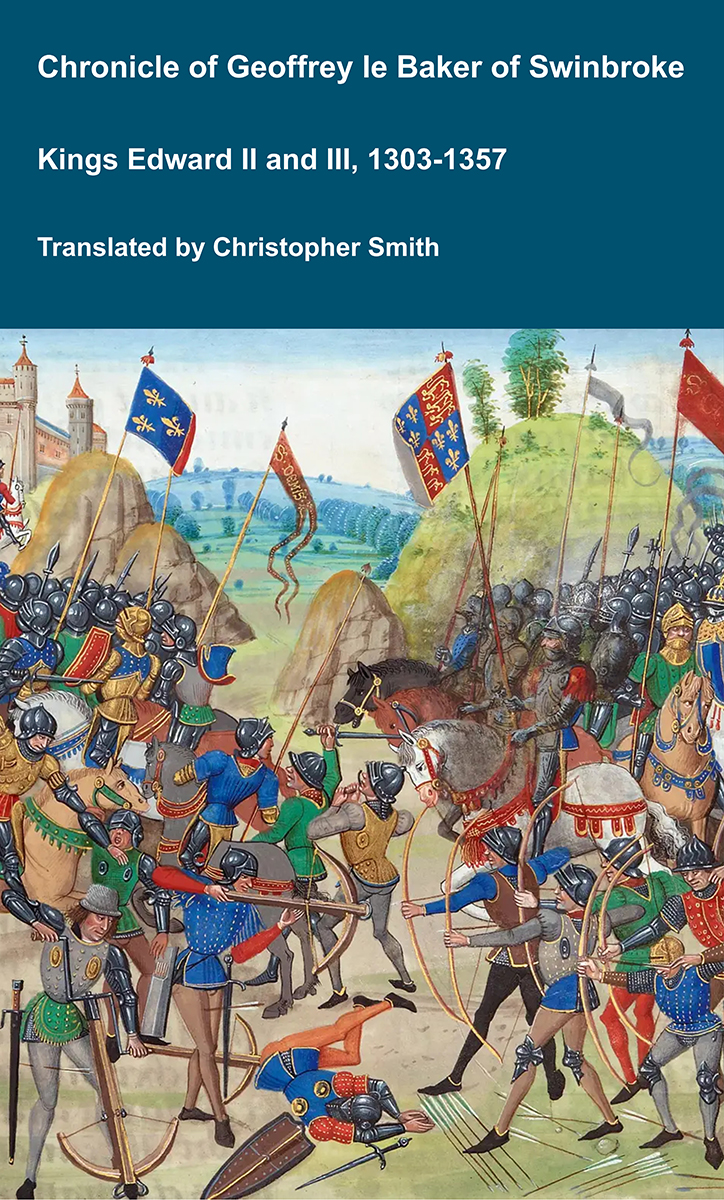
Chronicle of Geoffrey le Baker of Swinbroke
Baker was a secular clerk from Swinbroke, now Swinbrook, an Oxfordshire village two miles east of Burford. His Chronicle describes the events of the period 1303-1356: Gaveston, Bannockburn, Boroughbridge, the murder of King Edward II, the Scottish Wars, Sluys, Crécy, the Black Death, Winchelsea and Poitiers. To quote Herbert Bruce 'it possesses a vigorous and characteristic style, and its value for particular events between 1303 and 1356 has been recognised by its editor and by subsequent writers'. The book provides remarkable detail about the events it describes. Baker's text has been augmented with hundreds of notes, including extracts from other contemporary chronicles, such as the Annales Londonienses, Annales Paulini, Murimuth, Lanercost, Avesbury, Guisborough and Froissart to enrich the reader's understanding. The translation takes as its source the 'Chronicon Galfridi le Baker de Swynebroke' published in 1889, edited by Edward Maunde Thompson.
Available at Amazon in eBook and Paperback format.
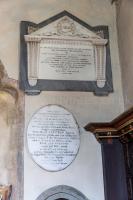
After 1806. Monuments at St James' Church, Kinnersley [Map] to the Clutton family.
From 1873 the interior of St James' Church, Kinnersley [Map] was revised by George Frederick Bodley [aged 45] working with the Reverend Frederick Andrews. Reredos by George Frederick Bodley. Altar Jacobean.
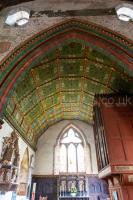
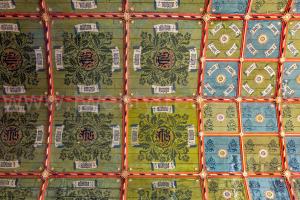
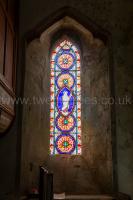
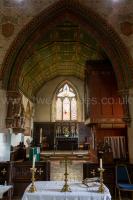
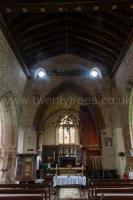
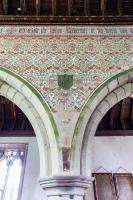
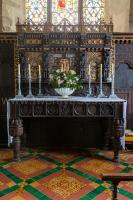
In 1873 Reverend Frederick Andrews was appointed Vicar of St James' Church, Kinnersley [Map].
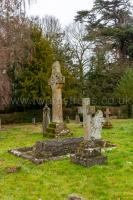
On 21st October 1907 George Frederick Bodley [aged 80] died at Water Eaton, Oxfordshire. He was buried in the churchyard of St James' Church, Kinnersley [Map].
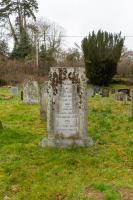
In 1920 Reverend Frederick Andrews died. He was buried in the churchyard of St James' Church, Kinnersley [Map].
Graves of George Frederick Bodley, flat, next to the large cross, and Reverend Frederick Andrews in the churchyard of St James' Church, Kinnersley [Map].
Reverend Frederick Andrews: In 1873 he was appointed Vicar of St James' Church, Kinnersley [Map]. In 1920 he died. He was buried in the churchyard of St James' Church, Kinnersley [Map].