The Deeds of the Dukes of Normandy
The Gesta Normannorum Ducum [The Deeds of the Dukes of Normandy] is a landmark medieval chronicle tracing the rise and fall of the Norman dynasty from its early roots through the pivotal events surrounding the Norman Conquest of England. Originally penned in Latin by the monk William of Jumièges shortly before 1060 and later expanded at the behest of William the Conqueror, the work chronicles the deeds, politics, battles, and leadership of the Norman dukes, especially William’s own claim to the English throne. The narrative combines earlier historical sources with firsthand information and oral testimony to present an authoritative account of Normandy’s transformation from a Viking settlement into one of medieval Europe’s most powerful realms. William’s history emphasizes the legitimacy, military prowess, and governance of the Norman line, framing their expansion, including the conquest of England, as both divinely sanctioned and noble in purpose. Later chroniclers such as Orderic Vitalis and Robert of Torigni continued the history, extending the coverage into the 12th century, providing broader context on ducal rule and its impact. Today this classic work remains a foundational source for understanding Norman identity, medieval statesmanship, and the historical forces that reshaped England and Western Europe between 800AD and 1100AD.
Available at Amazon in eBook and Paperback format.
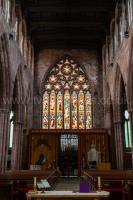
St Mary's Church, Nantwich is in Nantwich, Cheshire [Map], Churches in Cheshire.
Around 1340 the building of the current St Mary's Church, Nantwich [Map] was commenced in the Decorated Style. Interrupted by the Black Death the building was completed in the Perpendiucalr Style around 1400.
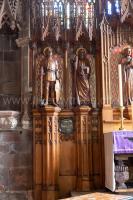
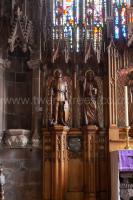
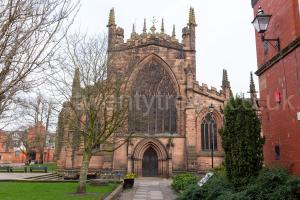
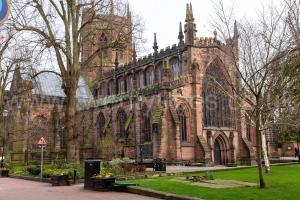
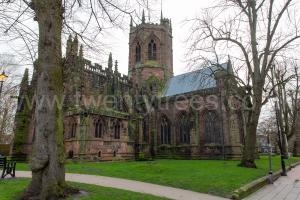
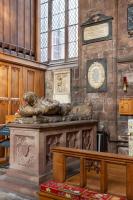
Around 1384. St Mary's Church, Nantwich [Map]. Alabaster monument to David Craddock, Mayor of Bordeaux, Justicar of Wales and a money-lender to Richard II, found buried under the chancel floor during the 19th-century restoration.
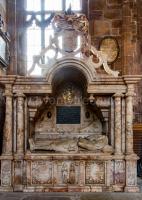
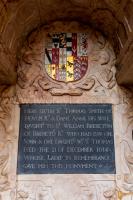
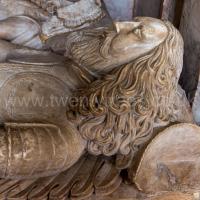
After 21st December 1614. St Mary's Church, Nantwich [Map]. Monument to Thomas Smith of Hough in Cheshire commissioned by his wife Anne Brereton. The monument, carved by Hugh Hall, was originally in St Chad's Church, Wybunbury [Map] but moved to Nantwich in 1982. Stuart Period.
Thomas Smith of Hough in Cheshire: Around 1545 he was born to Lawrence Smith and Anne Fouleshurst. On 21st January 1561 he and Anne Brereton were married. On 21st June 1614 he died. Notes of the Churches of Cheshire. The alabaster tomb [at St Chad's Church, Wybunbury [Map]] with two recumbent effigies of a knight in plate armour, and lady, has the inscription: Here lyeth Sr Thomas Smith of Haigh Kt and Dame Anne his wife daughter to Sr William Brereton of Brereton Kt who had issue one sonn and one daught'r wch Sr Thomas died the 21st of December 1614 whose ladie in remembrance gave him this monument.
Anne Brereton: In December 1546 she was born to William Brereton and Jane Warburton. After 1614 Anne Brereton died.
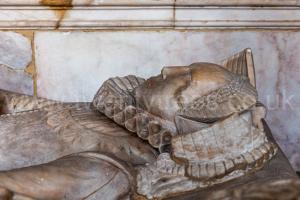
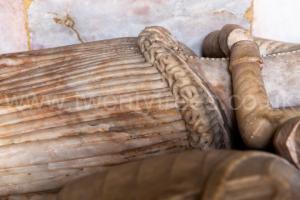
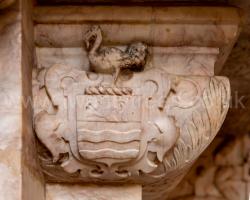
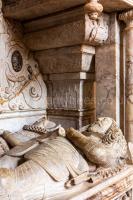
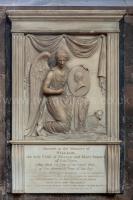
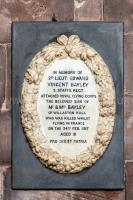
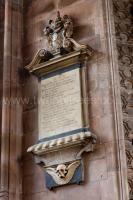
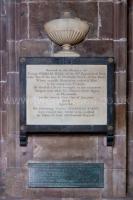
After 1807. St Mary's Church, Nantwich [Map]. Monuments to William Sprout, Edward Vincent Bayley, Roger Wilbraham and others.