

William of Worcester's Chronicle of England
William of Worcester, born around 1415, and died around 1482 was secretary to John Fastolf, the renowned soldier of the Hundred Years War, during which time he collected documents, letters, and wrote a record of events. Following their return to England in 1440 William was witness to major events. Twice in his chronicle he uses the first person: 1. when writing about the murder of Thomas, 7th Baron Scales, in 1460, he writes '… and I saw him lying naked in the cemetery near the porch of the church of St. Mary Overie in Southwark …' and 2. describing King Edward IV's entry into London in 1461 he writes '… proclaimed that all the people themselves were to recognize and acknowledge Edward as king. I was present and heard this, and immediately went down with them into the city'. William’s Chronicle is rich in detail. It is the source of much information about the Wars of the Roses, including the term 'Diabolical Marriage' to describe the marriage of Queen Elizabeth Woodville’s brother John’s marriage to Katherine, Dowager Duchess of Norfolk, he aged twenty, she sixty-five or more, and the story about a paper crown being placed in mockery on the severed head of Richard, 3rd Duke of York.
Available at Amazon in eBook and Paperback format.
St Peter's Church, Shelford is in Shelford, Nottinghamshire [Map], Churches in Nottinghamshire.
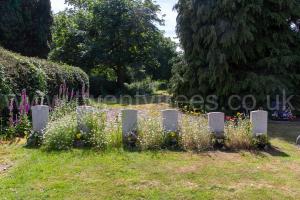
St Peter's Church, Shelford [Map]. Commonwealth War Graves.
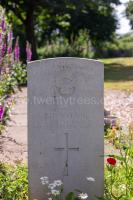
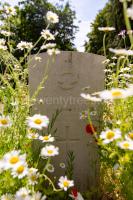
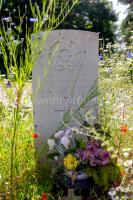
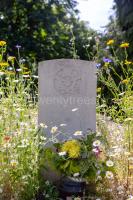
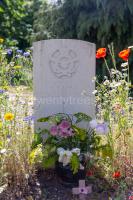
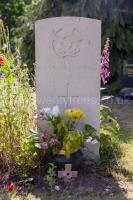
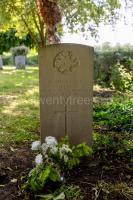
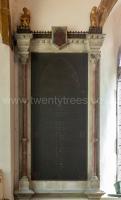
St Peter's Church, Shelford [Map]. Monument to unknown person.
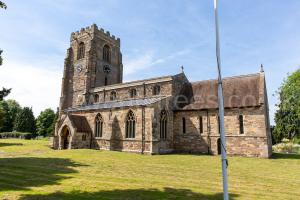
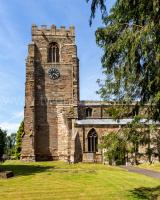
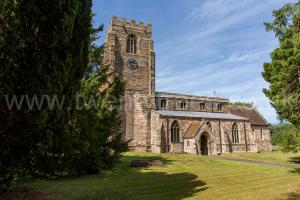
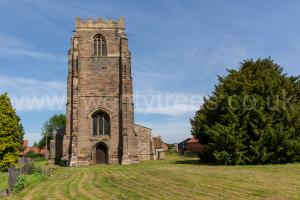
St Peter's Church, Shelford [Map]. Exterior.
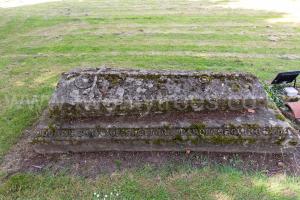
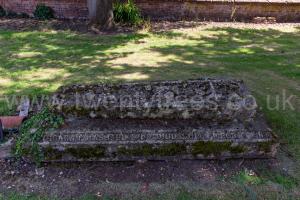
St Peter's Church, Shelford [Map]. Interior.
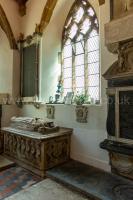
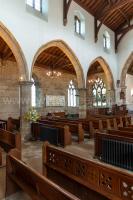
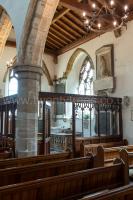
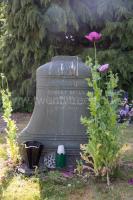
St Peter's Church, Shelford [Map]. Grave of Bellringer Robert Brian Mills.
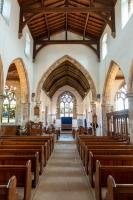
Interior of St Peter's Church, Shelford [Map].
Around 900. St Peter's Church, Shelford [Map]. Saxon Cross.
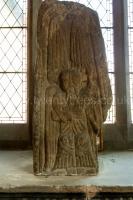
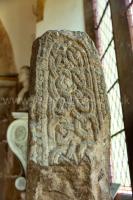
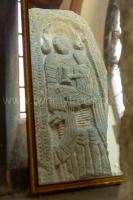
In 1244 Bishop Oliver Sutton [aged 25] held the living of St Peter's Church, Shelford [Map] as a sub-deacon.
After 1588. St Peter's Church, Shelford [Map]. Alabaster Monument to Anne Rawson [aged 73]. Carved by Richard and Gabriel Royley of Burton-upon-Trent.


The quartered  Stanhope Arms impaled with Rawson Arms: Gules, a four square castle in perspective with as many towers and cupolas one at each angle or standing in water azure.
The History of William Marshal was commissioned by his son shortly after William’s death in 1219 to celebrate the Marshal’s remarkable life; it is an authentic, contemporary voice. The manuscript was discovered in 1861 by French historian Paul Meyer. Meyer published the manuscript in its original Anglo-French in 1891 in two books. This book is a line by line translation of the first of Meyer’s books; lines 1-10152. Book 1 of the History begins in 1139 and ends in 1194. It describes the events of the Anarchy, the role of William’s father John, John’s marriages, William’s childhood, his role as a hostage at the siege of Newbury, his injury and imprisonment in Poitou where he met Eleanor of Aquitaine and his life as a knight errant. It continues with the accusation against him of an improper relationship with Margaret, wife of Henry the Young King, his exile, and return, the death of Henry the Young King, the rebellion of Richard, the future King Richard I, war with France, the death of King Henry II, and the capture of King Richard, and the rebellion of John, the future King John. It ends with the release of King Richard and the death of John Marshal.
Available at Amazon in eBook and Paperback format.
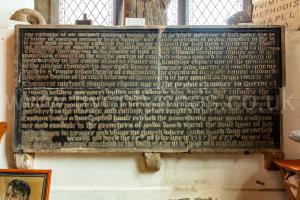
After 1588. St Peter's Church, Shelford [Map]. Memorial inscription to Michael Stanhope and Anne Rawson [aged 73].
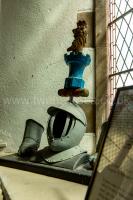
After 1596. St Peter's Church, Shelford [Map]. Helm and gauntlets of Thomas Stanhope [aged 56].
After 1636. St Peter's Church, Shelford [Map]. Monument to Catherine Hastings Countess Chesterfield. Foliate surround to the inscription flanked by single vase pilasters with decorative capitals supporting the segmental pediment containing shield of arms. The apron has a decorative swag.
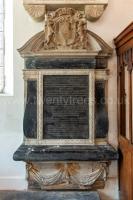

On or before 18th March 1758 Mary Thornhagh died. She was buried on 18th March 1758 at St Peter's Church, Shelford [Map].
In 1759 Charles Stanhope [aged 59] died. He was buried at St Peter's Church, Shelford [Map].
On 7th March 1770 Colonel Thomas Stanhope [aged 52] died. He was buried at St Peter's Church, Shelford [Map].
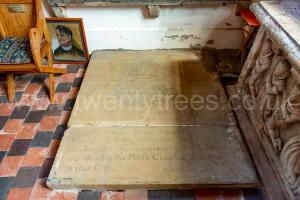
After 1800. St Peter's Church, Shelford [Map]. Memorial grave slab to Arthur Charles Stanhope, his first two wives Mary Thornhagh and Margaret Headlam, and his brothers Colonel Thomas Stanhope, Lovell Stanhope and Ferdinand Stanhope.
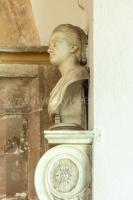
After 1800. St Peter's Church, Shelford [Map]. Monument to Elizabeth Stanhope. Bust sculpted by Joseph Nollekens [aged 62].
Elizabeth Stanhope: she was born to William Stanhope and Anne Hussey Delaval. In 1734 John Ellis and she were married. In November 1747 Welbore Ellis 1st Baron Mendip and she were married. In August 1761 Elizabeth Stanhope died.
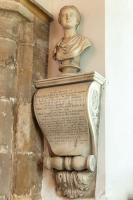
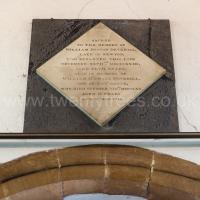
After 1823. St Peter's Church, Shelford [Map]. Memorial to William Hooton Deverill and his son William Hassall Deverill.
1825. St Peter's Church, Shelford [Map]. Monument to Georgiana Stanhope. Sculpted by Francis Leggatt Chantrey [aged 43].
Georgiana Stanhope: she was born to Philip Stanhope 5th Earl Chesterfield and Henrietta Thynne. On 14th November 1820 Frederick Richard West and she were married. She the daughter of Philip Stanhope 5th Earl Chesterfield and Henrietta Thynne. On 14th August 1824 Georgiana Stanhope died.
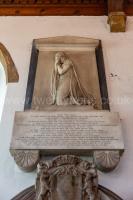
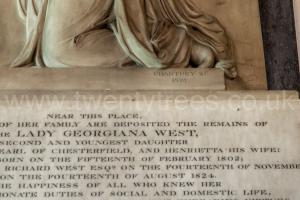
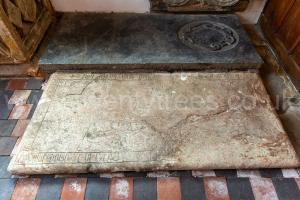
1825. St Peter's Church, Shelford [Map]. Grave slabs to unknown persons.
Jean de Waurin's Chronicle of England Volume 6 Books 3-6: The Wars of the Roses
Jean de Waurin was a French Chronicler, from the Artois region, who was born around 1400, and died around 1474. Waurin’s Chronicle of England, Volume 6, covering the period 1450 to 1471, from which we have selected and translated Chapters relating to the Wars of the Roses, provides a vivid, original, contemporary description of key events some of which he witnessed first-hand, some of which he was told by the key people involved with whom Waurin had a personal relationship.
Available at Amazon in eBook and Paperback format.
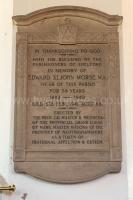
After 1940. St Peter's Church, Shelford [Map]. Memorial to Vicar Edward St John Morse.
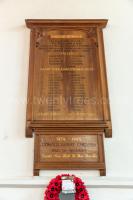
After 1945. St Peter's Church, Shelford [Map]. Memorials to those who died in World Wars One and Two.


