

The Deeds of the Dukes of Normandy
The Gesta Normannorum Ducum [The Deeds of the Dukes of Normandy] is a landmark medieval chronicle tracing the rise and fall of the Norman dynasty from its early roots through the pivotal events surrounding the Norman Conquest of England. Originally penned in Latin by the monk William of Jumièges shortly before 1060 and later expanded at the behest of William the Conqueror, the work chronicles the deeds, politics, battles, and leadership of the Norman dukes, especially William’s own claim to the English throne. The narrative combines earlier historical sources with firsthand information and oral testimony to present an authoritative account of Normandy’s transformation from a Viking settlement into one of medieval Europe’s most powerful realms. William’s history emphasizes the legitimacy, military prowess, and governance of the Norman line, framing their expansion, including the conquest of England, as both divinely sanctioned and noble in purpose. Later chroniclers such as Orderic Vitalis and Robert of Torigni continued the history, extending the coverage into the 12th century, providing broader context on ducal rule and its impact. Today this classic work remains a foundational source for understanding Norman identity, medieval statesmanship, and the historical forces that reshaped England and Western Europe between 800AD and 1100AD.
Available at Amazon in eBook and Paperback format.
Stafford, Staffordshire is in Staffordshire.
See: , Baswich, Stafford [Map], Bromwich Hall, Stafford, St Mary's Church Stafford [Map], St Thomas' Priory, Stafford [Map], Stafford Castle.
Anglo-Saxon Chronicle. 913. This year, about Martinmas, King Edward (age 39) had the northern fortress built at Hertford [Map], betwixt the Memer, and the Benwic, and the Lea. After this, in the summer, betwixt gang-days and midsummer, went King Edward with some of his force into Essex, to Maldon [Map]; and encamped there the while that men built and fortified the town of Witham [Map]. And many of the people submitted to him, who were before under the power of the Danes. And some of his force, meanwhile, built the fortress at Hertford [Map] on the south side of the Lea. This year by the permission of God went Ethelfleda (age 43), lady of Mercia, with all the Mercians to Tamworth [Map]; and built the fort there in the fore-part of the summer; and before Lammas that at Stafford [Map]: in the next year that at Eddesbury [Map], in the beginning of the summer; and the same year, late in the autumn, that at Warwick [Map]. Then in the following year was built, after mid-winter, that at Chirbury and that at Warburton; and the same year before mid-winter that at Runkorn [Map].
In 1081 Nicholas Stafford was born to Robert Stafford (age 42) and Avice de Clare (age 37) at Stafford, Staffordshire [Map]. He married Maud Meolte and had issue.
Around 1120 Juliana Stafford was born to Nicholas Stafford (age 39) and Maud Meolte at Stafford, Staffordshire [Map].
In 1125 Richard Stafford was born to Robert II Stafford (age 18) and Avice Anastasia Unknown at Stafford, Staffordshire [Map]. He married Annabilla Lancashire and had issue.
Around 1142 Robert III Stafford was born to Robert II Stafford (age 35) and Avice Anastasia Unknown at Stafford, Staffordshire [Map]. He married Basilia Unknown.
Around 1153 Millicent Stafford was born to Robert II Stafford (age 46) and Avice Anastasia Unknown at Stafford, Staffordshire [Map]. She married Hervey Bagot and had issue.
In 1153 Hervey Bagot was born at Stafford, Staffordshire [Map].
In 1154 Annabilla Stafford was born to Richard Stafford (age 29) and Annabilla Lancashire at Stafford, Staffordshire [Map].
In January 1224 Millicent Stafford (age 71) died at Stafford, Staffordshire [Map].
On 6th July 1336 Katherine Hastings Baroness Stafford (age 32) died at Stafford, Staffordshire [Map].
On 30th September 1487 John Sutton 1st Baron Dudley (age 86) died at Stafford, Staffordshire [Map]. He was buried at Dudley Priory [Map]. His grandson Edward (age 28) succeeded 2nd Baron Dudley.
The River Sow rises near Fair Oak, Staffordshire [Map]. From there it flows past Outlands, Staffordshire [Map], Bishops Offley, Staffordshire [Map], Copmere End, Staffordshire [Map], Eccleshall Castle, Staffordshire [Map], Chebsey, Staffordshire [Map], Little Bridgeford, Staffordshire [Map], Great Bridgeford, Staffordshire [Map], Stafford, Staffordshire [Map] to Baswich, Stafford [Map] where it is joined by the River Penk.
After Baswich the River Penk flows past Milford, Staffordshire [Map] to Essex Bridge [Map] where it joins the River Trent.
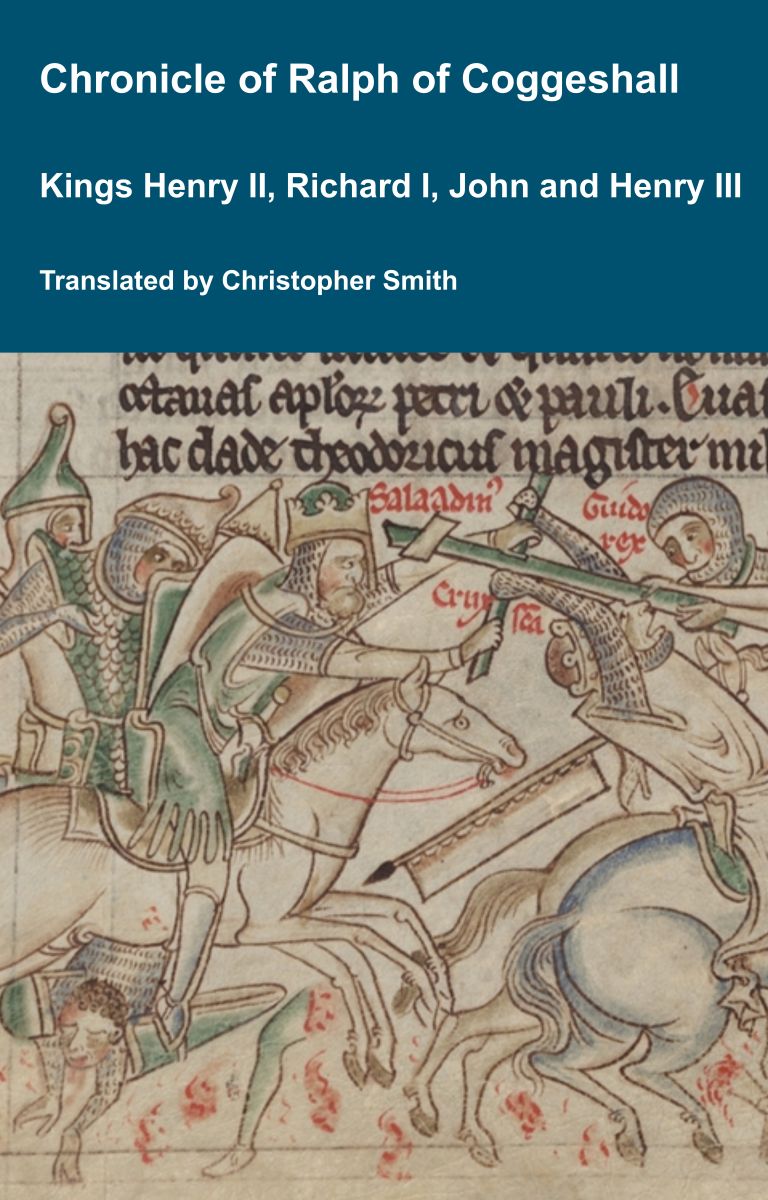
Chronicle of Abbot Ralph of Coggeshall
The Chronicle of Abbot Ralph of Coggeshall (Chronicon Anglicanum) is an indispensable medieval history that brings to life centuries of English and European affairs through the eyes of a learned Cistercian monk. Ralph of Coggeshall, abbot of the Abbey of Coggeshall in Essex in the early 13th century, continued and expanded his community’s chronicle, documenting events from the Norman Conquest of 1066 into the tumultuous reign of King Henry III. Blending eyewitness testimony, careful compilation, and the monastic commitment to record-keeping, this chronicle offers a rare narrative of political intrigue, royal power struggles, and social upheaval in England and beyond. Ralph’s work captures the reigns of pivotal figures such as Richard I and King John, providing invaluable insights into their characters, decisions, and the forces that shaped medieval rule. More than a simple annal, Chronicon Anglicanum conveys the texture of medieval life and governance, making it a rich source for scholars and readers fascinated by English history, monastic authorship, and the shaping of the medieval world.
Available at Amazon in eBook and Paperback format.
Nicholas Stafford died at Stafford, Staffordshire [Map].
The River Sow rises near Fair Oak, Staffordshire [Map]. From there it flows past Outlands, Staffordshire [Map], Bishops Offley, Staffordshire [Map], Copmere End, Staffordshire [Map], Eccleshall Castle, Staffordshire [Map], Chebsey, Staffordshire [Map], Little Bridgeford, Staffordshire [Map], Great Bridgeford, Staffordshire [Map], Stafford, Staffordshire [Map] to Baswich, Stafford [Map] where it is joined by the River Penk.
After Baswich the River Penk flows past Milford, Staffordshire [Map] to Essex Bridge [Map] where it joins the River Trent.
The River Penk rises near Perton, Staffordshire [Map] from where it flows past Pendeford, Staffordshire [Map], Coven, Staffordshire [Map], Brewood Staffordshire [Map], Stretton, Staffordshire [Map], Penkridge, Staffordshire [Map], Acton Trussell, Staffordshire [Map] to Baswich, Stafford [Map] where it joins the River Sow.
On 7th October 1534 John Stanley (age 64) died at Bromwich Hall, Stafford.
St Mary's Church Stafford is also in Churches in Staffordshire.
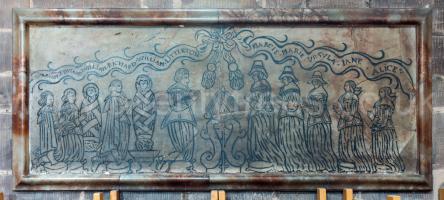
Around 1650. Monument at St Michael's Church, Penkridge [Map] to the family of Richard Drakeford whose eldest son is named Littleton. Apparently there is more of the monument at St Mary's Church Stafford [Map]
St Thomas' Priory, Stafford is also in Priories in England.
Around 1174 St Thomas' Priory, Stafford [Map] was a Augustinian Priory founded by Gerard fitz-Brian, a local landowner and burgess, and settled by canons from Darley Abbey, Derbyshire [Map].
Before 27th April 1279 Robert Ferrers 6th Earl of Derby (age 40) died. Earl Derby extinct. He was buried at St Thomas' Priory, Stafford [Map].
by 1522 Edward Littleton (age 17) was appointed Gentleman Usher. Around the same time he was appointed Constable of Stafford Castle.