

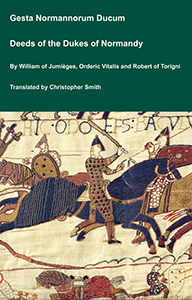
The Deeds of the Dukes of Normandy
The Gesta Normannorum Ducum [The Deeds of the Dukes of Normandy] is a landmark medieval chronicle tracing the rise and fall of the Norman dynasty from its early roots through the pivotal events surrounding the Norman Conquest of England. Originally penned in Latin by the monk William of Jumièges shortly before 1060 and later expanded at the behest of William the Conqueror, the work chronicles the deeds, politics, battles, and leadership of the Norman dukes, especially William’s own claim to the English throne. The narrative combines earlier historical sources with firsthand information and oral testimony to present an authoritative account of Normandy’s transformation from a Viking settlement into one of medieval Europe’s most powerful realms. William’s history emphasizes the legitimacy, military prowess, and governance of the Norman line, framing their expansion, including the conquest of England, as both divinely sanctioned and noble in purpose. Later chroniclers such as Orderic Vitalis and Robert of Torigni continued the history, extending the coverage into the 12th century, providing broader context on ducal rule and its impact. Today this classic work remains a foundational source for understanding Norman identity, medieval statesmanship, and the historical forces that reshaped England and Western Europe between 800AD and 1100AD.
Available at Amazon in eBook and Paperback format.
Wakefield Cathedral is in Wakefield [Map], Cathedrals in England.
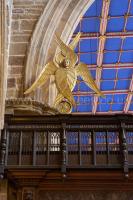
Misericords and Carvings at Wakefield Cathedral [Map].
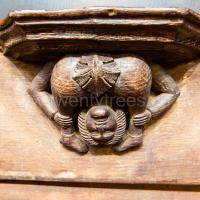
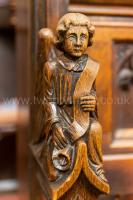
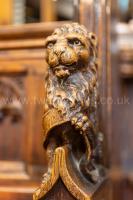
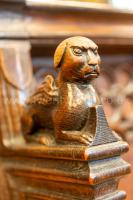
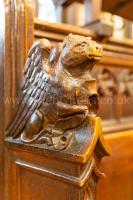
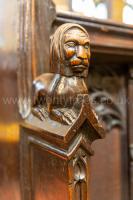
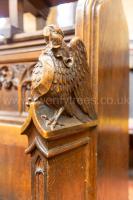
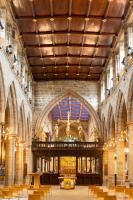
Interior of Wakefield Cathedral [Map].
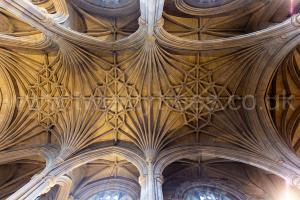
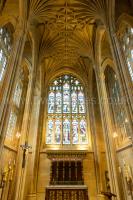
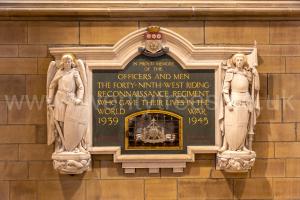
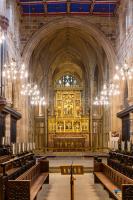
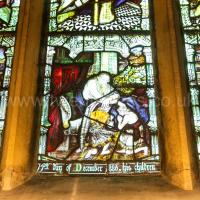
Stained glass with a mistake! at Wakefield Cathedral [Map].
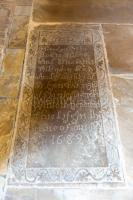
1689. Floor grave of Charles Pilkington and Elizabeth Pilkington at Wakefield Cathedral [Map].
Charles Pilkington: he was born to Lyon Pilkington 3rd Baronet. Possibly a child of his father Lyon Pilkington 2nd Baronet.
Elizabeth Pilkington: he was born to Lyon Pilkington 3rd Baronet. Possibly a child of his father Lyon Pilkington 2nd Baronet.
1714. Monument to Lyon Pilkington 3rd Baronet (age 54) at Wakefield Cathedral [Map]. Elbow Reclining Figure.
Lyon Pilkington 3rd Baronet: Around 1660 he was born to Lyon Pilkington 2nd Baronet. Around 2nd November 1684 Lyon Pilkington 2nd Baronet died. His son Lyon succeeded 3rd Baronet Pilkington of Stanley in Yorkshire. On 7th August 1714 Lyon Pilkington 3rd Baronet died. His son Lyon succeeded 4th Baronet Pilkington of Stanley in Yorkshire. He was buried on 26th June 1716.
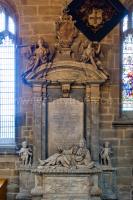
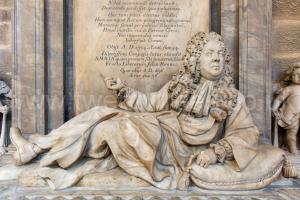
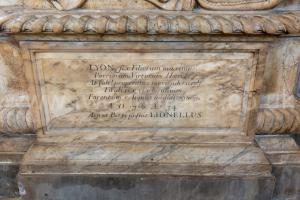
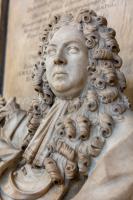
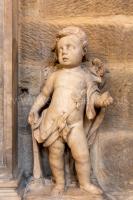
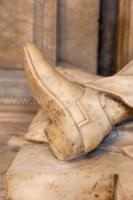
Around 1780. Ingram Family Memorial at Wakefield Cathedral [Map].
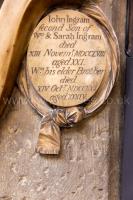
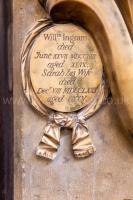
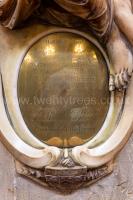
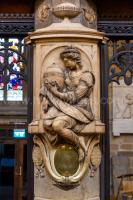
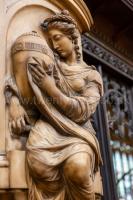
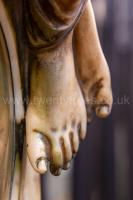
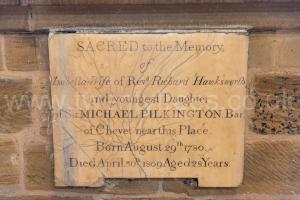
After 30th April 1789. Monument to Isabella Pilkington (age 8) at Wakefield Cathedral [Map].
Isabella Pilkington: On 29th August 1780 she was born to Michael Pilkington 6th Baronet. On 30th April 1809 Isabella Pilkington died.
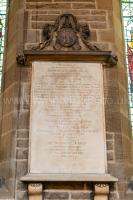
1791. Monument to Samuel Disney and Samuel Disney, second cousins seven and eight times removed, respectively, to Walter Elias "Walt" Disney at Wakefield Cathedral [Map].
Samuel Disney: On 9th June 1705 he was born to Reverend John Disney. On 22nd July 1741 Samuel Disney died.
Samuel Disney: Around 1738 he was born to Samuel Disney. On 10th July 1786 Samuel Disney died.
Walter Elias "Walt" Disney: On 5th December 1901 he was born to Elias Charles Disney. On 5th December 1966 Walter Elias "Walt" Disney died.
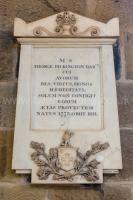
After 1811. Monument to Thomas Pilkington 7th Baronet (age 37) at Wakefield Cathedral [Map].
Thomas Pilkington 7th Baronet: On 7th December 1773 he was born to Michael Pilkington 6th Baronet. On 6th February 1788 Michael Pilkington 6th Baronet died. His son Thomas succeeded 7th Baronet Pilkington of Stanley in Yorkshire. On 1st August 1797 Thomas Pilkington 7th Baronet and Elizabeth Anne Tufnel Lady Pilkington were married. She by marriage Lady Pilkington of Stanley in Yorkshire. On 9th July 1811 Thomas Pilkington 7th Baronet died. His brother William succeeded 8th Baronet Pilkington of Stanley in Yorkshire.
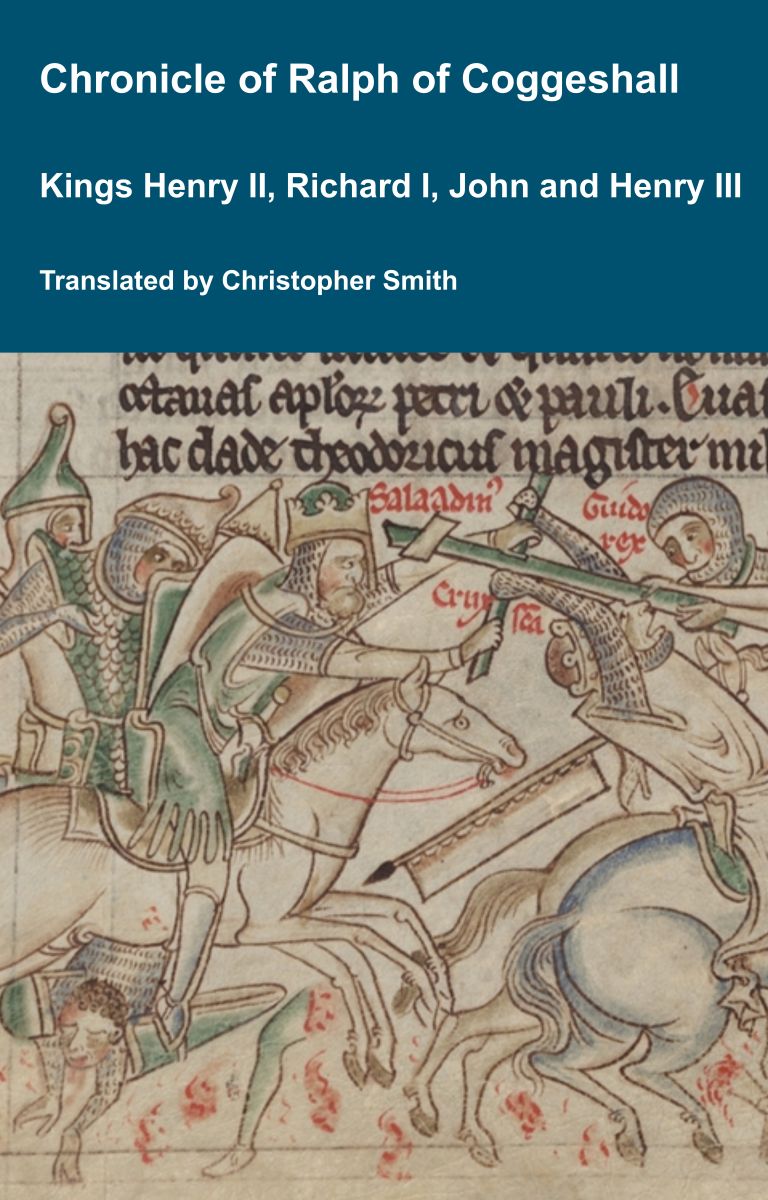
Chronicle of Abbot Ralph of Coggeshall
The Chronicle of Abbot Ralph of Coggeshall (Chronicon Anglicanum) is an indispensable medieval history that brings to life centuries of English and European affairs through the eyes of a learned Cistercian monk. Ralph of Coggeshall, abbot of the Abbey of Coggeshall in Essex in the early 13th century, continued and expanded his community’s chronicle, documenting events from the Norman Conquest of 1066 into the tumultuous reign of King Henry III. Blending eyewitness testimony, careful compilation, and the monastic commitment to record-keeping, this chronicle offers a rare narrative of political intrigue, royal power struggles, and social upheaval in England and beyond. Ralph’s work captures the reigns of pivotal figures such as Richard I and King John, providing invaluable insights into their characters, decisions, and the forces that shaped medieval rule. More than a simple annal, Chronicon Anglicanum conveys the texture of medieval life and governance, making it a rich source for scholars and readers fascinated by English history, monastic authorship, and the shaping of the medieval world.
Available at Amazon in eBook and Paperback format.
After 8th July 1824. Monument in Wakefield Cathedral [Map] to Janet daughter of George Munro of Calderbank, wife of Daniel Maude of Wakfield. Sculpted by Joseph Kendrick (age 70).


1902. Monument to Bishop William Walsham How at Wakefield Cathedral [Map] sculpted by James Nesfield Forsyth (age 38).
Bishop William Walsham How: On 13th December 1823 he was born. In 1889 Bishop William Walsham How was was appointed the first Bishop of Wakefield. On 10th August 1897 he died at Leenane whilst on holiday. He weas buried at Whittington, Shropshire.


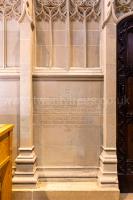
1912. Memorial to Robert Tempest Tempest 3rd Baronet and Tristram Tempest Tempest 4th Baronet at Wakefield Cathedral [Map].
Robert Tempest Tempest 3rd Baronet: In 1836 he was born to Cornwallis Ricketts 2nd Baronet and Henrietta Plumbe Tempest. In 1885 Cornwallis Ricketts 2nd Baronet died. His son Robert succeeded 3rd Baronet Ricketts of The Elms in Gloucestershire and Beaumont Leyes in Leicestershire. On 14th February 1901 Robert Tempest Tempest 3rd Baronet died. His son Tristram succeeded 4th Baronet Ricketts of The Elms in Gloucestershire and Beaumont Leyes in Leicestershire.
Tristram Tempest Tempest 4th Baronet: In 1865 he was born to Robert Tempest Tempest 3rd Baronet. On 23rd June 1909 Tristram Tempest Tempest 4th Baronet died. His uncle Frederick succeeded 5th Baronet Ricketts of The Elms in Gloucestershire and Beaumont Leyes in Leicestershire.