

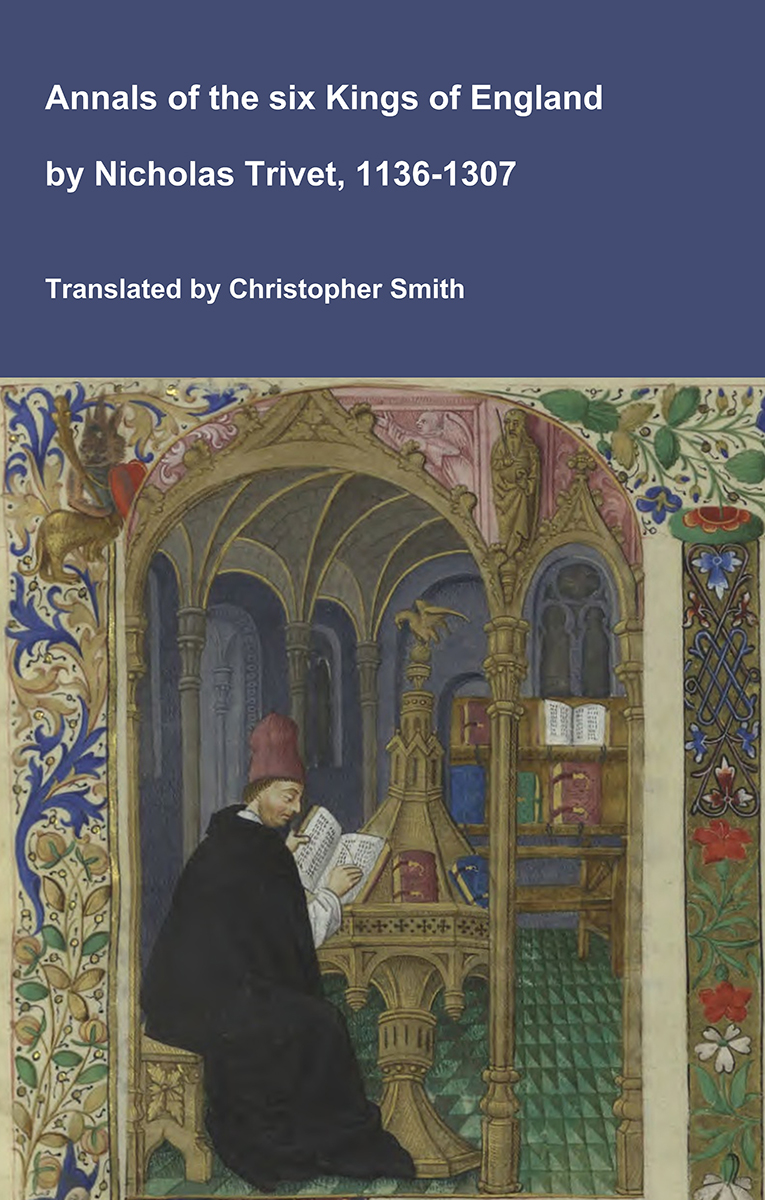
Annals of the six Kings of England by Nicholas Trivet
Translation of the Annals of the Six Kings of England by that traces the rise and rule of the Angevin aka Plantagenet dynasty from the mid-12th to early 14th century. Written by the Dominican scholar Nicholas Trivet, the work offers a vivid account of English history from the reign of King Stephen through to the death of King Edward I, blending political narrative with moral reflection. Covering the reigns of six monarchs—from Stephen to Edward I—the chronicle explores royal authority, rebellion, war, and the shifting balance between crown, church, and nobility. Trivet provides detailed insight into defining moments such as baronial conflicts, Anglo-French rivalry, and the consolidation of royal power under Edward I, whose reign he describes with particular immediacy. The Annals combines careful year-by-year reporting with thoughtful interpretation, presenting history not merely as a sequence of events but as a moral and political lesson. Ideal for readers interested in medieval history, kingship, and the origins of the English state, this chronicle remains a valuable and accessible window into the turbulent world of the Plantagenet kings.
Available at Amazon in eBook and Paperback format.
All Saints' Church, Brocklesby is also in Churches in Lincolnshire.
On 10th August 1875 Charlotte Anderson-Pelham Lady Copley [aged 64] died. She was buried at All Saints' Church, Brocklesby [Map].
All Saints' Church, Brocklesby [Map]. After 1914. Memorial to Charles Pelham [aged 26] sculpted by Charles Sargeant Jagger [aged 28]. Inscription: "Vincit Amor Patrae. To the glory of God and in memory of Charles Sackville Pelham Lord Worsley Lieutenant Royal Horse Guards who fell at Zandvoorde 30th October 1914 aged 27. This monument erected by his sorrowing family and the tenantry of the estate. he died as few men get the chance to die fighting to save a world's morality he died the noblest death a man may die fighting for god and right and liberty and such a death is immortality.
Newsham Abbey, Lincolnshire is also in Abbeys in England.
In 1143 Newsham Abbey, Lincolnshire [Map] was founded by Peter of Gousla in 1143. It was a daughter house of the Abbey of Licques, near Calais, and the first Premonstratensian house established in England.
In 1152 Easby Abbey, Yorkshire [Map] was foundfed by Roald, Constable of Richmond Castle. The Premonstratensians wore a white habit and became known as the White Canons. The Abbey was a daughter house of Newsham Abbey, Lincolnshire [Map]; the third Premonstratensian house founded in England.
The River Till rises near Stow [Map] from where it flows past Sturton by Stow [Map], Broxholme [Map] to Saxilby [Map] where it is joined by the Foss Dyke which provides an inter-connection with the River Trent after which it flows to Lincoln, Lincolnshire [Map] where it joins the River Witham.
St Peter and St Paul Church, Cherry Willingham is also in Churches in Lincolnshire.
St Peter and St Paul Church, Cherry Willingham [Map]. "Monument to Robert Featherby, died 1834, of ashlar with inner 4 centred arch and angel brackets below".
The River Witham rises near South Witham, South Kesteven [Map] from where it flows past North Witham, South Kesteven [Map], Colsterworth, South Kesteven [Map], Easton, South Kesteven [Map] to Great Ponton, South Kesteven [Map] where it is joined by the Cringle Brook.
From Great Ponton, South Kesteven [Map] the River Witham flows through Grantham [Map], Belton, Grantham [Map], past Barkston, South Kesteven [Map], Marston, South Kesteven [Map] and Hougham, South Kesteven [Map], Westborough, South Kesteven [Map], Long Benington, South Kesteven [Map], Claypole, South Kesteven [Map], Beckingham, North Kesteven [Map], Norton Disney, North Kesteven [Map], Bassingham, North Kesteven [Map], Haddington, North Kesteven [Map], Aubourn, North Kesteven [Map] through the centre of Lincoln, Lincolnshire [Map] where it joined by the River Till.
From Lincoln, Lincolnshire [Map] it flows under Five Mile Bridge [Map], past Bardney Abbey [Map], Kirkstead [Map], under Tattershall Bridge [Map] after which it is joined by the River Bain
After Tattershall the River Witham flows through canalised sections under Lanrick Bridge [Map], past Anton's Gowt [Map] to Boston [Map] where it is joined by the South Forty Foot Drain. After Boston [Map] the River Witham flows into the The Wash around eight kilometres away.
In 1837, Huntingdonshire was transferred to the Diocese of Ely and the Bishop of Lincoln's official residence was changed from Bishop of Lincoln's Palace, Buckden [Map] to Riseholme Hall, Lincolnshire, the newly established episcopal palace at Riseholme in Lincolnshire.
In 1851 Bishop John Kaye [aged 67] commissioned the building of St Mary's Church, Riseholme; the Bishops official residence Riseholme Hall was nearby.
On 18th February 1853 Bishop John Kaye [aged 69] died at Riseholme Hall, Lincolnshire. He was buried at St Mary's Church, Riseholme.
In 1851 Bishop John Kaye [aged 67] commissioned the building of St Mary's Church, Riseholme; the Bishops official residence Riseholme Hall was nearby.
Annals of the six Kings of England by Nicholas Trivet
Translation of the Annals of the Six Kings of England by that traces the rise and rule of the Angevin aka Plantagenet dynasty from the mid-12th to early 14th century. Written by the Dominican scholar Nicholas Trivet, the work offers a vivid account of English history from the reign of King Stephen through to the death of King Edward I, blending political narrative with moral reflection. Covering the reigns of six monarchs—from Stephen to Edward I—the chronicle explores royal authority, rebellion, war, and the shifting balance between crown, church, and nobility. Trivet provides detailed insight into defining moments such as baronial conflicts, Anglo-French rivalry, and the consolidation of royal power under Edward I, whose reign he describes with particular immediacy. The Annals combines careful year-by-year reporting with thoughtful interpretation, presenting history not merely as a sequence of events but as a moral and political lesson. Ideal for readers interested in medieval history, kingship, and the origins of the English state, this chronicle remains a valuable and accessible window into the turbulent world of the Plantagenet kings.
Available at Amazon in eBook and Paperback format.
On 18th February 1853 Bishop John Kaye [aged 69] died at Riseholme Hall, Lincolnshire. He was buried at St Mary's Church, Riseholme.

On 20th March 1885 Bishop Christopher Wordsworth [aged 77] died. He was buried at St Mary's Church, Riseholme. Monument at Lincoln Cathedral [Map] where he has a monument by Bodley and Garner. The design by Thomas Garner is supposed to have been influenced by the nearby Burghersh tombs.
Bishop Christopher Wordsworth: On 30th October 1807 he was born to Christopher Wordsworth and Priscilla Lloyd. On 22nd February 1869 he was appointed Bishop of Lincoln. On 24th February 1869 Bishop Christopher Wordsworth was ordained and consecrated Bishop of Lincoln by Archbishop Campbell Tait.
The River Till rises near Stow [Map] from where it flows past Sturton by Stow [Map], Broxholme [Map] to Saxilby [Map] where it is joined by the Foss Dyke which provides an inter-connection with the River Trent after which it flows to Lincoln, Lincolnshire [Map] where it joins the River Witham.
Sixhills Monastery [Map] was founded in the 12th Century as a nunnery of the Gilbertine Order.
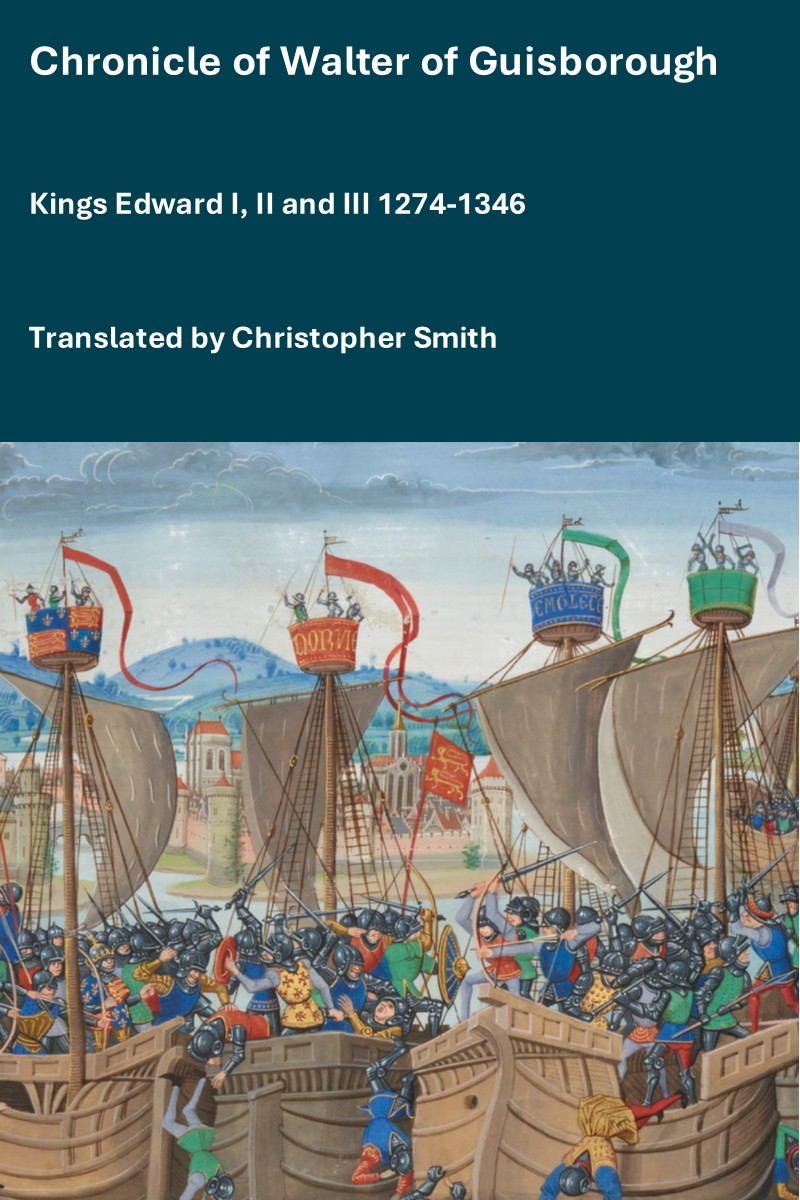 Chronicle of Walter of Guisborough. [November 1306] The wife [Christina Bruce [aged 33]] of Christopher , the king placed in the monastery of Sixhills [Map] in Lindsey, and the daughter [Marjorie Bruce [aged 10]] of the new king he placed in the monastery of Watton [Map]. The lord king gave to Lord Edmund de Mauley [aged 25] the manor of Seaton in Whitby Strand, which had belonged to Christopher, and other lands he had held in Northumberland the king gave to Lord William le Latimer [aged 30]. The lands of the new king the lord king divided among his magnates in this way: he gave the Valley of Annandale to the Earl of Hereford, who had married the daughter of the king of England; Ayr and Ayrshire he gave to Lord Robert de Clifford (saving, however, the right of the church of Durham); Tothenham, Tothenhamschire, and the manor of Wrothell in the southern parts he gave to other magnates. The earldom of Carrick, which the new king had held by maternal inheritance, the king of England gave to Lord Henry de Percy; and the earldom of Atholl he gave to the Earl of Gloucester [aged 36], who had married the king's daughter after the death of Gilbert de Clare, the former earl of Gloucester. Thus he bore the title of earl by right of his wife, not by inheritance, for he had been a mere and unremarkable knight when he married her, by the name of Ralph Monthermer.
Uxorem vero Christofori posuit rex in monasterio de Thyxsel in Lindesay, et filiam novi regis posuit in monasterio de Watton. Deditque dominus rex domino Eadmundo de Malo-lacu manerium de Seton in Wytebystrand, quod erat Christofori, et alias suas terras quas habuit in Northumberland dedit rex domino Willelmo le Latymer. Terras vero novi regis dispersit dominus rex inter magnates suos hoc modo; dedit enim Vallem Anandiæ comiti de Herford, qui filiam regis Angliæ duxerat in uxorem; Hert vero et Herternes dedit domino Roberto de Clifforde, salvo tamen jure ecclesiæ Dunolmensis; Thotenham et Thotenhamschyre et manerium de Wrothell in partibus australibus dedit aliis magnatibus suis; comitatum vero de Karrik, quem ex hæreditate materna habuerat ipse novus rex, dedit rex Angliæ domino Henrico de Percy; comitatum autem de Asechel dedit rex comiti Gloucestriæ, qui filiam regis post mortem Gilberti de Clare quondam comitis Gloucestriæ, duxerat; sicque nomen comitis habebat ab uxore, non ab hæreditate, fuerat enim miles simplex et segnis quando eam duxerat, nomine Radulphus Monhermer.
The River Till rises near Stow [Map] from where it flows past Sturton by Stow [Map], Broxholme [Map] to Saxilby [Map] where it is joined by the Foss Dyke which provides an inter-connection with the River Trent after which it flows to Lincoln, Lincolnshire [Map] where it joins the River Witham.
The River Till rises near Stow [Map] from where it flows past Sturton by Stow [Map], Broxholme [Map] to Saxilby [Map] where it is joined by the Foss Dyke which provides an inter-connection with the River Trent after which it flows to Lincoln, Lincolnshire [Map] where it joins the River Witham.
Anglo-Saxon Chronicle. 873. This year went the army against the Northumbrians, and fixed their winter-quarters at Torksey in Lindsey. And the Mercians again made peace with the army.