

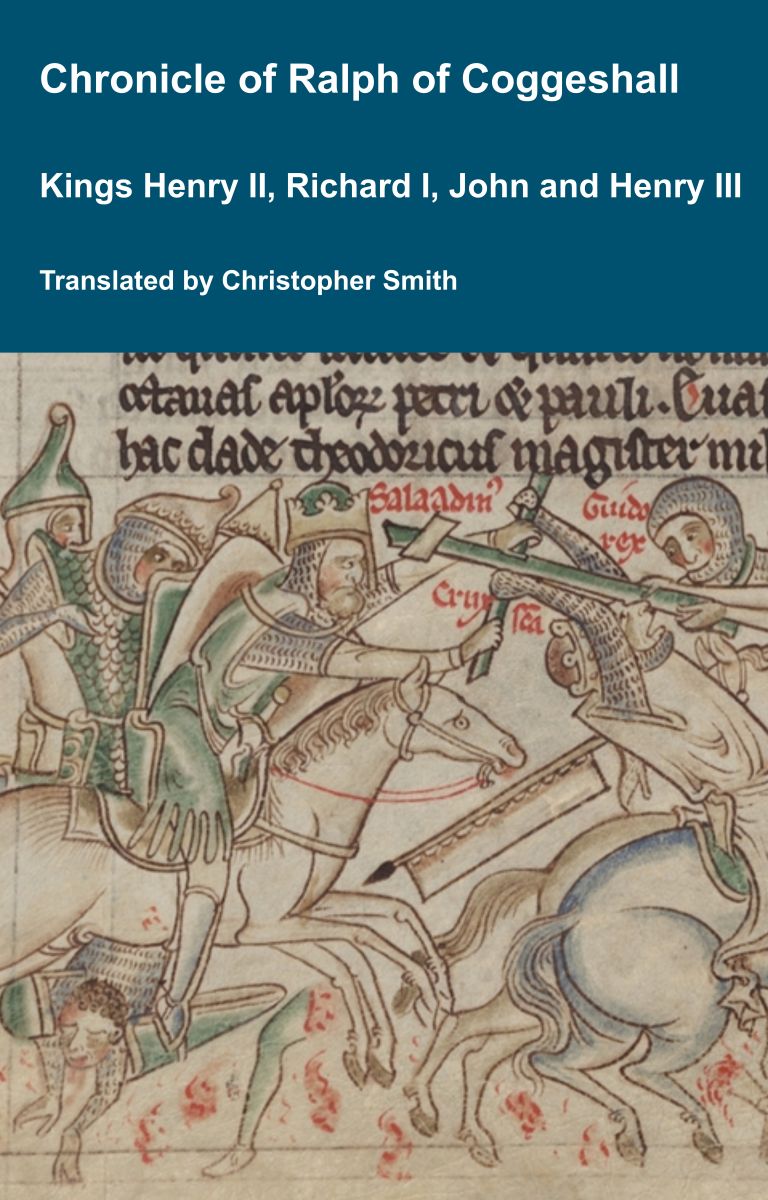
Chronicle of Abbot Ralph of Coggeshall
The Chronicle of Abbot Ralph of Coggeshall (Chronicon Anglicanum) is an indispensable medieval history that brings to life centuries of English and European affairs through the eyes of a learned Cistercian monk. Ralph of Coggeshall, abbot of the Abbey of Coggeshall in Essex in the early 13th century, continued and expanded his community’s chronicle, documenting events from the Norman Conquest of 1066 into the tumultuous reign of King Henry III. Blending eyewitness testimony, careful compilation, and the monastic commitment to record-keeping, this chronicle offers a rare narrative of political intrigue, royal power struggles, and social upheaval in England and beyond. Ralph’s work captures the reigns of pivotal figures such as Richard I and King John, providing invaluable insights into their characters, decisions, and the forces that shaped medieval rule. More than a simple annal, Chronicon Anglicanum conveys the texture of medieval life and governance, making it a rich source for scholars and readers fascinated by English history, monastic authorship, and the shaping of the medieval world.
Available at Amazon in eBook and Paperback format.
Wollaton, Nottinghamshire is in Nottinghamshire.
Around 1340 Edmund Willoughby was born to Richard Willoughby (age 50) and Joan Grey at Wollaton, Nottinghamshire. He married Alice Somerville and had issue.
Around 1357 Edmund Willoughby was born to Edmund Willoughby (age 17) and Alice Somerville at Wollaton, Nottinghamshire. He married Isabel Annesley and had issue.
Around 1395 Edmund Willoughby (age 38) died at Wollaton, Nottinghamshire.
In 1414 Edmund Willoughby (age 74) died at Wollaton, Nottinghamshire.
Around 1427 Robert Willoughby was born to Hugh Willoughby and Margaret Freville (age 26) at Wollaton, Nottinghamshire. He married Margaret Griffith and had issue.
Around 1452 Sanchia Willoughby was born to Robert Willoughby (age 25) and Margaret Griffith at Wollaton, Nottinghamshire. She married before 1478 John Strelley and had issue.
Around 1468 Anna Leeke (age 43) died in Wollaton, Nottinghamshire. She was buried at St Leonard's Church, Wollaton [Map].
In 1475 Anne Filiol was born to William Filiol of Woodlands and Filiols Hall (age 22) in Wollaton, Nottinghamshire. She married in or before 1517 Edward Willoughby and had issue.
In 1517 Henry Willoughby was born to Edward Willoughby (age 50) and Anne Filiol (age 42) at Wollaton, Nottinghamshire. He married before 1540 Anne Grey, daughter of Thomas Grey 2nd Marquess Dorset and Margaret Wotton Marchioness Dorset, and had issue.

On 21st October 1566 Margaret Willoughby was born to Francis Willoughby (age 20) and Elizabeth Lyttelton (age 18) at Wollaton, Nottinghamshire. She married 15th February 1587 Robert Spencer 1st Baron Spencer and had issue.

On 29th November 1795 Henry Venables-Vernon 3rd Baron Vernon (age 48) and Alice Lucy Whitefoord Baroness Vernon (age 28) were married at Wollaton, Nottinghamshire. The difference in their ages was 20 years.
Alice Willoughby was born to Robert Willoughby and Margaret Griffith at Wollaton, Nottinghamshire. She married in or before 1432 Richard Curzon and had issue.
Jean de Waurin's Chronicle of England Volume 6 Books 3-6: The Wars of the Roses
Jean de Waurin was a French Chronicler, from the Artois region, who was born around 1400, and died around 1474. Waurin’s Chronicle of England, Volume 6, covering the period 1450 to 1471, from which we have selected and translated Chapters relating to the Wars of the Roses, provides a vivid, original, contemporary description of key events some of which he witnessed first-hand, some of which he was told by the key people involved with whom Waurin had a personal relationship.
Available at Amazon in eBook and Paperback format.
Prodigy House. A large house built in the Tudor, Elizabethan and Jacobean periods defined by their use of glass. Prodigy houses include: Longford Castle, Wiltshire [Map], Wollaton Hall, Nottinghamshire, Longleat House, Burghley House, Hatfield House, Hertfordshire [Map] and Hardwick Hall, Derbyshire [Map].