

William of Worcester's Chronicle of England
William of Worcester, born around 1415, and died around 1482 was secretary to John Fastolf, the renowned soldier of the Hundred Years War, during which time he collected documents, letters, and wrote a record of events. Following their return to England in 1440 William was witness to major events. Twice in his chronicle he uses the first person: 1. when writing about the murder of Thomas, 7th Baron Scales, in 1460, he writes '… and I saw him lying naked in the cemetery near the porch of the church of St. Mary Overie in Southwark …' and 2. describing King Edward IV's entry into London in 1461 he writes '… proclaimed that all the people themselves were to recognize and acknowledge Edward as king. I was present and heard this, and immediately went down with them into the city'. William’s Chronicle is rich in detail. It is the source of much information about the Wars of the Roses, including the term 'Diabolical Marriage' to describe the marriage of Queen Elizabeth Woodville’s brother John’s marriage to Katherine, Dowager Duchess of Norfolk, he aged twenty, she sixty-five or more, and the story about a paper crown being placed in mockery on the severed head of Richard, 3rd Duke of York.
Available at Amazon in eBook and Paperback format.
Archdeacon Counties is in Archdeacon.
In 1464 Bishop Robert Stillington (age 44) was appointed Archdeacon Berkshire.

Archdeacon Edward Talbot was appointed Archdeacon Berkshire.
Patent Rolls. On 10th July 1461. Westminster Palace [Map]. Ratification for life of the estate of Master Robert Stillyngton (age 41), king's clerk as deacon of the king's free chapel of St Martin le Grand, London, archdeacon of Colchester in the cathedral of London and of Taunton in the cathedral of Wells, prebendary of Wetewang in the cathedral of York, Marther (possibly typo since 'Martha' unknown) in the cathedral of St Davids and the prebend which John Luca lately had in the king's free chapel of St Stephen within his palace of Wesminster, and person of the church of Aysshebury, in the diocese of Salisbury.
In 1775 Archdeacon Anthony Hamilton (age 36) was appointed Archdeacon Colchester.
In 1494 Bishop Robert Sherbourne (age 41) was appointed Archdeacon Huntingdon.
In 1400 Archdeacon Stephen Scrope was appointed Archdeacon Richmond.
From 1454 to 1456 Archbishop Lawrence Booth (age 34) was appointed Archdeacon Richmond.
From 1485 to 1493 Bishop John Blythe (age 25) was appointed Archdeacon Richmond.
In 1494 Christopher Urswick (age 46) was appointed Archdeacon Richmond.
In 1500 Bishop James Stanley (age 35) was appointed Archdeacon Richmond.
In 1678 Dr Henry Dove was appointed Archdeacon Richmond.
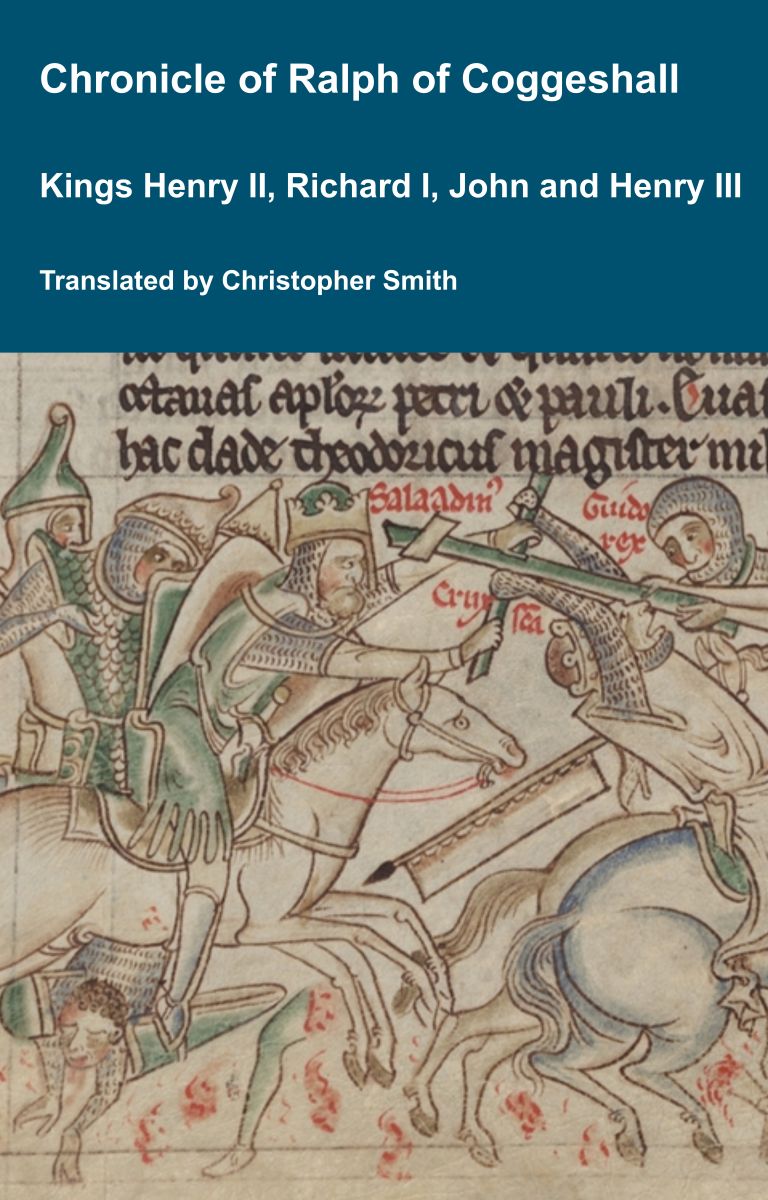
Chronicle of Abbot Ralph of Coggeshall
The Chronicle of Abbot Ralph of Coggeshall (Chronicon Anglicanum) is an indispensable medieval history that brings to life centuries of English and European affairs through the eyes of a learned Cistercian monk. Ralph of Coggeshall, abbot of the Abbey of Coggeshall in Essex in the early 13th century, continued and expanded his community’s chronicle, documenting events from the Norman Conquest of 1066 into the tumultuous reign of King Henry III. Blending eyewitness testimony, careful compilation, and the monastic commitment to record-keeping, this chronicle offers a rare narrative of political intrigue, royal power struggles, and social upheaval in England and beyond. Ralph’s work captures the reigns of pivotal figures such as Richard I and King John, providing invaluable insights into their characters, decisions, and the forces that shaped medieval rule. More than a simple annal, Chronicon Anglicanum conveys the texture of medieval life and governance, making it a rich source for scholars and readers fascinated by English history, monastic authorship, and the shaping of the medieval world.
Available at Amazon in eBook and Paperback format.
Edward Pole was appointed Archdeacon Richmond.
Before 25th February 1264 Bishop Thomas Cantilupe (age 46) was appointed Archdeacon Stafford.
In 1494 Bishop Robert Sherbourne (age 41) was appointed Archdeacon of Buckingham and Archdeacon of Taunton.
On 29th April 1554 Richard Petre (age 48) was appointed Archdeacon of Buckingham.
In 1559 Richard Petre (age 52) was deprived Archdeacon of Buckingham (possibly?).
In 1766 Reverend John Gordon (age 40) was appointed Archdeacon of Buckingham.
In June 1875 Arthur Purey Cust (age 47) was appointed Archdeacon of Buckingham.
On 3rd February 1552 Bishop Richard Cheyney (age 39) was appointed Archdeacon of Hereford.
Before 1170 Archbishop Geoffrey Plantagenet (age 17) was appointed Archdeacon of Lincoln.
In 1229 Bishop Robert Grosseteste (age 61) was appointed Archdeacon of Lincoln.
In 1528 Bishop Richard Pate was appointed Archdeacon of Lincoln.
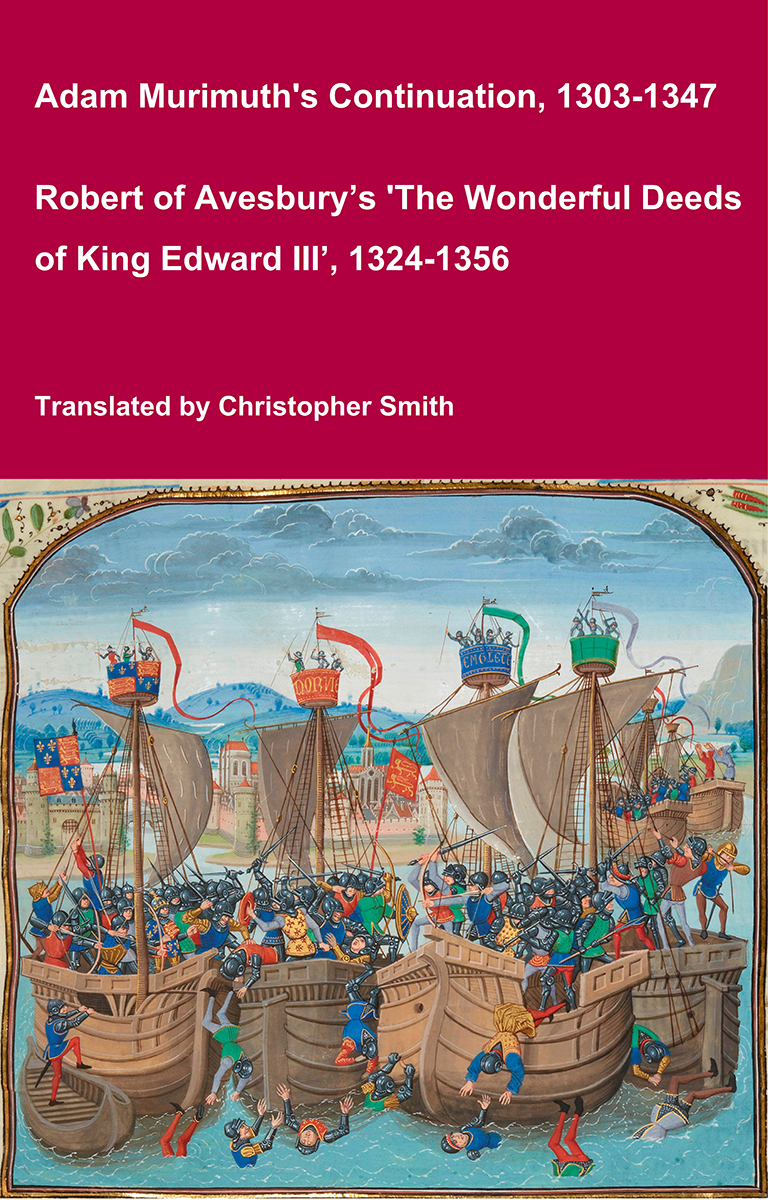
Adam Murimuth's Continuation and Robert of Avesbury’s 'The Wonderful Deeds of King Edward III'
This volume brings together two of the most important contemporary chronicles for the reign of Edward III and the opening phases of the Hundred Years’ War. Written in Latin by English clerical observers, these texts provide a vivid and authoritative window into the political, diplomatic, and military history of fourteenth-century England and its continental ambitions. Adam Murimuth Continuatio's Chronicarum continues an earlier chronicle into the mid-fourteenth century, offering concise but valuable notices on royal policy, foreign relations, and ecclesiastical affairs. Its annalistic structure makes it especially useful for establishing chronology and tracing the development of events year by year. Complementing it, Robert of Avesbury’s De gestis mirabilibus regis Edwardi tertii is a rich documentary chronicle preserving letters, treaties, and official records alongside narrative passages. It is an indispensable source for understanding Edward III’s claim to the French crown, the conduct of war, and the mechanisms of medieval diplomacy. Together, these works offer scholars, students, and enthusiasts a reliable and unembellished account of a transformative period in English and European history. Essential for anyone interested in medieval chronicles, the Hundred Years’ War, or the reign of Edward III.
Available at Amazon in eBook and Paperback format.
In 1769 Reverend John Gordon (age 43) was appointed Archdeacon of Lincoln.
Archdeacon George Heneage was appointed Archdeacon of Lincoln.
In 1865 George Hans Hamilton (age 41) was appointed Archdeacon of Lindisfarne which office he held until 1882.
In 1529 Bishop Richard Sampson was appointed Archdeacon of Suffolk.
In 1438 Adam Moleyns was appointed Archdeacon of Taunton.
In 1450 Bishop Robert Stillington (age 30) was appointed Archdeacon of Taunton.
Patent Rolls. On 10th July 1461. Westminster Palace [Map]. Ratification for life of the estate of Master Robert Stillyngton (age 41), king's clerk as deacon of the king's free chapel of St Martin le Grand, London, archdeacon of Colchester in the cathedral of London and of Taunton in the cathedral of Wells, prebendary of Wetewang in the cathedral of York, Marther (possibly typo since 'Martha' unknown) in the cathedral of St Davids and the prebend which John Luca lately had in the king's free chapel of St Stephen within his palace of Wesminster, and person of the church of Aysshebury, in the diocese of Salisbury.
In 1494 Bishop Robert Sherbourne (age 41) was appointed Archdeacon of Buckingham and Archdeacon of Taunton.
In 1551 Bishop John White (age 41) was appointed Archdeacon of Taunton.
From 19th April 1817 to 13th October 1927 Archdeacon George Trevelyan (age 52) was appointed Archdeacon of Taunton.
On 5th December 1827 Archdeacon Anthony Hamilton (age 49) was appointed Archdeacon of Taunton.
Before 1143 Archdeacon Hugh Avigo was appointed Archdeacon of Totnes.
On 28th September 1304 William Pontington Canon Exeter was appointed Archdeacon of Totnes.
In 1534 George Carew (age 36) was appointed Archdeacon of Totnes.

Before 1689 Bishop Jonathan Trelawny 3rd Baronet (age 38) was appointed Archdeacon of Totnes.
In 1701 Bishop Francis Atterbury (age 37) was appointed Archdeacon of Totnes.
In 1740 George Baker (age 53) was appointed Archdeacon of Totnes which office he held until his death in 1772.
Adam Murimuth's Continuation and Robert of Avesbury’s 'The Wonderful Deeds of King Edward III'
This volume brings together two of the most important contemporary chronicles for the reign of Edward III and the opening phases of the Hundred Years’ War. Written in Latin by English clerical observers, these texts provide a vivid and authoritative window into the political, diplomatic, and military history of fourteenth-century England and its continental ambitions. Adam Murimuth Continuatio's Chronicarum continues an earlier chronicle into the mid-fourteenth century, offering concise but valuable notices on royal policy, foreign relations, and ecclesiastical affairs. Its annalistic structure makes it especially useful for establishing chronology and tracing the development of events year by year. Complementing it, Robert of Avesbury’s De gestis mirabilibus regis Edwardi tertii is a rich documentary chronicle preserving letters, treaties, and official records alongside narrative passages. It is an indispensable source for understanding Edward III’s claim to the French crown, the conduct of war, and the mechanisms of medieval diplomacy. Together, these works offer scholars, students, and enthusiasts a reliable and unembellished account of a transformative period in English and European history. Essential for anyone interested in medieval chronicles, the Hundred Years’ War, or the reign of Edward III.
Available at Amazon in eBook and Paperback format.
In 1527 Bishop Richard Pate was appointed Archdeacon of Winchester.
After February 1552 John Philpot (age 36) was appointed Archdeacon of Winchester following the death of the previous incumbent William Boleyn (deceased).
On 9th September 1625 Bishop John Cosins (age 30) was appointed Archdeacon of the East Riding of Yorkshire which position he held until 1660.